Просмотр новости
Найдите то, что Вас интересует
 Спутники
 РН
РН SpaceX
 Роскосмос
 NASA
NASA
СпутникиРНSpaceXРоскосмосNASACan wood anatomical traits of oak species explain their coexistence along environmental gradients in the mountains of Mexico?

William Salter 10 January 2022 2 min read
Can wood anatomical traits of oak species explain their coexistence along environmental gradients in the mountains of Mexico?
https://www.botany.one/roles-of-wood-anatomical-traits-in-the-coexistence-of-mexican-oak-species/
Oaks (Quercus spp.) are a dominant tree genus of the northern hemisphere, occurring natively in North America, Europe, Asia, and northern Africa. Oak trees occupy a wide range of habitats, from Mediterranean semi-desert ecosystems to subtropical rainforests, and are highly ecologically diverse. In Mexico, oaks have undergone extraordinary diversification along the different mountain chains, resulting in the presence of several endemic species.
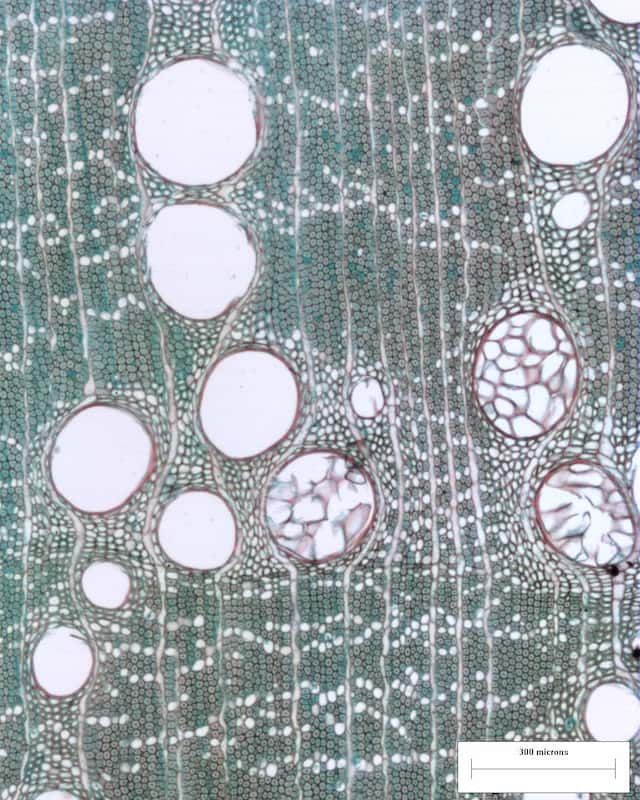
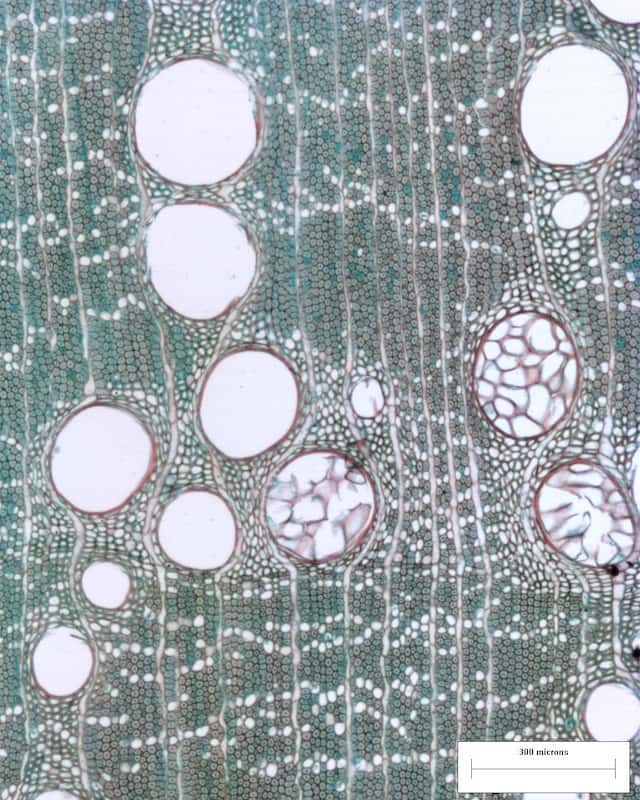 Arenas-Navarro et al. investigate how the wood anatomical traits of 21 Mexican oak species vary along environmental gradients in the mountains of the Serranias Meridionales de Jalisco floristic region. Image credit: Arenas-Navarro et al.
In their new Editor’s Choice study published in AoBP, Arenas-Navarro et al. analysed wood anatomical traits and the relative hydraulic conductivity of 21 oak species of the ‘El Tuito-El Cuale-Talpa de Allende’ Sierras mountains in west Mexico. The main vegetation types of this region are tropical deciduous forests at low elevations, oak, pine-oak and fir forests at high elevations and montane cloud forests in glens. In their study, Arenas-Navarro et al. aimed to identify how variation in wood anatomical traits was driven according to abiotic factors, leaf phenological patterns and phylogenetic restrictions by analysing interspecific variation along an environmental gradient.
The authors found that high temperatures combined with periodic water deficits lead to narrower vessels and high-density wood occupied by smaller fibres. On the contrary, at more humid sites, tall oaks invest in the widest vessels to conduct water with greater efficiency. The oak species in the study site showed an adaptive response of wood traits to climate, but there was also evidence of a low phylogenetic signal. Arenas-Navarro et al. conclude that the co-occurrence of oak species with different leaf habits and phylogenetic trajectories may promote complementary resource acquisition.
READ THE RESEARCH
Maribel Arenas-Navarro, Ken Oyama, Felipe García-Oliva, Andrés Torres-Miranda, Enrique G de la Riva, Teresa Terrazas, The role of wood anatomical traits in the coexistence of oak species along an environmental gradient, AoB PLANTS, Volume 13, Issue 6, December 2021, plab066, https://doi.org/10.1093/aobpla/plab066
| # | Наименование новости | Тональность | Информативность | Дата публикации |
|---|---|---|---|---|
| 1 | Estimating genetic variation in seed collections using seed morphology | 0 | 5.1 | 15-11-2021 |
| 2 | Photochemical performance of bunchgrass reproductive structures | 0 | 4.62 | 07-02-2022 |
| 3 | Conservation strategies for the endangered Dianthus superbus in Latvia | 0 | 4.16 | 11-11-2021 |
| 4 | Poor acclimation to drought in subalpine forest tree seedlings | 0 | 7.16 | 14-03-2022 |
| 5 | Interactive effects of drought and pollen intensity on seed production | 0 | 6.5 | 03-02-2022 |
| 6 | Phylogeography of the invasive Brazilian peppertree in South Africa | 0 | 5.5 | 28-03-2022 |
| 7 | Computer vision for phenotyping of photomorphogenesis | 0 | 13.45 | 06-12-2021 |
| 8 | Morphological characterisation of trichomes | 0 | 7.56 | 17-01-2022 |
| 9 | ASSEMBLY AND FUNCTION OF NEMATODE COMMUNITIES IN AN EARLY SUCCESSIONAL ALPINE LANDSCAPE | 0 | 2.5 | 14-08-2026 |
| 10 | Facilitation influences when trees grow, but not growth rate in a dry temperate forest | 0 | 5.55 | 14-08-2026 |