Просмотр новости
Найдите то, что Вас интересует
 Спутники
 РН
РН SpaceX
 Роскосмос
 NASA
NASA
СпутникиРНSpaceXРоскосмосNASAThe name "White-chested Fox" was found in drawings dating from 400 BC to 900 AD at the San Bartolo-Xultun archaeological site.
July 14, 2026 / 7:19 AM EDT / CBS/AFP
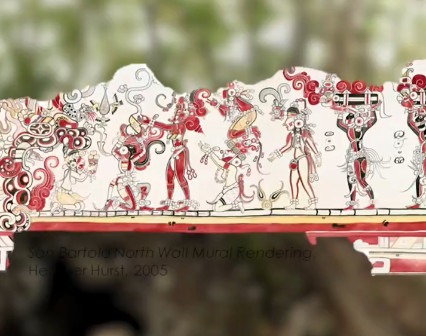
Archaeologists have transcribed mural symbols from Mayan ruins to learn the name of an astronomer and mathematician from the ancient civilization for the first time, Guatemala's Ministry of Culture said Monday.
The name "White-chested Fox" was found in drawings dating from 400 BC to 900 AD at the San Bartolo-Xultun archaeological site on the Mexican border.
Culture minister Luis Mendez told reporters researchers at Xultun unearthed a "complete mathematical and astronomical formula" authored by Sak Tahn Waax, which translates to White-chested Fox.
Mendez said it's the only work of its kind attributed to a mathematician from the Maya Classic period, considered the peak of the Mesoamerican civilization.
The discovery was "made possible by the epigraphic analysis of more than 50 mathematical and astronomical microtexts written on the wall," the ministry said in a statement.
 Archaeologists have transcribed mural symbols from Mayan ruins to learn the name of an astronomer and mathematician from the ancient civilization for the first time, Guatemala's Ministry of Culture said Monday.
Guatemala's Ministry of Culture
Archaeologists have transcribed mural symbols from Mayan ruins to learn the name of an astronomer and mathematician from the ancient civilization for the first time, Guatemala's Ministry of Culture said Monday.
Guatemala's Ministry of Culture
In addition to determining the astronomer's name, researchers identified calculations and tables that employ astronomical and calendrical units of time.
Researchers used drawings, photographs and scans of the inscriptions, which were later digitally enhanced, revealing 11 hieroglyphs that could finally be deciphered, the ministry said.
The glyphs appeared in "a context where art was intertwined with science, mathematics, astronomy and everyday life," Mendez said.
The Maya civilization went into decline around 900 AD, until its collapse with the arrival of Spanish conquistadors at the turn of the 16th century.
Last year, the culture ministry announced archaeologists unearthed the remains of a Mayan city nearly 3,000 years old in northern Guatemala, with pyramids and monuments.
In 2024, an American doctoral student discovered a sprawling Maya city within a dense jungle in Mexico. Scientists and archaeologists have discovered ancient Mayan ruins by shooting lasers down from a plane to penetrate the dense jungle.
In:
| # | Наименование новости | Тональность | Информативность | Дата публикации |
|---|---|---|---|---|
| 1 | Египтолог Челси Кауфман узнала имя жившей 3500 лет назад собаки | 0 | 14.17 | 04-10-2026 |
| 2 | New species of wild cat discovered for first time in more than a century | 0 | 3.09 | 18-09-2026 |
| 3 | Как "предки" ацтеков шифровали тайны - находка в пещере стала мировым открытием | 0 | 12.98 | 28-09-2026 |
| 4 | Как "предки" ацтеков шифровали тайны - находка в пещере стала мировым открытием | 0 | 12.98 | 28-09-2026 |
| 5 | На Алтае обнаружили фрагменты ДНК неизвестного вида яков | 0 | 10 | 06-10-2026 |
| 6 | Древние рисунки перевернули представление о письменности в доколумбовой Мексике | 0 | 8.23 | 28-09-2026 |
| 7 | 'Buried remains of Noah's Ark' found, researcher theorizes | 0 | 6.4 | 30-09-2026 |
| 8 | Древняя ДНК из Денисовой пещеры помогла выявить неизвестное животное | 0 | 10 | 05-10-2026 |
| 9 | В Египте ученые смогли прочитать имя пса на гробнице чиновника | 0 | 6.8 | 04-10-2026 |