Просмотр новости
Найдите то, что Вас интересует
 Спутники
 РН
РН SpaceX
 Роскосмос
 NASA
NASA
СпутникиРНSpaceXРоскосмосNASADurant, best known for the events chronicled in Black Hawk Down, looks back on a career in special operations aviation.
The post Night Stalker legacy: A Conversation with Mike Durant appeared first on Vertical Mag.
Published on: August 18, 2026
Estimated reading time 17 minutes, 2 seconds.
Former U.S. Army pilot and 160th Special Operations Aviation Regiment (SOAR) member Mike Durant became widely known following the Battle of Mogadishu in October 1993, later chronicled in the book and film Black Hawk Down.
A recipient of the Blades of Valor Recognition Program, Durant recently joined the Hangar Z Podcast to reflect on his aviation career, military service, and life after the Army.
This interview has been adapted from an episode of the Hangar Z Podcast and edited for length, clarity, and flow. Responses may combine excerpts from longer answers while maintaining the speaker’s original intent.
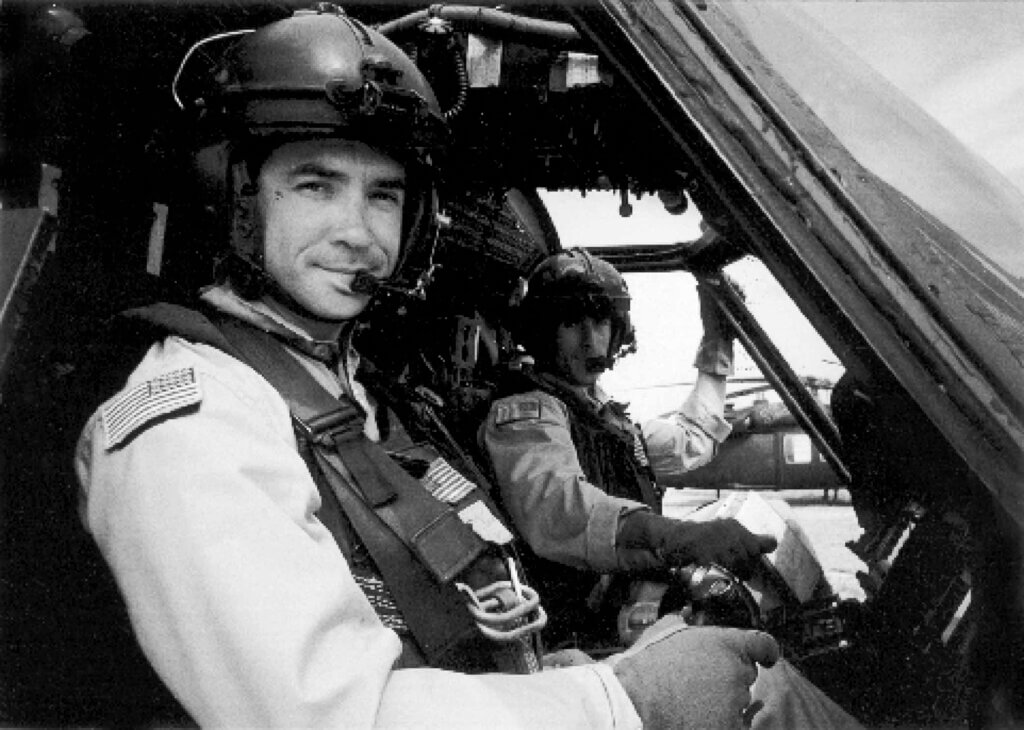 Photo courtesy of Mike Durant
Vertical Valor Plus: More than three decades later, many people still associate you with the Battle of Mogadishu in 1993. When you look back on that experience today, what stays with you most?
Mike Durant: It was a horrible event. We suffered some terrible losses, but there’s also a lot to be proud of in terms of the organizations involved, the people involved, and the actions across the board.
The one that probably hit me hardest was Cliff Wolcott and Donovan Briley. We had flown together so many times. We shared experiences together. When the call came over the radio, I knew they had been shot down, but in my mind, I thought they were going to get recovered and I’d see them when this was all done. Eleven days later, when I got released, I asked, “Where’s Cliff and Donovan?” That’s when I found out they too were gone.
It’s something you never recover from. A friend of mine had a great way to put it. He said it leaves a hole in your heart that will never be filled. Along with the other Task Force Ranger and 10th Mountain soldiers, they’re gone.
VV: Long before Mogadishu, you were just a kid from New Hampshire who became fascinated with helicopters. What first sparked your interest in aviation?
M.D.: We used to go camping every summer, and one of the people at the campground was a National Guard helicopter pilot named Joe Brigham who had his own aviation business in southern New Hampshire. One day he said, “Hey, do you want to go for a flight in the helicopter?”
We flew over the top of Mount Washington, the highest mountain in the Northeast. It felt like we were hovering over the mountain. I’m sitting there in what felt like a glass bubble, looking around while he’s talking about how this could be a job in the military.
It was the first time I’d ever experienced anything that amazing. I thought, if flying helicopters is a possibility, this would be an incredible career.
Apparently, I wasn’t the only one who had that experience with him. I got to work with him that summer as part of a ground crew, and from that point forward, if there was a way for me to make it happen, I was going to figure it out.
Then I saw a Black Hawk in the late 1970s. I thought, “Wow, that’s a spaceship.” That became the follow-on goal. If I could fly helicopters, then maybe I could fly that amazing machine. It was the cutting-edge helicopter at the time, and sure enough, I joined the Army, got accepted into flight school, and was flying Black Hawks.
VV: What was it about the 160th Special Operations Aviation Regiment that appealed to you, and what do you remember about joining the unit?
M.D.: I had heard about the 160th in Korea. At the time, it was not publicly known. Anytime it was talked about, it was sort of hush-hush and no one was supposed to know about it. Of course, that just interested me all the more.
I got orders to the 101st Airborne Division at Ft. Campbell, Kentucky, and found out the 160th was there. I went over and talked to a recruiter, but they told me I needed more experience. I was disappointed, but looking back, that was probably the right answer. I spent a little over two years with the 101st, went to the instructor pilot course, and built a lot more flight time.
As soon as I had the opportunity, I went back and assessed for the 160th. By then I had over 1,000 hours of flight time and probably close to 500 night vision goggle hours, so I was much better prepared for the demands of the unit.
I already thought the Black Hawk looked like a spaceship, and then I got to the 160th and started seeing multifunction displays, flight management systems, and FLIR for the first time. GPS didn’t exist in our cars. Cell phones didn’t exist. The internet didn’t exist. Seeing some of that technology already in the cockpit at the 160th, I thought, “Man, this is a cool unit.”
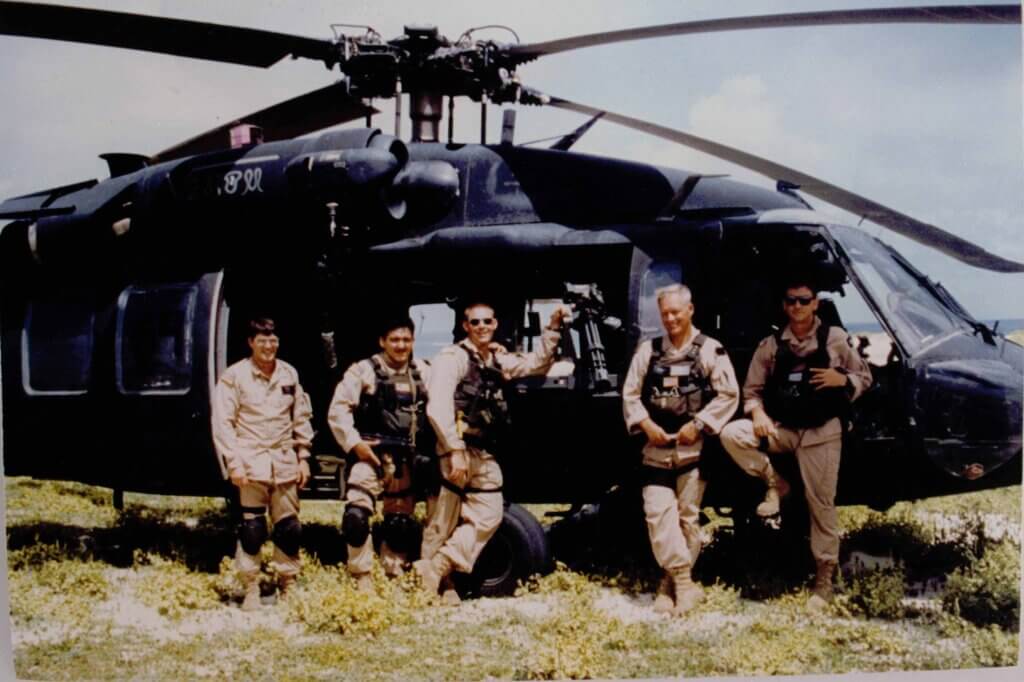 Photo courtesy of Mike Durant
VV: Before Somalia, you participated in several major operations, including Prime Chance, Just Cause, and Desert Storm. What stands out when you look back on those deployments?
M.D.: Prime Chance was probably the hardest flying I ever did in my whole career. We were flying over the Persian Gulf at night, about 30 feet above the water, and it was all hands-on flying. When the sandstorms came through, we used to call it flying inside a ping-pong ball. You couldn’t see a thing. It was really, really tough flying.
Just Cause was very different. I had always said it was probably the most complicated mission the community had ever done at that point. I think there were 26 targets hit simultaneously at H-Hour. I remember watching the Rangers come out of the C-130s during the airfield seizure at Rio Hato. Watching those Rangers pour out of those aircraft was just incredible.
Desert Storm was also significant because I got involved in the development of the armed Black Hawk. Cliff Wolcott was the father of the Direct Action Penetrator program, and I was his right-hand man. We were taking a Black Hawk and turning it into a multi-role aircraft. We had miniguns and rockets at the time, and eventually we put Hellfire missiles and the Apache’s 30mm chain gun on it. With no formal aerial gunnery training, we had to learn and create it all from scratch, but I happened to get in on the ground floor and be part of the development. That platform has now been instrumental in the success numerous missions for decades, including most recently, in Venezuela.
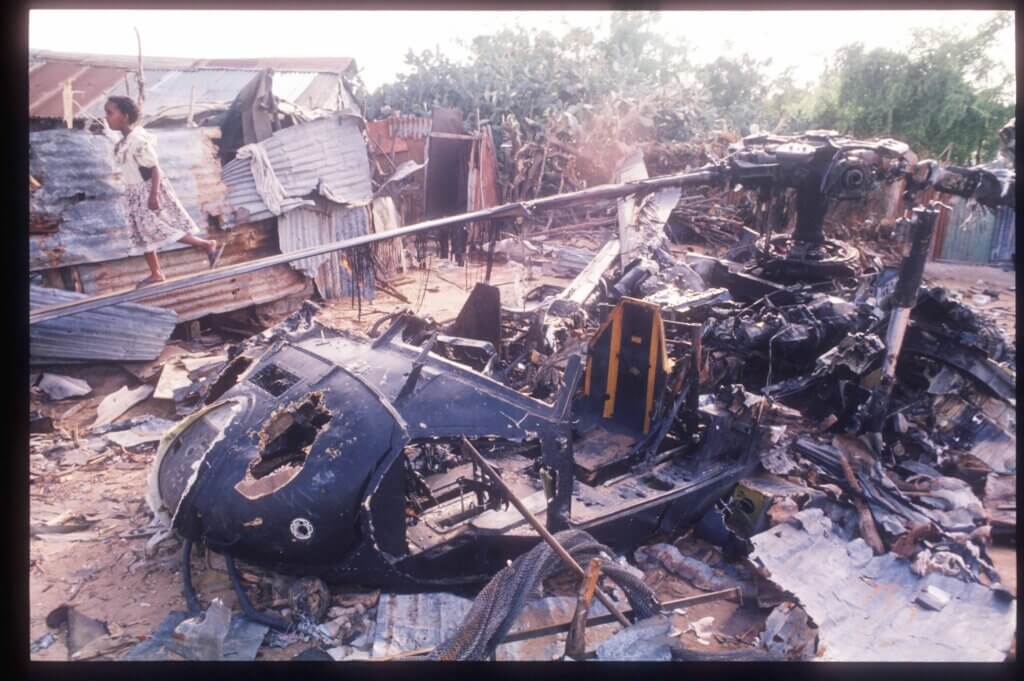 Photo courtesy of Mike Durant
VV: You went from serving in a relatively secretive unit to becoming an international news story overnight. What was that experience like?
M.D.: Going from a unit where the public didn’t know much about us to global coverage was a challenging experience.
I was in the hospital for a while, so I was somewhat insulated from it at first. And the way the news cycle works, things fade pretty quickly. By the time I got released from the hospital, it was almost after the fact when I realized just how big a story it had become.
There is no field manual on how to deal with that stuff. I had a public affairs officer with me pretty much the whole way through, and he gave me some great advice. One of the things he said that I’ve never forgotten, “If you stick your head in the sand, there’s only one part of your body that’s still visible.”
Over time, you get more comfortable speaking in public and dealing with the attention. I’ve always felt an obligation to portray the military, my unit, and Task Force Ranger in a positive way. These are amazing organizations with amazing people that gave all, and they deserve that.
VV: While you were in captivity, your family was following events from thousands of miles away. What do you remember about their experience?
M.D.: Well, initially I was MIA, which is very difficult for all involved. There are families who have dealt with it for years and I can’t even relate to that. Getting that initial notification that your loved one is missing in action is a pretty tough pill to swallow.
CNN was actually the organization that hired the freelance cameraman who shot the interrogation video. When they got it uploaded to Atlanta, they called the military and they called my family and said, “We’re going to air this in about five minutes,” so my parents wouldn’t suddenly see their son on television without any warning.
At that point, it was sort of a double-edged sword for them. It was relief that I was alive, but it was also a pretty rough situation with everything else that was happening and the knowledge that other members of Task Force Ranger had lost their lives.
The unit partnered with my family. They informed them as much as they could and worked with them to try to figure out how we could get some communication established so they could gather intelligence which would ultimately lead to a rescue. The path forward is always mission-focused, and that’s what it was all about.
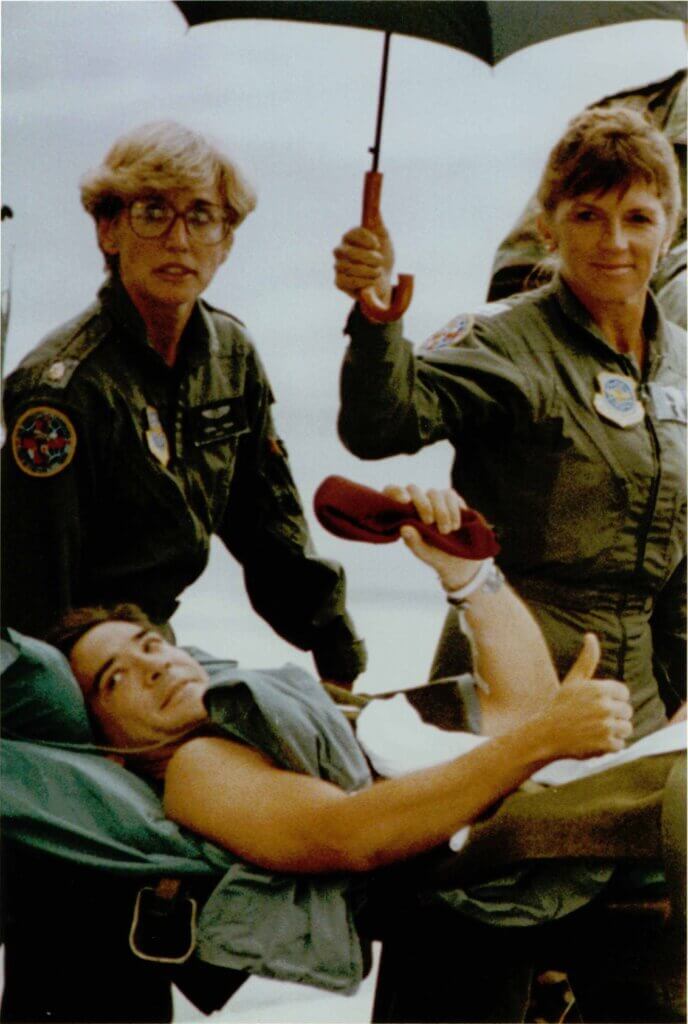 Photo courtesy of Mike Durant
VV: A Night Stalker pilot recently received the Medal of Honor for his actions during Operation Absolute Resolve in Venezuela. What was your reaction to that recognition?
M.D.: I don’t know Eric [Slover] personally, but I had the good fortune of recently visiting the unit and talking with some of the folks who were on that mission.
I saw some of the damage the aircraft took on the infill. He’s very fortunate to be alive. Frankly, he took some pretty hard hits there, but true to Night Stalker form, they executed the mission and made it happen.
I’m very proud. To me, it’s a highlight of decades of mission execution by Night Stalkers, many of whom will forever go unrecognized. That’s the culture. Night Stalkers do whatever we can do to support the unit we’re tasked to support, and there’s no better example than the Maduro mission.
VV: What has life looked like since leaving the Army?
M.D.: I started a company in 2008 and ran it for 15 years. We did, by most standards, extremely well. At one point, we had almost 700 people working for the company, counting subcontractors.
What I set out to do was take the culture of the 160th, and really aviation in general, and introduce it into a commercial environment. Aviation is a band of professionals. Whether it’s aircraft maintenance, flight operations, air traffic control, or manufacturing, it’s amazing what people accomplish when they work together.
I tried to bring that same culture and those same values into the company. I’m really proud of what we accomplished.
Just like aviation, nobody does anything by themselves. Everyone on the team has a role. I had some great people around me, and they helped us be successful.
| # | Наименование новости | Тональность | Информативность | Дата публикации |
|---|---|---|---|---|
| 1 | A CH-47 Chinook pilot recalls final days in Kabul | 0 | 6.03 | 01-09-2026 |
| 2 | Blades of Valor Road Tour: Where the mission happens | 0 | 6.37 | 18-08-2026 |
| 3 | How air medical operators are building the next generation of talent | 0 | 6.75 | 23-09-2026 |
| 4 | Blades of Valor 2026: Marshland manhunt | 0 | 15.34 | 11-08-2026 |
| 5 | PAC International: Rebuilt for mission | 0 | 8.44 | 26-08-2026 |
| 6 | Q&A: Keith Moreland, vice president of Rotorcraft Services Group Aviation | 0 | 5.59 | 27-08-2026 |
| 7 | Beyond Survival: How flight nurse Krista Haugen turned trauma into a lifesaving mission | 0 | 5.81 | 21-09-2026 |
| 8 | Mission over maintenance: Choosing the right helicopter for the job | 0 | 5.75 | 19-08-2026 |
| 9 | How the Flying Bulls keep history aloft | 0 | 8.03 | 20-08-2026 |
| 10 | Beyond survival: From HEMS crash survivor to patient safety advocate | 0 | 6.55 | 29-09-2026 |