Просмотр новости
Найдите то, что Вас интересует
 Спутники
 РН
РН SpaceX
 Роскосмос
 NASA
NASA
СпутникиРНSpaceXРоскосмосNASAUkraine has some very powerful "cards" to play, and Putin is becoming increasingly aware of that
In recent weeks, a series of landmark developments have taken place, including the meeting of the Coalition of the Willing in Paris, the NATO Summit in Ankara, and the signing of defense agreements aimed at strengthening both Ukraine and Europe. These developments come against the backdrop of Ukraine regaining the initiative in countering Russian aggression, even as relations between Ukraine and Poland—the principal logistical hub for military assistance to Kyiv—have shown signs of cooling.
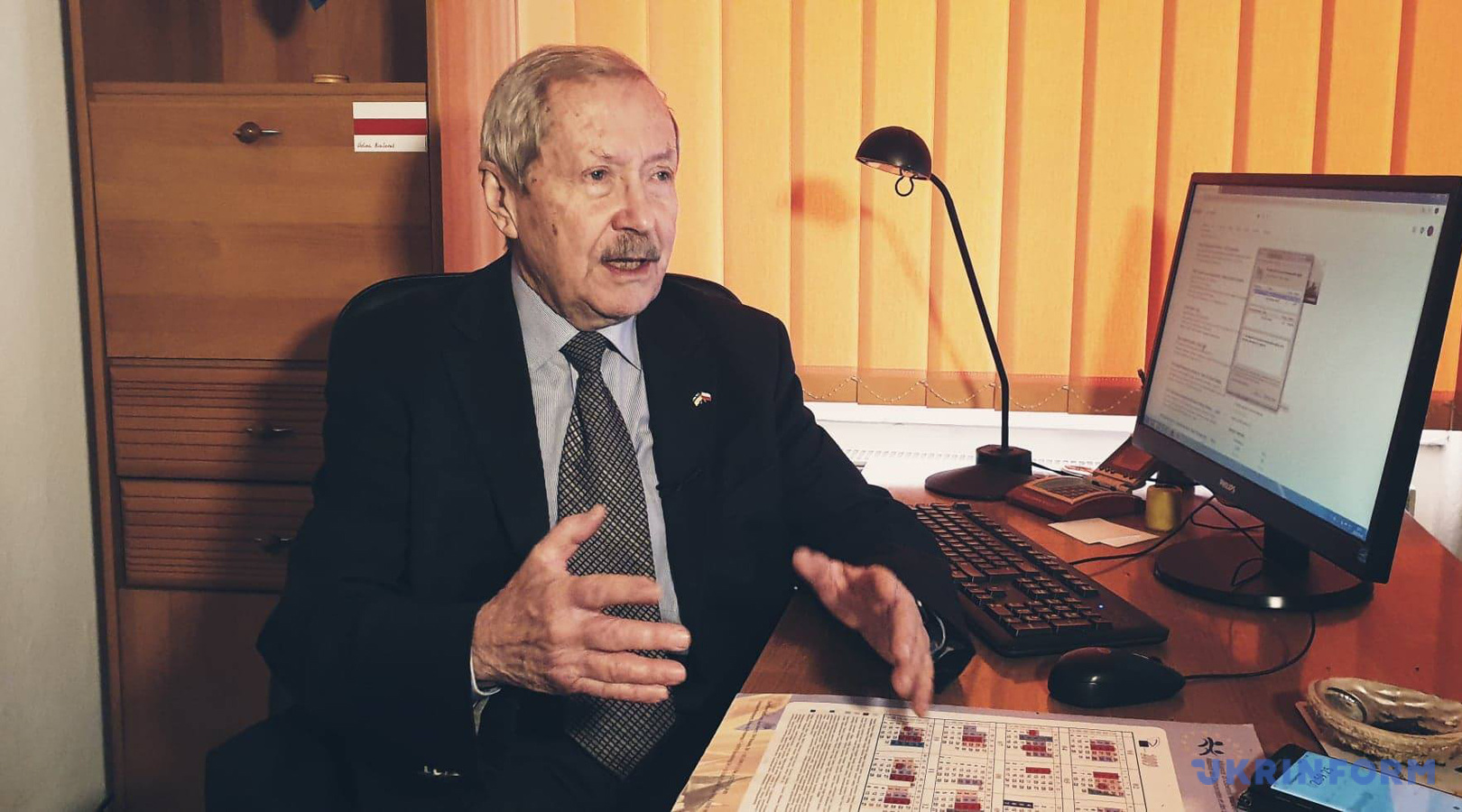
In a conversation with Ukrinform, former Polish Minister of National Defense Janusz Onyszkiewicz shared his views on the key dimensions of Ukrainian-Polish defense cooperation and the prospects for improving bilateral relations. He also assessed the current situation in Russia, the prospects for manufacturing Patriot air defense missiles in Europe, and the importance of Ukraine's battlefield experience for NATO.
POLAND COULD JOIN THE ANTI-BALLISTIC COALITION WITHIN A FEW MONTHS
Ukrinform (UI): Mr. Minister, the Coalition of the Willing recently held another meeting in Paris, where Poland was announced as the host of the Coalition's first military exercises. In your view, what will these exercises look like, and where might they take place?
Janusz Onyszkiewicz (JO): Poland has no shortage of suitable locations for hosting such exercises. The important thing is that they will take place at all. The Coalition of the Willing is working intensively to develop a range of operational concepts. Its members expect that if the war in Ukraine is frozen in some form, the ceasefire will need to be monitored and enforced, including through a military presence on Ukrainian territory. The United Kingdom and France have already declared their readiness to take part in such a mission (this conversation took place before Germany also announced that it would participate in the exercises – ed.). The drills will be based on that scenario.
Poland does not intend to deploy combat units to Ukraine. However, it plays a crucial role in the Coalition's activities as its operational base and logistical hub. Supply and transport routes will pass through Poland, making Warsaw's contribution indispensable, even if it differs from that of Paris or London.
UI: Do you think Poland is right not to participate in a potential stabilization mission in Ukraine?
JO: I believe this is largely driven by Poland's domestic political situation. A firm declaration of readiness to deploy combat troops to Ukraine could trigger an extremely heated political debate, particularly with parliamentary elections approaching (scheduled for autumn 2027 – ed.). So I think we should wait for the election results before revisiting the issue.
UI: During the Paris meeting of the Coalition of the Willing, the Anti-Ballistic Coalition was launched. Poland has not joined it yet. Prime Minister Donald Tusk said Warsaw could do so once the country's defense industry has prepared a proposal. When might that happen?
JO: Poland is in a somewhat unique position in this regard because it hosts the U.S. missile defense base in Redzikowo, which is capable of intercepting ballistic missiles.
The Anti-Ballistic Coalition is, in essence, an industrial cooperation initiative that requires the participation of defense manufacturers from a number of countries. I believe Polish companies will carry out the necessary assessments, and within the next few months a proposal outlining Poland's participation in the initiative should be ready.

Grzegorz Mehring / Archiwum ECS
EUROPEAN INVOLVEMENT IN PATRIOT MISSILE PRODUCTION IS A NECESSITY
UI: How do you view the agreement reached by several countries, including Poland, on the potential licensed production of Patriot missiles in Europe in cooperation with Ukraine and, above all, for Ukraine?
JO: Much will depend on whether U.S. President Donald Trump's rather general statement is translated into concrete military and industrial decisions. We'll have to wait and see. A full transfer of the technology required to manufacture these missiles is an extremely complex matter, and it is far from certain that the United States will be willing to share technology it considers highly sensitive. Even Patriot missiles produced in Japan—which has a technology-sharing agreement with the United States—are not manufactured entirely in Japan, as they still rely on critical American-made components.
We will have to see which technologies the United States is prepared to transfer to Europe. That said, this agreement is of great importance because demand for these missiles is enormous, especially after U.S. stockpiles were depleted by operations in the Persian Gulf. The American defense industry cannot meet that demand on its own. European involvement has therefore become a necessity. It is encouraging that the United States recognizes this reality and appears willing to move in that direction.
UI: What is your assessment of the political controversy that erupted in Poland after reports emerged that five Patriot missiles had been transferred to Ukraine this spring, followed by accusations that Prime Minister Donald Tusk's government had weakened the country's defense capabilities?
JO: This is, of course, politics. By the same logic, one could argue that transferring even a single helmet to Ukraine weakens Poland's defense capabilities. Such arguments are simply being exploited for domestic political gain.
It is worth remembering that the previous government, led by the Law and Justice (PiS) party—which is now among the strongest critics of this decision—supplied Ukraine with a vast amount of military equipment, and it deserves credit for doing so. By the same reasoning, one could also accuse the government of former Prime Minister Mateusz Morawiecki of undermining the combat readiness of the Polish Armed Forces.
Most importantly, every Patriot missile transferred to Ukraine that shoots down a Russian aircraft or intercepts a ballistic missile means one less aircraft or missile that could potentially be used against Poland.
UI: Deputy Prime Minister and Minister of National Defense Władysław Kosiniak-Kamysz recently released declassified information detailing the full scope of Poland's military assistance to Ukraine since 2022. It showed that the PiS government provided 90% of Poland's total military aid during the first year and a half of the war, while Donald Tusk's government accounted for the remaining 10% over the following three years. The disclosure sparked a debate in Poland over whether such sensitive information should have been made public. What is your view?
JO: I think it would have been better not to publish it. However, given the current political climate, it was probably unavoidable. Had only part of the information been released, there would inevitably have been claims that "they didn't disclose everything, so they must be hiding something." That, in turn, could have provided the opposition with yet another pretext to accuse the Tusk government.
For political rather than military reasons, it was therefore better to release the full information at once—if only to put an end to the controversy and deprive the opposition of the opportunity to accuse the government of concealing information that supposedly posed a threat to Poland's security.
BULGARIA EMERGES AS A POTENTIAL RECIPIENT OF POLAND'S MiG FIGHTERS
UI: The issue of Warsaw transferring its MiG fighter jets to Kyiv has once again resurfaced in Poland. Warsaw has expressed its readiness to transfer the aircraft to Ukraine in exchange for drone technologies, provided that Ukraine or its allies finance their modernization. Do you think this deal will ultimately be concluded?
JO: That will depend on how both sides weigh the potential benefits against the costs. Poland's MiGs are nearing the end of their service lives and are effectively no longer airworthy. That is why Poland is gradually retiring them from service. Restoring these aircraft to full operational capability, as Ukraine hopes, would require enormous additional investment. But Poland is retiring them precisely because maintaining and overhauling them has become too costly.
The original assumption was that the MiGs transferred to Ukraine would either be used for spare parts or restored, to the extent possible, by the Ukrainian side. However, if Poland is expected to carry out the refurbishment, the question becomes who will cover the cost of returning the aircraft to full combat readiness.
I believe both sides have reached something of an impasse because their expectations have become too ambitious, which explains the delay. Since there are other potential recipients for these MiGs, however, the issue will have to be resolved soon. If Ukraine is unwilling to accept the aircraft in their current condition and provide Poland with drone technologies of equivalent value in return, Warsaw will most likely move to Plan B and transfer the MiGs to another country.
Everything suggests that Bulgaria could become that recipient. It would be unfortunate if that happened—not because I have anything against Bulgaria, but simply because it would be far better if the matter were resolved through Polish-Ukrainian cooperation.
UI: Cooperation between the defense industries of Poland and Ukraine has produced rather modest results, as Poland's defense minister recently acknowledged. In your view, what is the main obstacle: politics, legislation, bureaucracy, or financing?
JO: I am afraid the main problem is the limited capacity of Poland's defense industry. The sector is already overloaded with existing orders and simply lacks the capacity to pursue new areas of cooperation in parallel. I know there is already some cooperation between private Polish companies and Ukrainian partners, and discussions are also underway on the joint production of engines for missiles and even aircraft.
I hope these projects will eventually get off the ground. Poland's defense industry needs time to absorb the shock caused by the dramatic increase in defense orders and adapt to the new reality. Cooperation with Ukraine's defense industry is, in fact, a tremendous opportunity for Poland.
UI: Which areas of cooperation hold the greatest promise?
JO: Above all, the production of drones, air defense systems, and the modernization of armored vehicles that are being tested and refined under real combat conditions in Ukraine.
CRIMEA HAS BECOME A BURDEN AND A LIABILITY FOR RUSSIA
UI: Let's turn to the situation on the battlefield. How do you assess Ukraine's strikes deep inside Russian territory, and what impact are they having on Russia's military and political situation?
JO: To borrow President Trump's terminology, Ukraine "has the cards"—and, as it turns out, very strong ones. Putin is becoming increasingly aware of that.
What is happening is significant for another reason as well. For several years, from the perspective of ordinary Russians, the war in Ukraine resembled a colonial war—much like the campaigns Britain once fought while comfortably remaining on its own islands as the fighting took place somewhere in India or Africa, far removed from daily life at home. Now, however, it is becoming clear that this is a war that affects Russians themselves.
The fact that Dmitry Peskov has begun referring to what is happening not as a "special military operation" but as a "war" is telling in itself. Gradually, the myth that this conflict is some grand civilizational mission through which Russia is destined to extend its power over others will begin to fade.
Eventually, Russians will come to the conclusion that this war must end—just as Americans eventually did during the Vietnam War. The United States did not lose that war because the Vietnamese militarily drove American forces out; rather, it became politically and socially impossible to continue fighting it. Something similar happened to the Soviet Union in Afghanistan, where it ultimately withdrew because public sentiment at home had shifted.
UI: But as we have all seen, Putin remains captive to his imperial ambitions. Could even Russia's enormous losses fail to persuade him to change course?
JO: Of course, Putin remains fixated on his imperial agenda. But it is worth noting that an increasing number of influential figures in Russia are beginning to question that policy. One can point to the governor of Russia's Central Bank, as well as a number of Russian generals, among others. In short, criticism of the war is beginning to emerge within Russia, and one can only hope that it will continue to grow.
Crimea, which was supposed to become the "jewel in Russia's crown," has instead turned into a burden and a liability. The aura of the "great triumph" that the annexation of Crimea—and, more broadly, this war—was meant to symbolize is gradually fading.
UI: What is your assessment of the capabilities the Ukrainian military has demonstrated in recent months, particularly its ability to strike targets deep inside Russian territory? Are NATO and Poland interested in incorporating this experience into their military doctrines and defense planning?
JO: NATO is constantly analyzing developments in Ukraine. After all, there is a dedicated NATO center in Bydgoszcz that exists precisely for this purpose (JATEC – ed.). The knowledge being gained is immensely valuable because it showcases entirely new methods of warfare. It requires careful analysis, particularly to assess the extent to which a potential conflict between NATO and Russia might resemble the war currently being fought in Ukraine.
At the same time, we should recognize that such a conflict would not necessarily mirror what has unfolded in Ukraine since 2022. Nevertheless, the experience gained in this war, the expertise Ukrainians have acquired, and the tactics and methods they have developed are, without any doubt, of immense value to Europe.
UI: Returning to Polish-Ukrainian relations, before the NATO Summit in Ankara the Polish prime minister publicly instructed the Polish delegation not to undertake any additional financial commitments to Ukraine. Was that the right approach, in your view?
JO: I think there is a difference between what is declared publicly today and what ultimately happens. Poland generally supports NATO and EU initiatives, including financial assistance to Ukraine.
However, we are currently under tremendous financial pressure because of the large-scale modernization of the Polish Armed Forces and extensive defense procurement programs. Finding additional funding beyond the commitments already made within NATO or the EU could therefore prove extremely difficult. That explains the cautious tone of such statements.
We should also bear in mind that Poland's domestic political climate regarding the war in Ukraine and assistance to Kyiv is rather challenging. The recent remarks by the prominent politician Przemysław Czarnek are a telling example of this.
UI: Poland has been allocated more than €43 billion under the European SAFE program to modernize its armed forces. Is there room within this framework for cooperation with Ukraine on joint arms production or other projects?
JO: The scope is relatively limited because SAFE is specifically designed to strengthen and expand the European defense industry. By "European," it naturally refers to the defense industry of the European Union.
As a result, opportunities to use these funds in cooperation with non-EU partners are limited, although the program does allow for some cooperation with the United Kingdom and Ukraine. Even so, only a relatively small portion of the funding Poland receives under SAFE could be allocated to such joint projects.
UI: In recent months, Polish-Ukrainian relations have become increasingly strained. Russia has been actively fueling these tensions through bot networks on social media. How serious is the situation? Could it spiral out of control in light of the recent anti-Ukrainian incidents in Poland?
JO: We need to remain vigilant and respond to such incidents. But I do not believe we are on a slippery slope that will inevitably lead to a steady deterioration of relations. What matters is responding firmly and decisively whenever such incidents occur.
I hope that the recent rise in anti-Ukrainian sentiment triggered by these events will prove temporary.
Yurii Banakhevych led this conversation. Warsaw
The conversation is given here translated from Ukrainian
Photos via Grzegorz Mehring / ECS Archive and Ukrinform Archive
| # | Наименование новости | Тональность | Информативность | Дата публикации |
|---|---|---|---|---|
| 1 | Markus Reisner, Austrian Military Expert | 0 | 8.62 | 28-07-2026 |
| 2 | Министр обороны Польши обратился к Украине с призывом | 0 | 5 | 20-07-2026 |
| 3 | Глава МО Польши объяснил, почему зима на Украине будет тяжелой | -2 | 3 | 21-07-2026 |
| 4 | Yehor Cherniev, Head of the Ukrainian Delegation to the NATO Parliamentary Assembly | 0 | 8.19 | 04-08-2026 |
| 5 | Report: Putin under pressure from Ukraine attacks | -3 | 7 | 26-06-2026 |
| 6 | Министр обороны Польши отверг сценарий нападения России | 0 | 8.84 | 29-07-2026 |
| 7 | Putin is planning 'military provocation' of NATO states as he comes under pressure from Ukraine attacks, European spies say | -2 | 6 | 26-06-2026 |
| 8 | Бывший министр обороны Украины высказался о борьбе с Зеленским | 0 | 10 | 01-08-2026 |
| 9 | Wladimir Putin hat einen neuen Plan, warnt ein ehemaliger Nato-Kommandeur – Russland habe den Konflikt bereits begonnen, behauptet ein Professor | 0 | 11.43 | 14-08-2026 |