Просмотр новости
Найдите то, что Вас интересует
 Спутники
 РН
РН SpaceX
 Роскосмос
 NASA
NASA
СпутникиРНSpaceXРоскосмосNASAStarting with a MySpace page 20 years ago, Saint Arnold has steadily refined its approach to social media marketing, landing on a journalistic approach that covers brewery news and spotlights the contributions of their team.
The post What Saint Arnold Brewing Can Teach Every Brewery About Social Media appeared first on Brewers Association.
When a friend sent me a Saint Arnold Brewing post, I did what I always do—went to the feed to see what the account was about. It was bright, colorful, and full of energy. Exactly the kind of feed that makes someone say, “I need to check this place out.” Immediately, I wanted to know what goes into Saint Arnold’s social. And that’s what this series is about—going behind the feed to find out what’s actually driving it.
When I reached out to Chief Marketing Officer, Lennie Ambrose, I found out that he’d been telling Saint Arnold’s story since the MySpace era. The oldest craft brewery in Texas had been building their presence on social media for nearly 20 years. What started as me wanting to understand the system behind a great feed became something bigger: what does it actually look like to have been telling this brewery’s story since before we even called it social media?
SG: You were at Saint Arnold at the very beginning of all of this—creating their MySpace page, then Twitter. What did that early era actually look like?
LA: I was in sports broadcasting before I started at Saint Arnold, and honestly, I didn’t even really understand MySpace. My wife had a personal page. I didn’t. In my first week or so, I remember kind of sheepishly walking into the owner’s office and saying, “I’m sure you already have a MySpace page, but if not, are you okay if I try to figure out ways to create one?” And he said, “We don’t have one. I don’t really know anything about it.” So we kind of learned together. Everybody was learning together.
It was sort of the same thing with Twitter. I had a couple of local Houston people who were a little more proficient in it walk me through it. At the time, we already had a very robust email newsletter—the owner had been building that since whenever email newsletters started; in the 90s he was already curating it as people got email addresses. So we actually used that newsletter to introduce Twitter to our audience. Step by step instructions on how to join it, what it was, how to sign up for alerts. That’s how we grew it. Which, when you think about it now, is kind of wild.
SG: What evolved from there?
LA: From there it grew into things like the TwittFace Pub Crawls—people had to follow us on Twitter and Facebook to find out where the stops were. And it just kept growing into what it is now. And what it is now is something I kind of hammer home with our team: whoever operates our social media has the loudest voice in the company every single day. Our owner, our sales reps, our brewers, our servers at the beer garden—no one is potentially talking to more guests, customers, future customers, existing customers than the person operating our social media.
So it cannot be throwaway. Yes, some posts we plan for longer—we set up a studio, buy supplies, get people in front of the camera. And some posts are just a picture of a pizza at the restaurant. But whatever that is, it is reaching the largest audience of anybody in the company, day in and day out.
What Intention Actually Looks Like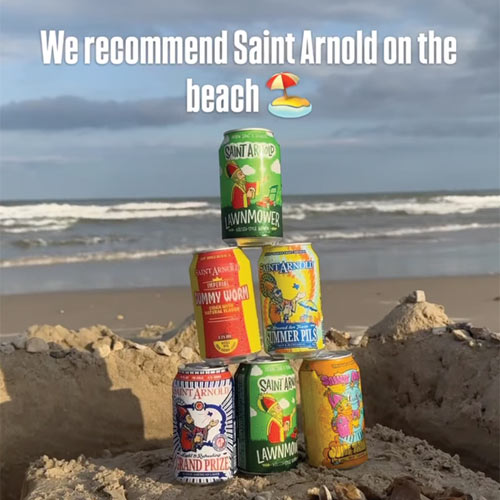
SG: You went from throwing darts in the early days to a much more intentional strategy. What’s stayed consistent, and what’s changed?
LA: I think one thing that has been consistent throughout is that we’ve always tried to be friendly and approachable. That is our brand. We want to be a place for everyone, a beer for everyone, and we want our social media to reflect that. Very friendly, very upbeat. We’re not doing a lot of snarky type stuff. Our responses are pretty upbeat. I don’t know if that came by accident or if it was just a natural thing from the start, but it’s always been there.
What’s changed is the need to be more intentional. Years ago, the algorithm was linear. You’d post something and most of your followers would see it. I did a presentation once where I asked our Facebook and Twitter audiences what new beer style they’d want to see—at the beginning of the presentation. Then we went and did the talk, came back, and there were hundreds of responses on just that one question. You just don’t get that anymore.
We have 103,000 Instagram followers right now, and sometimes a post gets 2,000 views. That’s a small fraction. So you have to be more intentional with what you’re creating.
SG: What does that intention look like in practice?
LA: We try to do two things at once. On one hand, we want well-staged, well-lit, beautiful shots. On the other hand, we want to be able to do the ridiculous trending audio and video content too. Both, as long as they’re done in a particular way. We don’t need an ultra-curated feed where it’s only staged photography. But we can also do the dumb, trending video things—as long as it still looks good and feels friendly and welcoming.
I think you can appeal to different people that way. Sometimes something really resonates one week and something else resonates another week. You don’t always know.
We also post a lot more than most people. We average somewhere in the high 40s to 50 posts per month. When people tell me I should post less, I always say: prove it. If there’s data to support that we’ll do better posting less, I’m willing to do that. I just haven’t seen it yet.
The Internal Audience Nobody Talks About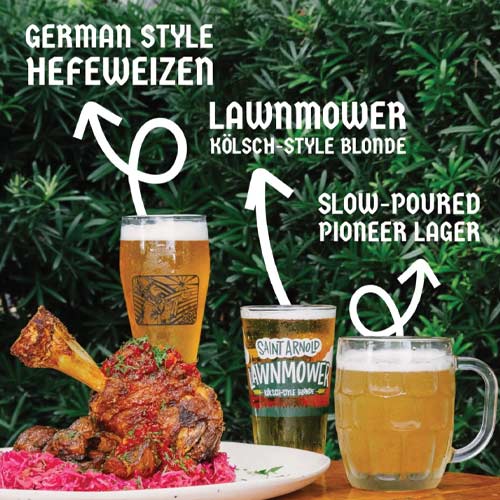
SG: You mentioned that every employee sees everything you produce on social. Can you say more about that?
LA: It’s something people don’t always think about. If a sales rep goes out and visits an account, we’re not personally seeing that. We don’t see every table a server is taking care of in the beer garden. We don’t see every packaging run. But everyone internally and externally sees what we produce on social. So all eyes are on us at all times.
That means if you misspell something in a graphic, it’s amplified. Our people inside are rightfully going to be the most critical of what we’re doing. And that creates real pressure, but also real purpose. I want every department represented. If you work in sales, I want you to see our brands being talked about out in the market. If you work in the beer garden, I want you to see that we’re trying to help promote what you do. That internal visibility is part of why we take it seriously.
Being a Place for EveryoneSG: When I look at your feed, it’s colorful, it’s upbeat—it really captures a vibe. Would you say it reflects what Saint Arnold is actually like as a place?
LA: It means our beer garden should be the kind of place where you can come if you’re a beer drinker—obviously—but also where your grandma can celebrate her birthday even if she hasn’t had a drink in 40 years and feel completely comfortable. Families. Kids. Adults who want to feel comfortable too. Everything we do on the service side is intentional about that, and we want to reflect it on the social side so people see it before they ever walk in.
Houston is one of the most diverse cities in the country, and I don’t think people really realize that. We want our social media to reflect that too. All types. You should feel as comfortable having our root beer or orange soda or hop water as you do having one of our award-winning traditional beer styles. We’re one of the most award-winning breweries in the South at the World Beer Cup and Great American Beer Festival, and we try to show that excellence on social too, but not at the expense of everything else we are.
And nothing we do is made up for social media. If we’re doing a food shoot, it comes right out of the kitchen. We don’t have a food stylist. It should look excellent and taste excellent when people actually get here.
The TV Station Mindset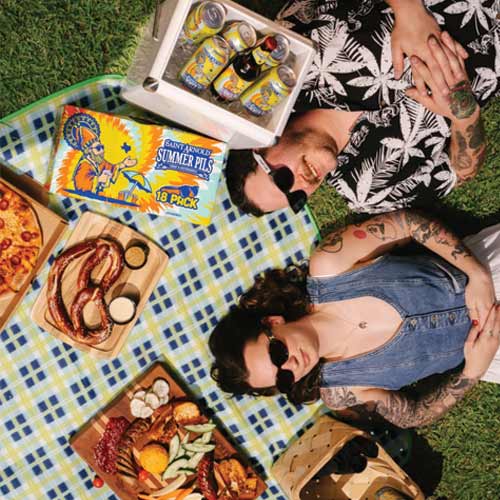
SG: How do you think about what goes on the feed? With 40 to 50 posts a month, how does your team stay organized?
LA: At the end of each month I go through and categorize everything—how many brand-building posts, how many beer garden posts, how many on-premise event posts, how many outside event posts. That kind of audit helps keep us centered. Because the easiest thing is to just run down to the beer garden and take a picture of something quick. And sometimes you do that. But we want a really good mix.
It’s partly because of my background as a TV broadcaster, but I try to tell whoever’s in that chair: cover it like you’re a local TV station covering their community. They do news, weather, sports. Under news they’re doing community events, local government, all of it. Your job is the same—covering every aspect of the company.
Advice for the Taproom Doing This AloneSG: For a brewery that doesn’t have a dedicated team—maybe it’s the taproom manager posting between pours—what’s the one thing you’d want them to hear?
LA: Batch your content. I know our team is sick of hearing me say it, but it’s the thing that makes this manageable. You don’t have to set up a shoot every single day. Think about it slightly in advance. Say to yourself: I need to get these six things done this week. And then do them all at once. Take all your shots at once. Plan it out.
What I would say to an owner: give that person six hours a week to do this. If you force them to generate content in between pouring beers, that’s what it’s going to look like. And if you have 15 people come through your taproom on a slow Tuesday, but you posted about it—look at your views. I guarantee more people saw that post than walked through your door that day. Those are the people you touched on social. Do you want that to be something completely throwaway, or do you want it to be something that makes someone want to come back?
The other thing I’ll say: don’t post just to post. If you’re putting out content with no intentionality behind it, it may end up looking worse than if you’d done nothing at all. There are so many free tutorials out there to help people do this better. Start there. Start with intention.
The TakeawayOne of the things that stuck with me most from this conversation is something Lennie said early on: whoever operates your social media has the loudest voice in the company. Most breweries think about social media as a visibility tool, a way to reach their audience. Saint Arnold has taken it a step further by using that visibility to improve morale by making their employees feel seen and supported through what they post. Spotlighting employees on social shows them that what they do matters and it’s part of the brewery’s story.
I also loved how Lennie thinks about their social as a TV station, covering every aspect of the company the way a local news team covers a community. I’ve heard someone say that journalists make some of the best social media managers. They both have the same instinct: find the story, cover the beat, show up for your audience consistently.
Nearly 20 years ago, Lennie walked into an owner’s office and asked if he could try to figure out how to make a MySpace page. Nobody knew what they were doing then. What Saint Arnold has built since is the result of staying curious, staying consistent, and never treating the work as something that can be phoned in.
Was this article helpful?
YesNo
| # | Наименование новости | Тональность | Информативность | Дата публикации |
|---|---|---|---|---|
| 1 | What Firestone Walker Brewing Company Can Teach Every Brewery About Social Media | 0 | 6.41 | 10-08-2026 |
| 2 | A Digital Health Check for Your Brewery | 0 | 7.4 | 15-07-2026 |
| 3 | Rising to the Occasion: Positioning NA Beer | 0 | 9.9 | 28-05-2026 |
| 4 | Handling and Filling Beer Growlers | 0 | 9.81 | 01-02-2026 |
| 5 | How Glass Gives You an Advantage | 0 | 8.18 | 23-04-2026 |
| 6 | Best Practices for Cleaning Your Draught System | 0 | 12.16 | 02-08-2024 |
| 7 | The powerful branding trick Guinness, Corona, and Spotify all share | 0 | 9.01 | 29-07-2026 |
| 8 | Clean Up Your Act! Safe CIP Practices | 0 | 7.4 | 09-08-2024 |
| 9 | Social media management for startups: A complete guide | 0 | 11.83 | 24-07-2026 |
| 10 | How to build a cross-network brand monitoring strategy on social | 0 | 12.31 | 09-07-2026 |