Просмотр новости
Найдите то, что Вас интересует
 Спутники
 РН
РН SpaceX
 Роскосмос
 NASA
NASA
СпутникиРНSpaceXРоскосмосNASALocal wisdom-based learning can connect academic knowledge with students’ cultural experiences, yet evidence concerning its implementation, contributions, contextual conditions, and methodological strength remains fragmented. This systematic literature review identified implementation patterns, examined contributions to conceptual understanding and character development, analyzed contextual factors, and determined research gaps. Following PRISMA 2020, searches of Scopus, Google Scholar, and Crossref for studies published between 2021 and 2026 yielded 1.209 records, of which 47 were analyzed using thematic synthesis. Five implementation patterns emerged: integrating cultural values into subject content, developing teaching materials, using innovative media, applying active-contextual learning, and utilizing local environments and communities as learning resources. The reviewed studies indicated potential contributions to conceptual understanding, literacy, critical thinking, engagement, value reflection, cultural identity, and ecological responsibility, particularly when local wisdom was combined with inquiry, problem-based learning, ethnoscience, contextual learning, and outdoor learning. These contributions depended on culture–content alignment, teachers’ cultural-pedagogical capacity, community involvement, resource and technology access, and assessment quality. However, the dominance of development studies, descriptive research, and short-term interventions limited causal and long-term conclusions. This review proposes the Local Wisdom Pedagogical Mediation Model, positioning pedagogical transformation and student meaning-making as mediators, teacher capacity as the primary moderator, and community involvement as an epistemic validator. Future research requires multisite, longitudinal, and mixed-methods designs with multidimensional assessments.
Twenty-first-century education is no longer concerned solely with academic knowledge. It also aims to develop critical thinking, creativity, communication, collaboration, digital literacy, and problem-solving skills (Antoninis et al., 2023; Arjaya et al., 2024). Educational success further depends on students’ ability to build a sense of identity, understand diversity, participate responsibly in social life, and make ethical and sustainable decisions (Kaswandi et al., 2025; Nurhasan & Bunyamin, 2025). Yet the globalization of education can make learning increasingly standardized and disconnected from students’ sociocultural contexts. The dominance of universal perspectives in curricula may marginalize local knowledge, values, and experiences that are relevant to students’ lives (Arjaya et al., 2024; Nugraha, 2026; Susanto et al., 2026). Without meaningful integration of local contexts, learning can become abstract, less relevant, and detached from the communities in which students live (Fathurrochman et al., 2025).
Education therefore serves two complementary goals: developing conceptual understanding and cultivating character. Conceptual understanding extends beyond recalling information; it includes recognizing relationships among concepts, explaining mechanisms, applying knowledge in unfamiliar situations, and using it to solve problems (Dewi et al., 2026; Pamungkas et al., 2023). Instruction that relies too heavily on memorization tends to produce superficial understanding and provides limited support for higher-order thinking (Pamungkas et al., 2023). At the same time, education is expected to foster responsibility, tolerance, cooperation, social concern, and environmental awareness (Padmadewi et al., 2025; Sianturi et al., 2022). Conceptual understanding and character should therefore not be treated as entirely separate educational outcomes. Meaningful learning experiences should enable students to understand concepts while reflecting on the values, social consequences, and responsibilities associated with that knowledge (Kaswandi et al., 2025; Nurhasan & Bunyamin, 2025; Rosyidah et al., 2025).
One approach that can connect these two goals is local wisdom-based learning. Local wisdom encompasses the knowledge, values, norms, social practices, and collective experiences that communities develop through long-term interaction with their social and ecological environments (Asteria et al., 2022; Budiman & Oue, 2025). It is not merely a cultural inheritance; it also embodies principles of environmental sustainability, social cohesion, community resilience, and cultural identity formation (Asteria et al., 2022; Kaswandi et al., 2025; Nurhasan & Bunyamin, 2025). In education, local wisdom can serve as a source of knowledge, a context for problems, a medium of representation, and a foundation for values-based reflection. It can be integrated through teaching materials, cultural narratives and practices, local environments, inquiry activities, and collaboration with communities (Fathurrochman et al., 2025; Rosyidah et al., 2025). Through these processes, abstract academic concepts can be connected to familiar phenomena, making learning more relevant and meaningful to students (Arjaya et al., 2024; Dewi et al., 2026).
This approach is particularly relevant in Indonesia, a country characterized by considerable cultural, linguistic, environmental, and epistemic diversity. That diversity offers contextual learning resources that can connect academic knowledge with students’ lived experiences (Arjaya et al., 2024; Fathurrochman et al., 2025). The implementation of the Merdeka Curriculum and the strengthening of the Pancasila Student Profile also create space for learning that values local identity while developing global competencies (Rosyidah et al., 2025; Susanto et al., 2026). However, simply including cultural elements in instructional materials does not guarantee meaningful learning. Local wisdom may remain a decorative illustration when it lacks a clear conceptual relationship with the subject matter or is not transformed into learning activities that promote inquiry, problem solving, and reflection on values (Dewi et al., 2026; Fathurrochman et al., 2025). The quality of this approach should therefore be judged by how local knowledge is pedagogically transformed, not merely by the presence of cultural symbols or content in teaching materials.
Technological development has broadened the ways local wisdom-based learning can be implemented through e-modules, augmented reality, gamification, animation, and interactive multimedia (Pattaufi et al., 2025; Sapta et al., 2025; Redhana et al., 2025). These media can expand access, increase appeal, and support student engagement with cultural knowledge (Pattaufi et al., 2025; Sapta et al., 2025). Technology, however, does not automatically produce deeper conceptual understanding or the internalization of values. Without sound pedagogical design, digitalization may reduce complex cultural practices to isolated images, facts, or interactive activities detached from their social contexts (Redhana et al., 2025). Implementation is also constrained by limited teacher capacity, a lack of practical guidance, weak school-community collaboration, and unequal access to culturally grounded learning resources (Arjaya et al., 2024; Fathurrochman et al., 2025; Suwono et al., 2026). The contribution of local wisdom must therefore be understood through its pedagogical mechanisms and conditions of implementation rather than assumed to occur automatically.
Research on local wisdom-based learning in Indonesia has expanded across grade levels, subject areas, regions, and forms of intervention. Studies have reported contributions to learning outcomes, conceptual understanding, literacy, critical thinking, interest, and student engagement (Anwar et al., 2024; Pamungkas et al., 2023; Rosyidah et al., 2025; Wulandari et al., 2025). In the domain of character, this approach has been associated with stronger cultural identity, social responsibility, tolerance, mutual cooperation, and environmental concern (Asteria et al., 2022; Kaswandi et al., 2025; Padmadewi et al., 2025; Sianturi et al., 2022). Although these findings are generally positive, the literature remains fragmented by cultural setting, subject, educational level, region, and intervention type, making it difficult to explain the overall pattern of contribution (Arjaya et al., 2024; Muhammad et al., 2022). Previous studies have also tended to examine cognitive and character outcomes separately, even though both may develop through the same learning experience (Pamungkas et al., 2023; Rosyidah et al., 2025).
A more fundamental gap concerns the limited explanation of how local wisdom is transformed into a learning experience, which conditions strengthen or weaken that process, and how far the available evidence supports claims of effectiveness. Product-development studies, classroom action research, short-term experiments, descriptive studies, and conceptual reviews do not provide equivalent levels of evidence. Product validity or feasibility, for example, is not the same as instructional effectiveness, while higher post-intervention scores do not demonstrate retention, conceptual transfer, or lasting character change. When these distinctions are overlooked, product validation, student perceptions, improved achievement, conceptual understanding, and character change may be treated as evidence with equal inferential strength (Fathurrochman et al., 2025; Muhammad et al., 2022; Rosyidah et al., 2025). The literature also provides insufficient explanation of when cultural integration produces meaningful learning, for which students it works, and when it becomes superficial or ineffective.
In response to these gaps, this study uses a systematic literature review to: (1) identify the main patterns of local wisdom-based learning implementation; (2) analyze evidence of its contribution to students’ conceptual understanding and character development; (3) identify contextual factors that support or constrain those contributions; and (4) formulate research gaps and directions for future inquiry. The review’s primary contribution is the integration of cognitive and character outcomes within a single explanatory framework, accompanied by a critical assessment of the strength of evidence underlying each claim. Drawing on cross-study synthesis, this review develops the Local Wisdom Pedagogical Mediation Model, which positions pedagogical transformation and student meaning-making as mediating processes, teachers’ cultural-pedagogical capacity as the primary moderator, and curriculum alignment, community validation, media quality, and assessment as conditions of implementation. The review therefore goes beyond mapping whether local wisdom-based learning is reported to support understanding and character. It explains how those contributions may emerge, under what conditions they are most likely, and why cultural integration may fail to produce the intended change.
This study employed a systematic literature review (SLR) guided by the Preferred Reporting Items for Systematic Reviews and Meta-Analyses (PRISMA) 2020. The review identified and synthesized research on the implementation of local wisdom-based learning to support students’ conceptual understanding and character development in Indonesia. The synthesis addressed four research questions concerning implementation patterns, contributions to conceptual understanding and character, contextual influences on implementation, and research gaps and future directions, as presented in Table 1.
The literature search covered Scopus, Google Scholar, and Crossref. Articles were limited to the 2021–2026 period and retrieved using combinations of the Boolean operators AND and OR. Search terms included local wisdom-based learning, local culture-based learning, local wisdom in education, local wisdom and students’ understanding, local wisdom and learning outcomes, local wisdom and student character, character education based on local wisdom, “kearifan lokal,” “pembelajaran berbasis kearifan lokal,” “budaya lokal dalam pembelajaran,” “pendidikan karakter berbasis kearifan lokal,” “hasil belajar,” “pemahaman siswa,” and “karakter siswa.” Search strings were adjusted to the search functions of each database.
Inclusion and exclusion criteria were established before screening to ensure consistency. Eligible studies were journal articles published between 2021 and 2026 that examined local wisdom-based learning in Indonesian educational settings, addressed student understanding, learning outcomes, literacy, critical thinking, or character, and were available in full text with sufficient metadata. The complete criteria are presented in Table 2.
Study selection followed the PRISMA 2020 stages of identification, screening, eligibility assessment, and inclusion. The initial search identified 1,209 records: 647 from Google Scholar, 326 from Scopus, and 236 from Crossref. After 46 duplicates were removed, 1,163 records were screened by title and abstract. At this stage, 976 records were excluded because they did not match the review focus. The full texts of 187 articles were then assessed, and 140 were excluded for failing to meet the eligibility criteria. The final synthesis therefore included 47 articles. Figure 1 presents the selection process.
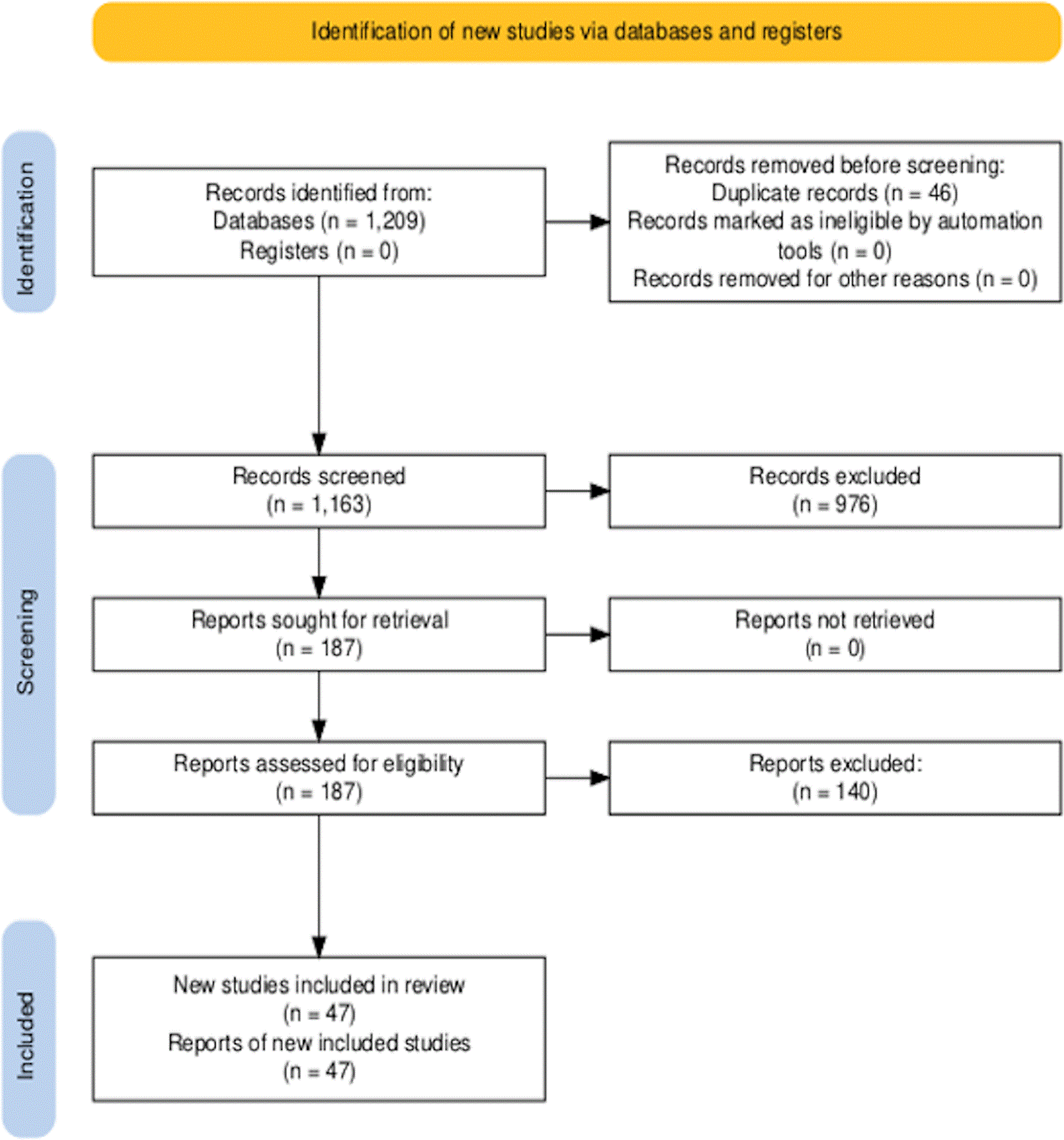
The initial search identified 1,209 records from Google Scholar, Scopus, and Crossref. After 46 duplicate records were removed, 1,163 records were screened by title and abstract, of which 976 were excluded. A total of 187 full-text articles were assessed for eligibility, and 140 were excluded because they did not meet the eligibility criteria. The final thematic synthesis included 47 articles. PRISMA, Preferred Reporting Items for Systematic Reviews and Meta-Analyses.
Each included article was assigned a code from A1 to A47 and extracted using a form that recorded publication details, study characteristics and methods, educational level, form of local wisdom, instructional approach, contributions to understanding and character, implementation challenges, and research recommendations. Article quality was reviewed in terms of the clarity of the study purpose, appropriateness of the method, relevance of the findings to the review focus, and completeness of the scientific information.
The data were analyzed using thematic synthesis. Analysis began with open coding of the findings from each article, followed by axial coding to group similar codes into broader categories. These categories were then developed into analytical themes through cross-study comparison to identify patterns, similarities, differences, and research gaps. The synthesis was used to answer the four research questions and formulate implications and future research directions.
General Characteristics of the Reviewed Articles
This section presents the general characteristics of the articles included in the systematic literature review. These characteristics include article identity, geographic distribution, publication year, citation count, journal indexing status, research method, and educational level. Describing these features establishes the scope and evidentiary profile of the literature corpus before examining implementation patterns, contributions to student understanding and character, implementation challenges, and future research opportunities.
Following the selection process, 47 journal articles met the inclusion criteria and served as the primary data sources for the synthesis. Published between 2021 and 2026, these studies examined local wisdom-based learning in Indonesian educational contexts. The distribution and key characteristics of the included studies are presented in Table 3. Overall, the reviewed literature positioned local wisdom not only as cultural content but also as a pedagogical resource for connecting academic concepts with lived experience, cultural identity, social values, and student character development.
Geographically, the studies were conducted across Sumatra, Java, Bali, Nusa Tenggara, Kalimantan, Sulawesi, Maluku, and Papua. As shown in Figure 2, the geographic coverage was broad, although the distribution remained uneven.
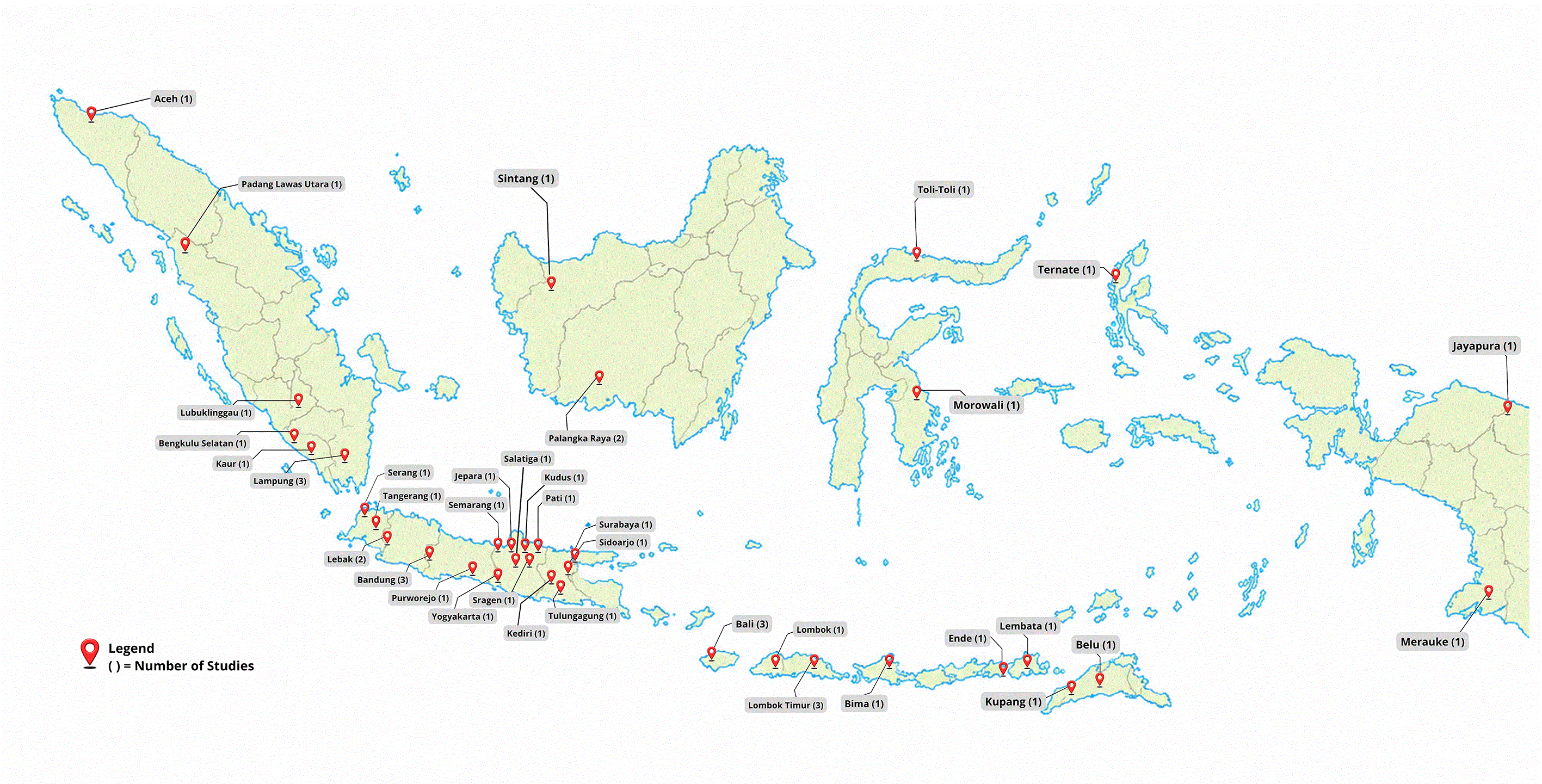
The map shows the geographic distribution of the 47 articles included in the review. The reviewed studies represented locations across Sumatra, Java, Bali, Nusa Tenggara, Kalimantan, Sulawesi, Maluku, and Papua. Red markers and accompanying labels indicate the locations represented in the reviewed studies.
The yearly distribution in Figure 3 shows that 4 articles were published in 2021, 7 in 2022, 8 in 2023, 6 in 2024, 20 in 2025, and 2 in 2026. Publication output peaked in 2025, while the 2026 figure represents only the articles available at the time of the search.
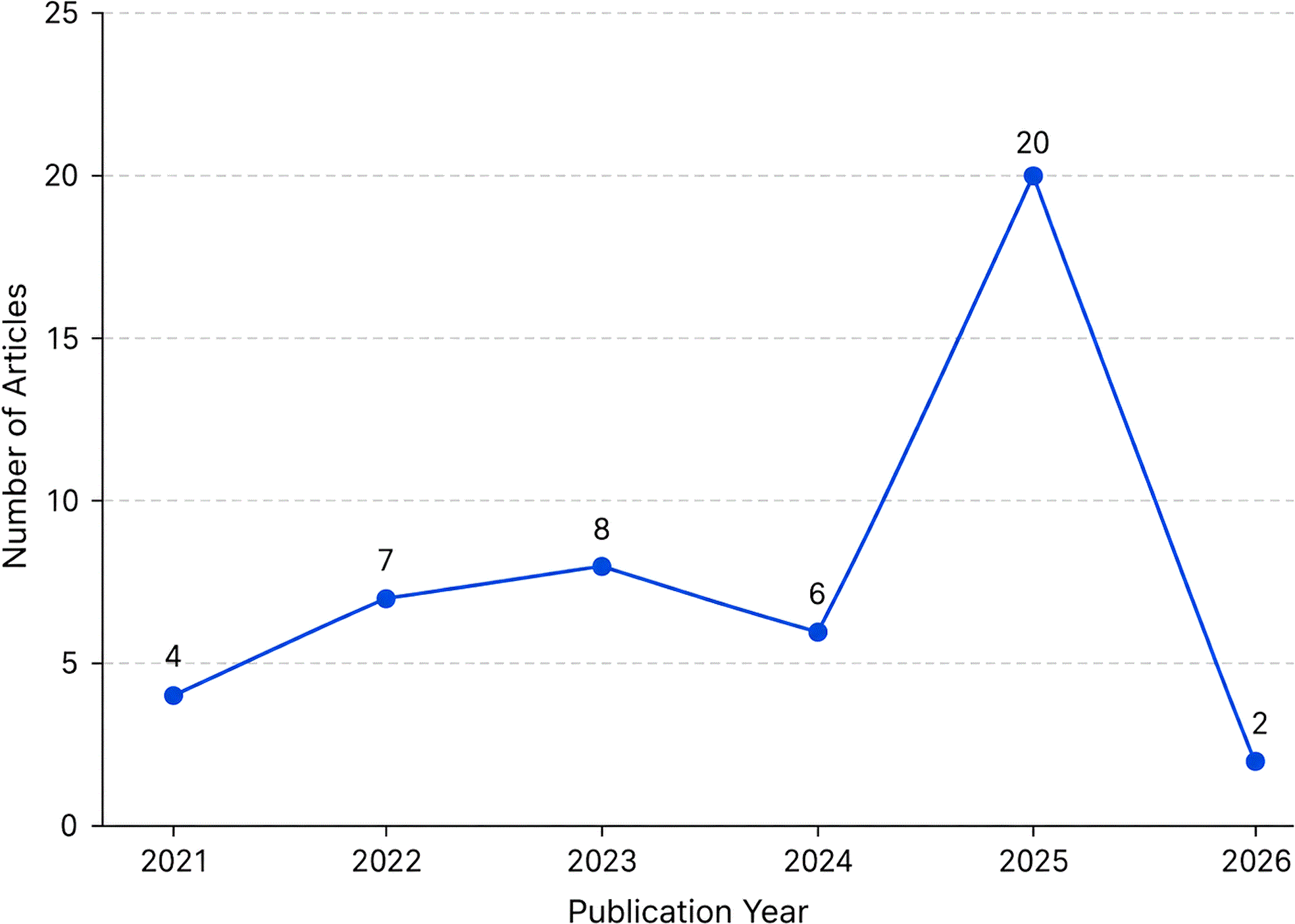
The figure shows the annual distribution of the 47 articles included in the review. The distribution comprised 4 articles published in 2021, 7 in 2022, 8 in 2023, 6 in 2024, 20 in 2025, and 2 in 2026. The number reported for 2026 represents only the articles available at the time the literature search was conducted.
As shown in Figure 4, the most highly cited article was A22 by Ramdani et al. (2021), with 436 citations, followed by A24 by Tohri et al. (2022), with 248 citations, and A23 by Bulkani et al. (2022), with 125 citations. The remaining articles in the top ten were A1 with 93 citations; A2 and A39 with 58 each; A25 with 54; A3 with 48; A4 with 43; and A5 with 38. Citation counts were used to indicate the academic visibility of articles within the corpus, not as a direct measure of methodological quality.
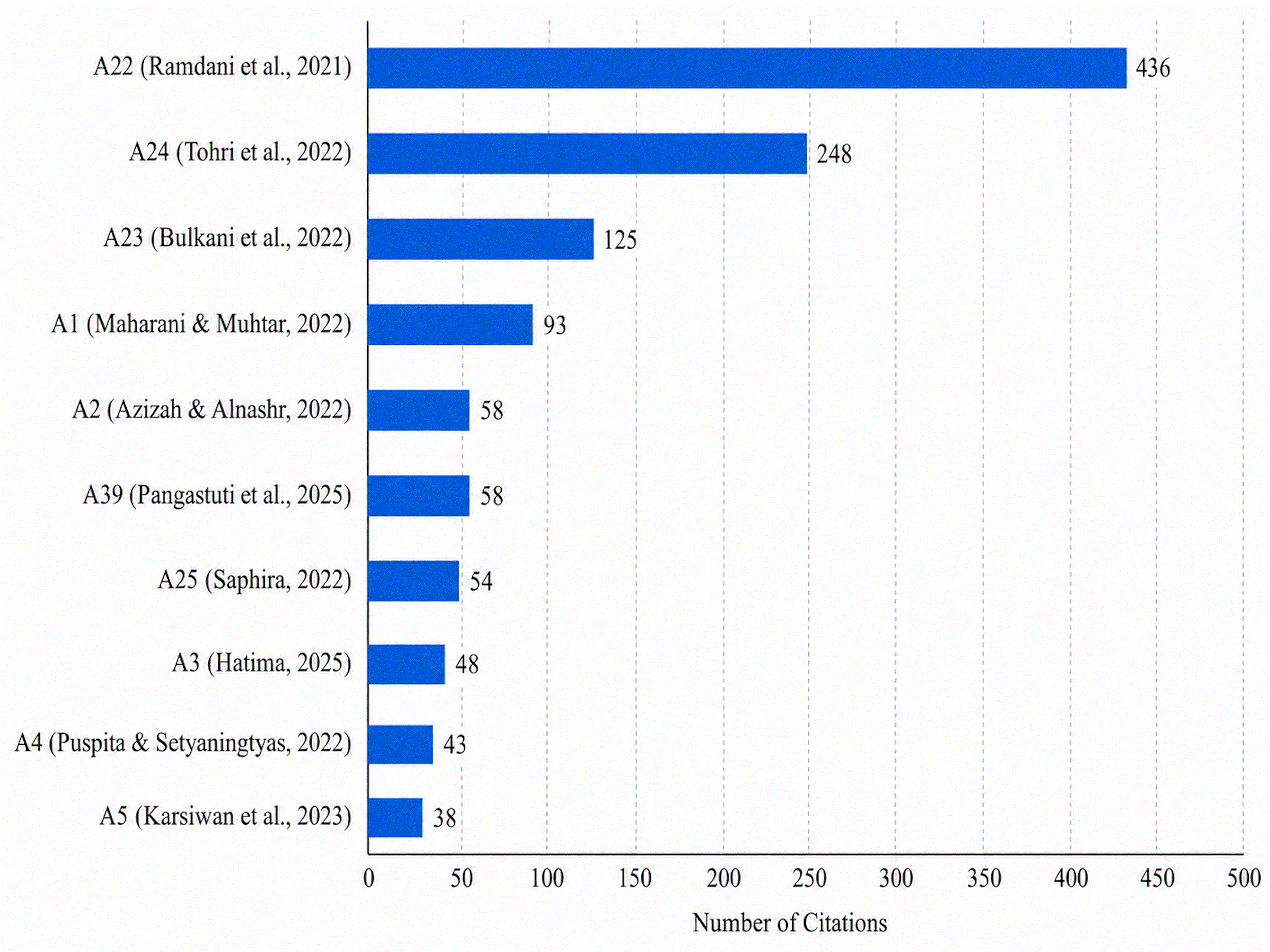
The horizontal bars show the citation counts of the 10 most highly cited articles included in the review. Article A22 by Ramdani et al. (2021) had the highest citation count, followed by A24 by Tohri et al. (2022) and A23 by Bulkani et al. (2022). Citation counts indicate the academic visibility of the articles and should not be interpreted as direct measures of methodological quality.
Figure 5 shows that 38 articles (81%) were published in SINTA-indexed journals, 5 (11%) in Scopus-indexed journals, 2 (4%) in Garuda-indexed journals, 1 (2%) in a journal indexed by both Scopus and Web of Science, and 1 (2%) in a journal indexed by both Scopus and SINTA. The corpus was therefore dominated by articles published in nationally indexed SINTA journals.
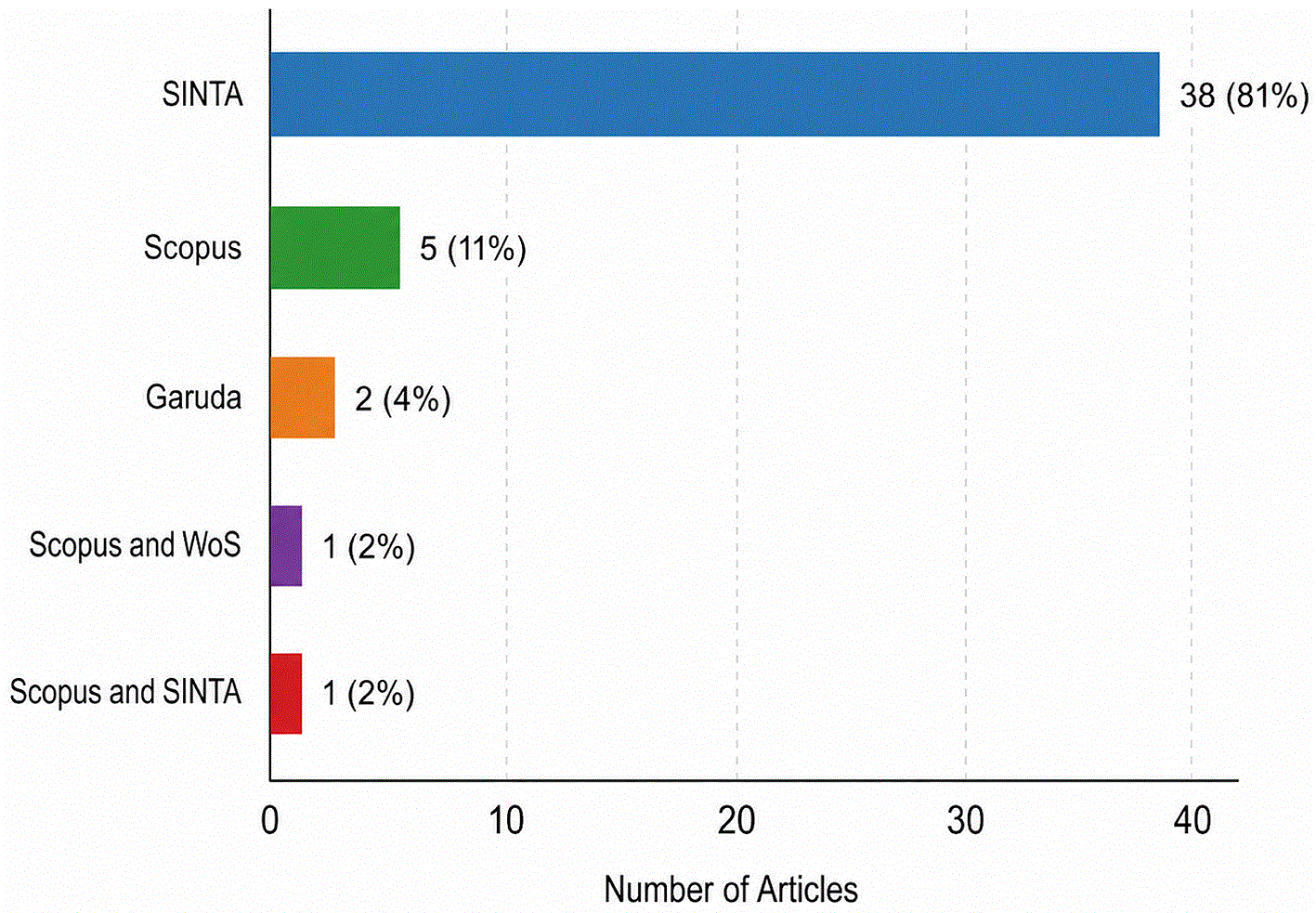
The figure shows the journal indexing status of the 47 articles included in the review. The distribution comprised 38 articles published in SINTA-indexed journals, 5 in Scopus-indexed journals, 2 in Garuda-indexed journals, 1 in a journal indexed by both Scopus and Web of Science, and 1 in a journal indexed by both Scopus and SINTA.
As shown in Figure 6, development research was the most frequently used method, accounting for 19 articles (40%). It was followed by qualitative research with 15 articles (32%), quantitative research with 6 (13%), literature or conceptual studies with 4 (9%), and action or implementation research with 3 (6%). Together, development and qualitative studies represented 72% of the corpus.
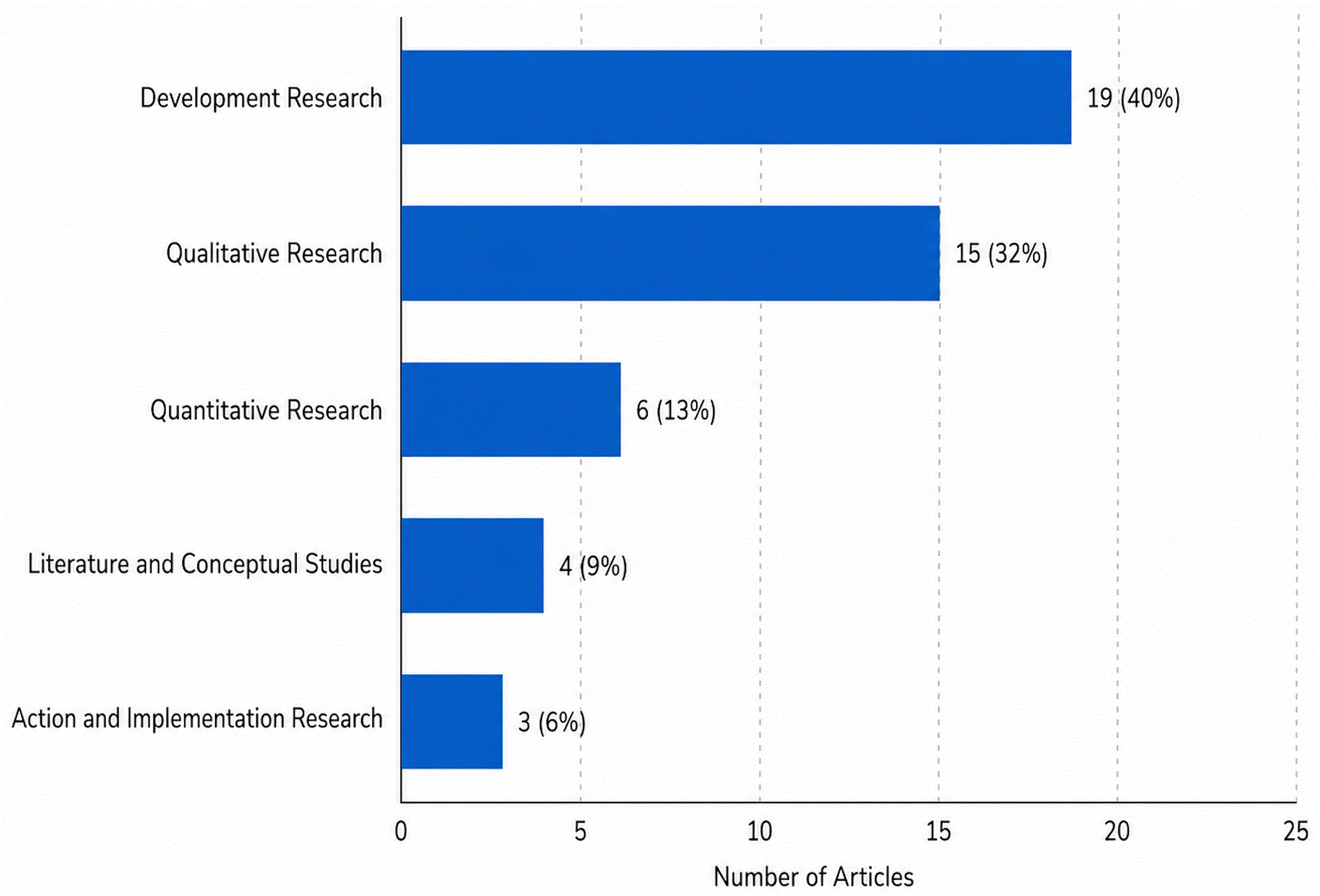
The figure shows the methodological distribution of the 47 articles included in the review. Development research accounted for 19 articles, qualitative research for 15 articles, quantitative research for 6 articles, literature or conceptual studies for 4 articles, and action or implementation research for 3 articles.
Figure 7 shows that 27 articles (58%) focused on elementary schools or Islamic elementary schools. Eleven articles (23%) addressed senior high schools, vocational high schools, or Islamic senior high schools; 7 (15%) addressed junior high schools or Islamic junior high schools; 1 (2%) addressed special education; and 1 (2%) covered multiple educational levels. This distribution demonstrates the dominance of elementary-level research and the limited attention given to special education and cross-level studies.
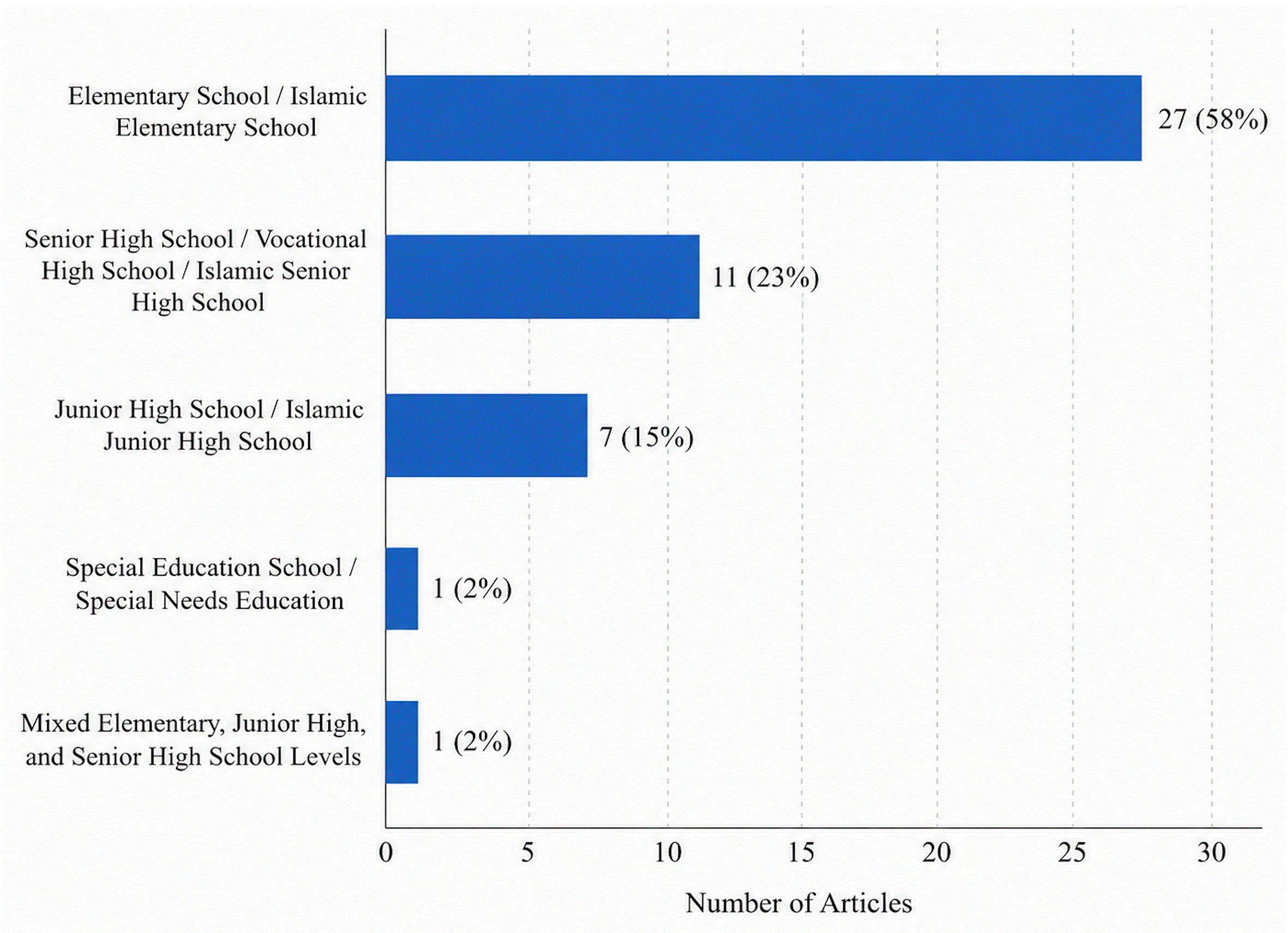
The figure shows the educational levels examined in the 47 articles included in the review. The distribution comprised 27 articles focusing on elementary schools or Islamic elementary schools, 11 on senior high schools, vocational high schools, or Islamic senior high schools, 7 on junior high schools or Islamic junior high schools, 1 on special education, and 1 on multiple educational levels.
Overall, the corpus was dominated by SINTA-indexed publications, development and qualitative research, and elementary-school settings. Publication output peaked in 2025, but geographic coverage, research design, and educational level remained unevenly distributed. These characteristics provide the context for interpreting implementation patterns, reported contributions, contextual factors, and research gaps in the following synthesis.
The synthesis identified five major patterns of local wisdom-based learning in Indonesia: integrating local cultural values into subject content, developing teaching materials, creating innovative learning media, applying active and contextual instructional models, and using local environments and communities as learning resources. These patterns show that local wisdom is more than supplementary content. It functions as a source of knowledge, a pedagogical context, a learning medium, and a value system that shapes students’ learning experiences.
The five patterns reflect how Indonesian schools and researchers translate culture into educational practice. The most prominent pattern was the development of teaching materials and learning media, largely because many studies used Research and Development designs. Such designs allow researchers to produce concrete products, including modules, e-modules, flipbooks, pop-up books, storybooks, multimedia, animations, and learning applications. These products are easier to develop, validate, and report in journal articles than long-term pedagogical change, which requires sustained intervention in teaching practice, school culture, assessment, and community engagement.
Table 4 shows that local wisdom-based learning in Indonesia intersects with several global educational traditions. Culturally responsive pedagogy emphasizes connecting instruction with students’ cultural identities. Place-based education treats local environments and communities as learning spaces. Funds of knowledge recognizes family and community knowledge as educational resources. Indigenous knowledge systems emphasize the legitimacy of local epistemologies and Indigenous knowledge.
Although Indonesian local wisdom-based learning overlaps with all of these traditions, it has a distinctive profile. Its defining feature is the integration of cultural identity, moral values, ecological knowledge, and national curriculum goals, particularly within the Pancasila Student Profile. It should therefore not be understood simply as adding culture to a lesson. A more accurate description is contextual moral-epistemic pedagogy. It is moral because local wisdom carries values, ethics, social responsibility, and environmental concern. It is epistemic because it reflects how communities understand nature, history, language, technology, and social life. It is contextual because learning begins with the lived experiences of students and their communities.
The dominance of elementary-school research is also meaningful. Elementary education offers greater thematic flexibility, places stronger emphasis on character, and is closely connected to stories, games, traditions, and local environments. At the junior and senior high school levels, disciplinary boundaries are more explicit. Integrating local wisdom therefore requires a clearer conceptual fit with fields such as science, chemistry, mathematics, economics, history, or language. This helps explain why elementary-school research dominates while studies in junior and senior high schools, special education, and vocational education remain comparatively limited.
Taken together, the findings for RQ1 indicate that local wisdom-based learning in Indonesia is moving from cultural inclusion toward pedagogical transformation. That transformation, however, is uneven. The development of learning products is well established, whereas research on changes in teacher practice, co-design with communities, character assessment, and implementation across contexts remains limited.
The reviewed studies generally reported that local wisdom-based learning contributes to conceptual understanding, learning outcomes, literacy, critical thinking, learning interest, student engagement, and character development. Claims of effectiveness, however, require careful interpretation because the studies did not have equal methodological strength. Some used experiments, classroom action research, or direct instructional implementation, while others used R&D, qualitative description, conceptual analysis, preliminary surveys, or literature reviews. The term “effective” therefore cannot be applied uniformly across the corpus. More appropriate wording includes “contributed to,” “was associated with,” “was reported to influence,” or “showed an observed effect.”
The clearest contribution concerned conceptual accessibility. Local wisdom helped students approach abstract concepts through cultural practices, ecological phenomena, traditional technologies, rituals, games, folklore, and everyday experience. This mechanism was particularly evident in science, ethnoscience, chemistry, biodiversity, environmental pollution, temperature, heat, expansion, and contextual mathematics. Students did not encounter academic terms only in textbooks; they connected concepts with things they had seen, experienced, and recognized in their communities.
Table 5 indicates that local wisdom-based learning was most compelling when local knowledge was genuinely aligned with academic concepts. In science and ethnoscience, community practices, natural phenomena, and ecological knowledge became entry points for understanding scientific ideas. In mathematics, local contexts made abstract concepts more accessible through concrete situations. In Indonesian language and literature, folklore and local narratives supported students’ understanding of text structure, cultural meaning, and moral values.
Character-related contributions followed a different pattern. In character education, local wisdom did more than support conceptual understanding; it helped shape identity, collective memory, belonging, social responsibility, and environmental concern. These outcomes, however, are more difficult to measure than conceptual understanding. Concepts can be assessed through cognitive tests, whereas character requires behavioral observation, attitude rubrics, student reflection, interviews, and long-term measurement. Claims about character development must therefore be stated proportionately.
The synthesis also revealed a tension that warrants critical attention. Most articles portrayed local wisdom as a source of positive values, yet not every cultural practice can be incorporated into education without selection and critical reflection. Some traditions may need to be reinterpreted to align with inclusivity, gender equality, scientific reasoning, children’s rights, and democratic values. Romanticizing culture becomes a risk when local wisdom is assumed to be inherently good, harmonious, and free of conflict.
Local wisdom-based learning should therefore not present culture as an unquestionable truth. Teachers need to help students understand, appreciate, examine, and reconstruct cultural values in relation to contemporary educational needs. This is where the approach connects with international discussions of culturally sustaining pedagogy and Indigenous education. Culture is not only preserved; it is also negotiated, interpreted, and critically renewed.
The answer to RQ2 is that local wisdom-based learning is frequently reported to make a positive contribution to conceptual understanding and character development. The contribution appears strongest when local wisdom is integrated with active pedagogy, appropriately matched subject concepts, and adequate assessment. The evidence is weaker when studies rely only on product validation, student perceptions, or short-term implementation without measuring behavior or the sustainability of effects.
The synthesis shows that local wisdom-based learning does not automatically improve students’ understanding or character. Its contribution depends heavily on context. Key factors include the alignment between local culture and subject matter, the quality of instructional design, teacher capacity, community involvement, the availability of learning media, access to technology, and assessment quality. This shifts the central question from “Is local wisdom effective?” to “Under what conditions can local wisdom function pedagogically?”
The first enabling factor is the fit between cultural knowledge and subject content. Local wisdom contributes more strongly when it has a clear conceptual relationship with the material being taught. Ecological knowledge is relevant to environmental pollution, biodiversity, conservation, and science education. Traditional practices involving heat, materials, or natural processes can be connected to chemistry and physics. Folklore can support Indonesian language, literature, cultural literacy, and character education. When the relationship between culture and disciplinary concepts is weak, integration becomes superficial and primarily decorative.
The second enabling factor is pedagogical transformation. Local wisdom must be translated into learning activities involving inquiry, problem solving, experimentation, discussion, storytelling, projects, environmental observation, or reflection on values. Without this transformation, culture remains an additional example. It may make a lesson more engaging, but it does not necessarily deepen understanding.
Table 6 identifies teacher capacity as the most important moderator. Teachers do not simply transmit local wisdom; they select, interpret, adapt, and evaluate it. Teachers with strong cultural and pedagogical literacy can connect local practices with disciplinary concepts. Less-prepared teachers may use culture only as an opening story, a visual decoration, or an additional example.
Community involvement also determines the depth of learning. Local wisdom is not merely information stored in books. It is living knowledge held by families, customary leaders, cultural practitioners, ecological practices, oral traditions, and collective memory. When schools do not involve communities, they may appropriate cultural symbols without understanding their meaning. This creates both ethical and epistemic problems and may result in narrow or inaccurate representation.
Technology plays an ambivalent role. E-modules, flipbooks, animation, multimedia, and applications make local wisdom more accessible to digital-age learners. At the same time, digitalization can reduce culture to images, short narratives, or shallow interactive activities. Unequal digital infrastructure may also leave low-resource schools further behind. Digital media grounded in local wisdom should therefore be evaluated not only for visual appeal but also for cultural depth, accessibility, sustainable use, and adaptability for teachers.
The most serious constraint concerns assessment quality. Many studies reported improvements in character, but not all provided strong behavioral evidence. Some relied on expert validation, student responses, or descriptions of values. Such evidence is useful, but it is insufficient to establish long-term character formation. This limitation does not diminish the importance of local wisdom-based learning; rather, it underscores the need for stronger, multilayered assessment instruments.
The answer to RQ3 is that local wisdom-based learning operates through a pedagogical ecosystem. Local wisdom is not a stand-alone solution. It becomes meaningful when supported by content alignment, active instructional design, teacher capacity, community validation, access to resources, and credible assessment.
The synthesis identified four major gaps: conceptual, methodological, practical, and international positioning. Together, these gaps show that the field has moved beyond early exploration but has not yet fully entered a theory-building stage. Many studies have documented forms of local wisdom-based learning, but far fewer have explained its mechanisms, boundary conditions, contradictions, or transferability to broader contexts.
The conceptual gap is the most important. Many studies indicate that local wisdom supports either understanding or character, but few explain the relationship between the two. Conceptual understanding and character are often treated as separate outcomes. In local wisdom-based learning, however, both may grow through the same mechanism: students encounter a culturally meaningful problem, connect it with academic concepts, reflect on its values, and translate that reflection into social or ecological responsibility.
Table 7 suggests that future work should move from mapping reviews toward theory-building reviews. Existing studies have successfully documented diverse forms of local wisdom-based learning. Articles aimed at reputable journals, however, need to provide stronger theoretical explanation. The key question is no longer simply whether local wisdom contributes to learning. More important questions are how the contribution occurs, through which mechanisms, under what conditions, for which groups of students, and at what point cultural integration may fail.
Based on cross-article synthesis, this review proposes the Local Wisdom Pedagogical Mediation Model to explain how local wisdom is transformed into meaningful learning experiences. The model is not presented as a direct empirical finding from every included article; it is a conceptual contribution developed by integrating implementation patterns, reported contributions, contextual factors, and research gaps. It proposes that local wisdom does not directly affect students’ conceptual understanding or character. Instead, its effects are mediated by pedagogical transformation and moderated by teacher capacity, curriculum alignment, community validation, media quality, and assessment.
The model in Figure 8 extends a linear framework that moves directly from local wisdom to learning outcomes. It emphasizes a more dynamic relationship. Teacher capacity acts as a moderator because it determines the quality of integration. Pedagogical transformation serves as a mediator by turning cultural knowledge into learning experiences. Community validation protects cultural integrity and reduces the risk of oversimplification. Student engagement functions as a process mediator because learners must actively connect experience, concepts, and values. Learning outcomes then generate feedback to schools and communities through student projects, cultural documentation, reflection, conservation practices, and locally grounded problem solving.
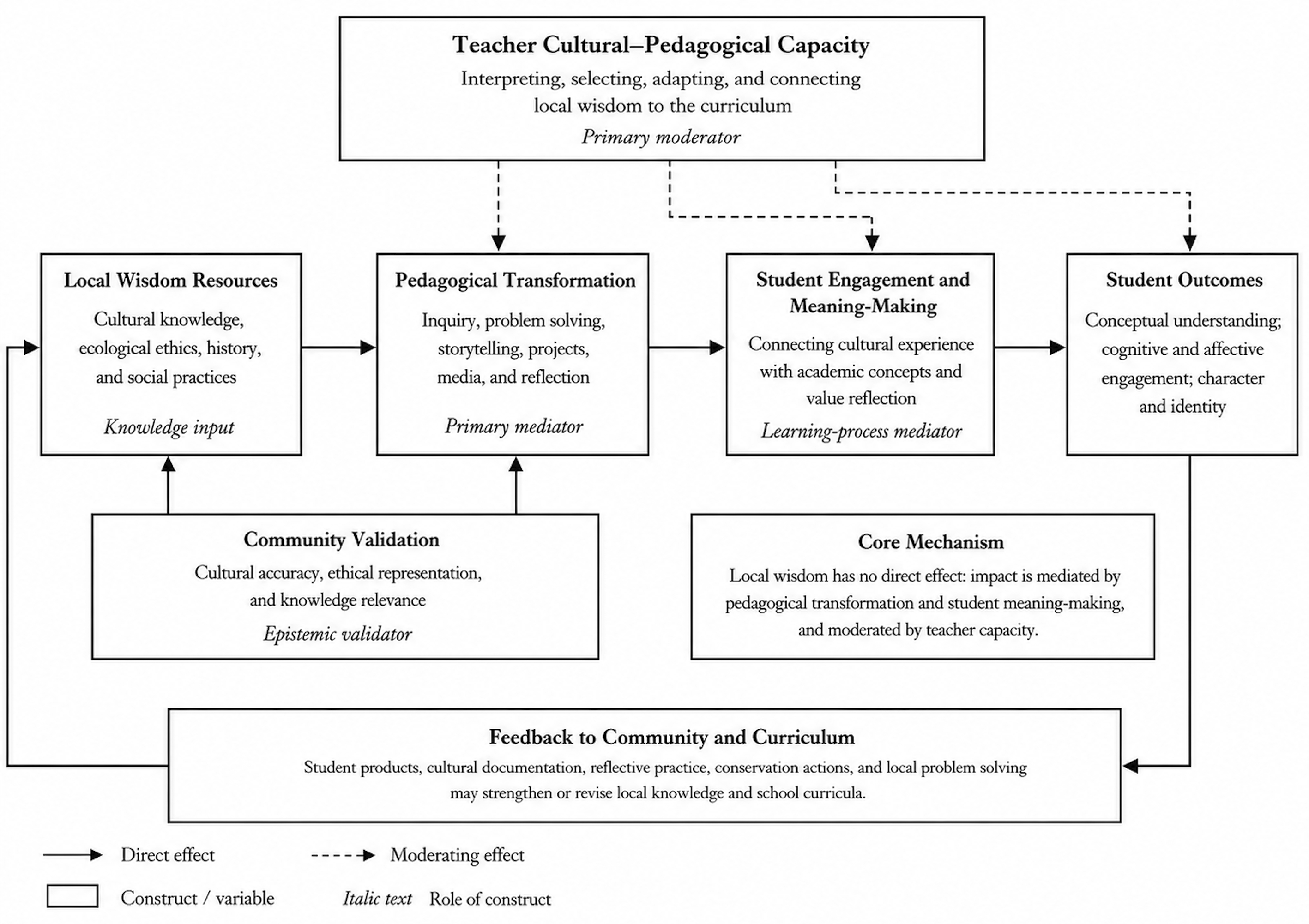
The model shows how local wisdom resources are transformed into meaningful learning experiences through pedagogical transformation and student engagement and meaning-making. Teachers’ cultural-pedagogical capacity functions as the primary moderator, while community involvement serves as an epistemic validator. These processes contribute to students’ conceptual understanding, engagement, character development, and cultural identity. Student products and actions provide feedback to communities and the curriculum through cultural documentation, reflection, conservation practices, and locally grounded problem solving. The model was developed through cross-study synthesis as the conceptual contribution of this review.
The model also clarifies the review’s position in the international literature. Compared with culturally responsive teaching, it gives greater attention to local ecological knowledge and community validation. Compared with place-based education, it adds explicit dimensions of character and identity. Compared with funds of knowledge, it emphasizes curriculum transformation and assessment. Compared with Indigenous education, it reflects a broader Indonesian context in which local wisdom may emerge from Indigenous, ethnic, village, religious, ecological, regional, and everyday community practices.
RQ4 therefore points to the need for a theoretical shift in research on local wisdom-based learning. Future studies should do more than test whether the approach is effective. They should explain how it works, for whom it works, under what conditions it works, when it fails, and how culture can be adapted without being reduced to a superficial or romanticized form.
Overall, the synthesis indicates that local wisdom-based learning has strong potential as a contextual moral-epistemic pedagogy. This potential is realized when cultural knowledge is transformed through teacher expertise, curriculum alignment, community validation, active instructional design, meaningful media, and reflective assessment. The distinctive contribution of the approach lies not in improving conceptual understanding or character development separately, but in connecting knowledge, identity, place, morality, and community within an integrated learning process.
The synthesis of 47 articles identified five patterns of local wisdom-based learning implementation: integrating cultural values into subject areas, developing teaching materials, innovating learning media, applying active and contextual models, and using local environments and communities as learning resources. Local wisdom can therefore function as content, a problem context, a source of knowledge, a representational medium, and a value system. These findings intersect with culture-based learning and culturally responsive teaching, which treat students’ culture, identity, and experience as educational resources (Brown et al., 2021; Matiso, 2024). The distinctiveness of the Indonesian context lies in the breadth of local wisdom, which includes ecological, historical, spiritual, and communal knowledge and therefore serves both as an epistemic resource and an ethical orientation (Linda et al., 2025; Suastra et al., 2021; Tohri et al., 2022).
The five patterns represent different levels of integration. At a superficial level, culture appears as an image, story, or example without changing students’ intellectual activity. At an intermediate level, local elements are packaged in modules, e-modules, flipbooks, animation, or applications to improve access and increase the appeal of learning materials (Bulkani et al., 2022). At a deeper level, cultural practices become contexts for inquiry, sources of data, authentic problems, and foundations for reflection on values (Hamna & Ummah, 2024; Linda et al., 2025; Ramdani et al., 2021). Teaching materials that contain “local content” therefore do not necessarily constitute local wisdom-based pedagogy. Their depth depends on how students use cultural knowledge to reason, investigate, and reflect on action.
Active and contextual models appear more promising than content integration alone. In problem-based learning, ethnoscience, contextual mathematics, and outdoor learning, local experience serves as a bridge to academic concepts and problem solving (Awaluddin, 2025; Linda et al., 2025; Matondang, 2025). Cultural familiarity narrows the distance between school content and students’ experience, while pedagogical activity converts that familiarity into knowledge construction. Local wisdom is therefore better understood as an epistemic resource mediated by instructional design than as an intervention that works automatically.
Integration must also avoid romanticizing culture. Local knowledge is dynamic and may contain claims that require testing or reinterpretation. Epistemic dialogue enables students to understand the social and ecological functions of a practice, examine evidence, compare ways of knowing, and recognize the limits of both local and scientific explanations (Djarwo & Amsad, 2025; Mashami et al., 2023). This position avoids two extremes: treating culture as a decorative add-on or accepting it uncritically as scientific truth.
The corpus associates local wisdom-based learning with learning outcomes, conceptual understanding, literacy, critical thinking, interest, and student engagement (Anas et al., 2025; Hamna & Ummah, 2024; Linda et al., 2025; Ramdani et al., 2021). Conceptual understanding requires learners to recognize relationships, explain mechanisms, integrate representations, and transfer knowledge to new situations (Jin & Wong, 2023; Pnevmatikos, 2022). Local wisdom supports this process when it provides concrete referents for abstract concepts. Dried-octopus processing, traditional games, and ecological knowledge, for example, can serve as entry points for understanding physics, science, and human-environment relationships (Evayanti et al., 2025; Pistira et al., 2025).
The synthesis suggests a three-stage mechanism. First, cultural familiarity activates prior knowledge and personal relevance. Second, pedagogical activities connect local experience with academic concepts. Third, discussion and reflection help students reorganize their initial explanations into deeper understanding (Awaluddin, 2025; Linda et al., 2025; Suastra et al., 2021). Media function as scaffolds rather than the primary mechanism. This may explain why digital media often increase interest and learning scores while evidence of retention and conceptual transfer remains limited (Anas et al., 2025; Septiani et al., 2025).
These claims must be qualified because the corpus is dominated by development research, qualitative studies, action research, and short-term interventions. Product feasibility is not equivalent to instructional effectiveness, and a higher posttest score does not demonstrate retention or transfer. The available evidence therefore supports the potential to improve conceptual accessibility and engagement, but it is not sufficient to establish stable effects across grade levels, subjects, regions, and student groups. Future research should distinguish factual recall, procedural mastery, understanding of conceptual relationships, and transfer ability (Hankeln et al., 2025).
In the character domain, studies reported stronger mutual cooperation, tolerance, cultural identity, collaboration, social concern, and ecological responsibility. The Peusijuek tradition, Sasak cultural values, Kamasan wayang painting, and local history illustrate how community values can be brought into the classroom (Rachmatsyah et al., 2023; Susilo et al., 2025; Tohri et al., 2022). This is consistent with values education, which emphasizes that cultural context shapes how values are interpreted and enacted (Brown et al., 2021; Döring et al., 2024).
The ability to name cultural values, however, cannot be interpreted directly as character formation. Moral knowledge, attitudes, intentions, and behavior are distinct constructs. Product validation, student perceptions, or immediate responses may indicate acceptance, but they do not demonstrate lasting dispositional change. Character development requires repeated practice, moral identity, social relationships, and institutional support (Bulkani et al., 2025; Chen, 2022). It is therefore more accurate to say that this approach “facilitates the recognition, reflection, and practice of values” than to claim that it definitively “forms character.”
The strongest convergence between understanding and character appears in the ecological dimension. Local knowledge can connect scientific concepts with the moral consequences of human action toward the environment (Linda et al., 2025; Pistira et al., 2025; Suastra et al., 2021; Sudirman et al., 2025). In this process, students not only understand natural phenomena but also evaluate why a practice is maintained and what responsibilities follow from it. Conceptual understanding and character can therefore develop through the same experience: one that links academic reasoning, identity, place, and reflection on values.
The contribution of this approach is shaped by cultural alignment with subject matter, instructional design, teacher capacity, community involvement, technology, and assessment. Teachers’ cultural-pedagogical capacity is the primary moderator because teachers select local resources, verify conceptual accuracy, avoid stereotypes, translate cultural knowledge into learning activities, and assess outcomes. This capacity includes pedagogical competence, cultural knowledge, self-efficacy, technological ability, experience, and organizational support (Collado et al., 2024; Endot & Jamaluddin, 2023; Spooner-Lane et al., 2025). Providing a module alone is insufficient when teachers lack practical procedures for integrating it consistently (Adam et al., 2022).
Communities function as epistemic and ethical validators. Customary leaders, cultural practitioners, and families are not merely information providers; they are holders and interpreters of knowledge. Without their involvement, schools may freeze traditions in static form, privilege dominant representations, or use cultural symbols without understanding their meaning (Adam et al., 2022; Linda et al., 2025; Rachmatsyah et al., 2023; Tohri et al., 2022). Co-design with communities is especially important when instruction involves sacred knowledge, group identity, or cultural ownership.
Technology expands access and representation, but it does not automatically deepen learning. Digitalization can reduce complex practices to disconnected images or facts, while unequal access to devices and digital literacy can widen educational disparities. Media should therefore be evaluated in terms of cultural depth, accessibility, adaptability, and sustainability of use. Assessment also determines the kinds of claims that can be made. Achievement tests do not necessarily demonstrate conceptual transfer, and attitude questionnaires do not establish behavioral change (Döring et al., 2024; Hankeln et al., 2025).
These relationships are summarized in the Local Wisdom Pedagogical Mediation Model shown in Figure 8. The model positions local wisdom resources as inputs; pedagogical transformation and student engagement and meaning-making as mediators; teachers’ cultural-pedagogical capacity as a moderator; and communities as epistemic validators. Conceptual understanding, engagement, character, and identity are interrelated outcomes, while student products and actions provide feedback to communities and the curriculum. The model was developed from recurring patterns concerning active design, teachers, student experience, and community involvement (Collado et al., 2024; Endot & Jamaluddin, 2023; Hamna & Ummah, 2024; Linda et al., 2025). Local content contributes only when it is relevant to the concept, transformed through intellectual activity, interpreted by students, and supported by teacher capacity and community validation.
The principal limitation of the corpus is the imbalance between the breadth of its claims and the strength of its research designs. Development studies, descriptive research, and short-term interventions dominate, while controlled experiments, longitudinal studies, and cross-school research remain limited. Effect sizes, fidelity of implementation, retention, transfer, and unintended effects are also rarely reported. The effectiveness of the approach therefore cannot yet be generalized. Research questions should move from “Is local wisdom effective?” to “Which design works, for which outcome, through what mechanism, for whom, and under what conditions?”
Three research priorities emerge. First, multisite quasi-experiments, mixed-methods studies, design-based research, and longitudinal measurement are needed to distinguish the influence of cultural familiarity from the novelty effects of media or instructional models. Second, conceptual understanding should be assessed through explanation tasks, concept mapping, transfer tasks, and problem solving, while character requires triangulation through observation, performance rubrics, reflection, and the perspectives of teachers and families (Döring et al., 2024; Hankeln et al., 2025; Oldham & McLoughlin, 2026). Third, scalability should focus on standardizing design principles, such as curriculum mapping, community validation, epistemic dialogue, inquiry, values reflection, and multidimensional assessment, rather than standardizing cultural content (Regi et al., 2025; Saphira, 2022; Siregar et al., 2025).
Future research should also include remote regions, low-resource schools, special education settings, and minority communities so that innovation does not reproduce existing inequalities. Evidence from Azmi et al., (2026) involving students with intellectual disabilities provides an important starting point, but the inclusiveness of the approach still needs to be tested across diverse learning needs, languages, and technological conditions.
Overall, local wisdom-based learning is most promising when culture is treated as living knowledge that can be investigated, debated, and used as a basis for action. The available evidence supports its potential to improve conceptual accessibility, engagement, reflection on values, identity, cooperation, and ecological responsibility (Hamna & Ummah, 2024; Linda et al., 2025; Ramdani et al., 2021; Tohri et al., 2022). However, the quality of the evidence does not yet justify broad claims about causal or long-term effects. The approach is therefore best positioned as a promising contextual pedagogical framework when supported by active design, teacher capacity, community involvement, valid assessment, and policies that permit local adaptation.
This systematic literature review of 47 articles published between 2021 and 2026 identified five patterns of local wisdom-based learning implementation in Indonesia: integrating cultural values into subject areas, developing teaching materials, innovating learning media, applying active and contextual learning, and using local environments and communities as learning resources. Among these patterns, the integration of local wisdom with problem-based learning, inquiry, ethnoscience, contextual learning, and outdoor learning demonstrated the strongest pedagogical potential because it positioned culture as a source of investigation and meaning-making rather than as a mere illustration.
The reviewed evidence indicates that this approach may support conceptual understanding, literacy, critical thinking, interest, and student engagement. In the character domain, local wisdom facilitates the recognition, reflection, and practice of social values, cultural identity, and ecological responsibility. These outcomes can develop through learning experiences that connect academic concepts, cultural contexts, and reflection on values. Their contribution, however, is not automatic. The Local Wisdom Pedagogical Mediation Model emphasizes that local knowledge must be transformed through pedagogical design and student meaning-making, with teachers’ cultural-pedagogical capacity serving as the primary moderator and communities serving as epistemic and ethical validators.
Although the literature is generally positive, the dominance of development research, descriptive studies, and short-term interventions does not support broad generalization about causal effectiveness or long-term impact. Future research should use multisite designs, mixed methods, design-based research, and longitudinal measurement that assess retention, conceptual transfer, behavioral change, and implementation sustainability. Local wisdom-based learning is therefore best understood as a promising contextual moral-epistemic pedagogical framework, provided that it is supported by active design, teacher readiness, community validation, and adequate assessment.
Paais, R. L., & Jovanda, R. (2026). Supplementary Data and Materials for “Local Wisdom-Based Learning Approaches for Strengthening Students’ Conceptual Understanding and Character in Indonesia: A Systematic Literature Review” (Version 1.0) [Dataset]. Zenodo. https://doi.org/10.5281/zenodo.21705385