Просмотр новости
Найдите то, что Вас интересует
 Спутники
 РН
РН SpaceX
 Роскосмос
 NASA
NASA
СпутникиРНSpaceXРоскосмосNASABackground Transformative learning explains changes in pre-service teachers’ frames of reference, yet previous mapping studies have examined the theory broadly, within higher education, or in specific domains such as sustainability. This study maps the development, contributors, intellectual and conceptual structures, and thematic evolution of transformative learning research in pre-service teacher education. Methods Data were retrieved from Scopus on 29 July 2026 without restrictions on publication year or language. The search identified 237 documents; after excluding non-article records and ineligible articles, 112 journal articles were analysed. Performance analysis used Bibliometrix/Biblioshiny, while keyword co-occurrence and author co-citation networks were constructed with VOSviewer. Author, institution, country, and keyword metadata were normalised before analysis. Results The corpus comprised 112 articles published between 2001 and 2026 across 74 sources and authored by 246 researchers. Annual growth reached 8.67%, while international collaboration accounted for 13.39% of articles. The Journal of Transformative Education was the most productive source; Katrina Liu had the highest citation impact; and Queensland University of Technology was the most productive institution. The conceptual structure centred on transformative learning, teacher education, pre-service teachers, and critical reflection. Mezirow continued to dominate the intellectual structure, while recent themes shifted towards culturally responsive pedagogy, sustainability, online learning, assessment, and pedagogical competence. Data for 2026 include only publications indexed up to 29 July. Conclusions The field has grown more consistently since 2020, although productivity and collaboration remain dispersed. Mezirow’s theoretical foundation persists, while its application in pre-service teacher education increasingly connects professional identity, field experiences, diversity, and sustainability. Longitudinal, comparative, and non-Western studies are needed to determine whether perspective changes endure in teaching practice.
Corresponding author: Haris Firmansyah Competing interests: No competing interests were disclosed.
Grant information: This research was supported by the Indonesian Education Scholarship (Beasiswa Pendidikan Indonesia, BPI), administered by the Center for Higher Education Funding and Assessment (Pusat Pembiayaan dan Pendanaan Pendidikan Tinggi, PPAPT), Ministry of Higher Education, Science, and Technology of the Republic of Indonesia, and by the LPDP Scholarship funded by the Indonesia Endowment Fund for Education (Lembaga Pengelola Dana Pendidikan, LPDP), Ministry of Finance of the Republic of Indonesia. No specific grant or contract number was assigned. The funders had no role in the study design, data collection and analysis, decision to publish, or preparation of the manuscript
The funders had no role in study design, data collection and analysis, decision to publish, or preparation of the manuscript.
Copyright: © 2026 Firmansyah H et al. This is an open access article distributed under the terms of the Creative Commons Attribution License, which permits unrestricted use, distribution, and reproduction in any medium, provided the original work is properly cited. How to cite: Firmansyah H, Darmawan W, Suryana N et al. Global research landscape of transformative learning in pre-service teacher education: A Scopus-based bibliometric and science-mapping analysis [version 1; peer review: awaiting peer review]. F1000Research 2026, 15:1385 (https://doi.org/10.12688/f1000research.188510.1) First published: 17 Aug 2026, 15:1385 (https://doi.org/10.12688/f1000research.188510.1) Latest published: 17 Aug 2026, 15:1385 (https://doi.org/10.12688/f1000research.188510.1)
Transformative learning explains fundamental changes in how individuals interpret experience, understand themselves, and determine how to act. The concept is rooted in Mezirow’s notion of perspective transformation, a process through which frames of reference that were previously accepted with little question are reassessed through challenging experiences, critical reflection, and dialogue (Mezirow, 1991, 2000). Learning, therefore, does more than add knowledge or skills; it can also alter the assumptions that shape judgement and action. Subsequent research has broadened this framework by showing that transformation is not solely rational: emotions, relationships, identity, and social context also influence how change unfolds and whether it endures (Taylor, 2007; Hoggan, 2016; McClain, 2024).
Pre-service teacher education provides a particularly important context for this process. Students enter teacher education programmes with beliefs about teaching and learning formed through many years of experience as learners. These beliefs do not necessarily change through mastery of pedagogical theory alone. Coursework, teaching practicums, service-learning, cross-cultural experiences, and interactions with pupils can confront pre-service teachers with circumstances that challenge their initial assumptions. Such experiences become potentially transformative, however, only when teacher education programmes create space to examine beliefs, engage with different perspectives, connect reflection to professional knowledge, and responsibly test new courses of action.
Interest in transformative learning within teacher education has increased alongside demands for teachers to respond to diversity, injustice, technological change, and sustainability challenges. Research has linked it to the formation of professional identity, agency, inclusive pedagogy, intercultural competence, and changes in beliefs following field experiences. Nevertheless, the term transformation has not always been used consistently. Gains in knowledge, temporary changes in attitude, and the restructuring of frames of reference are sometimes given the same label, even though their depth and consequences for practice differ. A review of teachers’ professional learning likewise indicates that the relationship between transformative aims, professional knowledge, and changes in practice remains insufficiently explained (Boylan et al., 2023).
Previous reviews differ in scope from the present study. Taylor (2007) examined empirical developments in transformative learning theory, whereas Enkhtur and Yamamoto (2017) discussed its application in higher education. Varela-Losada et al. (2022) mapped transformative learning for sustainable development, and Sugito (2024) analysed the broader field of transformative learning. Within teacher education, Christopher and Pinias (2025) restricted their review to transformative STEAM teacher education. These studies have not isolated pre-service teacher education as a distinct domain while simultaneously linking publication performance, social structure, intellectual foundations, conceptual structure, and thematic change.
This study addresses that gap through three contributions. First, the corpus is restricted to initial teacher education, allowing field placements, service-learning, cross-cultural experiences, and professional identity formation to be examined as distinctive contexts. Second, performance analysis is integrated with science mapping after metadata normalisation to reduce fragmentation in author, institution, country, and keyword names. Third, the resulting maps are interpreted to explain the shift from individual perspective transformation towards questions of identity, diversity, sustainability, and professional action. The study addresses three research questions: (RQ1) How have publication output and citation impact developed? (RQ2) Who are the leading contributors, and what are the patterns of collaboration? (RQ3) How have the intellectual foundations, conceptual structure, and research themes changed over time?
This study employed bibliometric analysis and science mapping to examine performance, structure, and knowledge relationships in research on transformative learning in pre-service teacher education. The design followed the distinction between performance analysis and science mapping (Zupic & Čater, 2015; Donthu et al., 2021), while reporting was guided by the minimum BIBLIO items (Montazeri et al., 2023). Scopus was selected because it provides publication, citation, affiliation, keyword, and reference metadata compatible with Bibliometrix and VOSviewer. The search was conducted on 29 July 2026 without restrictions on publication year, language, or subject area.
The search was applied to titles, abstracts, and keywords using the following query: TITLE-ABS-KEY((“transformative learning” OR “transformational learning” OR “perspective transformation”) AND (“pre-service teacher*” OR “preservice teacher*” OR “student teacher*” OR “teacher candidate*” OR “prospective teacher*” OR “teacher education student*” OR “initial teacher education”)). Multiple terms for pre-service teachers were included to capture terminological variation across countries. The term transformational learning was retained to maximise sensitivity, but records using it in relation to transformational leadership or organisational change were excluded during screening. The complete search string, search date, and list of DOI/EID identifiers are available in the repository.
The corpus was restricted to journal articles. Book chapters, books, conference papers, conference reviews, reviews, notes, editorials, and other publication types were excluded. Articles were retained when transformative learning served as a theoretical framework, pedagogical approach, learning process, intervention, or object of analysis in initial teacher education. Documents using transformative only as a general descriptor were excluded. Two reviewers independently assessed titles and abstracts, and full texts were examined when the initial information was insufficient. Disagreements were resolved through discussion; a third reviewer was consulted when consensus could not be reached. The archived worksheet records the final consensus decisions and reasons for exclusion, but individual decisions made before consensus were not retained; consequently, Cohen’s kappa could not be calculated retrospectively.
All records were exported from Scopus in CSV format with the fullest metadata available. The original file was retained unchanged for internal audit purposes, while a copy was used for screening, duplicate checking, and analysis. Duplicates were checked using DOI, Scopus EID, title, and combinations of author and year. Variants of author names were examined using Scopus Author ID; institutional names were standardised at the parent-institution level; and country names were normalised. Author keywords were cleaned using a thesaurus to harmonise capitalisation, hyphenation, singular and plural forms, and equivalent synonyms without merging substantively distinct concepts. Eighteen articles did not provide author keywords; these articles were retained in all analyses except keyword mapping.
Performance analysis was conducted using Bibliometrix version 5.4.1 through the Biblioshiny interface (Aria & Cuccurullo, 2017). The indicators included annual scientific production, growth rate, sources, authors, institutions, corresponding-author countries, international collaboration, and global and local citations. Document impact was assessed using global citation counts, citations per year, local citations, and normalised global citation scores so that publication age was not the sole basis for interpretation. The thematic map used author keywords occurring at least twice and generated nine clusters. Trend topics were restricted to terms occurring at least seven times.
VOSviewer version 1.6.21 was used to construct keyword co-occurrence and author co-citation networks (van Eck & Waltman, 2010). The keyword network used author keywords with a minimum threshold of two occurrences; 43 of the 273 terms met this threshold. The author co-citation network used a minimum threshold of four citations; 22 authors met the threshold and were displayed in the largest connected component. A reference co-citation analysis with a minimum threshold of three citations is provided as extended data. Descriptive analyses used full counting, whereas the collaboration networks in the extended data used fractional counting. Networks were normalised using association strength. Node size indicates weight, line thickness indicates link strength, and colour denotes either cluster membership or average publication year in the overlay visualisation.
The selection process yielded 112 articles for the final analysis. The search strategy, screening log, DOI and Scopus EID lists, thesaurus, metadata-normalisation mappings, analytical parameters, tables, and visualisations are available on Zenodo (https://doi.org/10.5281/zenodo.21672421). The complete CSV export from Scopus is not publicly distributed because it contains licensed bibliographic metadata. Neither the study nor its analysis plan was preregistered. No bespoke software or custom analytical code was developed.
The Scopus search yielded 237 documents. After 53 non-article documents were excluded, 184 journal articles were screened by title and abstract; two articles required full-text assessment. Seventy-two articles were excluded because they did not focus on pre-service teacher education or did not treat transformative learning as a concept subjected to substantive analysis. The final corpus comprised 112 articles published between 2001 and 2026. These articles were distributed across 74 sources, authored by 246 researchers, and cited 5,328 references. The mean number of authors was 2.42 per article, international collaboration accounted for 13.39% of publications, the annual growth rate was 8.67%, and the mean citation count was 16.38 per article. The complete selection diagram is provided as Figure S1 in the extended data.
Figure 1 shows that scientific production was sporadic during the early period and began to increase more consistently after 2020. Publication output peaked in 2022 with 16 articles and reached 13 articles in 2025. Eight articles were recorded in 2026, although this figure includes only publications indexed up to 29 July 2026.
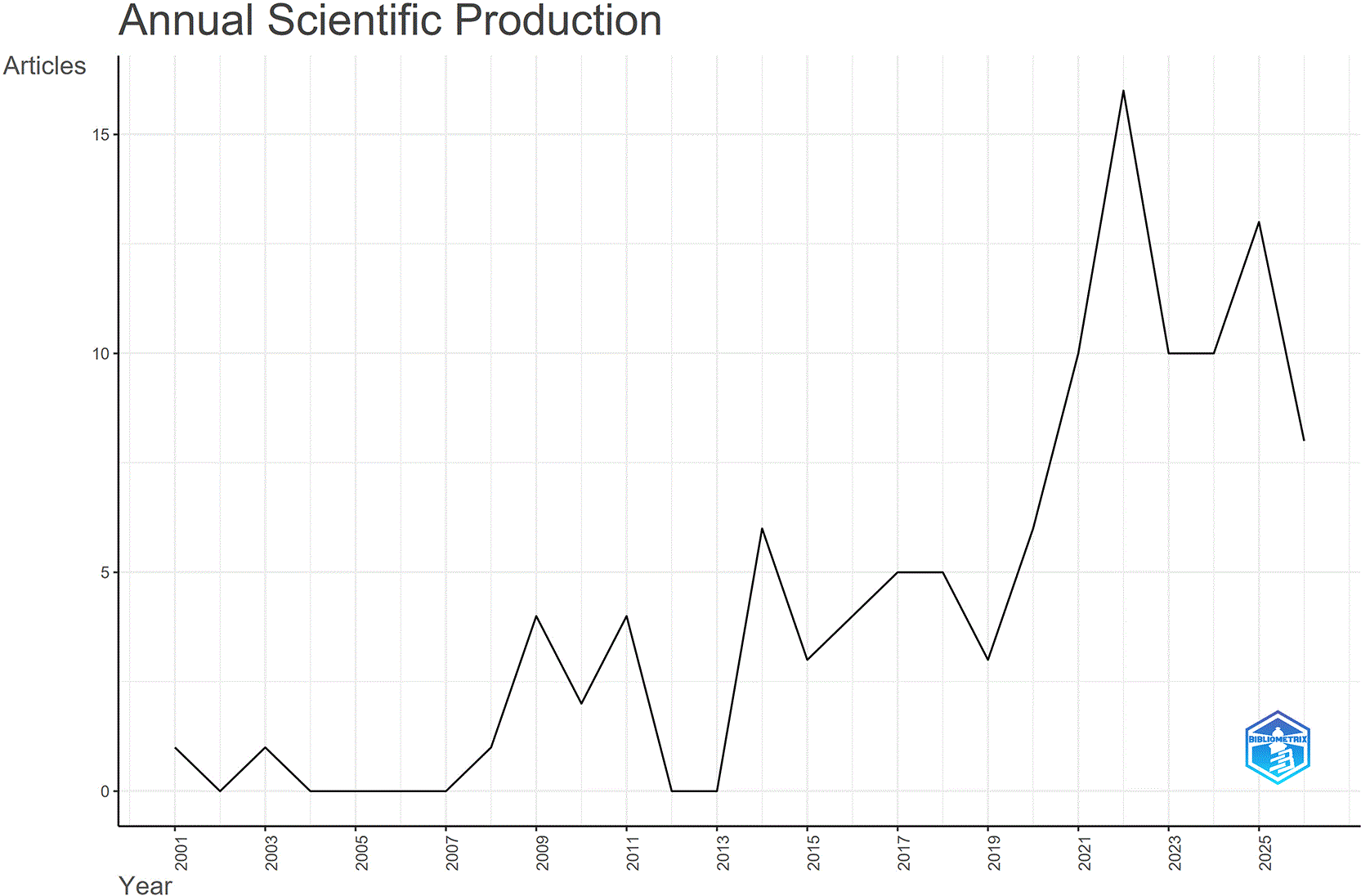
Data for 2026 include only publications indexed up to 29 July 2026.
Table 1 presents the ten articles with the highest global citation counts, together with citations per year and normalised citation scores. Liu (2015) ranked first by global citations (n = 207), whereas Zygmunt et al. (2018) achieved the highest normalised citation score (2.92). Trilokekar and Kukar (2011) recorded the highest number of local citations (n = 7), indicating a strong connection to the corpus despite receiving fewer global citations than Liu’s article.
Table 2 shows that the Journal of Transformative Education was the most productive source, with ten articles. Teaching and Teacher Education, however, had the highest citation impact among the leading sources, receiving 217 citations from three articles. The difference between productivity and impact indicates that the literature is distributed across specialist journals devoted to transformative learning and reflection, as well as core teacher education journals.
Table 3 shows that author productivity was dispersed; no author published more than three articles. Katrina Liu had the highest citation impact, with 263 citations from three articles. Suzanne Carrington and Gitta Selva each published two articles but received 179 citations, indicating that scholarly influence was not directly proportional to publication output.
Table 4 shows that the United States was the largest contributor by corresponding-author country, with 25 articles, followed by China with eight and Australia with five. China had an international collaboration ratio of 62.5%, while all three Indonesian articles resulted from cross-country collaboration. The most frequent collaboration pairs were China–Spain and Indonesia–Malaysia, with three publications each.
Table 5 shows that Queensland University of Technology was the most productive institution, with five articles and 205 citations. Universitas Negeri Malang ranked second with four articles, while four other institutions each produced three articles. The absence of any institution with more than five articles confirms that research output in this field has not yet become concentrated in a particular research centre.
Figure 2 presents the author-keyword co-occurrence network. Ninety-four articles provided author keywords and yielded 273 unique terms after normalisation; 43 terms occurring at least twice were included in the network. Transformative learning was the most prominent term (n = 65), followed by teacher education (n = 29), preservice teachers (n = 25), preservice teacher education (n = 11), and critical reflection (n = 10). The central position of transformative learning connects critical reflection, perspective transformation, teaching practicum, cross-cultural experiences, culturally responsive pedagogy, and education for sustainable development.
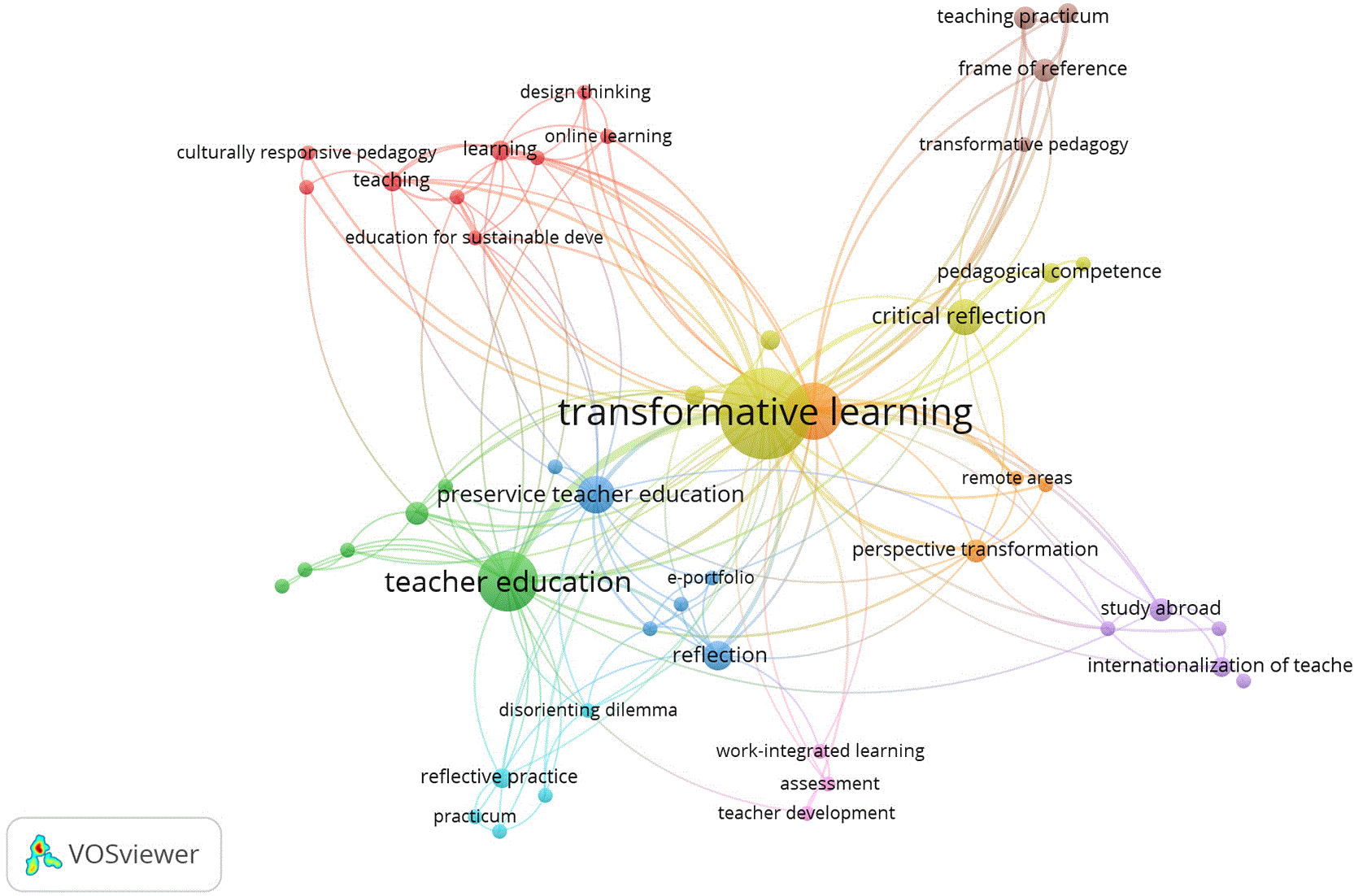
Node size indicates frequency, while colour denotes thematic clusters.
Figure 3 shows the temporal development of keywords. Relatively earlier themes were associated with study abroad, the internationalisation of teacher education, reflective practice, and the disorienting dilemma. More recent themes shifted towards culturally responsive pedagogy, education for sustainable development, online learning, pedagogical competence, assessment, and work-integrated learning. This overlay indicates an expansion from international-experience contexts towards more contextually grounded pedagogical applications.
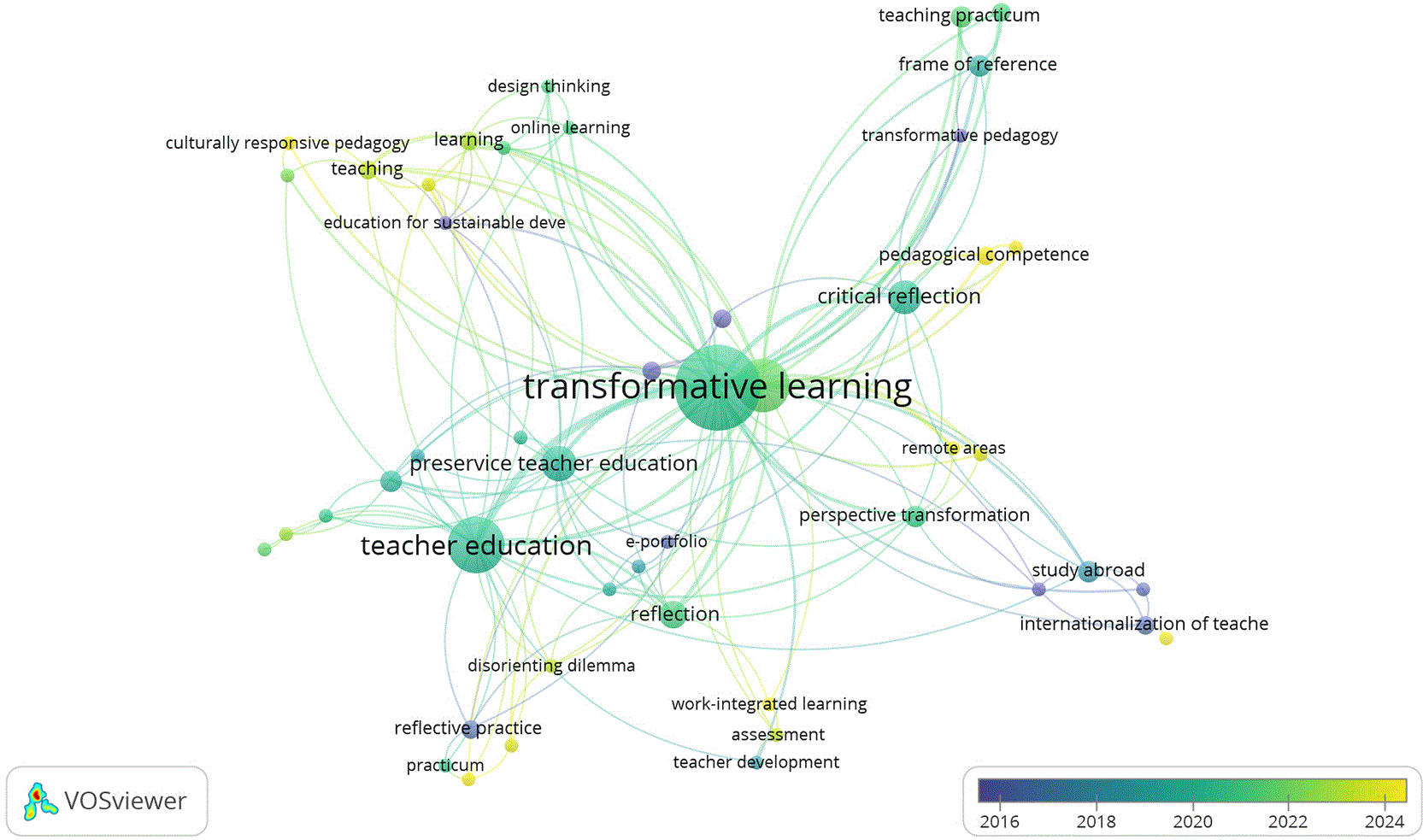
Blue denotes relatively earlier themes, while yellow denotes more recent themes.
Figure 4 presents the co-citation network of the 22 authors who met the minimum threshold of four citations. Jack Mezirow occupied the largest and most central node, with strong links to Patricia Cranton, Edward W. Taylor, Arthur Kitchenham, Knud Illeris, and Jack M. Dirkx. Another cluster connected John Dewey, Donald Schön, Stephen Brookfield, Gloria Ladson-Billings, Geneva Gay, Ken Zeichner, and Linda Darling-Hammond. At the reference level, Transformative Dimensions of Adult Learning received the highest number of local citations (n = 40), followed by Learning as Transformation (n = 18), Transformative Learning: Theory to Practice (n = 11), and Perspective Transformation (n = 10).
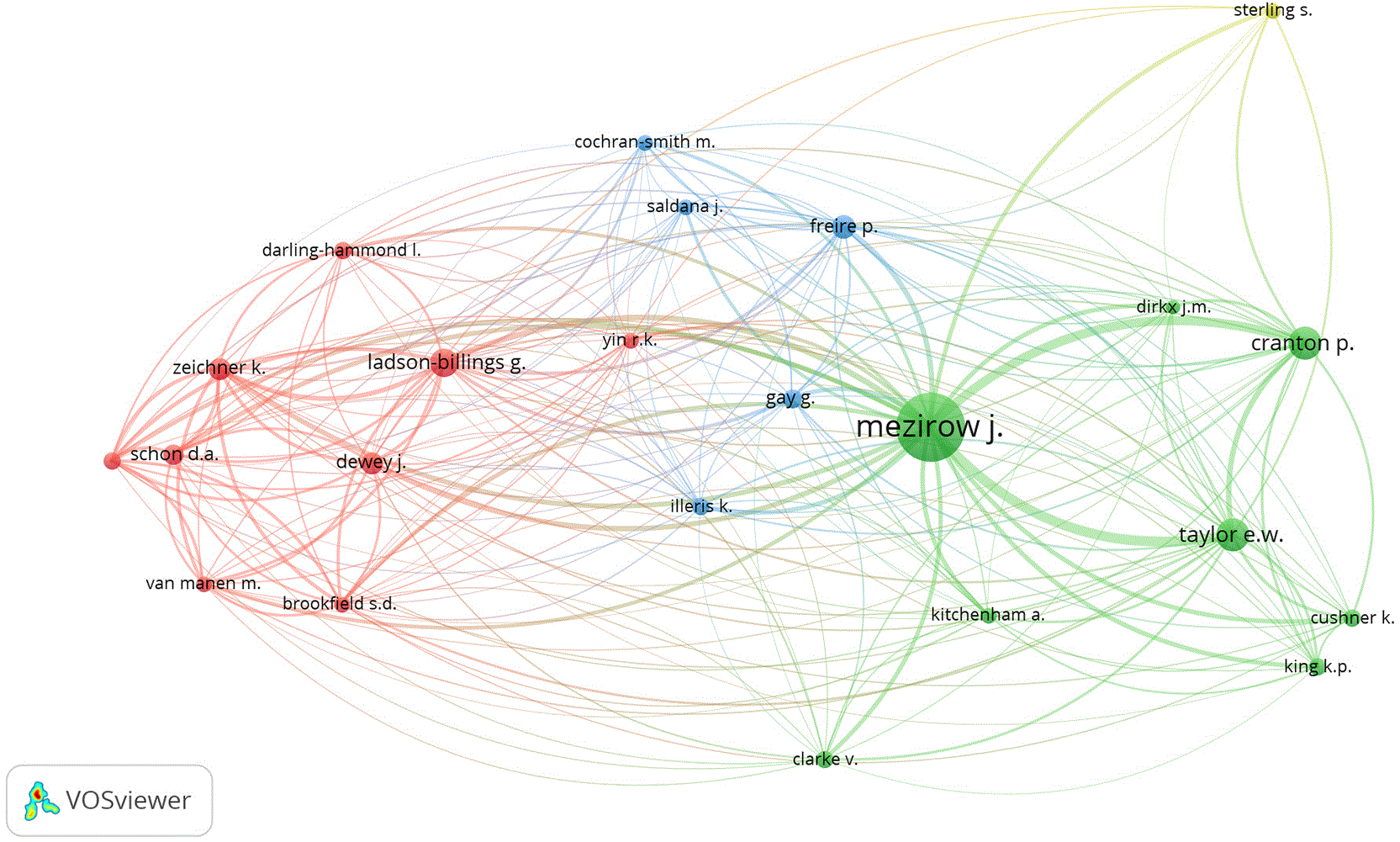
Node size indicates co-citation weight, while colour denotes clusters.
This analysis shows that research on transformative learning in pre-service teacher education has grown more consistently since 2020, but has not yet formed a consolidated research community. This is evident in the low productivity of authors and institutions, the distribution of articles across 74 sources, and the fact that international collaboration accounts for only 13.39% of the corpus. The pattern is consistent with bibliometric mapping of transformative learning for sustainability, which found both increasing publication output and the dominance of Western academic centres (Varela-Losada et al., 2022). The contribution of the present study extends beyond confirming growth: it demonstrates that pre-service teacher education has a distinctive knowledge architecture in which critical reflection functions as the central mechanism, while field experiences, service-learning, and cross-cultural encounters serve as triggering contexts.
The position of Liu’s article on critical reflection as the most highly cited document indicates that perspective transformation continues to be explained primarily through the examination of assumptions. The central positions of Mezirow (1991, 2000), Cranton (2016), Taylor (2007), and Illeris (2014) within the intellectual network reinforce this finding. Reflection, however, is not synonymous with recording experience. It becomes transformative when pre-service teachers examine the origins of their beliefs, confront disconfirming evidence or perspectives, and connect new interpretations to professional action. Liu (2017) showed that dialogic spaces enable pre-service teachers to scrutinise the reasoning underlying their beliefs. Reflective journals or autobiographical writing therefore do not, in themselves, guarantee transformation; the quality of the prompts, the safety of the dialogue, instructor feedback, and opportunities to test new actions are more consequential.
The prominence of field experiences, service-learning, placements in remote areas, and study abroad indicates that a shift in perspective often begins with a mismatch between initial assumptions and the situation encountered. Trilokekar and Kukar (2011) and Klein and Wikan (2019) showed that cross-national experiences can challenge assumptions about culture, education, and global citizenship. Sari et al. (2023) identified a similar pattern when pre-service teachers taught in remote areas. A disorienting dilemma, however, is a trigger rather than an endpoint. Jones et al. (2023) demonstrated that change is more likely when cultural experience, teaching practice, and critical reflection are designed as a mutually reinforcing sequence. Without appropriate facilitation, unfamiliar experiences may remain transient impressions or even reinforce stereotypes.
These findings explain why service-learning and practicum experiences repeatedly appear in influential articles. Carrington and Selva (2010) demonstrated that reflection guided by critical social theory can move pre-service teachers’ writing from descriptions of experience towards critiques of injustice and consideration of possible action. At this point, transformation cannot be assessed solely through increased confidence or shifts in attitude. More substantive change becomes evident when pre-service teachers can recognise power relations, evaluate the consequences of pedagogical choices, and design more inclusive practices. This connection helps explain why culturally responsive pedagogy and social justice have emerged as new directions in the field.
This change of direction is visible in the temporal visualisation. Earlier themes were dominated by study abroad, the internationalisation of teacher education, reflective practice, and the disorienting dilemma. Recent publications more often connect transformative learning with culturally responsive pedagogy, education for sustainable development, online learning, assessment, and pedagogical competence. Weinberg et al. (2020) showed that disorienting experiences do not necessarily develop into collective agency, while Avsec and Ferk Savec (2021) emphasised that technology supports transformation only when accompanied by critical reflection, openness, and social support. The expansion of technology in teacher education should therefore be evaluated by its capacity to change reasoning and action, rather than by the novelty of the tools alone.
The field’s intellectual structure brings together two traditions. The first centres on changes in frames of reference, dialogue, and identity through the work of Mezirow (1991, 2000), Cranton (2016), Taylor (2007), and Illeris (2014). The second links experience and reflection with critical pedagogy and teacher education through Dewey (1933), Schön (1983), Brookfield (1995), Freire (1970), Ladson-Billings (1995), Gay (2010), Zeichner (2010), and Darling-Hammond (2017). Their convergence broadens the theory, but it also creates a risk of conceptual inflation when every change in attitude or meaningful experience is labelled transformative. Wu (2024) showed that transformation is relational and involves the reconfiguration of identity, while Xu (2025) demonstrated that critical experiences can produce divergent trajectories, including no change. Transformation should therefore be treated as a non-linear process and substantiated through relatively enduring changes in meaning and their consequences for action.
The distribution of sources, authors, and institutions reveals both the interdisciplinary character and the fragmentation of the field. The Journal of Transformative Education provides a specialist forum for theory and practice, while Teaching and Teacher Education and the Journal of Teacher Education achieve high citation impact when transformative learning is connected to professional identity, practicum experiences, and inclusion. Queensland University of Technology was the most productive institution, yet it produced only five articles. The absence of authors with more than three articles and institutions with more than five indicates that no dominant research centre has yet emerged. This condition allows diverse perspectives to develop, but it may also perpetuate inconsistencies in definitions and measurement.
The dominance of the United States and other English-speaking countries is consistent with previous bibliometric findings (Varela-Losada et al., 2022). The presence of China, Indonesia, and other Asian countries indicates geographical expansion, but collaboration ratios must be interpreted alongside publication counts. All Indonesian articles involved international collaboration, yet the corpus contained only three such articles. Most collaboration pairs also appeared only once, suggesting that the global network more closely resembles project-based ties than sustained research programmes. Africa, Latin America, and parts of Asia remain under-represented, even though forms of transformation may be shaped by local histories, languages, communal relations, spirituality, and education systems. Dependence on Western contexts risks treating individual change as the primary measure and overlooking collective transformation.
These findings point to three priorities for future research. First, longitudinal studies should assess whether changes reported during coursework or practicum experiences persist when graduates enter the classroom. Second, evidence of transformation should move beyond self-report by combining reflective writing, observation, learning artefacts, repeated interviews, and assessments of changes in pedagogical reasoning. Third, comparative research across contexts should distinguish transferable elements of the theory from those that require reinterpretation. Emerging themes such as culturally responsive pedagogy, sustainability, and online learning should be evaluated in terms of changes in professional responsibility and practice, rather than merely gains in knowledge or skills.
Theoretically, this study shows that the field is not moving away from Mezirow; rather, it is locating the foundations of perspective transformation within teacher education contexts that are increasingly relational, cultural, and action-oriented. Methodologically, the integration of performance analysis, conceptual structure, intellectual structure, and metadata normalisation provides a more coherent account than broad mappings of transformative learning. These contributions should nevertheless be interpreted in light of the limitations of the corpus and the screening process.
This study has several limitations. First, the corpus was drawn exclusively from Scopus; national journals, non-English-language publications, and sources indexed only in other databases may therefore have been missed. The results also depend on the search string. The terms used cover the most common terminology for pre-service teachers, but articles using only alternative expressions such as teacher trainee or future teacher, without any term included in the query, may not have been retrieved. Second, the two reviewers’ individual decisions before consensus were not archived, so the initial agreement rate and Cohen’s kappa could not be calculated retrospectively. The final decision log and reasons for exclusion are nevertheless provided to support traceability.
Third, citation counts are dynamic and favour older articles. This study included citations per year and normalised citation scores, but these indicators are not equivalent to quality. Articles published in 2026 also had only a short period in which to be indexed and cited. Fourth, eighteen articles did not provide author keywords and therefore did not contribute to the co-occurrence analysis. Metadata inconsistencies may still affect author, institution, country, and reference names despite the normalisation process. Finally, network thresholds and cluster labels require analytical judgement. Co-citation or co-occurrence proximity indicates a structural relationship, not complete conceptual equivalence or a causal association.
Research on transformative learning in pre-service teacher education has developed gradually since 2001 and has grown more consistently since 2020. However, the distribution of articles across numerous journals, the low productivity of authors and institutions, and limited international collaboration indicate that the field is not yet fully consolidated.
Intellectually, Mezirow’s work remains the principal foundation. The field has developed by connecting perspective transformation with critical reflection, professional identity, field experiences, critical pedagogy, diversity, and sustainability. These findings show that the distinctive contribution of pre-service teacher education lies in translating changes in meaning into pedagogical judgement and action.
Future research should test the durability of transformation through longitudinal studies, strengthen evidence of changes in practice through multimodal or mixed-methods designs, and extend investigation to non-Western contexts. Definitions and measures must also become more consistent so that the term transformative is not applied to every short-term change in attitude.
Ethical approval and informed consent were not required because this study used publicly available bibliographic metadata and did not involve human participants.
Zenodo: Underlying and extended data for “Global research landscape of transformative learning in pre-service teacher education: A Scopus-based bibliometric and science-mapping analysis”. https://doi.org/10.5281/zenodo.21672421
This project contains the following underlying data:
1. 01_Search_Strategy_and_Eligibility.md (database, search date, complete Scopus query, eligibility criteria, and selection counts).
2. 02_Screening_Log_184_Public.csv and 03_Excluded_Records_72_Public.csv (screening decisions and reasons for exclusion, without redistribution of abstracts).
3. 04_Full_Text_Decisions_2.csv (eligibility decisions for the two articles assessed in full text).
4. 05_Included_Records_112_Public.csv (public bibliographic identifiers and normalized metadata for the final corpus).
5. 06_Metadata_Normalization_Audit.xlsx, 07_VOSviewer_Thesaurus_Keywords.csv, and 08_VOSviewer_ Thesaurus_Authors.csv (metadata-cleaning and name-normalization records).
6. 09_Biblioshiny_Complete_Report.xlsx and 10_Analysis_Parameters.md (derived bibliometric outputs and analytical settings).
The complete Scopus export cannot be redistributed because the bibliographic metadata, abstracts, and cited-reference lists are licensed by Elsevier. Readers with authorised Scopus access may reconstruct the corpus using the complete search query, search date, and DOI and Scopus EID identifiers deposited in Zenodo. The public repository provides the screening decisions, metadata-normalisation records, thesaurus files, analytical parameters, and derived outputs required to reproduce the reported analyses.
Zenodo: Underlying and extended data for “Global research landscape of transformative learning in pre-service teacher education: A Scopus-based bibliometric and science-mapping analysis”. https://doi.org/10.5281/zenodo.21672421
This project contains the following extended data:
1. 01_Extended_Data_Tables.xlsx (supplementary tables covering sources, authors, countries, global and local citations, locally cited references, keyword frequencies, trend topics, thematic-map indicators, collaboration links, and analysis parameters).
2. 02_Extended_Data_Figures.pdf and the Figures folder (study-selection flowchart, corrected author co-authorship network, cited-author and cited-source co-citation networks, international collaboration network, thematic map, and trend-topic visualization).
3. 03_Bibliometric_Reporting_Checklist.pdf (completed study-specific reporting checklist).
4. 04_Extended_Data_Manifest.xlsx and the Source_Tables folder (file descriptions and original derived tables used to construct the supplementary outputs).
Firmansyah, H., Darmawan, W., Suryana, N., Wahyuni, S., Munira, W., & Khasyar, M. L. (2026). Underlying and extended data for “Global research landscape of transformative learning in pre-service teacher education: A Scopus-based bibliometric and science-mapping analysis” [Data set]. Zenodo. https://doi.org/10.5281/zenodo.21672421.
This research was supported by the Indonesian Education Scholarship (Beasiswa Pendidikan Indonesia, BPI), administered by the Center for Higher Education Funding and Assessment (Pusat Pembiayaan dan Pendanaan Pendidikan Tinggi, PPAPT), Ministry of Higher Education, Science, and Technology of the Republic of Indonesia, and by the LPDP Scholarship funded by the Indonesia Endowment Fund for Education (Lembaga Pengelola Dana Pendidikan, LPDP), Ministry of Finance of the Republic of Indonesia. No specific grant or contract number was assigned. The funders had no role in the study design, data collection and analysis, decision to publish, or preparation of the manuscript
The funders had no role in study design, data collection and analysis, decision to publish, or preparation of the manuscript.
© 2026 Firmansyah H et al. This is an open access article distributed under the terms of the Creative Commons Attribution License, which permits unrestricted use, distribution, and reproduction in any medium, provided the original work is properly cited.
Current Reviewer Status:
AWAITING PEER REVIEW
AWAITING PEER REVIEW
?
Key to Reviewer Statuses VIEW HIDE
ApprovedThe paper is scientifically sound in its current form and only minor, if any, improvements are suggested
Approved with reservations A number of small changes, sometimes more significant revisions are required to address specific details and improve the papers academic merit.
Not approvedFundamental flaws in the paper seriously undermine the findings and conclusions