Просмотр новости
Найдите то, что Вас интересует
 Спутники
 РН
РН SpaceX
 Роскосмос
 NASA
NASA
СпутникиРНSpaceXРоскосмосNASAThe post RISC-V Edge Inference for Real-Time Eye-Movement Control on GAPses Smart Glasses appeared first on RISC-V International.
Project Snapshot
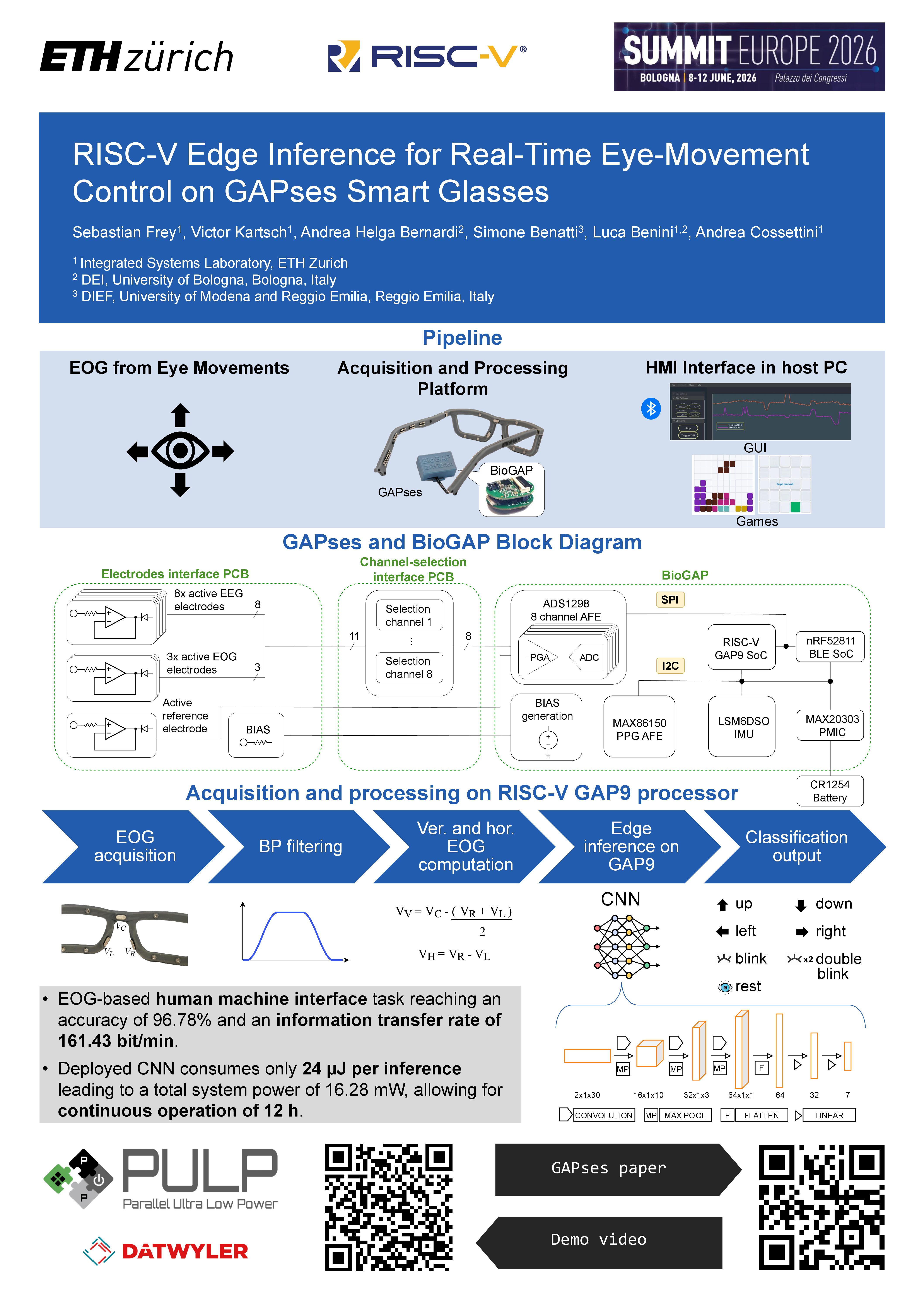
This live demonstration showcases GAPses, an ultra-low-power smart-glasses platform based on an ultra-low power RISC-V multicore processor (GAP9), enabling always-on, real-time, energy-efficient edge processing of electrooculography (EOG) and electroencephalography. GAPses performs on-device signal processing and machine-learning inference, converting raw biosignals into events without cloud compute or continuous high-bandwidth streaming, enabling energy-scalable and privacy-preserving operation. In the demo, dry electrodes integrated into the glasses frame capture horizontal/vertical EOG, and an on-device lightweight CNN running on GAP9 classifies saccadic eye movements from these EOG signals in real time. The resulting eye-movement events are transmitted via BLE to a laptop running a visualization application, which displays the CNN outputs alongside filtered EOG traces. The classification stream drives multiple interactive scenarios, including grid control, a Tetris game, and live class-probability visualization. During the demo session, we will run the complete pipeline live: a team member will wear the glasses and perform a sequence of saccades to trigger on-device CNN inference. The GUI updates in real time with predicted classes and EOG traces, allowing attendees to observe latency, robustness, and privacy benefits of RISC-V-based embedded biosignal inference in a practical wearable form factor. Overall, the demo highlights GAPses as an open, fully wearable research platform and illustrates how parallel RISC-V compute enables always-on neural interfaces by executing sensing, inference, and event-level decisions locally without cloud dependence or continuous high-bandwidth streaming.
In Their Own Words
Poster Preview
Meet the Authors
Sebastian Frey (Graduate Student Member, IEEE) received the M.Sc. degree in electrical engineering and information technology from ETH Zürich, Switzerland, in 2022. He is currently working toward the Ph.D. degree in information technology and electrical engineering under the supervision of Prof. L. Benini with the Integrated Systems Laboratory, D-ITET, ETH Zurich, Switzerland. His research interests include design of intelligent, headcentric wearables and on applying machine learning for biosignal processing on low-power devices, aiming to advance smart wearable technologies for real-time health monitoring.
Victor Kartsch received the Ph.D. degree in electrical engineering and computer science from the University of Bologna in 2020 (Ph.D. Advisor Prof. Luca Benini). During his Ph.D., he worked on the hardware–software design of fully embedded human–machine interaction (HMI) systems with a full-stack perspective, targeting both EMG and EEG signals. One of the most important systems developed by Dr. Kartsch is BioWolf, an ultralow-power HMI for signal acquisition and real-time processing of computationally intensive algorithms, which has been adopted by many research institutions in the field. His work experience also includes data analysis and optimization of signal processing and machine learning algorithms for embedded systems. He has published several papers in international peer-reviewed conferences and journals. Currently, he is a Research Fellow at the Integrated System Laboratory, ETH Zürich, where he also designs wearable systems for several applications. At ETH, he is also working on the design of hardware and software solutions for UAVs, and, by extension, on integrating such systems with HMIs for advanced control.

Andrea Helga Bernardi (Graduate Student Member, IEEE) received her master’s degree with honors in Electronic Engineering from the University of Bologna, Italy, in 2024. She is currently enrolled in a PhD program under the supervision of Prof. Simone Benatti at the Energy-Efficient Embedded Systems Laboratory (EEES Lab), DEI Department, University of Bologna. Her research focuses on biosignal processing and the development of real-time human-machine interfaces based on smart glasses.
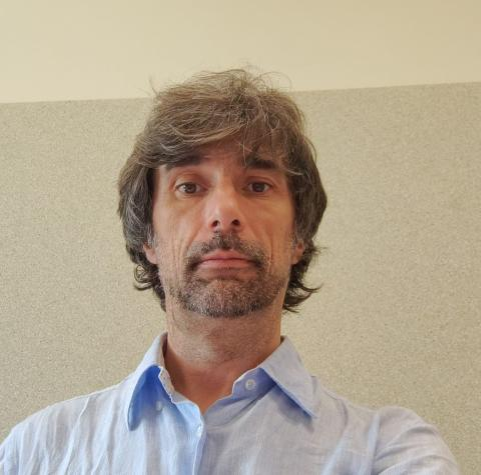
Prof. Simone Benatti earned his Ph.D. from the University of Bologna in 2016, under the supervision of Prof. Luca Benini. During his Ph.D. studies, he was a Visiting Scholar at the BWRC – University of California, Berkeley (in Prof. Jan Rabaey’s group), where he also served as a Visiting Researcher in 2019. Since June 1, he has been an Associate Professor at the University of Modena and Reggio Emilia, where he teaches the courses “Digital Electronic Systems” and “Hardware-Software Co-design of Electronic Systems.” Prof. Benatti works on the design and optimization of energy-efficient embedded systems for the acquisition and processing of bioelectric potentials (ExG) and on the design of HMIs for healthcare and automotive applications. In this field, he has published more than 100 articles in international conferences and journals. In 2023, he spent a period as a Visiting Professor at the ETH Future Computing Lab at ETH Zurich. He has ongoing collaborations with several international research institutes, such as ETH Zurich, EPFL, UC Berkeley, and the Polytechnic University of Turin. Prof. Benatti was the recipient of the GHAIA Grant (H2020-MSCA-RISE-2017, G.A. 777822).
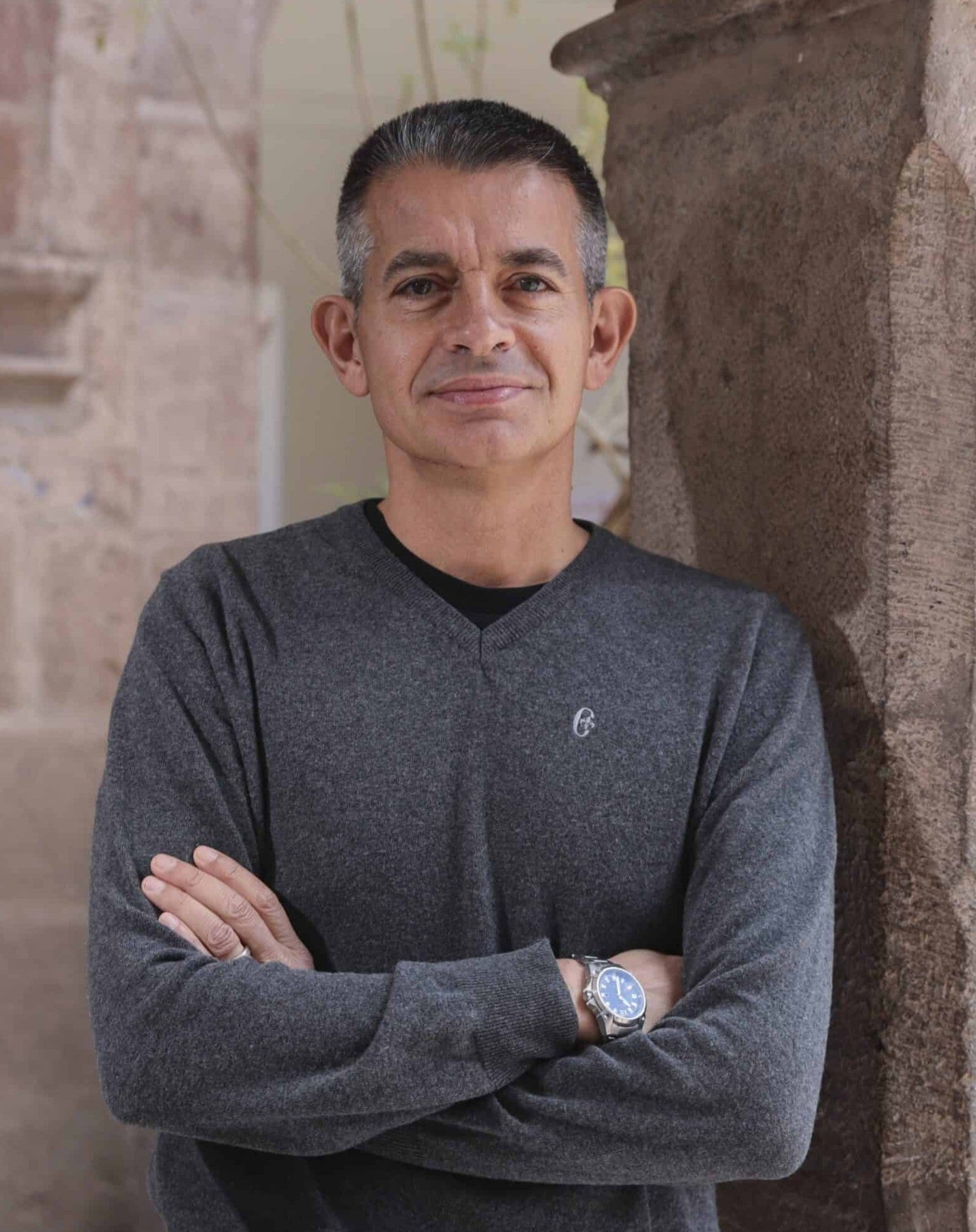
Luca Benini holds the chair of digital Circuits and systems at ETHZ and is Full Professor at the Università di Bologna. He received a PhD from Stanford University. He is a Fellow of the IEEE, of the ACM, a member of the Academia Europaea and a funding member of the Italian Academy of Engineering and Technology. He is the recipient of various awards, including the 2023 IEEE CS E.J. McCluskey Award, and the 2024 IEEE CS Open Source Hardware contribution Award.
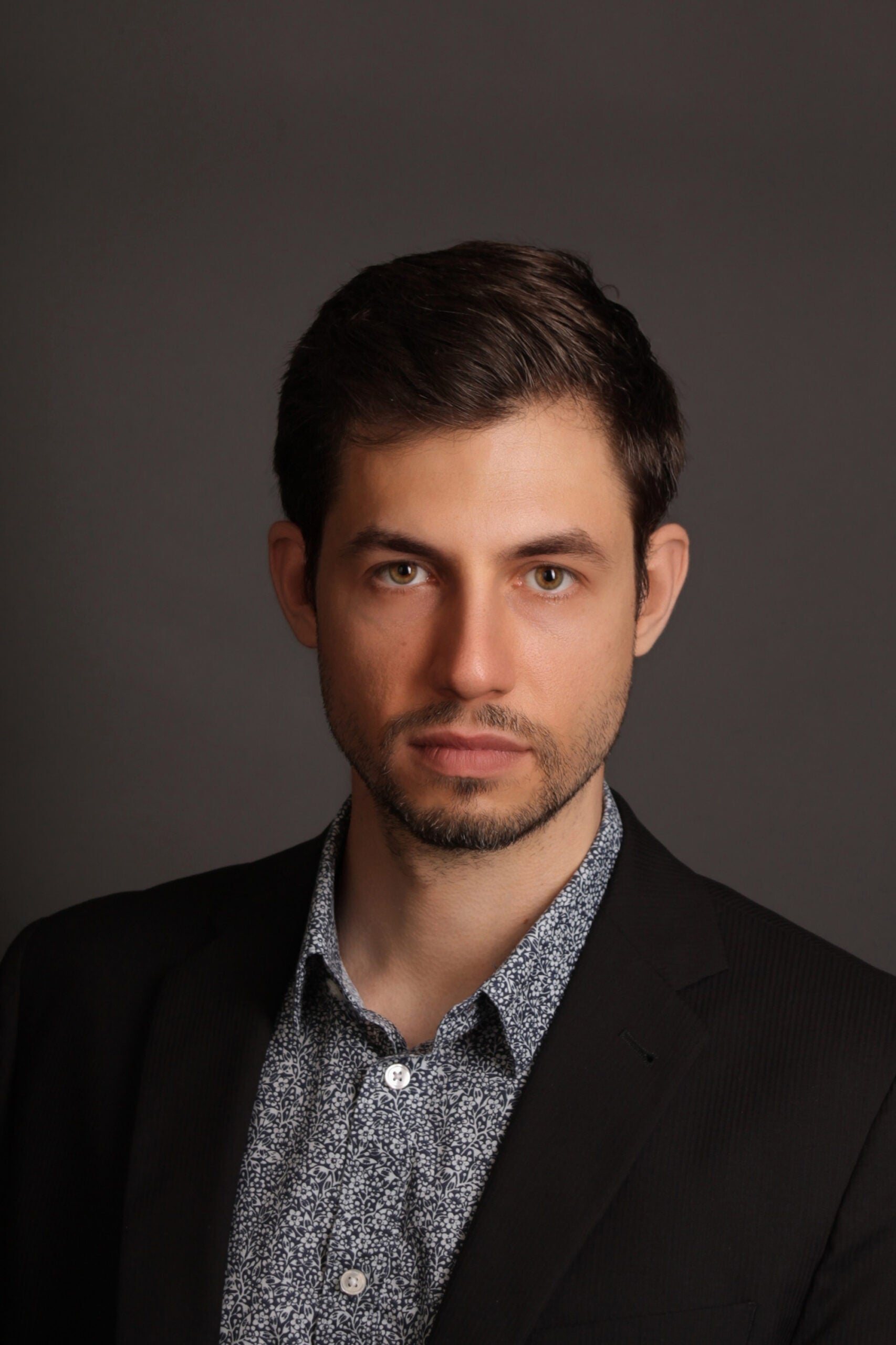
Andrea Cossettini (Senior Member, IEEE) received the Ph.D. degree in electronic engineering from the University of Udine, Udine, Italy, in 2019, with research on nanoelectrode-array biosensors for bioelectronic and biomedical applications. He previously worked at Acreo Swedish ICT AB (Kista, Sweden) on sub-millimeter-wave waveguide-to-chip interconnects, and at Infineon Technologies (Villach, Austria) on signal integrity for high-speed communication interfaces. Currently, he is with ETH Zurich, Zurich, Switzerland, serving as Research Cooperation Manager of the ETH Future Computing Laboratory (EFCL), Project Leader at the Integrated Systems Laboratory (IIS), and Lecturer. His research focus is on smart biomedical sensing, with a particular emphasis on wearable ultrasound, wearable EEG, multimodal physiological sensing, and edge-AI-enabled systems for healthcare and human–machine interaction.
| # | Наименование новости | Тональность | Информативность | Дата публикации |
|---|---|---|---|---|
| 1 | RISC-V Mentorship Taught Me the RISC-V ISA Is Far More Than a Reference Manual | 0 | 10.88 | 10-02-2026 |
| 2 | Support RAJA and Scientific Applications on RVV Architectures | 0 | 10.06 | 17-02-2026 |
| 3 | Conflict to Compliance: RISC-V Extension Migration Across Spec, HW, and SW | 0 | 13.33 | 29-07-2026 |
| 4 | CG-BEV: Conditional Generation of Bird's-Eye-View Segmentation Using BEV-optimised Diffusion | 0 | 17.71 | 14-08-2026 |
| 5 | Überwachung im Vorbeigehen: Wie Smart Glasses die Privatsphäre der Mitmenschen bedrohen | -5 | 6 | 01-07-2026 |
| 6 | Using a Performance Model to Implement a Superscalar CVA6 | 0 | 13.29 | 24-03-2026 |
| 7 | OpenCV 5 Is Here: The Biggest Leap in Years for Computer Vision | 5 | 7 | 05-06-2026 |
| 8 | Google shows off first intelligent specs running Android XR | 0 | 7.41 | 19-05-2026 |
| 9 | In-Situ Intelligent Mixed Reality Assistants for Adaptive Human-AI Collaboration on OpenCV Live | 0 | 5 | 09-07-2026 |
| 10 | Edge AI, Not Cloud AI, to Define the Next Generation of Autonomous Vehicles: NXP | 0 | 8.24 | 05-08-2026 |