Просмотр новости
Найдите то, что Вас интересует
 Спутники
 РН
РН SpaceX
 Роскосмос
 NASA
NASA
СпутникиРНSpaceXРоскосмосNASADr. Jennifer Tufts began treating Clancy in September 2022, a few months after Clancy gave birth to her third child.
The post Lindsay Clancy was ‘depressed and flat’ the day before she killed her children, psychiatrist says appeared first on Boston.com.
Send this article to your social connections.
Livestream via NBC 10 WJAR.
On the stand Friday:
This story may contain content readers find disturbing. For help with postpartum mood disorders, text or call 1-833-TLC-MAMA for the National Maternal Mental Health Hotline. If you or someone you know is having thoughts of suicide, call 988 or go to https://988lifeline.org/ to chat online.
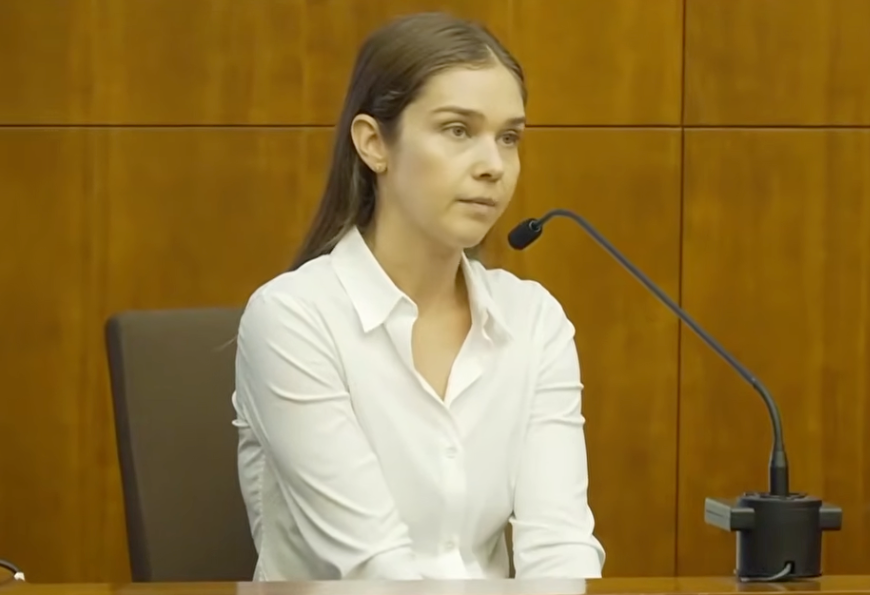 Dr. Jennifer Tufts. – NBC 10 WJAR
At a meeting with her psychiatrist the day before she killed her children, Lindsay Clancy appeared “depressed and flat,” according to Dr. Jennifer Tufts, who treated Clancy.
Tufts testified that Clancy reported starting the antidepressant amitriptyline, but that it didn’t appear she was experiencing any side effects.
“She said she was doing all right,” Tufts recalled Friday. “A little more anxious, and the anxiety was described as the feeling of her heart racing. She had a decreased appetite, as well.”
According to Tufts, Clancy once again denied having suicidal or homicidal thoughts, just as she had in their previous appointments throughout the fall and winter.
Still, the psychiatrist said she considered Clancy’s insight “poor” due to her alleged tendency to attribute some of her mental health symptoms to medication side effects.
“Like how she felt about the Seroquel [an antipsychotic Clancy had also been prescribed], how she felt that that was making her depressed,” Tufts explained. “When in reality I think she was just depressed.”
Tufts began treating Clancy in September 2022, a few months after Clancy gave birth to her third child. She testified that Clancy had previously tried the antidepressant Zoloft following the birth of her second child.
“She mentioned something about initial side effects, which are pretty common for many people,” Tufts said. “I didn’t detail what those side effects were, but they sounded like the very normal ones that people may experience that are transient in the beginning of the treatment.”
She confirmed Clancy reported feeling “overwhelmed,” as well as anxious and irritable about leaving her infant, Callan. However, Clancy allegedly denied having thoughts about harming the baby.
At another appointment on Sept. 28, 2022, Clancy told Tufts she had picked up the prescribed Zoloft but decided not to take it. According to Tufts, Clancy said she was feeling “a little bit better” and sleeping more, though Tufts felt her insight at the time was “poor.”
“I think that that must have been related to the fact that at this point, she did have some very clinically significant anxiety,” Tufts explained. “Usually when people come to a psychiatrist, they believe that their symptoms are significant and that a medication is something that might be prescribed. But despite these symptoms, she still didn’t want to try the medicine.”
Tufts also clarified that the 17-minute appointment documented in Clancy’s medical records referred to the amount of time she and Clancy spent on therapy, and they had actually spent additional time discussing medication management. Tufts also said Clancy seemed receptive to her suggestion that she meet with a therapist at the same practice.
Clancy’s next appointment with Tufts was Oct. 3, 2022, and she allegedly inquired about getting paperwork to extend her maternity leave. Assistant District Attorney Jennifer Sprague read aloud the note Clancy wrote to Tufts, in which she said she was “feeling just better enough to function without medication” but wanted to extend her leave because she didn’t “feel mentally well enough to return to taking care of patients with a baby at home that still won’t take the bottle.”
At that Oct. 3 appointment, Clancy also reported she was “on the verge” of taking the prescribed medication, Tufts said. But when they met again later that month, Clancy said she had been on the Zoloft for one week and felt “awful” after increasing the dosage as prescribed.
“She was having increased difficulty sleeping,” Tufts testified. “She had loss of appetite, diarrhea. She was feeling her mood was down. She was tearful and feeling very foggy and feeling very anxious.”
Tufts said she and Clancy discussed switching to a different medication, but the negative experience left Clancy hesitant to try a new prescription.
According to Tufts, Clancy again denied having suicidal or homicidal ideation and “was very clearly not psychotic,” though she also expressed concern about developing thoughts of suicide.
She testified that she instructed Clancy to stop taking the Zoloft and they discussed other options, including natural remedies such as fish oil and other supplements.
“So you weren’t pushing her to take a prescription medication, correct?” Sprague pressed.
“No,” Tufts replied.
At another appointment the following day, Clancy told Tufts she hadn’t been able to sleep overnight. Tufts said she prescribed a low dose of Ativan, a benzodiazepine, as needed to treat “severe anxiety.”
They followed up several days later, and Clancy reported the Ativan was helping her anxiety, but not her sleep, Tufts recalled.
She said Clancy also reported trying Benadryl, an over the counter antihistamine, to help her sleep. While Tufts testified that she didn’t instruct her to do so, she said she was glad something was helping Clancy sleep. They also discussed trying Clancy on a new anti-anxiety medication, Buspar, or buspirone, as well as the antihistamine hydroxyzine as a safer alternative to Ativan for short-term anxiety.
But when they next met on Nov. 2, 2022, Tufts said Clancy hadn’t started the Buspar.
“She was too afraid to start a new medication,” Tufts explained.
She said Clancy again denied suicidal or homicidal ideation and showed no signs of psychosis. Once more, they discussed alternatives to Ativan, “because Ativan was not a medication I intended for her to be taking for a long period of time,” given its risk of dependency, Tufts said.
When they met again on Nov. 22, 2022, Clancy informed Tufts she had joined South Shore Health’s Perinatal Behavioral Health Program and would be starting the antidepressant Prozac, Tufts recalled.
Clancy also requested a letter authorizing her to return to work, Tufts said. Yet according to Tufts, Clancy was still struggling when they met again on Dec. 1, 2022. Tufts testified that Clancy had tried to taper her Ativan, but was having difficulty sleeping without it.
“So she tried a few different medications, a few different medication combinations, but she was having trouble with them,” Tufts said.
She said Clancy also reported having intrusive thoughts after starting the antidepressant Remeron, so Clancy was planning to stop the medication.
“She said it was ‘a feeling like I’m going to die,’” Tufts recalled.
While Clancy denied having suicidal ideation, “she was feeling pretty badly,” Tufts testified. “She said she was ‘close to it,’ meaning close to having some suicidal thoughts, and that she was feeling very hopeless. But she didn’t have any active thoughts of hurting herself, didn’t have an intention of doing anything, didn’t have any plans.”
Tufts also confirmed she documented in her notes that Clancy said at the time, “I think it’s my problem; I keep reaching out to different people and not sticking with the plan.”
She testified that she advised Clancy to stick to one person managing her psychiatric medications. At Sprague’s prompting, Tufts explained that while some medications, such as benzodiazepines, work quickly, many medications used to treat depression and anxiety take longer to kick in.
Tufts said she also raised the possibility of bipolar disorder with Clancy that day but testified that Clancy “really didn’t meet the criteria,” including mania and euphoria with symptoms including rapid speech, grandiosity, and increased risk-taking behaviors.
She said she suggested a partial hospitalization program to provide Clancy extra support.
At their next appointment on Dec. 16, 2022, Clancy reported having “a really rough time,” Tufts said. She said Clancy told her she went to Massachusetts General Hospital after having suicidal thoughts but turned down an in-patient program at the time.
“She was feeling hopeless but didn’t have any intent or suicidal plans,” Tufts testified.
She said Clancy was referred to a program at the Women & Infants Hospital in Rhode Island, adding that Clancy also indicated she thought the Seroquel was making her depressed.
At follow-up appointments in early January, Tufts said she learned Clancy had been discharged from an inpatient stay at McLean Hospital, a psychiatric facility, and that Clancy still felt her mood was “flat.”
On Jan. 11, 2023, Tufts said Clancy emailed her asking for her thoughts on ketamine therapy. While Tufts said she thought ketamine was a “great option” for Clancy, she noted “it can be hard to get the insurance coverage for it.”
Sprague confirmed Clancy told Tufts she was “getting desperate for something that would work quickly” to get her out of her depressed state.
Tufts further testified that ketamine was something she had considered for Clancy, given the young mother’s symptoms appeared resistant to treatment, “but I didn’t think we were at that point yet.”
Clancy’s mood was still “very low” on Jan. 16, 2023, and her affect was “depressed and flat” at another appointment the following week, Tufts testified.
“At any point in time, did she tell you she was planning to kill herself?” Sprague asked.
“No,” Tufts replied.
“At any point in time on the 23rd did she say she was planning to kill her children?” Sprague pressed.
“No, absolutely not,” Tufts answered.
After Sprague finished her direct examination of Tufts, Judge William Sullivan sent jurors home for the weekend. Tufts is expected to continue her testimony under cross-examination Monday morning.
3 p.m. update: DA’s office says ‘hot mic’ moment in Lindsay Clancy trial was misheardThe Plymouth County District Attorney’s Office is looking to correct the record after Lindsay Clancy’s defense attorney accused prosecutors of saying “shut her up” on a “hot mic” as Clancy sobbed openly in court. Read more.
1:45 p.m. update: Dr. Jennifer Tufts, one of the first psychiatrists to treat Lindsay Clancy postpartum, testifiesAs she began psychiatric treatment in September 2022, Lindsay Clancy seemed “reluctant” to try medication due to concerns about side effects, according to Dr. Jennifer Tufts, who treated Clancy.
“I recall that she was generally reluctant to take medications, but at this point she was considering it and was interested in learning about what medications might be helpful for her,” Tufts testified Friday.
She said she began seeing Clancy a few months after Clancy gave birth to her third child, Callan. According to Tufts, Clancy reported during her intake that she had previously tried the antidepressants Prozac and Wellbutrin while she was in nursing school. Clancy also reported drinking as many as five times per week and indicated she felt guilty about it, Tufts testified.
She said Clancy reported symptoms that were “highly suggestive” of an anxiety disorder and indicated a need for further screening for depression. Those symptoms included anxiety attacks, decreased appetite, depressed mood, easy distraction, excessive worry and guilt, racing thoughts, and inability to feel pleasure or to fall asleep.
At the time, Tufts said, Clancy denied feeling as though she didn’t want to live, having a specific plan to kill herself, having suicidal or homicidal intent, or hallucinating or hearing voices.
Tufts also denied that Clancy’s answers indicated she had experienced mania or manic episodes. She said she recommended Clancy try individual therapy and Zoloft, which she described as a first-line medication for anxiety disorders, as well as the safest selective serotonin reuptake inhibitor (SSRI) for patients who are breastfeeding. Clancy also saw a therapist at Aster Mental Health, where Tufts is employed.
Tufts, a defendant in Clancy’s medical malpractice lawsuit, testified that her initial diagnosis was generalized anxiety disorder and an adjustment disorder with depressed mood, meaning a reaction to a particular life event that may not meet the full criteria for, say, major depressive disorder.
Judge William Sullivan dismissed jurors for the lunch recess at about 1 p.m. with Tufts still on the stand. With the jury out of the courtroom, he offered a strict warning in response to defense attorney Kevin Reddington’s earlier allegations of an insensitive “hot mic” moment during Thursday’s proceedings.
“I just want to make it real clear that there is to be no inappropriate comments or disruptive comments to be made inside of this courtroom,” Sullivan warned. “If anybody is found to make those, they will be immediately escorted out and barred for the balance of this, all right? I just want to make that real clear. And just in case you’re wondering, there are microphones all around.”
He continued: “So if we hear, if I get a report of that, there’s going to be some serious issues and serious problems. And I just kind of wanted to put that out for everybody so it’s crystal clear. There’s going to be no warnings, no yellow cards; you’re out, all right? So I just kind of want to make that real clear.”
12:30 p.m. update: McLean Hospital psychiatrist testifies about Lindsay Clancy’s care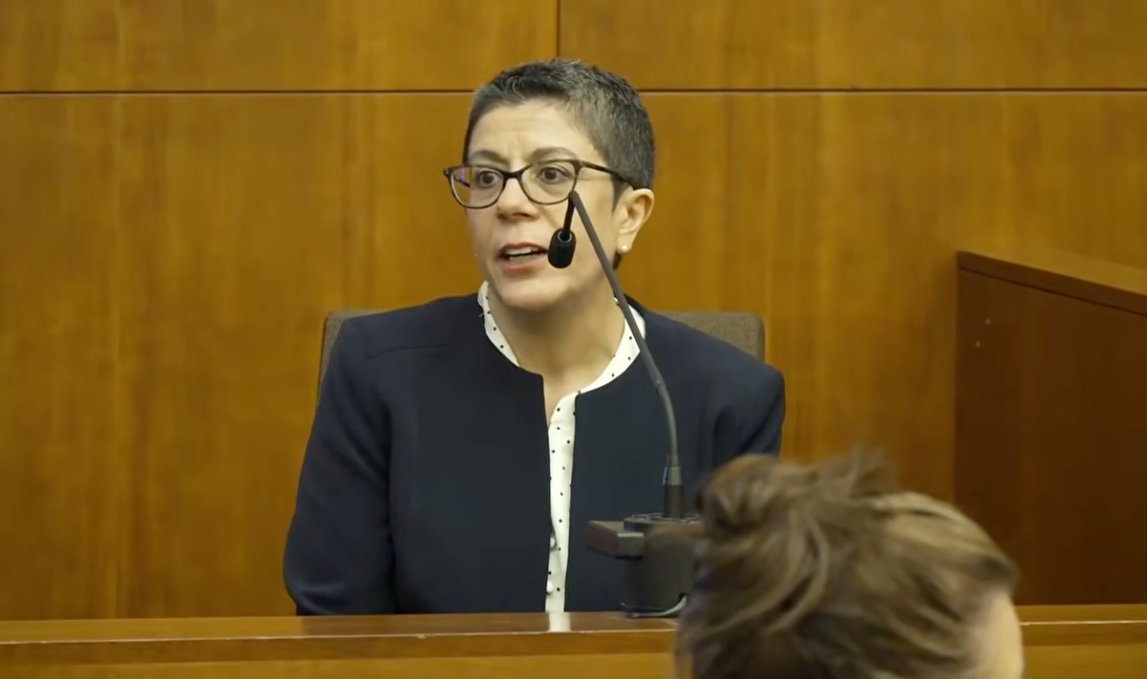 Dr. Alia Goodheart. – NBC 10 WJAR
After admitting herself to McLean Hospital over New Year’s Day in 2023, Lindsay Clancy denied having a plan to kill herself and cited “her children and her family, her mother” as reasons to live, according to a psychiatrist who saw her there.
Dr. Alia Goodheart, who is also a named defendant in Clancy’s medical malpractice lawsuit, confirmed Clancy arrived at McLean complaining that she was feeling “numb,” experiencing side effects from psychiatric medications, and “was finding it hard to sleep if she didn’t take medications.”
According to Goodheart, Clancy also reported intrusive and suicidal thoughts after starting Seroquel, an antipsychotic used to treat schizophrenia and bipolar disorder, and Remeron, an antidepressant, in early December 2022. Further, she testified, one of Clancy’s other mental health care providers had suspected she was suffering from bipolar disorder.
Still, Goodheart said Clancy was deemed a “minimal” risk upon her admission to McLean. She saw other psychiatrists there earlier on in her stay.
When Goodheart met her face-to-face for the first time on Jan. 3, she said Clancy appeared anxious but cooperative. She testified that she decided to continue with a plan to taper Clancy off of Seroquel and to monitor her symptoms and mood while keeping a lookout for any indicators of bipolar disorder.
Goodheart said she also suggested Cymbalta, an antidepressant also known as duloxetine, as an alternative medication after Clancy discontinued the Seroquel. She testified that she also switched Clancy from Valium to Ativan, though she said Clancy reported that her husband had concerns about her being on a benzodiazepine.
When she saw Clancy again on Jan. 4, Goodheart testified that Clancy reported she had slept the night before. While they had previously discussed discharging Clancy that Friday, she said Clancy was anxious about being in the hospital and wanted to be discharged earlier so she could be home with her children — particularly for her daughter’s upcoming birthday party.
“I said she could leave, provided she had psychiatric follow-up the next day,” Goodheart explained. “I wanted to ensure that if she wasn’t able to sleep that night after discharge, that she could speak with somebody about it so that they could come up with a plan to ensure that she could sleep and to monitor how she was doing off of the medication.”
To assess whether Clancy could think clearly, follow directions, “and get it together,” Goodheart said McLean staff asked her to set up the follow-up appointment herself, and she was able to do so.
Clancy was discharged from McLean on the afternoon of Jan. 5, she testified. Asked about factors that made her feel that Clancy was safe to go home, Goodheart noted that Clancy appeared to be “future-oriented” and a “caring mother” who had a support system in place and outpatient psychiatric care lined up.
Defense attorney Kevin Reddington put Goodheart in the hot seat for his cross-examination, grilling her about the resources provided to Clancy upon discharge and her knowledge of Clancy’s psychiatric care prior to her hospitalization. He specifically pointed to the Zoloft prescribed to Clancy by Dr. Jennifer Tufts, who began treating her in September 2022.
“Are you supposed to prescribe Zoloft, or sertraline, to a person that has bipolar?” he asked.
“I think it all depends on what you’re seeing when you see the patient,” Goodheart answered.
She also described Clancy as “cooperative” and “forthcoming” with her symptoms.
“I had no reason to think that she would not provide us with what other providers thought, just like she told us that [nurse practitioner Rebecca H. Jollotta, another mental health care professional,] said she was worried about bipolar disorder,” Goodheart explained.
Reddington asked whether psychiatric professionals can take patients at their word, or if they must verify information with other providers.
“I had no reason to believe that she was not a reliable reporter,” Goodheart maintained.
Reddington later asked Goodheart whether she was aware that some patients minimize or lie about their symptoms, and she said she was. He asked if that meant it was important to corroborate the symptoms a patient reports.
“When a patient presents and they are talking to us, it is not just about what they are saying. It’s about their body language, their eye contact. You can get a sense of whether a person is being honest or whether they are lying,” Goodheart testified. “The patient is there to get help; they’re going to tell us what is bothering them and what they’re concerned about. That’s why they’re in the hospital.”
Reddington pressed Goodheart about how many patients she treated who were suffering from postpartum psychosis, a condition Clancy says she experienced at the time of the killings.
“I don’t remember, but I think it would stick in my memory. So I don’t think that I probably have,” Goodheart answered softly, adding, “I haven’t seen any.”
She said she has, however, treated patients with postpartum depression.
12:05 p.m. update: Lindsay Clancy’s attorney accuses prosecutors of ‘hot mic’ moment in heated exchange with judge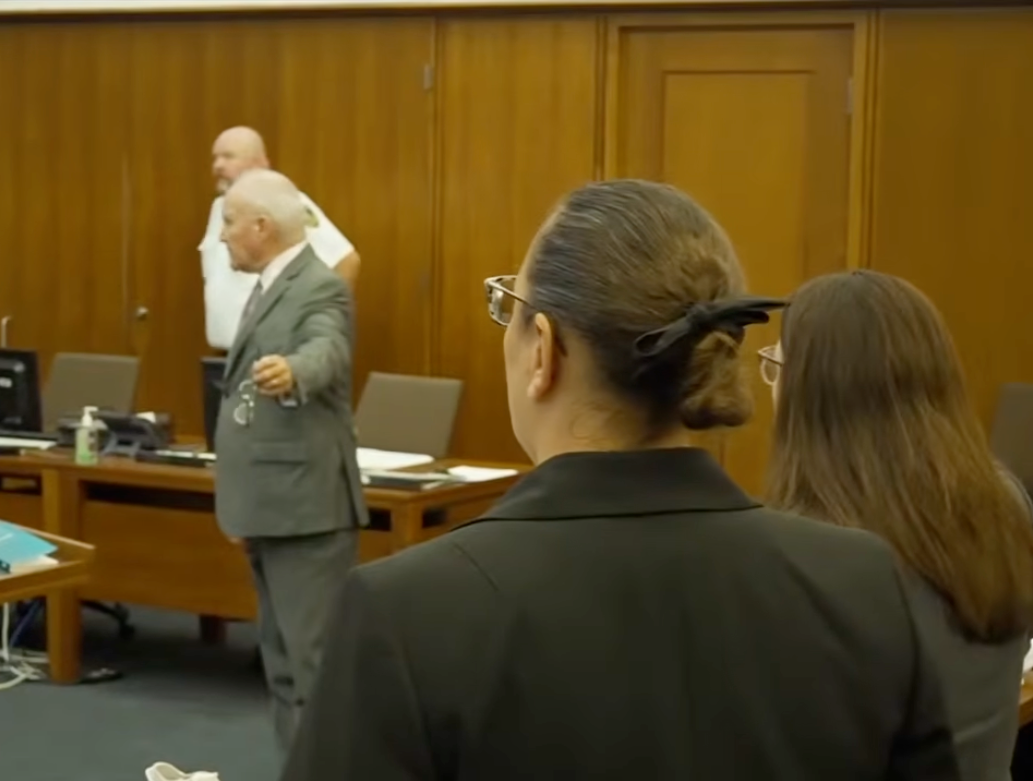 Defense attorney Kevin Reddington points to prosecutors as he levies his accusation. – NBC 10 WJAR
Following the morning recess, Lindsay Clancy’s defense attorney locked horns with Judge William Sullivan as the former accused prosecutors of making an insensitive comment during Thursday’s testimony.
When Sullivan suggested Reddington take the issue up at sidebar, the defense attorney responded with a raised voice.
“I don’t want to go to the sidebar; I really don’t want to go to the sidebar,” Reddington said, adding, “I want to tell you that … they (prosecutors) got picked up on a hot mic saying ‘shut her up’ during the playing of that autopsy.”
Reddington seemed to be referring to a moment after Thursday’s testimony from a medical examiner who performed 8-month-old Callan Clancy’s autopsy. As a sobbing Clancy is being led out of the courtroom for a break, a whispering voice can be heard as the livestream camera zooms in on the state seal. It’s hard to make out the exact wording.
Assistant District Attorney Jennifer Sprague appeared confused after Reddington levied his allegation, turning to fellow prosecutor Shanan Buckingham and mouthing “what?”
Sullivan called the attorneys up for a brief sidebar, after which Dr. Alia Goodheart resumed her testimony about Clancy’s treatment at McLean Hospital.
10 a.m. update: Friend of Lindsay Clancy’s family takes the stand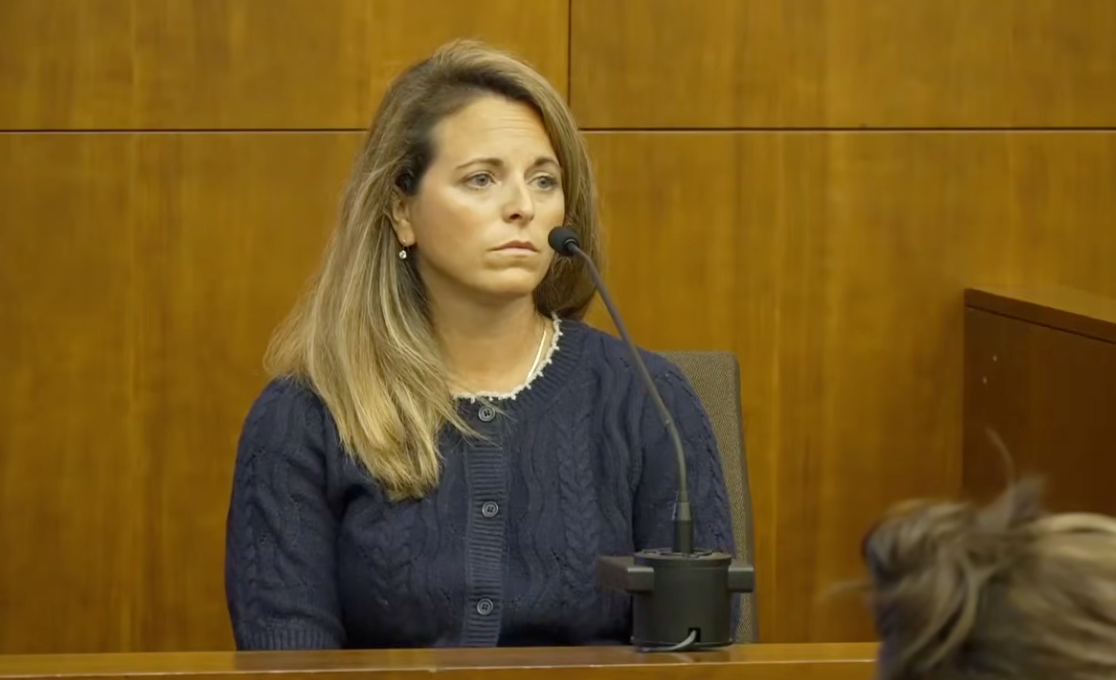 Sarah Carney. – NBC 10 WJAR
By the fall of 2022, months after she had given birth to her third child, Lindsay Clancy “just seemed thinner, more frail,” a friend of the family testified Friday.
But Sarah Carney, who befriended Clancy’s former husband, Patrick, in college, said she didn’t notice any changes in Lindsay’s overall demeanor in the fall and early winter of 2022.
Carney and her husband Kyle, who testified Thursday, described getting together with Lindsay and Patrick Clancy and the couple’s two older children, Cora and Dawson, for a bonfire on Jan. 22, 2023.
Sarah Carney testified that Lindsay seemed “quiet, but fairly normal” during the meetup. She recalled asking Lindsay how she was doing at some point and said Lindsay told her she was “good.”
 Kimberlee Hardy. – NBC 10 WJAR
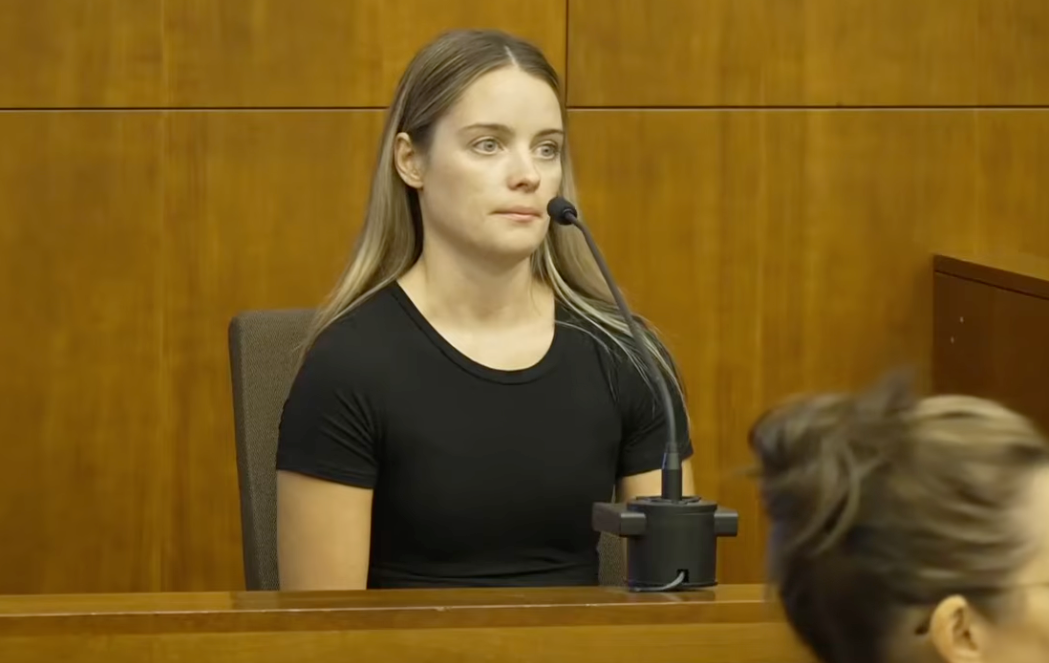
Earlier on Friday, jurors heard from Kimberlee Hardy, the former child service director at the Kingsbury Club in Kingston. She testified that she would often see Cora and Dawson in the playroom there, describing Lindsay as “very shy” during drop-offs and pick-ups.
Hardy testified that she was aware the Clancys had a third child and asked the couple if they wanted to bring him, but they informed her they were “scared of sickness.”
“[Lindsay] was nervous about colds, because it was cold and flu season,” Hardy explained.
On cross-examination, Hardy denied Lindsay ever seemed angry at her children.
“She seemed happy to be with them,” Hardy testified. “She always picked up on time, and they were always excited to see her.”
Lindsay Clancy’s murder trial wraps up its second week of testimony Friday after jurors heard from Clancy’s former father-in-law and several friends who described her as a loving mother.
“She was very, very good” as a mother, Christopher Clancy testified Thursday. “She fed them great. She did a lot of things with them. They [were] like the all-American family.”
He said he was aware his former daughter-in-law was struggling with her mental health following the birth of her third child, Callan.
“I knew she was having a hard time sleeping. I knew she just didn’t feel well,” Christopher Clancy recalled. “I knew she had gone to the emergency room where my wife [Sue, a nurse at South Shore Hospital] was working.”
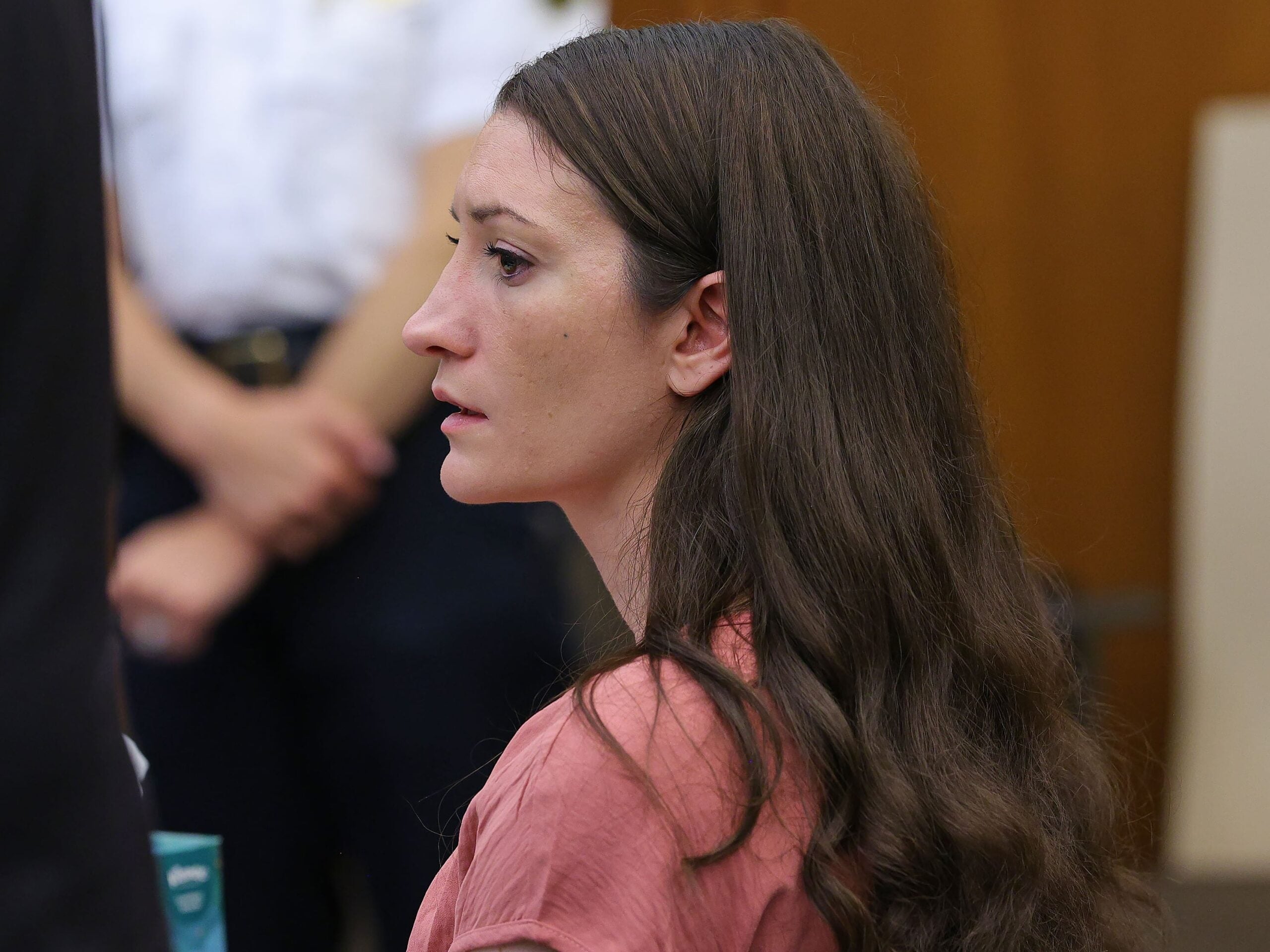
Lindsay Clancy, now 35, does not deny she strangled her three children — 5-year-old Cora, 3-year-old Dawson, and 8-month-old Callan — at home in Duxbury on Jan. 24, 2023. But she’s raising an insanity defense, arguing that she cannot be held criminally responsible because she was plagued by postpartum mental illness and heard a voice in her head instructing her to kill the kids and herself.
Clancy sobbed loudly in court Thursday as medical examiner Dr. Kimberley Springer spoke about performing an autopsy on Callan, who she said died of “complications of mechanical asphyxia.”
Prosecutors argue that Clancy, who remains paralyzed following a suicide attempt the night of the killings, acted “deliberately and meticulously” because she had grown tired of her life as a mother. Defense attorney Kevin Reddington has disputed that theory, using his cross-examination of Clancy’s friend and former Massachusetts General Hospital co-worker, Andrea Hennigan, to underscore his point.
“Lindsay, from the time I met her as a young woman, very much desired to be a mother and have a family,” Hennigan testified Thursday, adding, “Lindsay was a very loving, caring mother. This is exactly what she wanted; she wanted a big family. She was happy to have her children close in age.”
Hennigan also testified that Clancy had been open about her struggles with insomnia and anxiety in the fall of 2022. She said Clancy might have used words like “brain fog” to describe her condition, though she appeared coherent and clear at the time.
Hennigan said she texted Clancy shortly before Jan. 24 to check in, and Clancy informed her she was continuing to work with her psychiatric practitioners to find medication that would allow her to sleep at night and function during the day. Clancy also mentioned bad or negative side effects that required her to switch prescriptions, Hennigan recalled.
“I believe that Lindsay was always hopeful that she would get the care that she was seeking,” she testified.
Two more friends, Bethany DeCollibus and Amy Bevins, also testified that Clancy confided in them about her postpartum mental illness. While DeCollibus said Clancy didn’t seem to have difficulty with day-to-day tasks and never expressed thoughts of harm or suicide, she testified that her friend told her in January 2023 that her sleep issues hadn’t improved, “and that she feels like a zombie.”
Bevins, Clancy’s friend since childhood, said they texted shortly before Jan. 24, and Clancy shared that she was tapering off of a medication that caused her to have “dark thoughts.” She recalled that Clancy sounded hopeful at the time.
Bevins testified that she later visited Clancy at a rehabilitation center following the killings, making small talk and playing a game of Uno. She said Clancy had a “neutral” affect and did not mention her children, though she also said she’d been instructed by Clancy’s sister beforehand not to bring up the killings.
Asked her opinion of Clancy on cross-examination, Bevins replied, “I knew her as a good person, a good friend, a good mom.”
Dr. Lindsay Rosshirt, the Clancy family’s former pediatrician, likewise agreed Clancy appeared to be a doting, concerned mother, and her three children seemed happy and healthy. She also agreed with Reddington that Clancy was not a “complainer.”
“She was a hell of a mother, wasn’t she?” Reddington asked.
“I always thought she was a good mom,” Rosshirt answered.
Jurors on Thursday also heard from three teachers who worked at Learning Sprouts, the preschool and daycare that Dawson and Cora Clancy attended. Susan Fraone testified that Dawson began having “harder drop-offs” around mid-October, 2022. Asked if that was typical behavior for a 3-year-old, she said it could be, but “it was a little not typical for Dawson.”
Another teacher, Susan Bertolo, said she noticed Cora had to use the bathroom more frequently on Jan. 23, 2023. She mentioned it to Clancy, who said she would let Cora’s doctor know during her check-up the following day.
Stephanie Williams, also a teacher at Learning Sprouts, said Cora complained of a stomachache and was reluctant to get off her nap cot that afternoon when it was time to leave. She said Clancy picked her daughter up and said, “Oh, baby. Come on, let’s go get Dawson and we’ll go home.”
Williams further testified that she didn’t notice anything different about Clancy that fall leading into January 2023.
“She was just a very loving mother who cared about her children,” Williams said.
The final witness Thursday was Massachusetts State Police Sgt. Andrew Chiachio, who confirmed Clancy posted in the Facebook group “Attachment Parenting for Littles” in May 2021. Prosecutors displayed a copy of that post, in which Clancy described Dawson — then 19 months old — as “the most difficult human I have ever encountered.”
“I mean that with all of the love in my heart but I honestly cannot make it through a day without getting so frustrated with him,” the post continued. “EVERY. SINGLE. THING. with him is a battle.”
During his cross-examination, Chiachio agreed with Reddington’s assessment that State Police “must have turned things inside out to find out if Lindsay Clancy was ever abusive to her son Dawson.”
“Found nothing, did you?” Reddington asked.
No, Chiachio replied.
 Lindsay Clancy in Plymouth Superior Court. – Greg Derr/The Patriot Ledger, Pool

Abby Patkin is a general assignment news reporter whose work touches on public transit, crime, health, and everything in between. She has been covering the Lindsay Clancy murder case since January 2023.
Get everything you need to know to start your day, delivered right to your inbox every morning.