Просмотр новости
Найдите то, что Вас интересует
 Спутники
 РН
РН SpaceX
 Роскосмос
 NASA
NASA
СпутникиРНSpaceXРоскосмосNASADr. Jennifer Tufts testified Friday that Clancy repeatedly denied having suicidal or homicidal thoughts in the months before she killed her children and tried to take her own life.
The post Livestream: Lindsay Clancy murder trial continues with psychiatrist under cross-examination appeared first on Boston.com.
Livestream via NBC 10 WJAR.
This story may contain content readers find disturbing. For help with postpartum mood disorders, text or call 1-833-TLC-MAMA for the National Maternal Mental Health Hotline. If you or someone you know is having thoughts of suicide, call 988 or go to https://988lifeline.org/ to chat online.
Lindsay Clancy‘s murder trial enters its third week Monday with Dr. Jennifer Tufts, Clancy’s former psychiatrist, back on the stand under cross-examination.
Fielding questions from prosecutors Friday, Tufts testified that Clancy appeared “depressed and flat” the day before she strangled her three children and attempted suicide at home in Duxbury on Jan. 24, 2023. At prosecutors’ prompting, Tufts also told jurors Clancy repeatedly denied having suicidal or homicidal thoughts in the months leading up to the killings.
Clancy, now 35, doesn’t deny she killed 5-year-old Cora, 3-year-old Dawson, and 8-month-old Callan. However, she’s raising what’s commonly known as an insanity defense as she argues she can’t be held criminally responsible because she was wracked by postpartum mental illness and heard a voice in her head telling her to kill.
Clancy’s lawyer has pointed to her numerous psychiatric medications as a contributing factor in her downward spiral. Yet Tufts — who treated Clancy between September 2022 and January 2023 — testified Friday that Clancy was “generally reluctant” to try medications for her mental health and told Tufts in one session, “I keep reaching out to different people and not sticking with the plan.”
Tufts further opined that Clancy had a tendency to over-attribute some of her symptoms to medication side effects. She testified that Clancy reached out to her on Jan. 11, 2023, to ask about ketamine therapy, and while Tufts thought it could be a good fit for Clancy, “I didn’t think we were at that point yet.”
Prosecutor Jennifer Sprague also confirmed Clancy told Tufts around that point that she was “getting desperate for something that would work quickly” to get her out of her depressed state.
Tufts, who is also a defendant in Clancy’s medical malpractice lawsuit, testified that her initial diagnosis was generalized anxiety disorder and an adjustment disorder with depressed mood, or a reaction to a particular life event that may fall short of the criteria for, say, major depressive disorder.
Tufts told jurors she also raised the possibility of bipolar disorder — a condition with which Clancy has since been diagnosed — but that Clancy “really didn’t meet the criteria” at the time.
Another psychiatrist named in Clancy’s malpractice lawsuit, Dr. Alia Goodheart, testified Friday that Clancy denied having a suicide plan after admitting herself to McLean Hospital over New Year’s Day in 2023.
Further, she said, Clancy cited “her children and her family, her mother” as reasons to live.
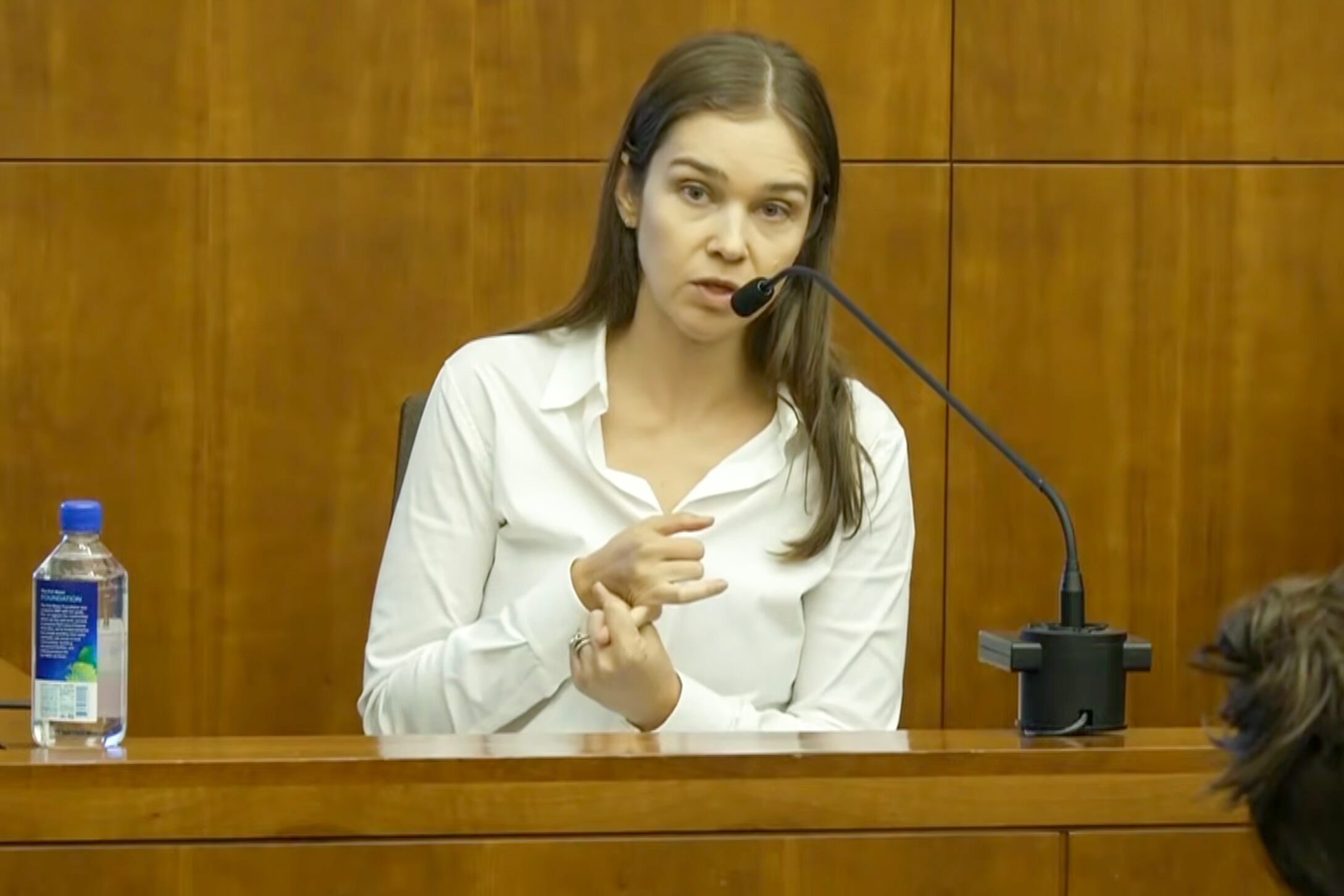 Dr. Jennifer Tufts, one of the first medical professionals Clancy consulted, lists the symptoms of bipolar disorder for the court on Friday, August 7, 2026 during the murder trial of Lindsay Clancy in Plymouth. – Court TV

Abby Patkin is a general assignment news reporter whose work touches on public transit, crime, health, and everything in between. She has been covering the Lindsay Clancy murder case since January 2023.
Get everything you need to know to start your day, delivered right to your inbox every morning.