Просмотр новости
Найдите то, что Вас интересует
 Спутники
 РН
РН SpaceX
 Роскосмос
 NASA
NASA
СпутникиРНSpaceXРоскосмосNASAChloroplast genomes provide important insights into plant phylogeny, genome evolution, and molecular marker development. In this study, we sequenced, assembled, and analyzed the complete chloroplast genomes of two endemic species from Uzbekistan, Astragalus nuratensis and Oxytropis pseudorosea. Genome skimming produced high-quality paired-end reads, yielding mean chloroplast sequencing depths of 638.13× for Astragalus nuratensis and 1,725.34× for Oxytropis pseudorosea, respectively. The chloroplast genomes were 122,316 bp in A. nuratensis and 122,708 bp in O. pseudorosea. Both genomes encoded 110 unique genes, including 76 protein-coding genes, 30 transfer RNA genes, and 4 ribosomal RNA genes. Consistent with members of the inverted repeat–lacking clade of Fabaceae, both species lacked the typical inverted repeat regions, resulting in a single-copy genome structure. Phylogenetic analysis based on 119 complete chloroplast genomes resolved major lineages within Astragalus and related genera with strong support. Astragalus nuratensis was placed within the Phaca clade, while Oxytropis pseudorosea formed part of a distinct Oxytropis lineage. These results provide new genomic resources for understanding evolutionary relationships and plastome evolution in Central Asian legumes.
Genome Note
Revised
[version 4; peer review: 2 approved]
Diyorjon Hamrayev1, Bobur Karimov
https://orcid.org/0009-0005-5874-1033
1, Husniddin Esanovhttps://orcid.org/0000-0003-2813-3019
2, [...] Sodik Khuzhzhiev3, Maxzuna Nasretdinova4, Oysha Jabborova5, Oybek Omonov6,7, Mohistara Sharipova8, Ziyoviddin Yusupov1, Alijon Esankulov9Diyorjon Hamrayev1, Bobur Karimov
https://orcid.org/0009-0005-5874-1033
1, [...] Husniddin Esanovhttps://orcid.org/0000-0003-2813-3019
2, Sodik Khuzhzhiev3, Maxzuna Nasretdinova4, Oysha Jabborova5, Oybek Omonov6,7, Mohistara Sharipova8, Ziyoviddin Yusupov1, Alijon Esankulov91 Institute of Botany, Academy of Sciences of Uzbekistan, Tashkent, Uzbekistan
2 Bukhara State University, Bukhara, Uzbekistan
3 Navoi State University, Navoi, Uzbekistan
4 Samarkand State Medical University, Samarkand, Uzbekistan
5 Bukhara state medical institute named after Abu Ali ibn Sino, Bukhara, Uzbekistan
6 Karshi State University, Qarshi, Kashkadarya Province, Uzbekistan
7 Turan University, Karshi, Uzbekistan
8 Jizzakh State Pedagogical University, Jizzakh, Uzbekistan
9 Tashkent Botanical Garden under the Institute of Botany, Academy of Sciences, Tashkent, Uzbekistan
Diyorjon Hamrayev
Roles: Writing – Original Draft Preparation
Bobur Karimov
Roles: Writing – Original Draft Preparation, Writing – Review & Editing
Husniddin Esanov
Roles: Writing – Original Draft Preparation
Sodik Khuzhzhiev
Roles: Writing – Original Draft Preparation
Maxzuna Nasretdinova
Roles: Writing – Original Draft Preparation
Oysha Jabborova
Roles: Writing – Original Draft Preparation
Oybek Omonov
Roles: Writing – Original Draft Preparation
Mohistara Sharipova
Roles: Writing – Original Draft Preparation
Ziyoviddin Yusupov
Roles: Conceptualization, Writing – Original Draft Preparation, Writing – Review & Editing
Alijon Esankulov
Roles: Writing – Original Draft Preparation
OPEN PEER REVIEW
REVIEWER STATUS
Corresponding author: Ziyoviddin Yusupov Competing interests: No competing interests were disclosed.
Grant information: This work was supported by the project “Digital Nature: Development of a digital platform for the flora of Central Uzbekistan” (2025–2029), implemented by the Institute of Botany, Academy of Sciences of the Republic of Uzbekistan. Additional support was provided by the project “Assessing climate change adaptation in endangered plants of Uzbekistan: A DNA barcoding approach” (AL-9224104464). The funders had no role in study design, data collection, analysis, decision to publish, or preparation of the manuscript.
The funders had no role in study design, data collection and analysis, decision to publish, or preparation of the manuscript.
Copyright: © 2026 Hamrayev D et al. This is an open access article distributed under the terms of the Creative Commons Attribution License, which permits unrestricted use, distribution, and reproduction in any medium, provided the original work is properly cited. How to cite: Hamrayev D, Karimov B, Esanov H et al. Complete chloroplast genomes of endemic Astragalus and Oxytropis species from Uzbekistan [version 4; peer review: 2 approved]. F1000Research 2026, 15:445 (https://doi.org/10.12688/f1000research.178398.4) First published: 27 Mar 2026, 15:445 (https://doi.org/10.12688/f1000research.178398.1) Latest published: 14 Jul 2026, 15:445 (https://doi.org/10.12688/f1000research.178398.4)
Chloroplast (cp) genomes of angiosperms have been widely used in studies of phylogeny, sequence variation, genome evolution, and the development of molecular markers (Dong et al., 2013). In most angiosperms, the cp genome exhibits a conserved quadripartite structure consisting of a large single-copy (LSC) region, a small single-copy (SSC) region, and two inverted repeat (IR) regions (Sugiura, 1992). Nevertheless, structural modifications, including gene rearrangements, inversions, expansion or loss of IR regions, gene loss, and pseudogene formation, have been documented in several lineages, particularly in Fabaceae (Cai et al., 2008; Son & Choi, 2022).
Fabaceae is one of the largest families of flowering plants and includes many species of considerable ecological and agricultural importance. According to recent classifications, the family is divided into six subfamilies: Caesalpinioideae, Cercidoideae, Detarioideae, Dialioideae, Duparquetioideae, and Faboideae (Papilionoideae) (Azani et al., 2017). Within Faboideae, the inverted repeat–lacking clade (IRLC) is characterized by the loss of one copy of the IR region (approximately 25 kb) in the chloroplast genome. This clade comprises about 52 genera and more than 4,000 species, and plastomes of IRLC taxa frequently show gene loss or pseudogenization (e.g., rps16, rpl22, infA, accD, and ycf4), intron loss (clpP, atpF, and rpoC1), inversions, and occasional transfer of genes to the nuclear genome (Son & Choi, 2022).
Within the IRLC, the genera Astragalus L. (3,095 species) and Oxytropis DC. (608 species) represent highly diverse and taxonomically complex groups (POWO, 2026). In recent years, complete chloroplast genome sequencing has been increasingly applied to resolve phylogenetic relationships and species boundaries within the genera Astragalus and Oxytropis. Several chloroplast genomes of species belonging to these genera have been published (Su et al., 2021; Li et al., 2025; Bobur et al., 2026). Despite these advances, chloroplast genome data remain limited for many narrowly distributed endemic species from Uzbekistan. In the present study, we sequenced, assembled, and analyzed the cp genomes of Oxytropis pseudorosea Filim. and Astragalus nuratensis Popov, two narrowly distributed endemic species from the Nuratau Mountains of Uzbekistan, Central Asia.
Leaf samples of Oxytropis pseudorosea and Astragalus nuratensis were collected in 2024 from the Nuratau Mountains, Uzbekistan, by Diyorjon Hamrayev. Astragalus nuratensis was identified by Beshko Natalya and its voucher specimen was deposited in the National Herbarium of Uzbekistan (TASH) under accession number TASH-2024-AN-001, whereas Oxytropis pseudorosea was identified by Doston Turdiyev and its voucher specimen was deposited in TASH under accession number TASH-2024-OP-002.
Genomic DNA was isolated from leaf tissue using the Tiangen DP305 Plant Genomic DNA Kit (Beijing, China). Libraries were prepared with the NEBNext® Ultra™ DNA Library Prep Kit for Illumina (NEB, USA; Cat. E7370L) following the manufacturer’s protocol, with index codes added during preparation. DNA was sonicated to ~350 bp and fragments were end-repaired, A-tailed, and ligated to Illumina adapters, followed by PCR amplification. PCR products were purified using AMPure XP beads (Beverly, USA). Library quality was assessed on an Agilent 5400 system, and concentrations were quantified by qPCR (1.5 nM). Qualified libraries were pooled and sequenced on Illumina platforms using the PE150 strategy at Novogene (Beijing, China).
Raw reads were assembled de novo using NOVOPlasty v4.3.5 (Dierckxsens et al., 2017), with the plastomes of Astragalus agrestis Douglas ex G. Don and Oxytropis neimonggolica C.W. Chang & Y.Z. Zhao serving as seed references. The assembly generated a single circular chloroplast genome for each species without structural ambiguities. To assess assembly accuracy and sequencing depth, clean paired-end reads were aligned to the assembled plastomes using BWA-MEM v0.7.17 (Li, 2013). Alignments were subsequently sorted and indexed with SAMtools v1.19.2 (Li et al., 2009). Genome annotation was conducted in Geneious v9.0.2 (Kearse et al., 2012) using closely related reference plastomes. Protein-coding genes, transfer RNAs, and ribosomal RNAs were annotated, and gene boundaries were manually curated to ensure accurate start/stop codons and intron–exon junctions. Furthermore, the cp map was generated using Chloroplot (https://irscope.shinyapps.io/chloroplot/) (Zheng et al., 2020).
For several taxa included in the phylogenetic analysis, complete chloroplast genome sequences were not available in GenBank. Only raw sequencing data (SRA accessions; SRR numbers listed in Table 1) were available. Therefore, the chloroplast genomes of these taxa were assembled de novo using NOVOPlasty v4.3.5 (Dierckxsens et al., 2017). A total of 119 complete chloroplast genome sequences were included in the phylogenetic analysis. Of these, two plastomes were newly sequenced in this study, while the remaining 117 sequences were downloaded from the NCBI GenBank database ( Table 1). Complete chloroplast genome sequences were aligned using MAFFT (Katoh & Standley, 2013). The alignment was manually inspected and used to reconstruct phylogenetic relationships under the maximum likelihood criterion in IQ-TREE 2 (Minh et al., 2020). The best-fit substitution model was selected using ModelFinder (Kalyaanamoorthy et al., 2017), and branch support was assessed with 1,000 ultrafast bootstrap replicates (Hoang et al., 2018).
For taxa lacking published chloroplast genome accessions, plastomes were assembled in this study from raw reads downloaded from the NCBI Sequence Read Archive (SRR accessions provided).
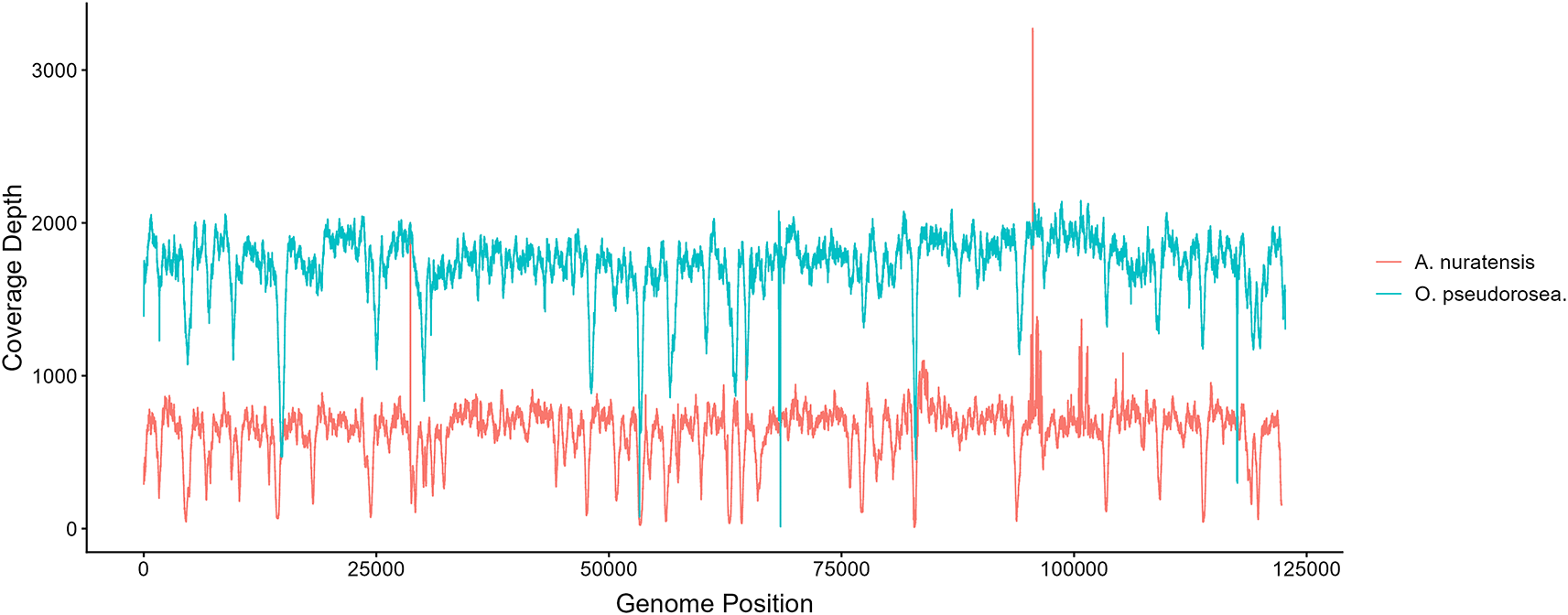
Genome skimming generated a total of 39,668,027 paired-end reads for A. nuratensis and 16,998,801 paired-end reads for O. pseudorosea. After quality filtering, 39,666,696 and 16,994,332 reads were retained as high-quality reads for A. nuratensis and O. pseudorosea, respectively. Mapping of the filtered reads to the assembled chloroplast reference genomes showed that 540,829 reads (1.36%) in A. nuratensis and 1,421,542 reads (8.36%) in O. pseudorosea were successfully aligned. Properly paired reads accounted for 1.33% and 8.27% of the total reads, respectively. The chloroplast genome of Astragalus nuratensis was recovered with an average sequencing depth of 638.13×, with coverage ranging from 9× to 3273×. In comparison, the chloroplast genome of Oxytropis pseudorosea exhibited a substantially higher mean sequencing depth of 1,725.34×, with coverage ranging from 12× to 2146× (Figure 1).
The complete chloroplast genome of O. pseudorosea was 122,708 bp in length, whereas that of A. nuratensis was 122,316 bp. Both genomes encoded a total of 110 unique genes, including 77 protein-coding genes (CDS), 30 transfer RNA (tRNA) genes, and 4 ribosomal RNA (rRNA) genes ( Figure 2). In both Astragalus nuratensis and Oxytropis pseudorosea, the genes rpl16, rpl2, rpoC1, ndhA, ndhB, petB, petD, atpF, clpP, trnA-UGC, trnG-UCC, trnI-GAU, trnK-UUU, trnL-UAA, and trnV-UAC each contain one intron, while ycf3 contains two introns. In addition, rps12 is a trans-spliced gene with two introns (one cis-spliced and one trans-spliced). Consistent with other members of the inverted repeat–lacking clade (IRLC) of legumes, the typical inverted repeat regions were absent in both species, resulting in a single-copy chloroplast genome structure, a feature commonly reported in plastome studies of Astragalus and related taxa (Moghaddam et al., 2023; Ma et al., 2025; Li et al., 2025).
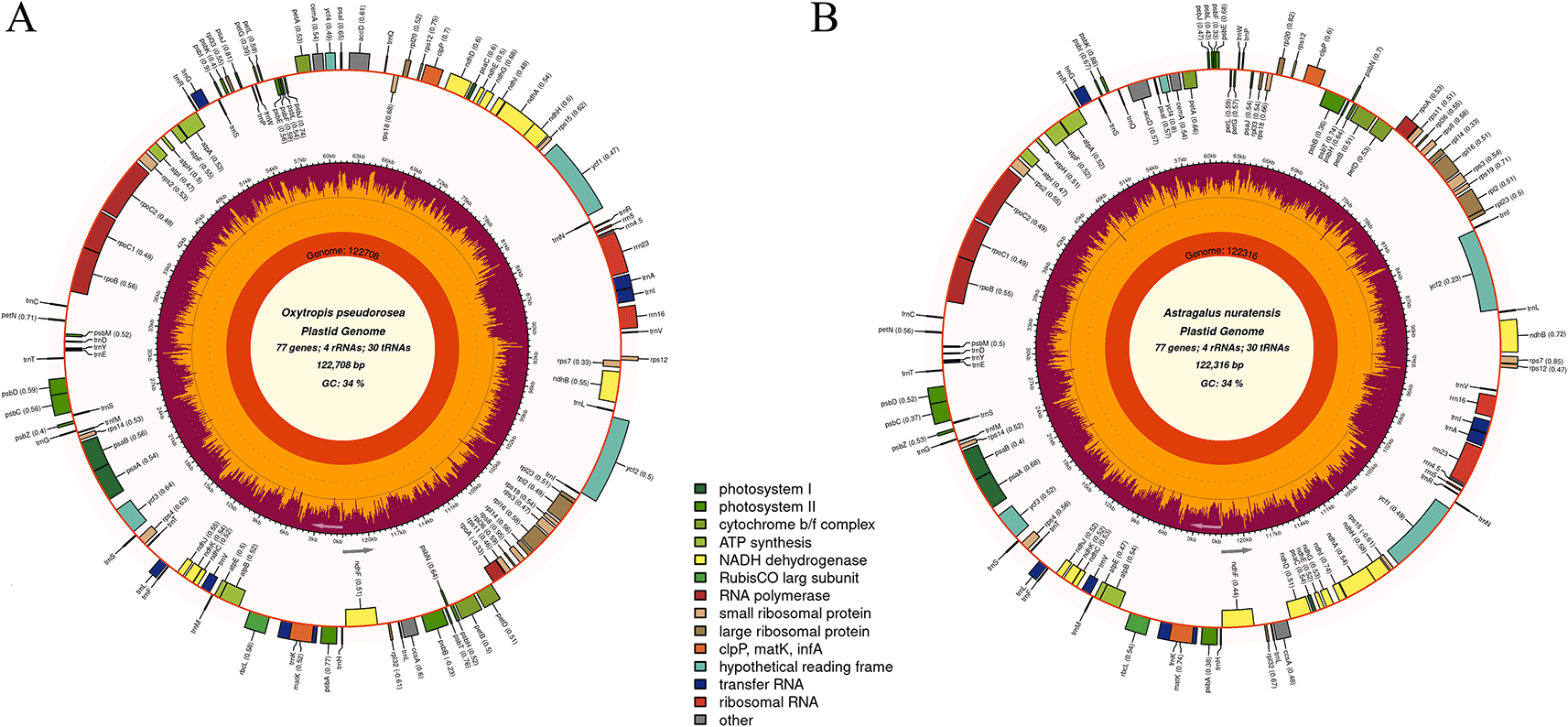
The innermost circle represents the lengths of chloroplast genomes. The second concentric ring illustrates nucleotide composition, where the orange segment indicates GC content and the yellow segment corresponds to AT content. The outermost circle displays the distribution of genes, which are color-coded according to their functional classification. The transcriptional orientation is indicated such that genes on the inner circle are transcribed clockwise, whereas those on the outer circle are transcribed anticlockwise.
Maximum likelihood analysis based on complete chloroplast genome sequences resolved the sampled taxa into several well-supported clades corresponding to recognized infrageneric groups within Astragalus and related genera ( Figure 3). Most backbone nodes received strong bootstrap support (BS ≥ 95), indicating a stable phylogenetic structure. The overall topology was consistent with previous phylogenomic studies of Astragalus, which also recovered major lineages with strong support using plastome and target-enrichment data (Su et al., 2021; Buono et al., 2025).
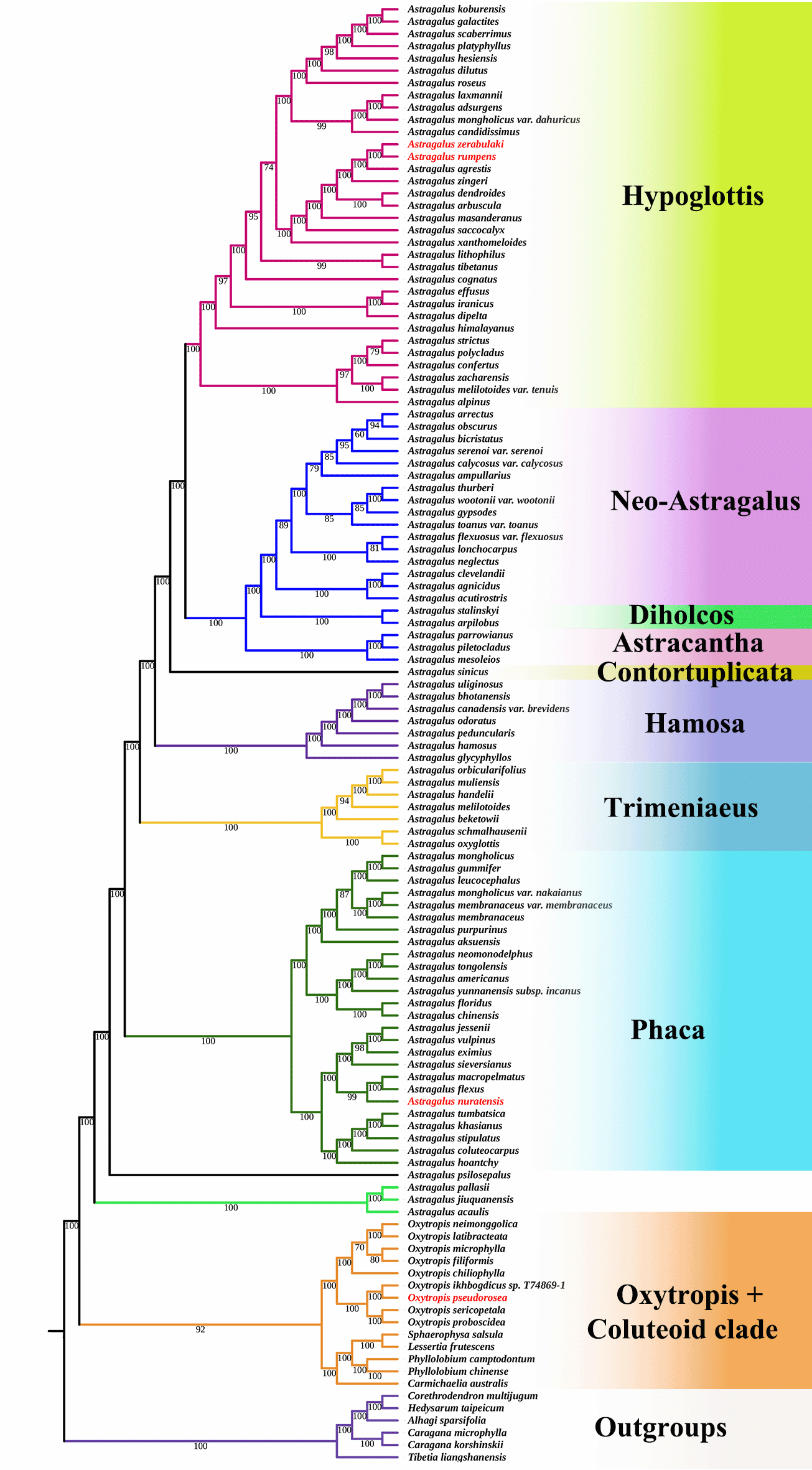
Species of Astragalus were distributed among the major lineages corresponding to the Hypoglottis, Neo-Astragalus, Diholcos, Astracantha, Contortuplicata, Hamosa, Trimeniaeus, and Phaca clades. Among these, the Phaca clade represented one of the largest lineages and included A. nuratensis, which grouped with other members of this clade with strong bootstrap support. In the phylogenetic tree, A. zerabulaki, another endemic species, was resolved within the Hypoglottis clade and formed a well-supported sister relationship with A. rumpens, indicating close evolutionary relationships among members of this lineage.
Species of Oxytropis, including O. pseudorosea, formed a distinct and well-supported lineage corresponding to the Oxytropis + Coluteoid clade, clearly separated from the main Astragalus lineages, in agreement with previous plastome-based phylogenies (Buono et al., 2025). O. pseudorosea (sect. Eumorpha) as sister to O. ikhbogdicus, despite the latter’s morphological affinity to section Mesogaea. This suggests that current morphological classifications in Oxytropis may reflect convergent evolution rather than true genetic relationships (Munkhtulga et al., 2026).
This work was supported by the project “Digital Nature: Development of a digital platform for the flora of Central Uzbekistan” (2025–2029), implemented by the Institute of Botany, Academy of Sciences of the Republic of Uzbekistan. Additional support was provided by the project “Assessing climate change adaptation in endangered plants of Uzbekistan: A DNA barcoding approach” (AL-9224104464). The funders had no role in study design, data collection, analysis, decision to publish, or preparation of the manuscript.
The funders had no role in study design, data collection and analysis, decision to publish, or preparation of the manuscript.
Published: 14 Jul 2026, 15:445
Published: 01 Jun 2026, 15:445
Published: 14 May 2026, 15:445
Published: 27 Mar 2026, 15:445
© 2026 Hamrayev D et al. This is an open access article distributed under the terms of the Creative Commons Attribution License, which permits unrestricted use, distribution, and reproduction in any medium, provided the original work is properly cited.
Current Reviewer Status: ?
Key to Reviewer Statuses VIEW HIDE
ApprovedThe paper is scientifically sound in its current form and only minor, if any, improvements are suggested
Approved with reservations A number of small changes, sometimes more significant revisions are required to address specific details and improve the papers academic merit.
Not approvedFundamental flaws in the paper seriously undermine the findings and conclusions
Version 4
VERSION 4
PUBLISHED 14 Jul 2026
Revised
Reviewer Report 15 Jul 2026
Hoang Dang Khoa Do, Nguyen Tat Thanh University, Ho Chi Minh City, Ho Chi Minh, Vietnam
Approved
VIEWS 0
Competing Interests: No competing interests were disclosed.
Reviewer Expertise: Plant Chloroplast genomes
CloseVersion 3
VERSION 3
PUBLISHED 01 Jun 2026
Revised
Reviewer Report 03 Jun 2026
Hoang Dang Khoa Do, Nguyen Tat Thanh University, Ho Chi Minh City, Ho Chi Minh, Vietnam
Approved with Reservations
VIEWS 0
Competing Interests: No competing interests were disclosed.
Reviewer Expertise: Plant Chloroplast genomes
CloseVersion 2
VERSION 2
PUBLISHED 14 May 2026
Revised
Reviewer Report 22 May 2026
Hoang Dang Khoa Do, Nguyen Tat Thanh University, Ho Chi Minh City, Ho Chi Minh, Vietnam
Approved with Reservations
VIEWS 0
Competing Interests: No competing interests were disclosed.
Reviewer Expertise: Plant Chloroplast genomes
CloseReviewer Report 20 May 2026
Yoshinori Fukasawa, Center for Bioscience Research and Education Utsunomiya University, Tochigi, Japan
Approved
VIEWS 0
Competing Interests: No competing interests were disclosed.
Reviewer Expertise: Plant genomics and bioinformatics
CloseVersion 1
VERSION 1
PUBLISHED 27 Mar 2026
Reviewer Report 27 Apr 2026
Yoshinori Fukasawa, Center for Bioscience Research and Education Utsunomiya University, Tochigi, Japan
Approved with Reservations
VIEWS 0
Are the rationale for sequencing the genome and the species significance clearly described?
Yes
Are the protocols appropriate and is the work technically sound?
Yes
Are sufficient details of the sequencing and extraction, software used, and materials provided to allow replication by others?
Partly
Are the datasets clearly presented in a usable and accessible format, and the assembly and annotation available in an appropriate subject-specific repository?
Yes
Competing Interests: No competing interests were disclosed.
Reviewer Expertise: Plant genomics and bioinformatics
CloseReviewer Report 03 Apr 2026
Hoang Dang Khoa Do, Nguyen Tat Thanh University, Ho Chi Minh City, Ho Chi Minh, Vietnam
Approved with Reservations
VIEWS 0
Are the rationale for sequencing the genome and the species significance clearly described?
Yes
Are the protocols appropriate and is the work technically sound?
Yes
Are sufficient details of the sequencing and extraction, software used, and materials provided to allow replication by others?
Partly
Are the datasets clearly presented in a usable and accessible format, and the assembly and annotation available in an appropriate subject-specific repository?
Yes
Competing Interests: No competing interests were disclosed.
Reviewer Expertise: Plant Chloroplast genomes
Close