Просмотр новости
Найдите то, что Вас интересует
 Спутники
 РН
 SpaceX
 Роскосмос
 NASA
СпутникиРНSpaceXРоскосмосNASA
Israel heads into a closely contested election as Netanyahu fights to retain power after years of war, political scandals, and mass protests Read Full Article at RT.com
The vote comes amid deep divisions, mounting criticism of Netanyahu’s wartime leadership, and uncertainty over who will govern
Israelis head to the polls on Tuesday in a closely contested parliamentary election that could end the nearly four-year rule of Prime Minister Benjamin Netanyahu’s current coalition, following years of war, political scandals, mass protests, and deepening divisions within Israeli society.
The vote is widely viewed as a referendum on Netanyahu’s leadership, with the opposition blaming him for security failures surrounding the October 7, 2023 Hamas attack and accusing his government of undermining democratic institutions.
The Hamas attack killed around 1,200 people and saw some 250 taken hostage. Israel responded with a military campaign in Gaza that has killed more than 74,000 Palestinians, including at least 21,000 children, according to the local Health Ministry.
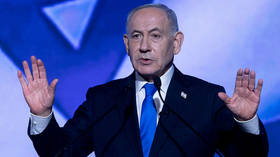
Despite their fierce political rivalry, the main Israeli election contenders differ less considerably over the country’s military policies and its approach to the Palestinians.
Netanyahu’s fight for political survival
Opposition leader Gadi Eisenkot, a former military chief who heads the centrist Yashar party, has emerged as Netanyahu’s strongest challenger.
Speaking at a mass rally in Tel Aviv on Sunday, Eisenkot urged traditional voters for Netanyahu’s Likud party to abandon the prime minister, claiming that Israel cannot survive another four years under his leadership.
“Anyone who thinks our Israel can survive another four years like these is living under a dangerous misconception,” Eisenkot said, according to the Times of Israel.
Netanyahu is also facing accusations of attempting to provoke a new war with Iran to postpone the election. Former Defense Minister Avigdor Liberman has demanded a criminal investigation into the prime minister on suspicion of treason after Channel 12 reported a clash between Netanyahu and Israel Defense Forces Chief of Staff Eyal Zamir over a proposed military operation.
“The man has gone off the rails,” Liberman said on Monday, accusing Netanyahu of putting his political survival ahead of national security. The prime minister denied the reported confrontation, and no criminal wrongdoing has been established.
Netanyahu also failed to persuade US President Donald Trump to launch strikes on Iran before the Israeli election, CNN reported, citing American and Israeli sources. The operation has reportedly been postponed, potentially until after the November 3 US midterm elections. Netanyahu’s office rejected the report.
The confrontation is not simply between the left and the right. Former Prime Minister Naftali Bennett and Yesh Atid leader Yair Lapid are also seeking to oust Netanyahu, but the opposition remains divided over domestic policy, coalition alliances, and who should lead the next government.
Four years of war and political turmoil
Netanyahu’s latest term has been marked by a series of crises, from mass protests over his judicial overhaul to the October 7 Hamas attack, which exposed major failures in Israel’s security apparatus and triggered years of warfare.
The attack remains a central election issue, with Netanyahu’s opponents accusing him of evading responsibility and blocking an independent state commission of inquiry. While the opposition demands a full investigation into the political and military failures, the prime minister has backed a government-appointed panel with more limited powers.
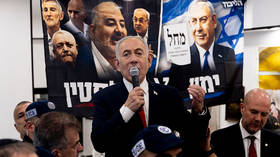
Israel’s subsequent military campaigns in Gaza, Lebanon, and Iran have come at a heavy human, economic, and diplomatic cost. The Gaza offensive has devastated the Palestinian enclave, killing tens of thousands and displacing much of its population.
In September 2025, a UN commission of inquiry concluded that Israel had committed genocide against Palestinians in Gaza. Netanyahu is also subject to an International Criminal Court arrest warrant over alleged war crimes and crimes against humanity. Israel rejects the genocide allegations and denies committing war crimes.
Another major dividing line concerns Netanyahu’s judicial overhaul, which triggered nationwide protests in 2023. His opponents have pledged to reverse measures they say undermine judicial independence. The prime minister is also standing trial on corruption charges, including bribery, fraud, and breach of trust, which he denies.
Another contentious issue is the exemption of ultra-Orthodox Jewish men from military service. Despite a 2024 Supreme Court ruling against blanket exemptions, Netanyahu’s coalition has continued to resist compulsory conscription for religious students, fueling resentment among Israelis repeatedly called up for military duty.
The economic toll has added to public anger. Rising defense spending, higher living costs, and a VAT increase to 18% in 2025 have put further pressure on households.
Yet the wars themselves have attracted relatively little debate among the main contenders, many of whom support Israel’s military campaigns. The deeper political battle is over Netanyahu’s leadership, accountability, and the direction of the Israeli state.
Election arithmetic: Can anyone secure a majority?
Recent surveys indicate a tight race, with Eisenkot’s Yashar holding a narrow advantage over Netanyahu’s Likud in several polls.
An October 21 Jerusalem Post analysis of four major surveys put Yashar at an average of 22.5 seats, compared with 19.75 for Likud. But neither Netanyahu’s allies nor the opposition appear assured of the 61 seats needed for a majority in Israel’s 120-member Knesset.
Under Israel’s proportional representation system, parties must win at least 3.25% of the national vote to enter parliament. Votes for parties that fail to cross the threshold do not translate into seats, meaning even small shifts could tip the balance between rival camps.
The real battle may therefore begin after the ballots are counted. Smaller parties, particularly ultra-Orthodox factions, could determine who governs, with military conscription exemptions and religious education funding among their key demands.
According to a Jerusalem Post report published Monday, possible scenarios include opposition cooperation with ultra-Orthodox factions, reliance on Arab parties’ parliamentary support, or even another election if coalition talks fail.
Would a defeat for Netanyahu change Israel’s course?
A new prime minister would not necessarily mean a new direction for Israel’s military and foreign policies.
Despite their fierce opposition to Netanyahu, leading opposition figures broadly support maintaining Israel’s military superiority, confronting Iran, and retaining extensive security control over Palestinian territories. None of the principal contenders has made the establishment of a Palestinian state a central campaign commitment.
The election also comes amid renewed tensions in the occupied West Bank. Israeli authorities have imposed sweeping restrictions following a shooting near Hebron that killed two Israeli soldiers and two Palestinian gunmen, including curbs on Palestinians entering Jewish settlements for work.
Meanwhile, thousands of Israelis have demonstrated against the government and violence toward Palestinians, even as younger voters increasingly identify with the political right.
Reporting from Tel Aviv, RT correspondent Charlotte Dubenskij described Israel as “a nation dramatically shifting towards the right,” with many young people citing the October 7 attack as a turning point in their political views.
The election could therefore remove Netanyahu from power without reversing the security policies that have defined his latest term.
What happens after October 27?
The vote could leave Netanyahu in power, hand the opposition a chance to form a government, or produce another parliamentary deadlock.
Under Israel’s parliamentary system, the president consults party leaders before choosing a lawmaker to form a government. Coalition talks can drag on for weeks, with smaller parties demanding concessions in exchange for their support. If no candidate can secure a majority, Israel could face another election.
The final result may therefore be decided not at the ballot box, but behind closed doors, as rival parties bargain over who will govern Israel next.
Yet even if Netanyahu loses power, the election may change Israel’s leadership without fundamentally altering its approach to the Palestinians or the regional conflicts that have defined his latest term.
| # | Наименование новости | Тональность | Информативность | Дата публикации |
|---|---|---|---|---|
| 1 | Thousands protest against Netanyahu ahead of Israeli election (VIDEO) | 0 | 12.9 | 25-10-2026 |
| 2 | Encuestas de las elecciones en Israel 2026: así está Netanyahu en los sondeos | 0 | 9.58 | 24-10-2026 |
| 3 | Israel unlikely to attack Iran before elections – media | 0 | 13.98 | 16-10-2026 |
| 4 | As Netanyahu drops in polls, Ben-Gvir’s star rises | 0 | 14.34 | 16-10-2026 |
| 5 | Thirty years of Netanyahu: The man who shaped modern Israel | -2 | 5 | 28-06-2026 |
| 6 | Israeli prosecutors move to charge Netanyahu’s aides – media | 0 | 10.37 | 12-08-2026 |
| 7 | Israel needs sanctions-proof economy – Netanyahu | 0 | 15.49 | 25-10-2026 |
| 8 | Israël aux urnes : l’élection qui peut tout faire basculer | 0 | 7 | 15-07-2026 |
| 9 | October 7 becomes Netanyahu’s ‘political kryptonite’ – RT reports (VIDEO) | 0 | 17.1 | 17-10-2026 |