Просмотр новости
Найдите то, что Вас интересует
 Спутники
 РН
 SpaceX
 Роскосмос
 NASA
СпутникиРНSpaceXРоскосмосNASAThe wild world is full of roars, whoops and songs. Scientists are using such sounds to guide efforts to help save species at threat of extinction.
Jonathan Growcott’s “happy place” is bouncing across the African savanna in a 4×4 vehicle. As a large-carnivore biologist, he tracks predators in the wild. It’s tough work; these animals can be hard to find.
Common methods often involve driving for hours in search of footprints or droppings. Some researchers set up camera traps in hopes of snapping photos of passing animals.
Growcott felt these still missed something. Maybe scientists could do more than just look for signs of critters. Perhaps they could listen for them, too.
“Species like lions, leopards and hyenas produce some of the most recognizable sounds in the animal kingdom,” notes Growcott. What’s more: “These sounds travel many kilometers [miles].”
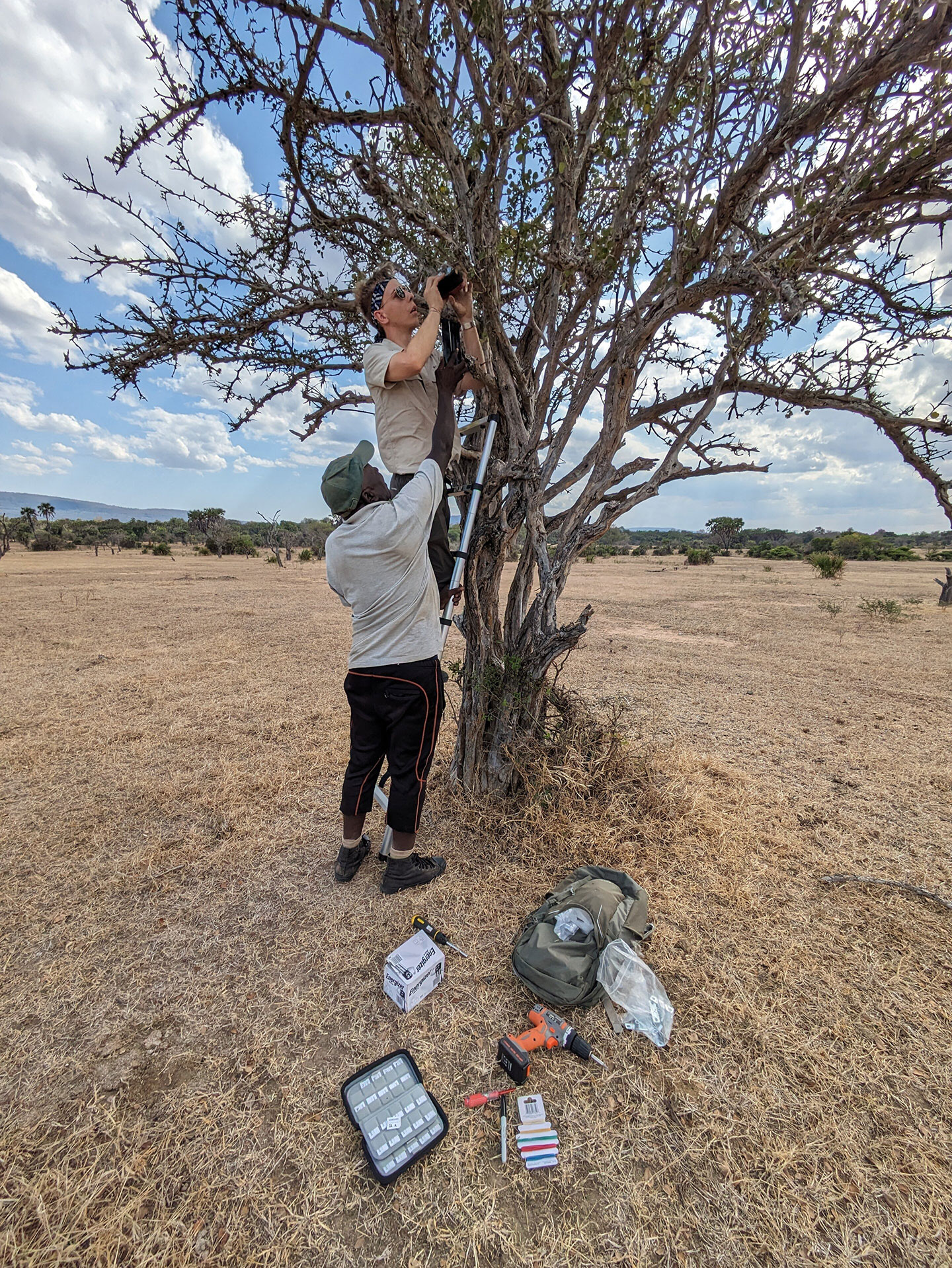 Jonathan Growcott and colleagues set up 50 pairs of camera traps and microphones in East Africa in Nyerere National Park. Combining these two technologies allowed the team to pair photographs with unique roars to identify individual leopards.Charlotte Searle
And these critters are far from the only sound-makers. Birds, mammals and insects are, too. So are reptiles, amphibians, fish — even crustaceans. Some call out to find mates or defend territories. Others use calls to scare off predators. Sounds help many creatures sense their environment and check in with each other. This cacophony of chirps, squeaks, rattles and roars can aid scientists, too — if they know what to listen for.
Across the globe, more and more researchers are studying how living things make, transmit and receive sounds. Audio recorders can be strapped to a tree or set on the ocean floor. Once placed, the devices capture these bioacoustic data without disturbing wildlife. This can make them especially useful in conservation efforts.
By eavesdropping on neighborhood chatter, researchers can find out which species are out there and what they’re up to. They can estimate the size of populations to keep tabs on how critters are doing. Knowing where animals are can also help limit their conflict with people. For all these reasons, bioacoustics can be a powerful tool in the fight to save endangered species.
Hear me roar!Growcott ran the first large-scale bioacoustics survey of African carnivores. At the time, he was a PhD student at the University of Exeter in England. He and his team worked in East Africa at the Nyerere National Park in Tanzania. They deployed 50 acoustic recorders across 450 square kilometers (175 square miles).
He focused on leopards first. These solitary cats are secretive and nocturnal. Such habits make monitoring their numbers challenging. So Growcott worked to identify the animals by sound.
Leopards produce deep “sawing” roars that resemble the sound of cutting wood. Jonathan Growcott and colleagues found that each leopard’s roar was unique. So “you can identify leopards not only by their spots, but also by their roars,” Growcott reports.
J. Growcott et al. (2024)
He set up acoustic recorders next to camera traps. This allowed him to match individual leopards to their roars. With these data, a computer model was able to distinguish between leopards based on their roars with 93 percent accuracy. This revealed that each leopard’s roar is unique enough to identify it.
Could the same be true for other big cats?
When Growcott turned to lions, he noticed patterns. Some of their roars were loud, long and complex. Others sounded shorter and simpler. He wondered whether lions used different types of roars.
Using artificial intelligence (AI), he analyzed those roars. It showed lions produce two distinct types. There’s the familiar, full-throated roar you may have heard at a zoo or in a movie. Then there’s a shorter, lower-pitched one. He called this previously unknown one an “intermediary” roar.
But what Growcott really wanted was to identify individual lions by their roars. For this, he created an AI tool that he calls “Shazam for lions.” It analyzes just the full-throated roars — because they contain the most sound information. AI, he found, could identify a specific lion by its roar with more than 95 percent accuracy. That’s better than human experts can do!
Lions emit different types of calls within roaring bouts. Full-throated roars are loudest and have the most detailed vocalization. They can be used to identify individual lions. These big cats also produce a previously unclassified vocalization, dubbed the intermediary roar, new research reveals.
J. Growcott et al. (2024)Linking cats to their roars could help researchers count and track the big cats. That, in turn, could help them gauge the size of their populations while also monitoring the range of individual animals. Conservationists and others need such data to protect wildlife and people.
This work highlights how much we have to learn about even well-known sounds, such as a lion’s roar, Growcott notes.
“At some point, we may better understand why animals make the sounds they do,” he adds. “Trying to work out what animals mean when they make noises is something that has fascinated people for a long time. I think it will continue to fascinate us for a long time to come.”’
Sounds of the forestSound is especially useful when animals are rare or hard to see.
The last 74 Cao-vit gibbons on Earth live in a remote part of Southeast Asia. They’re in a patch of mountainous rainforest in northern Vietnam. Their species was thought to be extinct until 2002. That’s when scientists discovered this small population. These critically endangered apes spend their lives in treetops. That makes them almost impossible to observe by eye.
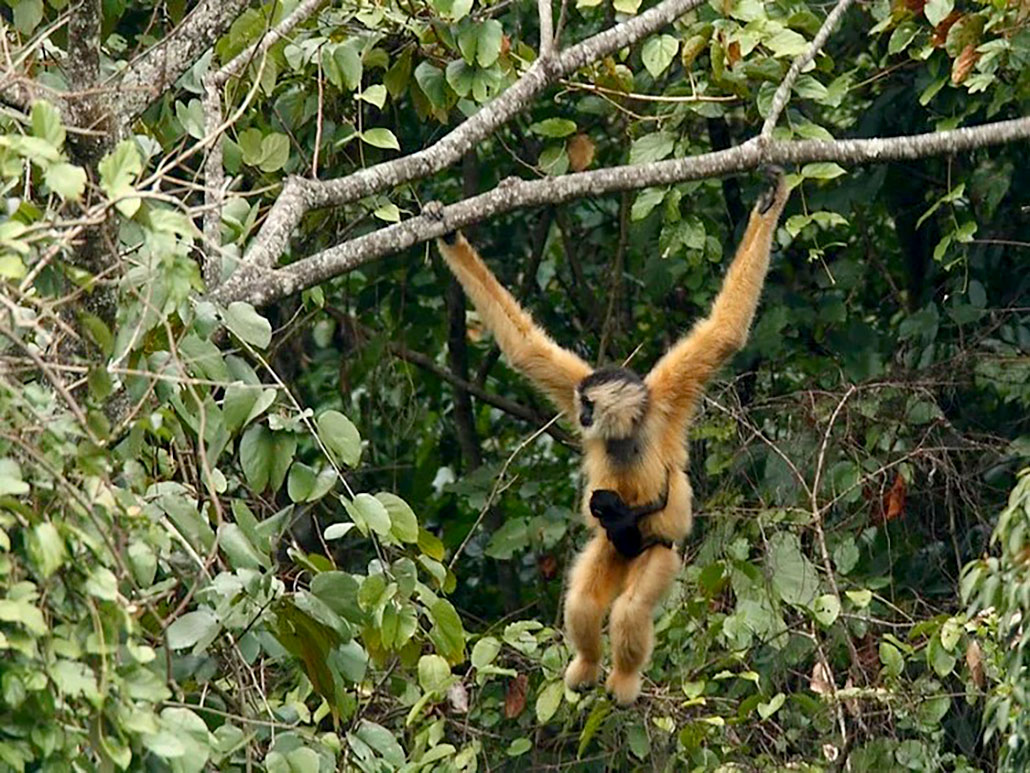 Cao-vit gibbons spend their lives high in treetops within only one tiny patch of a remote Vietnam jungle. This female gibbon is seen carrying a one-month-old baby.Bioacoustics Research Group
Fortunately, Cao-vit gibbons like to make themselves heard. Mated pairs sing loud, melodic duets. They’re music to Angela Dassow’s ears.
“It is a privilege to hear one of the rarest primates on the planet giving their morning duet calls,” she says. These “are kind of eerie,” she notes, “but also beautiful to wake up to.”
Cao-vit gibbonsFauna & Flora, a conservation group, recorded Cao-vit gibbon calls in northern Vietnam. This clip features two male gibbons singing over each other and then a female calling at the end.Fauna & Flora VietnamDassow is a biologist at Carthage College in Kenosha, Wisc. For the past five years, she’s studied Cao-vit gibbons with partners in Vietnam. To locate the animals, the team uses specially designed acoustic recorders. Dassow places around 20 of them throughout a region. That way, a single gibbon call reaches different recorders at slightly different times. By comparing those times, computers can pinpoint where the sound came from.
“Our recording units don’t just tell us if an animal is present,” says Dassow. “They give us a GPS location of where that animal is, without putting a radio collar on it.”
Dassow tracks gibbon movements by those calls and monitors their population. This soundscape also tells her about the social lives of these apes. Her team shares what it learns with local rangers, who use the info to help protect gibbons and manage their forest home.
Angela Dassow and colleagues filmed a documentary about their efforts to reduce conflict between people and tigers in Nepal. This clip shows the impact that their acoustic tiger-detection system has on the local community.Dassow is using bioacoustics in another Asian forest to lessen conflicts between people and Bengal tigers.
Over the past 10 years, conservation programs have increased the number of these tigers in Nepal. That’s great news for this endangered species. But it also has led to more encounters between people and these top predators. This is especially true in rural areas, where the lives of people depend on the forest around them.
To help people coexist with the big cats, Dassow developed an acoustic alarm system. It alerts villagers to the presence of approaching tigers.
For this, she had to get a bit creative. “Tigers tend to be quiet. Very rarely do you hear them vocalize,” Dassow notes. “But there are a lot of chital deer in the area, and they are a prey source for tigers. As you might expect, these deer are excellent at detecting when a tiger is near.”
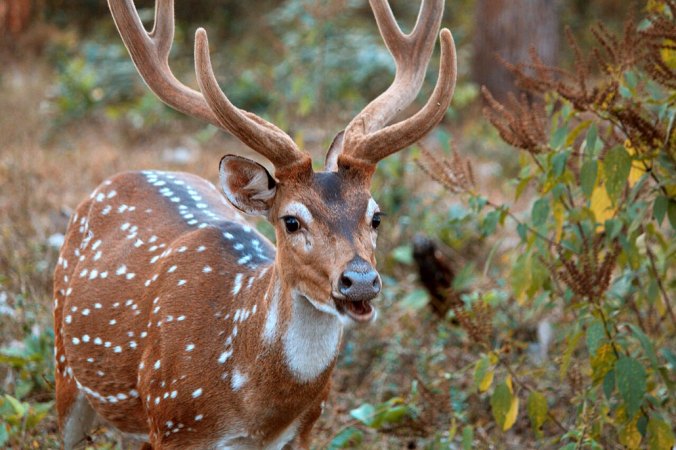 Chital deer are important prey of Bengal tigers in India and Nepal. They make a distinctive alarm call when they spot a tiger or other predator. It sounds like the bark of a small dog or a sharp coughing.Sovietonion321/Wikimedia Commons (CC BY 4.0)
When chital (CHEE-tul) deer notice a tiger, they start barking out an alarm call. Recorders in the forest detect these and alert local villagers. This system warns people to nearing tigers in real time. Villagers can then take extra precautions. They might avoid areas where a tiger has been spotted or travel in groups when moving through the forest.
Submit your question here, and we might answer it an upcoming issue of Science News Explores
Researchers have long listened to sounds made by aquatic animals. Those sounds may now help people share the ocean safely with them.
Ana Širović is a marine ecologist at the Norwegian University of Science and Technology in Trondheim. She’s part of the international team behind Whale Safe. It’s a powerful tool for preventing ships from colliding with endangered whales.
Ship collisions often kill large whales. Research shows that reducing a ship’s speed is one way to limit this. But ships need to know when and where to slow down to avoid whale strikes.
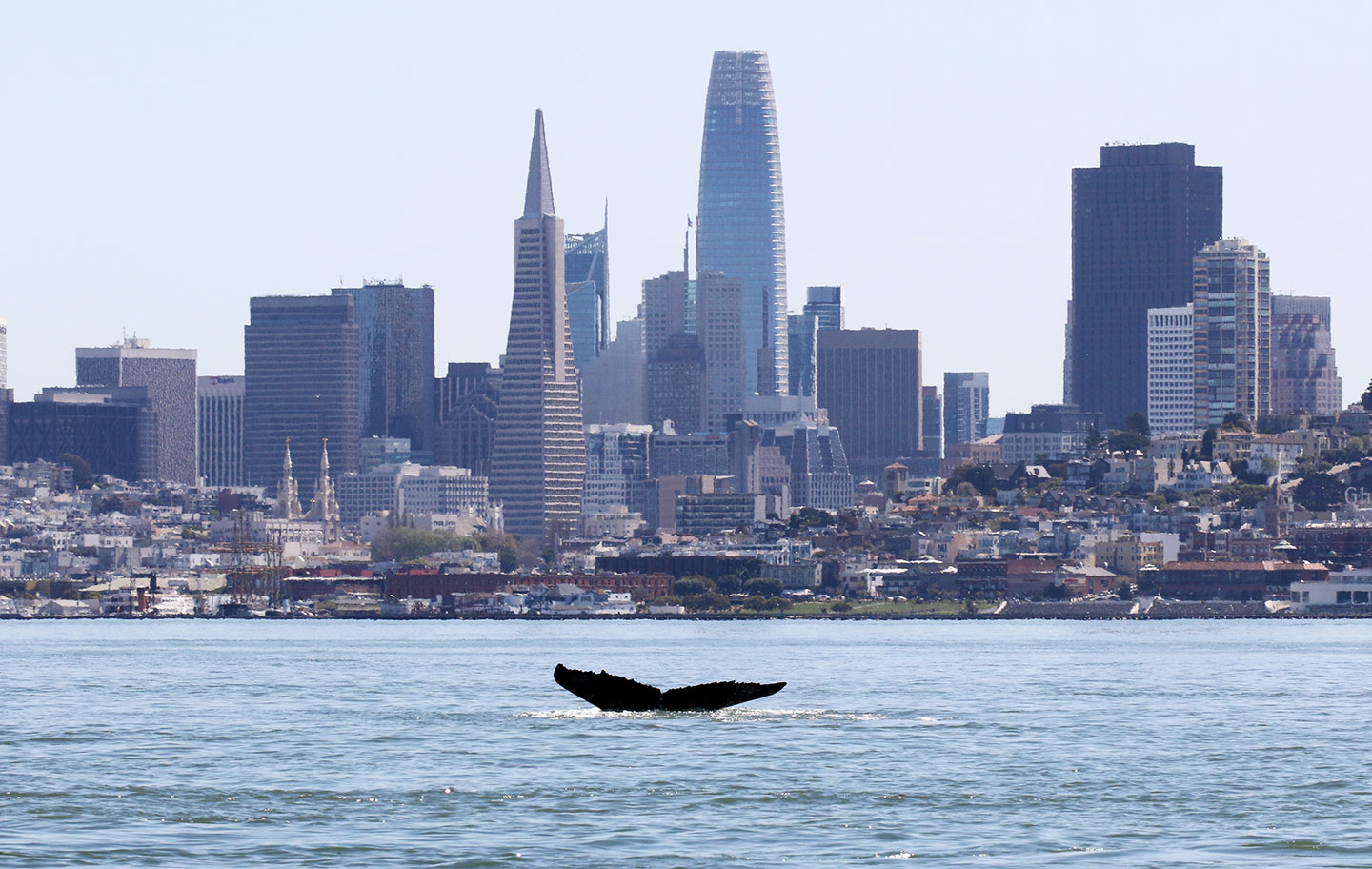 San Francisco Bay is near several major shipping ports. It’s also an important feeding ground and migratory route for whales. Scientists estimate that more than 80 blue, humpback and fin whales are killed each year in ship collisions along the U.S. west coast.Bekah Lane/The Marine Mammal Center
That’s where Whale Safe comes in. It maps in nearly real time the locations of large cargo ships as well as blue, fin and humpback whales. To do this, Whale Safe uses data from three sources. The first is a system that monitors whale calls. The second is a mobile app through which community scientists record whale sightings. The third is a model that monitors certain ocean conditions.
What boings belowFor her research, Ana Širović leaves acoustic recorders on the ocean floor for long periods. Sometimes, they pick up sounds she cannot identify. This is her favorite recording of an unknown sound. Širović recorded these “mystery boings” at a reef about 80 meters (260 feet) off the coast of southern California.Data from all these sources are combined to rate how likely it is that whales are near. Ships can use these ratings to understand where they should slow down.
Whale Safe was first used in California’s Santa Barbara Channel. This is near several major shipping ports. It’s also an important feeding ground and migratory route for large whales. Whale Safe has since expanded to San Francisco Bay. The second busiest port in California, it’s another hot spot for whale strikes.
Each year, collisions with large ships kill dozens of whales in these regions. Even a small reduction in speed saves lives. A shipping vessel that slows down from 15 knots to 10 knots cuts in half its risk of striking a whale.
Part of what makes her job fun, Širović says, is listening to parts of the ocean no human has ever heard before. When she leaves acoustic recorders on the sea floor, they often pick up unexpected or unknown sounds.
“The ocean is a vast portion of the planet, but there is still so much of it that’s not explored,” she says. “I enjoy learning new information and figuring out what to do with it. My job is part adventure, part puzzle solving and part new discoveries.”
Scientists from Woods Hole Oceanographic Institution in Massachusetts and The Norwegian University of Science and Technology in northern Europe deploy an acoustic buoy in the Santa Barbara Channel. The buoy contains an underwater microphone and a tiny computer to detect the calls of whales. Benioff Ocean Science LaboratorySound scienceAcoustic recordings can capture a lot of data. Analyzing these used to be slow and difficult. Researchers had to listen carefully for certain sounds.
Today’s acoustic recorders can be left unattended for weeks, months or even years. They can collect and store huge amounts of data — sometimes, more than someone could listen to in their entire lifetime! What’s a researcher to do?
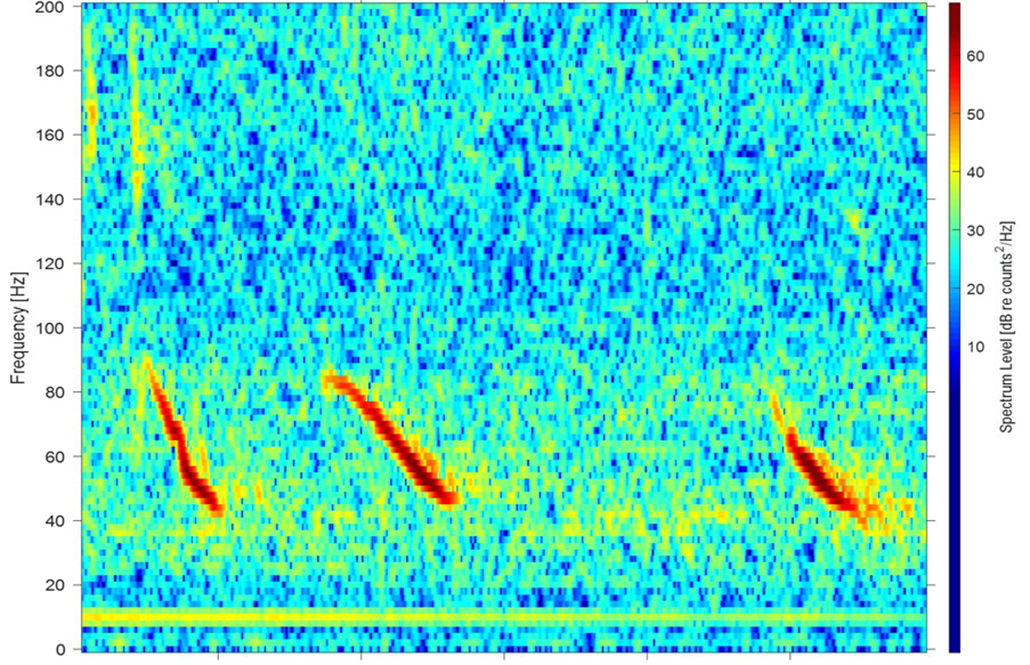 Scientists often transform audio files into images called spectrograms. This spectrogram shows blue whale calls. Horizontal axis shows time; vertical axis shows frequency. Low frequencies (low-pitched sounds) are at the bottom, high frequencies at the top. Colors represent energy or volume at a given time and frequency. Reds and oranges indicate a more intense signal; blues and greens indicate silence.J. H. Rasmussen
Over the past decade, AI technology has evolved and transformed how scientists analyze recorded sounds. Now, AI algorithms can do much of the work. They can sort through recordings to identify sounds. And they process data more quickly and accurately than humans can.
Jeppe Have Rasmussen is a biologist at the University of Copenhagen in Denmark. He specializes in applying AI to animal bioacoustics. AI algorithms are usually not trained to analyze sounds themselves, he points out. Instead, the sound data must first be transformed into some visual form.
“AI is really good at detecting and classifying objects in images,” he says. “So, we convert the recorded sound file into a spectrogram.” This is more like an image, Rasmussen explains. It shows sound frequency on a vertical axis; time is shown on the horizontal axis.
AI models, he says, can then be trained on these spectrograms to identify the calls of specific species.
Rasmussen is using this approach to learn more about endangered species.
 Colleen Reichmuth
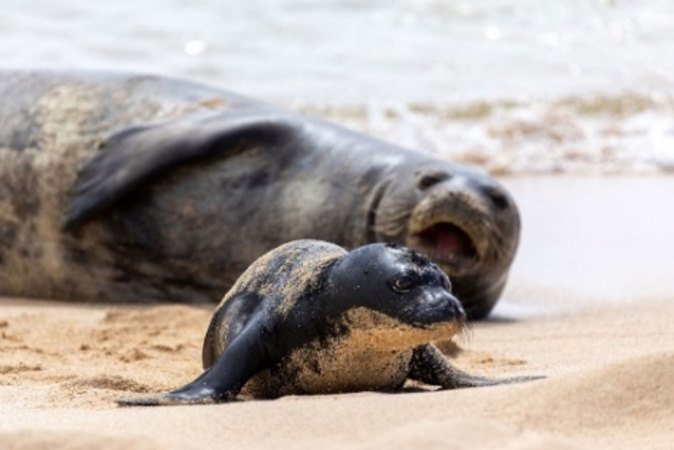
Hawaiian monk seals are one of the most endangered marine mammals in the world. They live in the warm, subtropical waters around the Hawaiian Islands and spend about two-thirds of their time at sea.
“There are only 1,600 Hawaiian monk seals left in the entire world,” he says. “If we can track where they are, we can better determine where to focus on protecting them. Listening for their underwater calls is a very good way.”
Recently, a team of researchers identified six types of underwater calls made by these seals. They include moans, croaks and whoops. Rasmussen is now using AI to automatically detect these calls. His team hopes to figure out where the monk seals spend their time. Then, conservationists can prioritize those sites for protection.
Hawaiian monk seals make a host of different sounds underwater. These include croaks, groans, growls, moans, rumbles and whoops. Scientists are using AI to monitor the ocean for these calls. This helps them decide where to focus efforts to protect these endangered marine mammals.
J.M. Sills et al. Endangered Species Research 2021Rasmussen also is exploring other ways to use AI in bioacoustics. For instance, it can help evaluate the welfare of captive animals. In one recent study, his tools could tell whether a pig sound came from a stressed animal or a happy one.
“The combination of bioacoustics and AI is one window we can use to look into the minds of animals,” he says.
Such techniques, Rasmussen says, will help science “discover that there is much more information hidden in animal communication.”
acoustic: Having to do with sound or hearing.
acoustics: The science of sound.
AI model: Short for artificial-intelligence model, it’s a particularly smart computer algorithm. Simple types of these models choose from a set of preselected options to answer a user’s requests (perhaps to respond to a chat). More complex models may train on mountains of data to essentially figure out their own answers to potentially novel questions.
algorithm: A group of rules or procedures for solving a problem in a series of steps. Algorithms are used in mathematics and in computer programs for figuring out solutions.
amphibians: A group of animals that includes frogs, salamanders and caecilians. Amphibians have backbones and can breathe through their skin. Unlike reptiles, birds and mammals, unborn or unhatched amphibians do not develop in a special protective sac called an amniotic sac.
app: Short for application, or a computer program designed for a specific task.
aquatic: An adjective that refers to water.
artificial intelligence: A type of knowledge-based decision-making exhibited by machines or computers. The term also refers to the field of study in which scientists try to create machines or computer software capable of intelligent behavior.
audio: Having to do with sound.
axis: (in mathematics) The line to the side or bottom of a graph. It is labeled to explain the graph’s meaning and the units of measurement. (plural: axes)
biologist: A scientist involved in the study of living things.
blue whale: A species of baleen whale (Balaenoptera musculus) that is the largest animal ever known to have existed. They can grow to lengths of 30 meters (almost 100 feet) and weigh up to 170 metric tons.
camera trap: A still or video camera set to activate when motion is detected. The device is often used to monitor wildlife. It can also be used to record poachers.
carnivore: An animal that either exclusively or primarily eats other animals.
coexist: To exist at the same time as or along with.
computer model: A program that runs on a computer that creates a model, or simulation, of a real-world feature, phenomenon or event.
conservation: (v. conserve) The act of preserving or protecting something. The focus of this work can range from art objects to endangered species and other aspects of the natural environment.
crustaceans: Hard-shelled water-dwelling animals including lobsters, crabs and shrimp.
data: Facts and/or statistics collected together for analysis but not necessarily organized in a way that gives them meaning. For digital information (the type stored by computers), those data typically are numbers stored in a binary code, portrayed as strings of zeros and ones.
ecologist: A scientist who works in a branch of biology that deals with the relations of organisms to one another and to their physical surroundings.
endangered: An adjective used to describe species at risk of going extinct.
environment: The sum of all of the things that exist around some organism or the process and the condition those things create. Environment may refer to the weather and ecosystem in which some animal lives, or, perhaps, the temperature and humidity (or even the placement of things in the vicinity of an item of interest).
extinct: (n. extinction) An adjective that describes a species for which there are no living members.
frequency: The number of times some periodic phenomenon occurs within a specified time interval. (In physics) The number of wavelengths that occurs over a particular interval of time.
gibbon: A small, slender ape with long arms.
GPS: Abbreviation for global positioning system, which uses a device to calculate the position of individuals or things (in terms of latitude, longitude and elevation — or altitude) from any place on the ground or in the air. The device does this by comparing how long it takes signals from different satellites to reach it.
horizontal: A line or plane that runs left to right, much as the horizon appears to do when gazing into the distance.
humpback: A species of baleen whale (Megaptera novaeangliae), perhaps best known for its novel “songs” that travel great distances underwater. Huge animals, they can grow up to more than 15 meters (or around 50 feet) long and weigh more than 35 metric tons.
insect: A type of arthropod that as an adult will have six segmented legs and three body parts: a head, thorax and abdomen. There are hundreds of thousands of insects, which include bees, beetles, flies and moths.
mammal: An animal distinguished by possessing hair or fur, the secretion of milk by females for the feeding of their young, and (typically) the bearing of live young. They also are warm-blooded (or endothermic).
marine: Having to do with the ocean world or environment.
migratory: An adjective for species that travel long distances each year, along fairly regular paths, to find food or more hospitable conditions (such as better weather). Such travels are known as migrations.
model: A simulation of a real-world event (usually using a computer) that has been developed to predict one or more likely outcomes. Or an individual that is meant to display how something would work in or look on others.
monitor: To test, sample or watch something, especially on a regular or ongoing basis.
nocturnal: An adjective for something that is done, occurring or active at night.
population: (in biology) A group of individuals (belonging to the same species) that lives in a given area.
predator: (adjective: predatory) A creature that preys on other animals for most or all of its food.
prey: (n.) An organism hunted by another, often for food. (v.) To attack and eat another organism.
primate: The order of mammals that includes humans, apes, monkeys and related animals (such as tarsiers, the Daubentonia and other lemurs).
radio: Referring to radio waves, or the device that receives these transmissions. Radio waves are a part of the electromagnetic spectrum that people often use for long-distance communication. Longer than the waves of visible light, radio waves are used to transmit radio and television signals. They also are used in radar. Many astronomical objects also radiate some of their energy as radio waves.
rainforest: Dense forest rich in biodiversity found in tropical areas with consistent heavy rainfall.
real time: A term that connotes immediacy; something is being studied, recorded and/or reported at the very time it is happening.
reptile: Vertebrate animals belonging to a group known as Reptilia. Most reptiles have skin that is covered with scales or horny plates. Snakes, turtles, lizards and alligators are all reptiles. Once considered their own separate group, birds now belong to this order. With the exception of modern birds, most modern reptiles are cold-blooded (or ectothermic).
savanna: A grassland containing some trees and shrubs. Most are fairly dry for part or much of the year.
sea: An ocean (or region that is part of an ocean). Unlike lakes and streams, seawater — or ocean water — is salty.
social: (adj.) Relating to gatherings of people; a term for animals (or people) that prefer to exist in groups. (noun) A gathering of people, for instance those who belong to a club or other organization, for the purpose of enjoying each other’s company.
species: A group of similar organisms capable of producing offspring that can survive and reproduce.
spectrogram: A visual (or graphical) representation of a spectrum. That spectrum can map sound waves or other types of electromagnetic radiation. A sound spectrogram graphs sound frequency (pitch) over time; and its amplitude (or volume) through the intensity of color.
survey: To view, examine, measure or evaluate something, often land or broad aspects of a landscape.
system: A network of parts that together work to achieve some function. For instance, the blood, vessels and heart are primary components of the human body's circulatory system. Similarly, trains, platforms, tracks, roadway signals and overpasses are among the potential components of a nation's railway system. System can even be applied to the processes or ideas that are part of some method or ordered set of procedures for getting a task done.
Tanzania: A nation in East Africa that sits just south of the equator. It’s well known in science communities as home to the East African Rift valley, where many hominid fossils have turned up. With a small population, many big wildlife species remain, including lions, rhinos, elephants, zebras, hippos, cheetahs and giraffes. The country is bordered by the Indian Ocean to the east; Kenya and Uganda to the north; Rwanda, Burundi and Democratic Republic of Congo to the west; and Zambia, Malawi and Mozambique to the south. It became a country in 1964. Its capital is Dodoma.
technology: The application of scientific knowledge for practical purposes, or the devices, processes and systems that result from those efforts.
transmit: (n. transmission) To send or pass along.
unique: Something that is unlike anything else; the only one of its kind.
vertical: A term for the direction of a line or plane that runs up and down, as the vertical post for a streetlight does. It’s the opposite of horizontal, which would run parallel to the ground.
whale: A common, but fairly imprecise, term for a class of large mammals that lives in the ocean. This group includes dolphins and porpoises.
Journal: A. Kershenbaum et al. An autonomous network of acoustic detectors to map tiger risk by eavesdropping on prey alarm calls. Remote Sensing in Ecology and Conservation. Vol. 12, February 4, 2026. doi: 10.1002/rse2.70061.
Journal: J. Growcott et al. Roar data: redefining a lion’s roar using machine learning. Ecology and Evolution. Vol. 15, November 20, 2025. doi:10.1002/ece3.72474.
Journal: J. Growcott et al. The secret acoustic world of leopards: A paired camera trap and bioacoustics survey facilitates individual identification of leopards via their roars. Remote Sensing in Ecology and Conservation. Vol. 11, December 22, 2024. doi: 10.1002/rse2.429.
Journal: J.H. Rasmussen et al. Sound evidence for biodiversity monitoring. Science. Vol. 385, July 11, 2024. doi: 10.1126/science.adh2716.
Journal: E.F. Briefer et al. Classification of pig calls produced from birth to slaughter according to their emotional valence and context of production. Scientific Reports. Vol. 12, March 7, 2022. doi: 10.1038/s41598-022-07174-8.
Journal: J.M. Sills et al. Underwater hearing and communication in the endangered Hawaiian monk seal Neomonachus schauinslandi. Endangered Species Research. Vol. 44, January 28, 2021. doi: 10.3354/esr01092.
Journal: M.F. Baumgartner et al. Persistent near real-time passive acoustic monitoring for baleen whales from a moored buoy: System description and evaluation. Methods in Ecology and Evolution. Vol. 10, June 24, 2019. doi: 10.1111/2041-210X.13244.
| # | Наименование новости | Тональность | Информативность | Дата публикации |
|---|---|---|---|---|
| 1 | Human-built ‘beaver’ dams help save struggling streams | 0 | 11.16 | 09-04-2026 |
| 2 | Some of the most pristine coral reefs have a secret weapon: birds | 0 | 6.81 | 13-10-2026 |
| 3 | Some birds defy overall plunge in bird numbers | 0 | 8.21 | 22-07-2026 |
| 4 | Beyond national parks: Researchers explore a broader future for conservation | 0 | 7.54 | 15-10-2026 |
| 5 | Scientists Say: Clone | 0 | 10 | 20-04-2026 |
| 6 | The musicians turning bat calls into club music | 0 | 7.73 | 03-08-2026 |
| 7 | Scientists Tracked 4,500 Animals During COVID – What They Discovered Was Surprising | 0 | 20.95 | 11-06-2026 |
| 8 | Chatty cats and talking dogs could one day ‘speak’ in our language | 0 | 8.62 | 20-07-2026 |
| 9 | Close social bonds help wild jackdaws hold feeding spots but come with waiting costs | 0 | 7.71 | 18-10-2026 |
| 10 | By saving ecosystems, environmental regulations help prevent biodiversity loss | 0 | 10.41 | 26-06-2026 |