Просмотр новости
Найдите то, что Вас интересует
 Спутники
 РН
РН SpaceX
 Роскосмос
 NASA
NASA
СпутникиРНSpaceXРоскосмосNASA[By Christian Honce | UK College of Medicine] Picture this: You find a small fire isolated in your kitchen. If you had the right tool, you might be able to put it out. But before you can, the sprinklers turn on and soak your entire house. An automatic response to an issue has now damaged […]
The post Two Hours of Sleep Restored in Alzheimer’s Brains in Research Breakthrough appeared first on Good News Network.
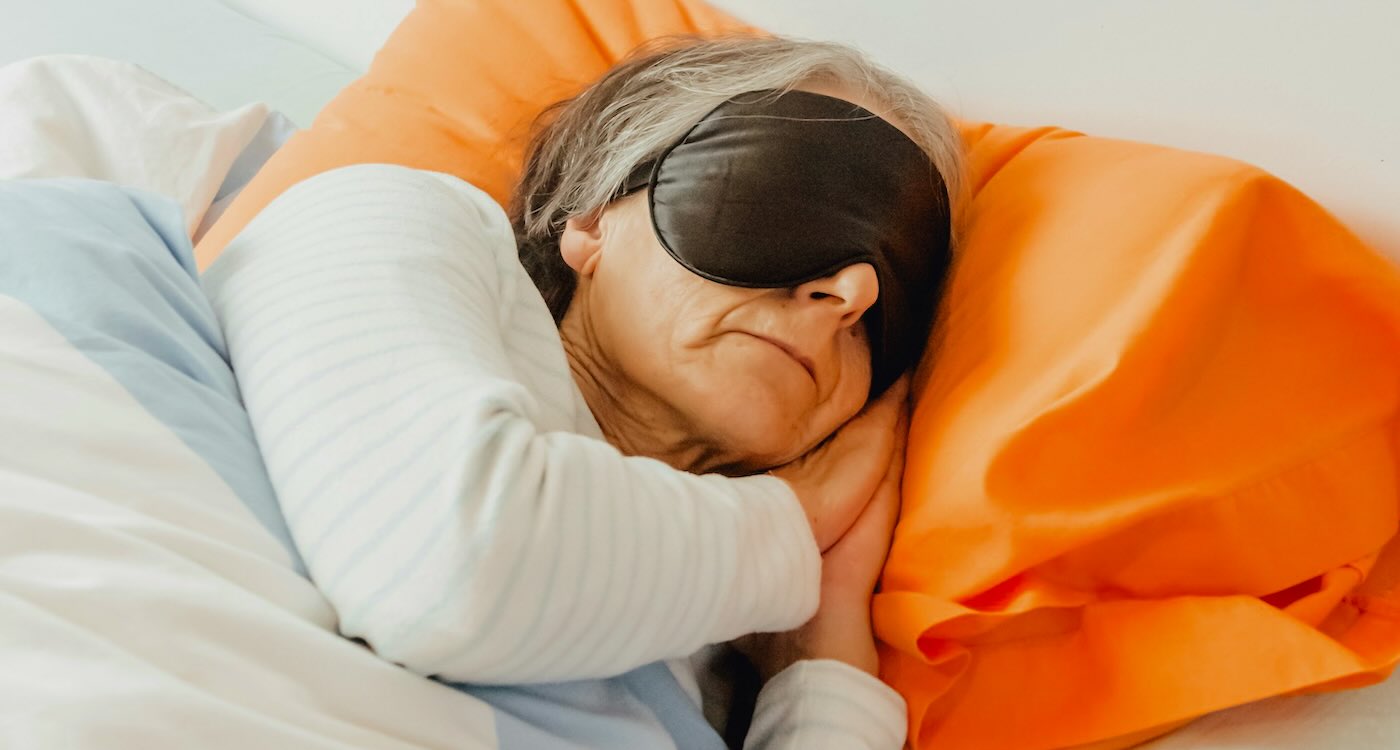 Credit: A. C. for Unsplash+
[By Christian Honce | UK College of Medicine]
Picture this: You find a small fire isolated in your kitchen. If you had the right tool, you might be able to put it out. But before you can, the sprinklers turn on and soak your entire house. An automatic response to an issue has now damaged everything you own.
That’s akin to what happens in the brains of people with Alzheimer’s: amyloid plaques, sticky protein clumps that build up in the brain, are the fire in the kitchen. Microglia, the brain’s resident immune cells, are the sprinklers. A mechanism designed to protect the body ends up hurting it.
Researchers at the University of Kentucky have discovered this harmful process for the first time — and figured out how to turn it off.
In a study published in the journal Alzheimer’s & Dementia, a team led by Shannon L. Macauley, Ph.D., an associate professor of physiology in the UK College of Medicine, and first author Nicholas J. Constantino, Ph.D., a recent UK doctoral graduate, revealed that microglia are the primary drivers of sleep loss.
By using a drug to temporarily remove these cells in animal models, the researchers successfully restored over two hours of sleep per day, providing a new target for treating the disease that Macauley described as “paradigm shifting.”
Previously, scientists believed that sleep loss in Alzheimer’s was caused by dying neurons or the physical clutter of amyloid plaques. However, the UK team’s findings suggest the problem is a “whole house response” scenario.
“Basically, we showed that it is not the plaques themselves, or solely dysfunctional neurons, that cause sleep loss but actually microglia,” said Macauley. “Microglia are immune cells that, when they respond to plaques, kick off this elaborate cascade of inflammation, as if the microglia are partying all night, and keeping the brain awake.”
Seeing insideTo isolate the effects of Alzheimer’s from the natural changes of aging, the team compared two groups of mice: those with a genetic predisposition to develop amyloid plaques and “wild-type” mice that aged normally. They studied these mice at six months, when plaques first emerge, and at 18 months, representing late-stage disease.
The researchers employed several sophisticated technologies to track these changes and monitor exactly when the mice were in deep, restorative sleep, dreaming sleep, or awake.
To prove that microglia were the cause of sleep loss, the team used a drug called Pexidartinib (PLX3397). This medication, originally used in cancer research, works by blocking a signal that microglia need to survive. By feeding the mice this drug for 14 days, they were able to temporarily remove 87% of the brain’s immune cells to see if sleep would return.
The team used a mathematical algorithm to separate the brain’s electrical activity into different parts: periodic activity (the rhythmic waves we usually think of as brain waves) and aperiodic activity (the background electrical noise).
To use a car metaphor, they were checking to see if the brain’s engine was revving too high, even during rest.
A new view is ‘mind-blowing’Macauley described the findings as “mind-blowing and unexpected.” The research revealed that the relationship between plaque buildup and sleep loss is not a simple downward slide.
“I expected that as plaque burden became more severe, sleep disruption would also worsen,” said Constantino. “The disruptions in sleep and cortical EEG activity that occur at six months, when plaques first emerge, did not worsen by 18 months, despite more than double the amount of plaque burden.”
The researchers described this as a ceiling effect: even when plaque levels more than doubled, the sleep deficit remained stable. This suggests that the initial immune storm triggered by early plaques is what causes the damage, regardless of how many plaques follow.
The study also clarified how the brain changes during normal aging compared to disease. Normal aging selectively reduces rapid eye movement (REM) sleep — the stage where we dream and consolidate memories. Amyloid pathology present in Alzheimer’s selectively targets nonrapid eye movement (NREM) sleep or restorative sleep.
“That restorative sleep is super important for physical repair, learning and memory and washing out the toxins of the day,” Macauley said. “When Alzheimer’s patients lose this stage, they lose their brain’s primary cleaning cycle, creating a feed-forward loop that may drive further damage.”
2 hours of sleep restored per nightThe most impactful finding was the result of the microglial depletion. When the immune cells were removed, the mice with Alzheimer’s gained more than two hours of sleep per night. Their restorative NREM sleep bouts became longer, allowing them more opportunities to transition into healthy dreaming sleep important for making new memories.
Crucially, this sleep was restored without changing the amount of amyloid plaques in the brain. This suggests that the body’s inflammatory response is a reversible cause of sleep loss that can be treated independently of the plaques themselves.
Answering the question of whether this vital sleep can be restored for humans, is the ultimate goal of this research—to create affordable, noninvasive tools for people facing Alzheimer’s disease that allow their brains to break the “feed-forward loop”.
This study, which was partly funded by grants from NIH, the Cure Alzheimer’s Fund and The CART Fund, accomplished several things that can be built upon in future research.
The team identified specific electrical signatures in the brain that distinguish Alzheimer’s from normal aging, and they believe EEG could be used as a “readily accessible, affordable and longitudinal biomarker of Alzheimer’s disease.”
“Portable EEG systems could allow us to monitor people in their home environments and potentially screen for changes associated with an Alzheimer’s disease, without the initial need for expensive or invasive tests,” Macauley said.
This could allow doctors at local clinics across Kentucky to potentially screen those at risk before requiring individuals to travel hours for more specialized tests at major hospitals.
Macauley’s lab is now investigating how to calm down these immune cells without removing them entirely. They are exploring the use of safe, existing medications — such as the diabetes drug Metformin or anti-seizure drug Stiripentol — to reset the way microglia use fuel and change how overactive these cells become. By stopping the immune cells from revving the brain’s engine, they hope to restore sleep and improve quality of life years before memory loss begins.
“If we can target that process, it might help with quality of life, attention, cognition and confusion,” Macauley said.
SHARE THE SLEEP TIPS By Sharing This on Social Media…
| # | Наименование новости | Тональность | Информативность | Дата публикации |
|---|---|---|---|---|
| 1 | Deep Sleep Brain Waves Offer Protection Against Alzheimer’s, Shows New Research | 0 | 7.37 | 29-08-2026 |
| 2 | Struggle Sleeping? These 3 Sleep Habits Are Tied to Signs of Brain Aging, Study Finds | 0 | 7.92 | 07-06-2026 |
| 3 | Drug May Repair DNA at Earliest Stages of Alzheimer’s – And it’s Already Passed Safety Trials | 0 | 5.83 | 18-07-2026 |
| 4 | Your sleep may be hiding an early clue to Alzheimer’s | 0 | 10.42 | 29-08-2026 |
| 5 | Сомнолог Царёва: дефицит сна связывают с риском болезни Альцгеймера | 0 | 14.05 | 30-09-2026 |
| 6 | Названо оптимальное количество сна для снижения риска деменции | 0 | 8.93 | 06-10-2026 |
| 7 | Woman With Alzheimerâs Regains Most of Her Memory, Finds Love and Hope | 0 | 15.88 | 03-09-2026 |
| 8 | One simple way to keep your brain sharp even after a bad night’s sleep | 0 | 10.41 | 08-09-2026 |
| 9 | Названа оптимальная продолжительность сна для снижения риска деменции | 0 | 10 | 06-10-2026 |
| 10 | Невролог Мацокин: нарушения сна могут появиться за годы до деменции | 0 | 7.39 | 27-09-2026 |