Просмотр новости
Найдите то, что Вас интересует
 Спутники
 РН
РН SpaceX
 Роскосмос
 NASA
NASA
СпутникиРНSpaceXРоскосмосNASAAsia-Pacific now generates its own datacentre demand, but executives from AWS, Damac Digital and Delta Electronics say the real test is turning announced investments into working capacity
Asia-Pacific (APAC) is no longer a spillover market for datacentre demand, but turning billions of dollars in announced investments into live capacity is another matter, according to a panel of industry experts at Tech Week Singapore last week.
Saji PK, director of datacentre operations for Asia-Pacific, Japan and China (APJC) and global services at Amazon Web Services (AWS), said the region is generating its own requirements, but what matters is whether the industry can convert announced investments into “usable, reliable, sustainable capacity” for customers, he added.
Lorraine Salazar, senior knowledge expert at McKinsey & Company, who moderated the panel discussion, said the firm’s base case has global datacentre capacity growing from about 90GW today to around 270GW by 2030.
APAC is expected to account for about a third of that, or roughly 90GW, second only to North America. McKinsey has tracked over $200bn in publicly announced investments in the region since 2024. “There’s probably more that’s not yet announced,” said Salazar.
Much of the demand now comes from sovereign requirements and wider enterprise adoption of artificial intelligence (AI) in the region, she added. But many operators continue to face constraints on powered land, permitting, natural resources, talent and equipment.
David Leal, vice-president of infrastructure solutions in Southeast Asia at Delta Electronics, said the region was “absolutely keeping up” in terms of ambition and demand. With so many countries and different requirements, though, “we’ve still got a long way to go” in pulling all the pieces together, he said.
Joey Tan, vice-president of business development at Damac Digital, was more upbeat. The region sits between East and West, and draws demand from China, the rest of Asia and Europe, he said. Its regulatory structure, spanning more than 14 economies, has pushed datacentre operators to be more agile in addressing the needs of the market.
Saji said APAC is leading on innovation because the region is so varied. With multiple countries, weather conditions and regulatory frameworks, “you necessarily need to innovate and solve problems in this part of the world”, he said.
Make or breakAmid the flurry of datacentre investments in the region, Saji called for financial discipline on where and when to invest. “This can make or break organisations because we are talking about billions worth of investments,” he said.
Upgrades, technology refreshes and operating costs add to the bill.
AWS buys a lot of capacity from partners, and Saji said the hyperscaler looks closely at their prudence and financial controls, including where their money comes from and whether they have sustainable processes in place.
Tan said datacentre operators have to work with governments on changing regulations, secure power and compete for talent, which is why companies like Damac Digital see themselves as “infrastructure orchestrators”.
“There are so many players in the market today. The market is moving so quickly, but the ability to hyper-localise the executions, ensuring that we deliver on time with the quality that lasts for over 10 years in a multibillion-dollar investment, is essential,” said Tan.
Leal said power comes in two parts: getting a grid connection to the site, which depends on the country, and the equipment that goes into the building. Australia, for one, has added requirements on water usage and renewables.
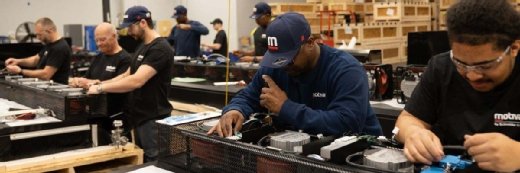
On the equipment side, Delta has focused on modular designs such as powertrain units and skids, so it can repeat the manufacturing process and plan maintenance access from the start.
“We need to make sure that what we build and what goes into an infrastructure is reliable on day one and continues with proper maintenance all the way through, whether it’s 10 years, 15 years or 20 years,” said Leal.
With graphics processing unit (GPU) racks pushing past 120kW, against 8kW to 30kW for conventional racks, AWS’s electrical distribution can now take six times its current capacity, with room for a further threefold increase without significant changes, Saji said. The company uses a mix of air and liquid cooling, partly because some conventional infrastructure, such as networking, will take time to reach AI densities. That can leave a 30kW rack sitting next to an AI rack with 20 GPUs.
“That’s a big complexity,” said Saji. Even rack allocation now needs “a highly AI-powered engine”, though AI is also helping AWS automate tasks and simulate how its cooling systems behave in near real time.
Responding to an audience question, he said AWS still runs air-cooled facilities. It uses no water for cooling in Singapore, and 95% of its cooling solutions in India are air-cooled. He expects a shift to liquid over time and said direct-to-chip cooling is about 75% more efficient in the resources it needs.
At Delta, the growth in power demand shows in the size of its kit. Its first powertrain unit for Southeast Asia was rated at about 850kW. The latest is pushing towards 3MW, a jump Leal called “just astronomical”.
‘They don’t exist’Leal said building the datacentre workforce in markets such as Indonesia, Malaysia and Australia is “a huge challenge right now”.
“Just trying to get electricians to be able to support the infrastructure is difficult, and I think many of the providers are trying to grab the people from each of the different areas,” he said.
Delta has been developing apprenticeship programmes for school leavers and working with PhD students.
Saji told the audience the industry needed five times as many people as were in the room. “So where do you find that? You don’t. They don’t exist. So, you want to create that,” he said.
When Leal asked how AWS was bringing younger people into the industry, Saji said the company runs upskilling and cross-skilling programmes for people from other sectors, as well as a one-year entry-level programme that requires no prior knowledge. Its tools and standard operating procedures are available in 17 languages.
“You just need to speak English, and today we don’t even need that,” he said. “If you have an attitude to learn, ability to learn, absorb things … we can make you a datacentre engineer.”
In India, Australia and Malaysia, where AWS has large requirements, it works with universities to run the programme as an elective alongside regular courses and then hires selectively from those cohorts.
Read more on Datacentre capacity planning| # | Наименование новости | Тональность | Информативность | Дата публикации |
|---|---|---|---|---|
| 1 | Asia Pacific firms demand faster cross-border payments | 0 | 13.57 | 28-09-2026 |
| 2 | AI industry moves to thwart data centre backlash ahead of US midterms | 0 | 8.21 | 30-09-2026 |
| 3 | Wood Mackenzie: Data centre boom drives structural LNG demand in Southeast Asia, while South Asia remains out of reach | 0 | 11.82 | 07-09-2026 |
| 4 | Letter: Latin America eyes chance to win data centre investment | 0 | 10 | 02-10-2026 |
| 5 | Residents, community leaders debate Wichita Falls Skybox data center investment | 0 | 6.14 | 28-09-2026 |
| 6 | Japan plans $140bn AI data centre push with Dell and Jera | 0 | 8.46 | 01-10-2026 |
| 7 | Amazon to invest $1B into data center communities amid backlash against data center rollouts | 0 | 7.47 | 02-10-2026 |
| 8 | La regulación de los centros de datos abre un nuevo frente en la carrera tecnológica | 0 | 7.79 | 02-10-2026 |
| 9 | The Grid Is Becoming the Scarce Resource | 0 | 7.99 | 11-09-2026 |

 Telehouse completes fossil fuel-free datacentre retrofit as £251m West 2 build begins

 nLighten completes £15m refurbishment of Bristol ‘edge’ datacentre
 Datacentre dive: Do AI datacentre physics make on-premise unviable?