Просмотр новости
Найдите то, что Вас интересует
 Спутники
 РН
РН SpaceX
 Роскосмос
 NASA
NASA
СпутникиРНSpaceXРоскосмосNASAThe post Do AI Search Engines Respond the Same to the Same Query? An Exploration appeared first on SEO.com.
Key takeaways
AI search engines respond differently, producing unique answers even to the same query.
Minor wording changes can noticeably alter AI-generated responses.
Clear formatting helps AI better interpret and display your content.
User intent shapes how generative engines organize and present results.
Consistent business listings boost visibility across multiple AI search engines.
With so many options for generative engines, favorites are chosen and sides are taken. If you’re an active AI search user or even a beginner, you have your platform you gravitate towards — maybe you like ChatGPT’s thoroughness or Perplexity’s frequent citations.
But that begs the question — Will you have the same experience with your preferred AI search engine that others do with their favorite generative tool?
If it’s anything like my co-worker’s experience, the answer is not really.
When I had the idea to write a blog post focusing on how AI search engines respond to the same search query, she immediately had a story.
When she started to explore different generative AI tools, she took three of them and asked the tools to turn her into a Peanuts character. She fed them the same prompt and asked them to work their magic.
Two of them did. The other one…well…tried.

Needless to say, one of these things is not like the other. One of these things just doesn’t belong.
So, that solidified it — I had to dive in and see how different generative engines produce a response to the same query. And although the insights I uncovered aren’t as funny as the image above, it did reveal some interesting insights about how AI search engines produce responses to queries.
In this guide:
All generative engines have a similar operating structure, but it’s not identical. Generally, they all train on a set of data and use decoding strategies to decipher information to produce responses. They all leverage prompt engineering, which determines what information appears in the response.
But where they differ is how the components within that structure are built. For example, ChatGPT may train on a completely separate data set than Claude, which is why a one-size-fits-all LLM SEO strategy only goes so far. Claude may use different decoding strategies than Gemini. So while they’re similar at the base structure, how that structure is built differs between generative engines.
As a result, you don’t get identical answers from these engines. Which prompts the question: How do responses differ on popular generative engines?
Background on this explorationTo explore the question at hand, I pulled a list of the top generative AI platforms to feed the queries to. I opted for the big ones:
From there, I decided to take a query-type approach to better represent the types of queries people ask and how the type of query can impact the output from a generative engine.
So, I opted to hit four major query categories:
For each query type, I put the same exact question or prompt into each of the generative engines listed above and compared their responses.
Keep in mind that, for each query type, I looked at one prompt per category. So, the insights from this exploration may slightly vary depending on the query topic, but there are general overarching similarities and differences that you can take away regardless of query type.
Additionally, it’s also important to know that the responses will shift depending upon the users and the day. Generative engines aren’t static — they shift who they cite, how they present information, and more. But, having the general insight into how these engines produce queries can help you stay agile as you optimize for AI search engines.
How generative AI search engines produce responses to the same queriesLet’s explore the four different query types to see how the most popular generative engines produce responses to them.
Query type #1: Question-basedFor the question-query type, I input the question “How can I save on my energy bill?” into each generative engine.
Here were the responses:
Image examples
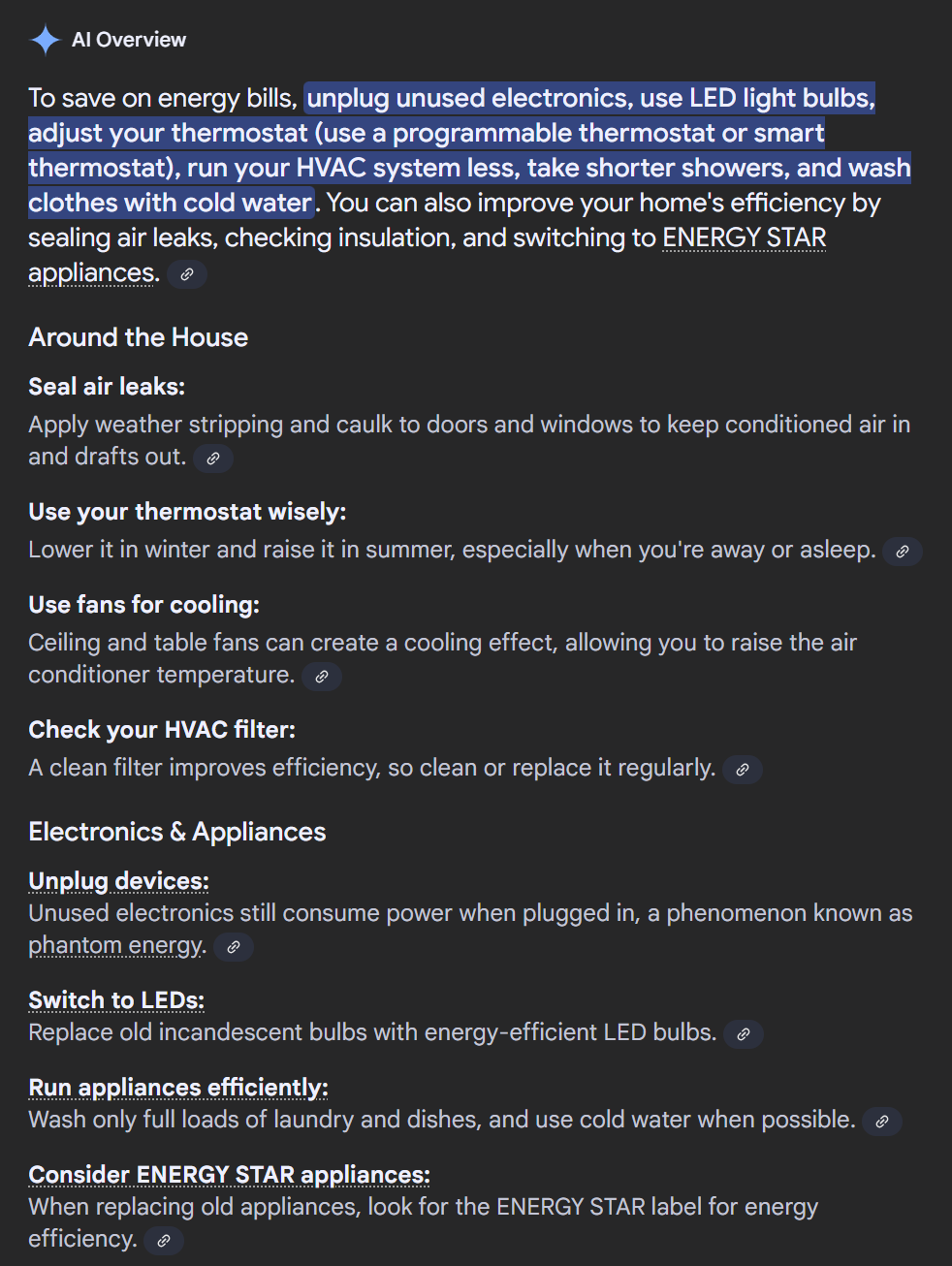
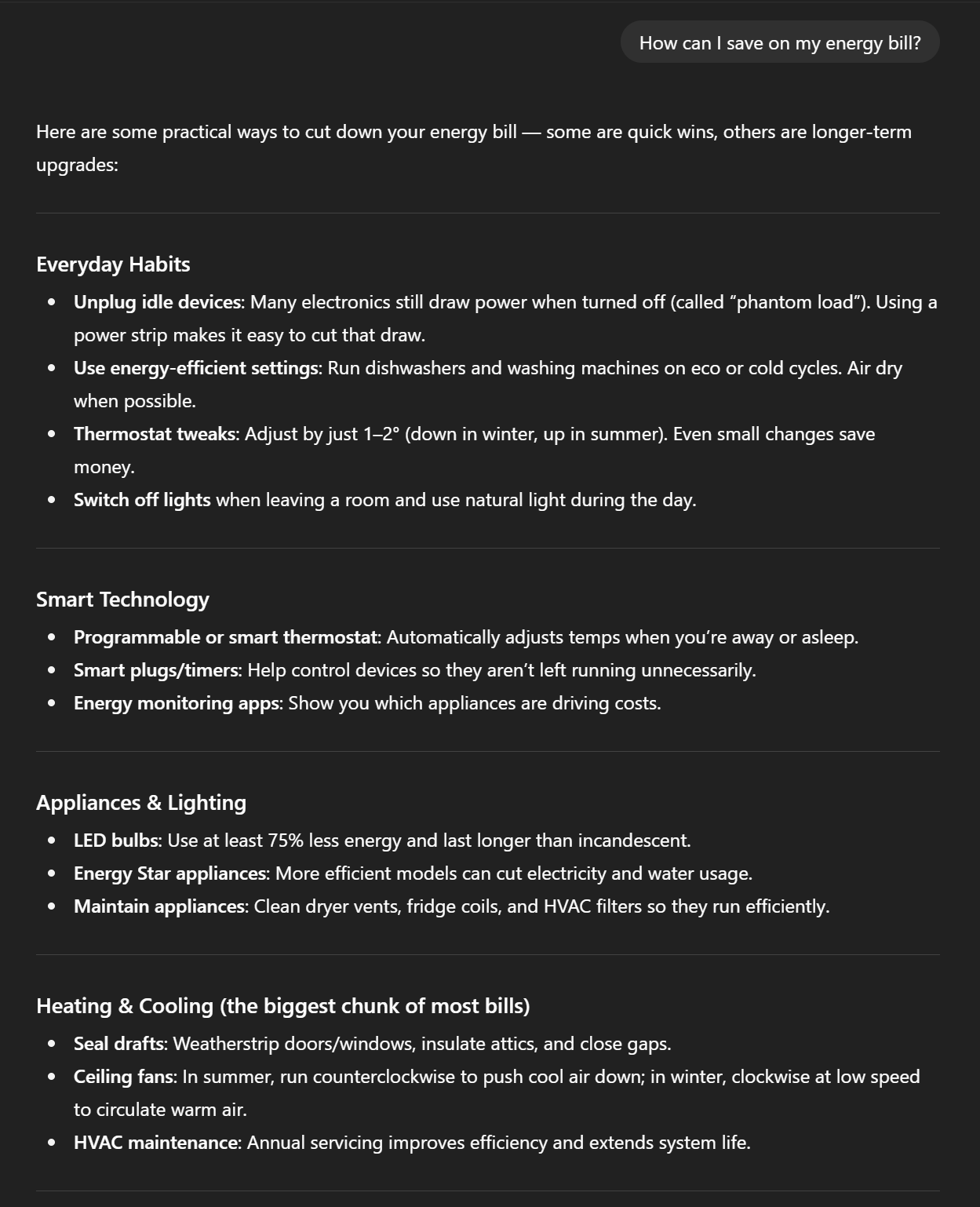
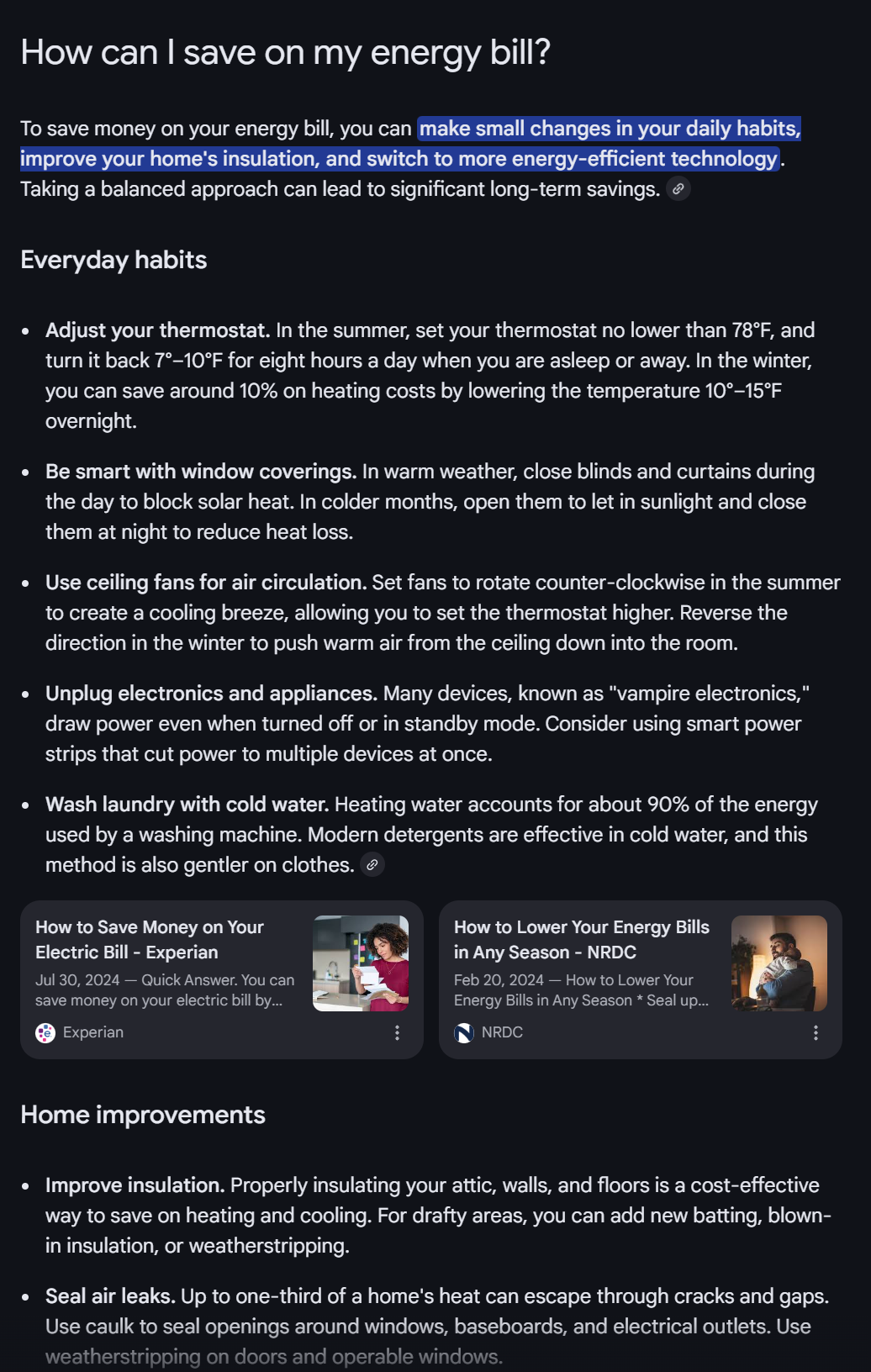
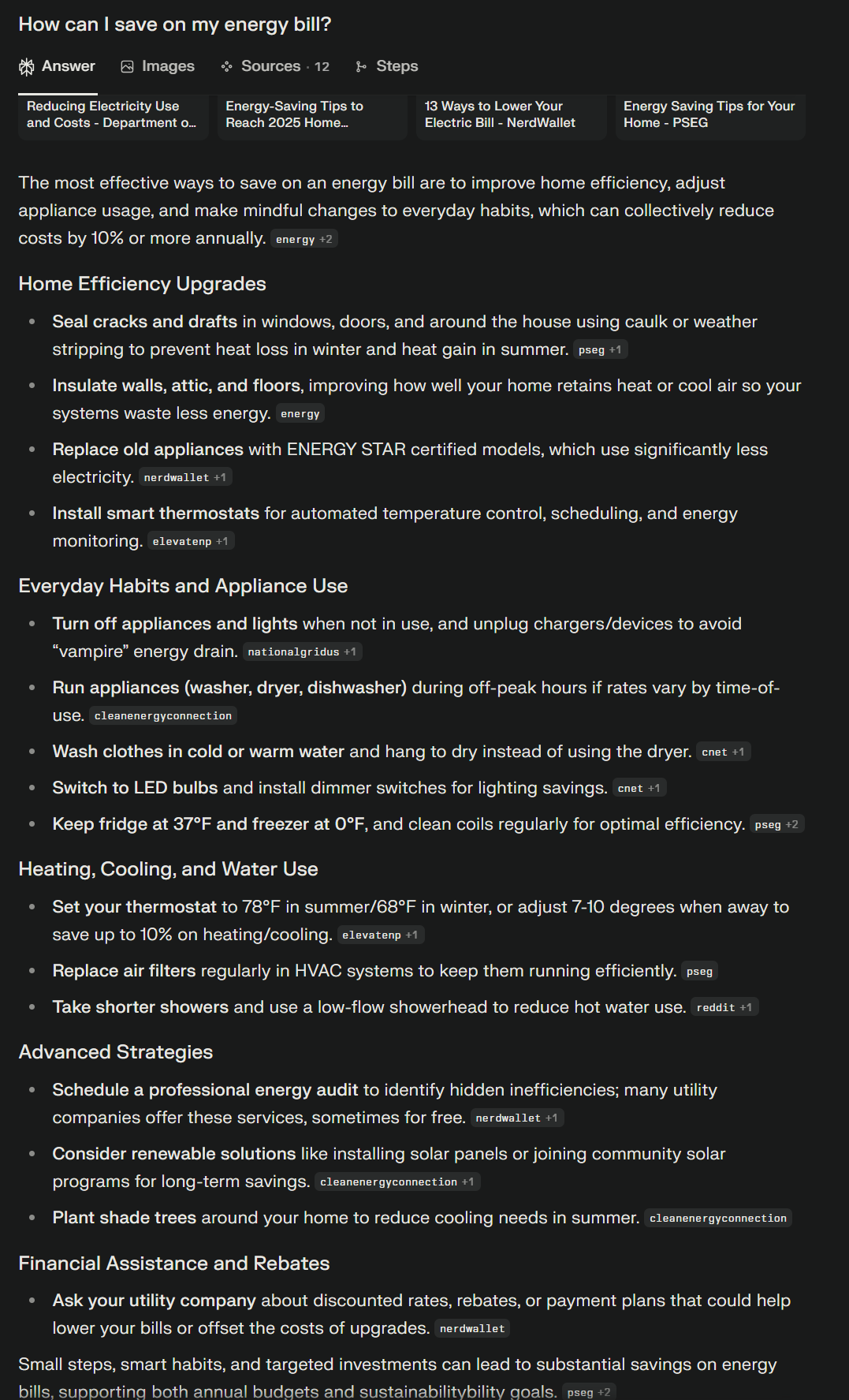
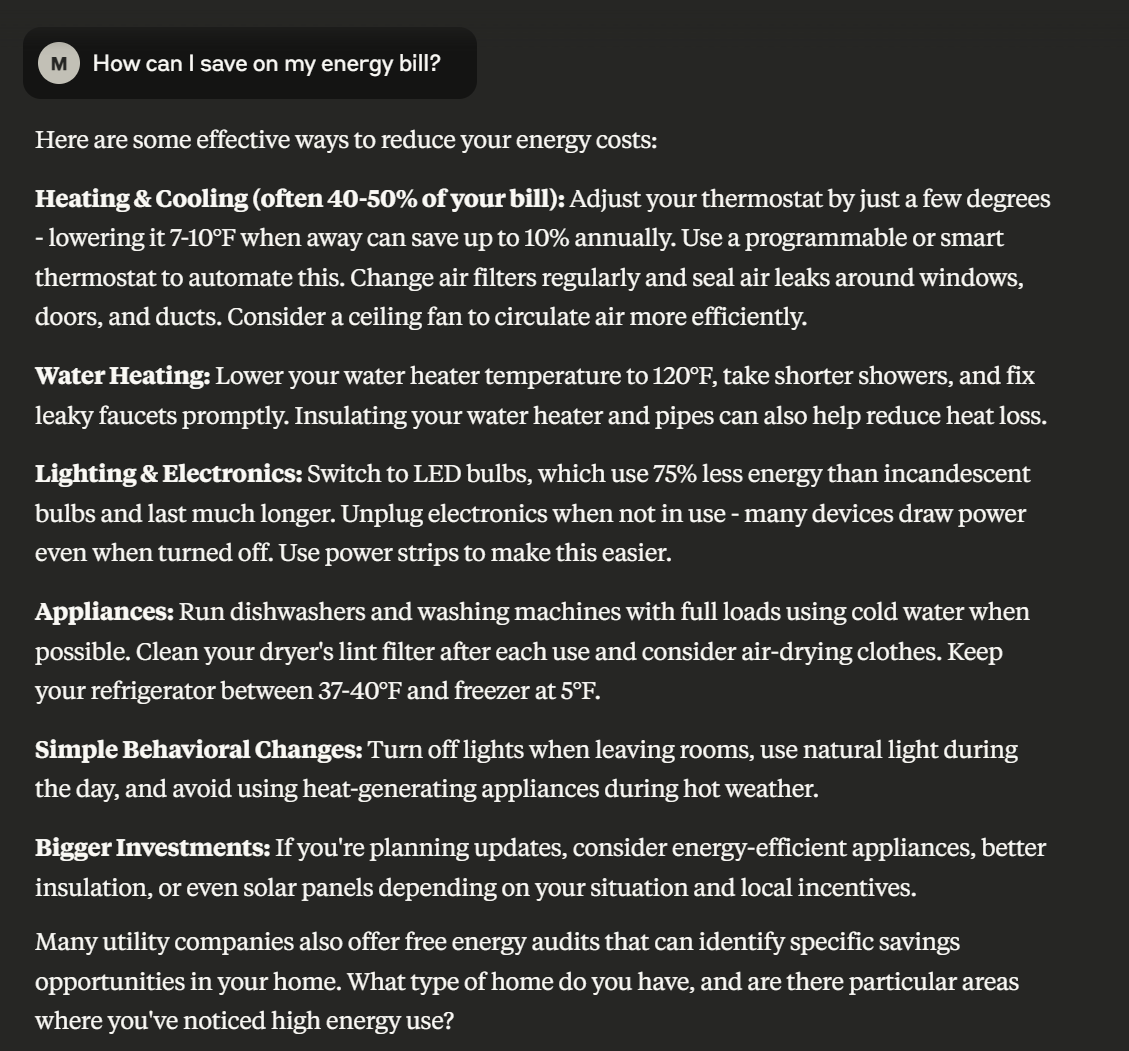
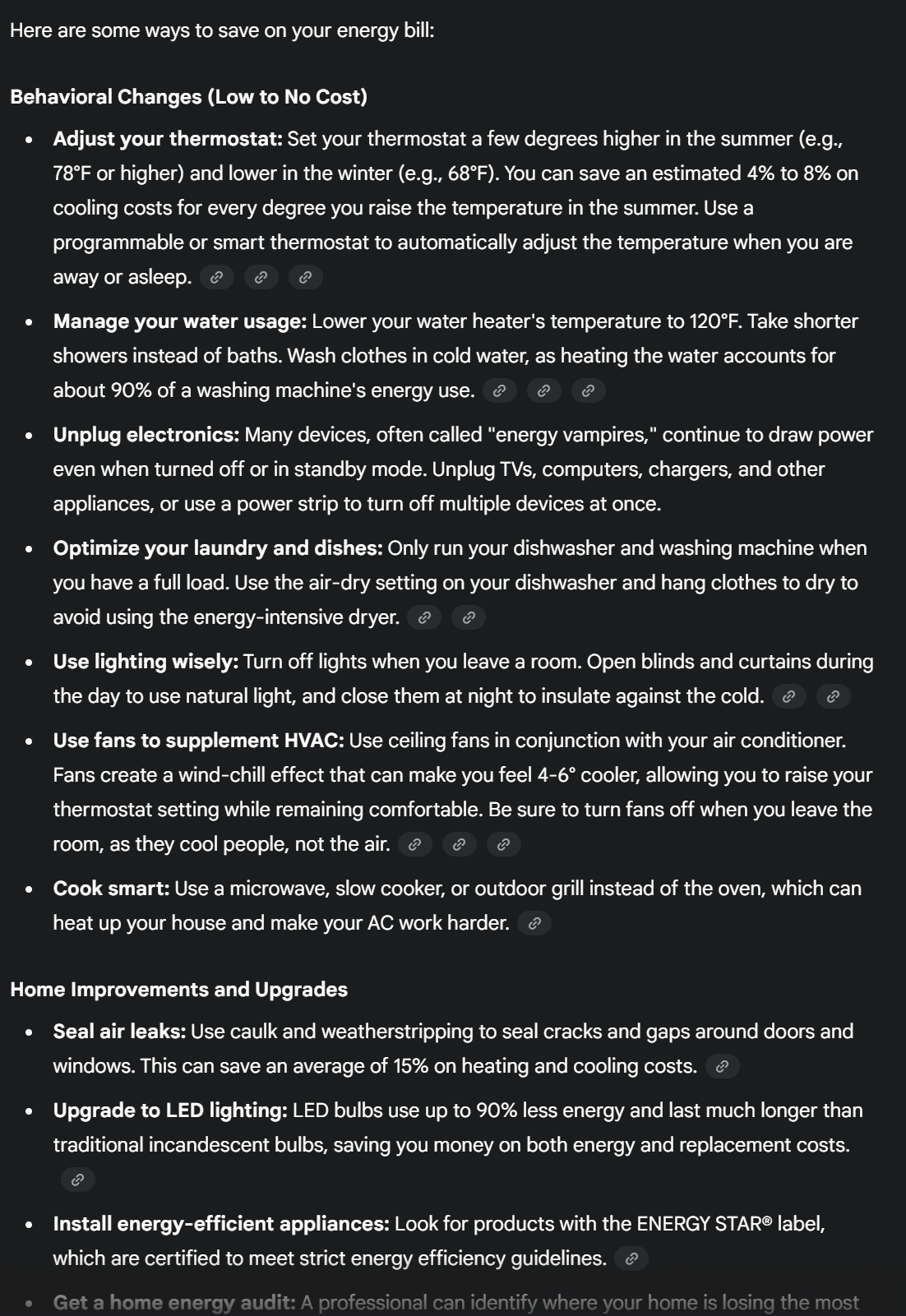
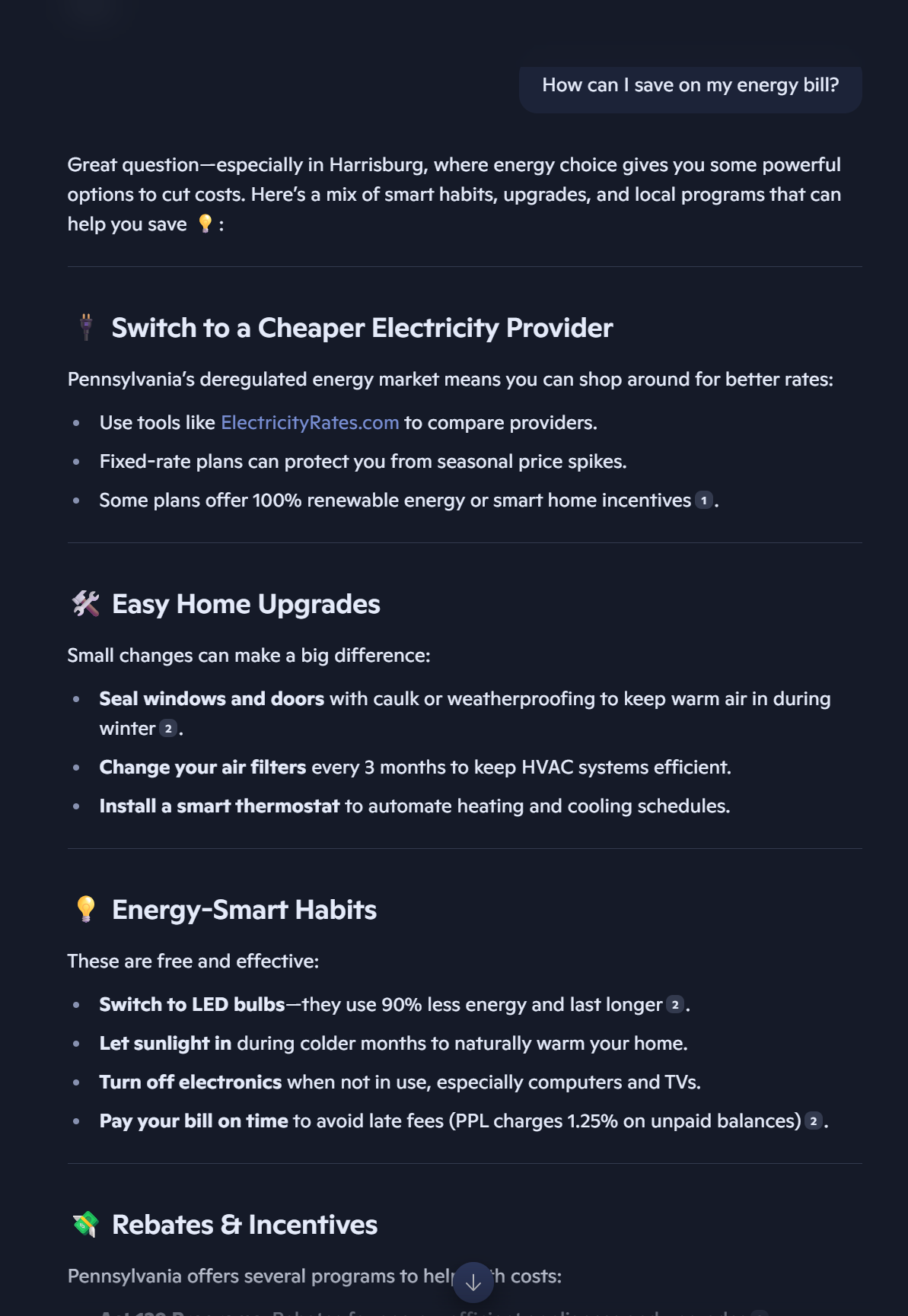
Here are some key insights from searching this query type:
The most interesting response from this crowd was Copilot. Despite the query not having outward local intent, it took a localized approach to the response. This query has a somewhat “hidden” local intent, where the tips you might take advantage of depend upon your location and climate.
Not only did Copilot pull my city location into the response, but it also gave me a Pennsylvania-specific resource I could check out for more information on energy efficiency. This was unique from any of the other platforms I tested with this query.
Additional exploration: Claude & query modificationAs mentioned prior, Claude gave one of the shortest responses out of all the engines. It was very succinct and to the point — there weren’t even subheadings to organize the tips into categories like all the other engines!
That got me thinking — What would happen if I just ever-so-slightly tweaked the query?
So I did.
Instead of searching, “How can I save on my energy bill?” I searched, “How can I save money on my energy bill?”
Only a one word differential. Would it make a difference?
Turns out, it did. Claude produced a much more in-depth response to my query than the original query.
In the image comparison below, you can see how the length of response is much longer after adding the word “money” to the query. There are also headings present to organize the information.
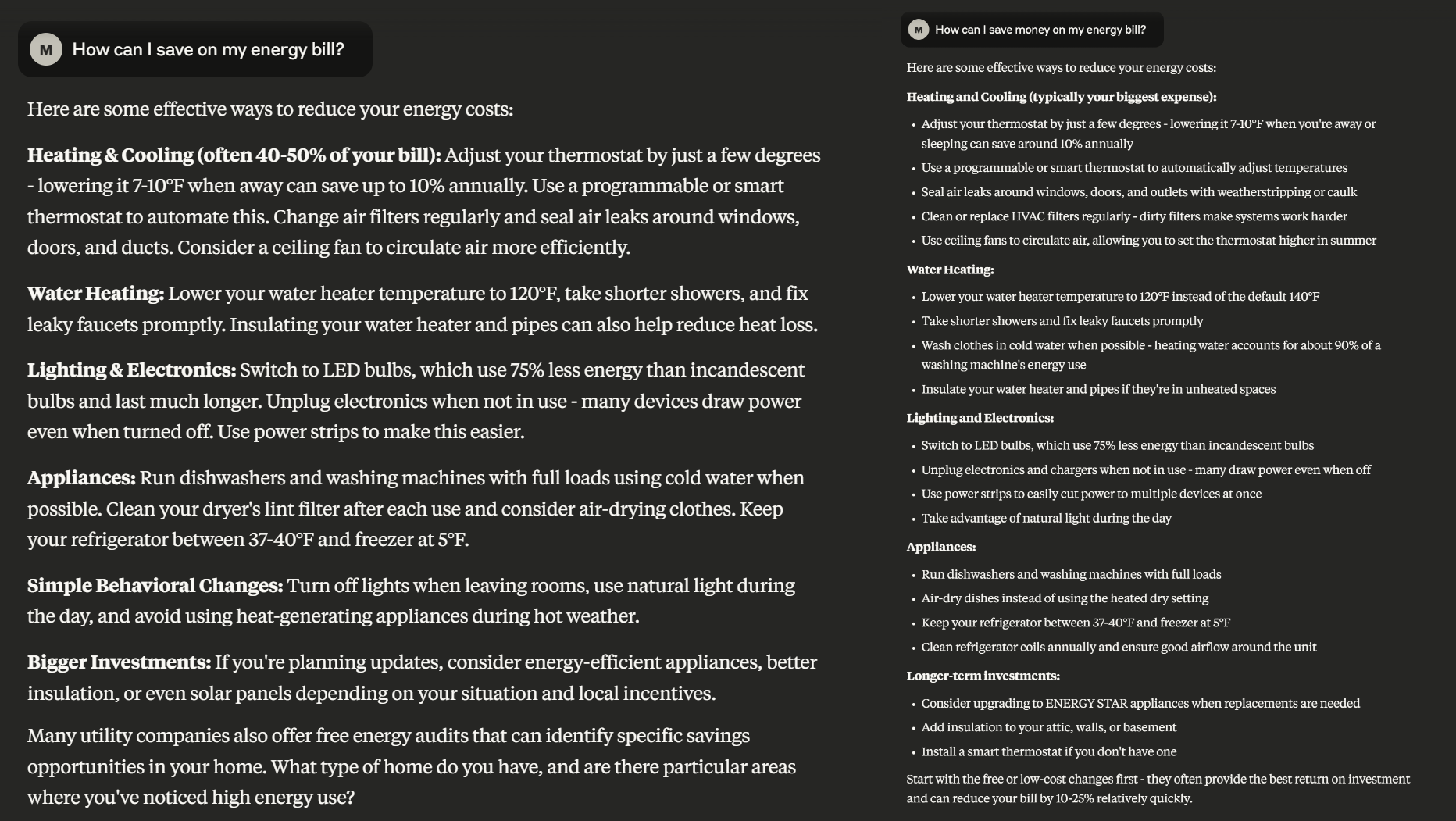
When I ran this same modified query through Gemini, the information it shared changed, too. It offered information about government programs I could take advantage of that included tax credits, rebates, and other money-saving tips.
So, what does this mean?
It means that even the slightest modifications to a query can change the information in the response, which can, in turn, impact what information you put on your pages.
How you can take action based on this explorationIf you’re targeting question-based queries, here are a few takeaways you can apply to your AI search optimization strategy:
Organize and categorize your page content
The majority of the engine responses verified something marketing experts have been preaching with AI — organize the information on your pages.
Using subheadings to organize information on your page is a multifaceted benefit. It helps AI crawlers better understand what’s on your page, but also helps provide context and makes it easier to understand.
Subheadings help readers, too. It allows people to know what to expect in a section of information and skip ahead to the section they’re looking for.
So, take advantage of subheadings to help organize information, so both readers and generative engines can access your information easily.
Account for keyword modifications
My little side quest to modify the original query showed one big thing — keyword modifications matter. You may think that adding one word doesn’t make a difference, but realistically, it provides additional context for LLMs, which triggers different information to populate.
This is a difference from traditional SEO. With traditional SEO, targeting both “save on my energy bill” and “save money on my energy bill” would produce the same websites sharing the same information, with maybe a few varying sources.
But when it comes to LLMs, the subtle differences allow these platforms to give more granular details, which alters the response.
So, whether you’re updating an old page or creating a new one, you need to account for how your keyword or phrase may be modified. Put your related keywords into an LLM and see how the response changes from the original target keyword/phrase. It’ll help you identify information gaps you can address to have a better chance of appearing in LLM results.
Query type #2: Research-basedFor this query type, I gave all the generative engines a prompt of me looking for homeowners insurance and specified the information I wanted to know.
Here were the responses:
Image examples
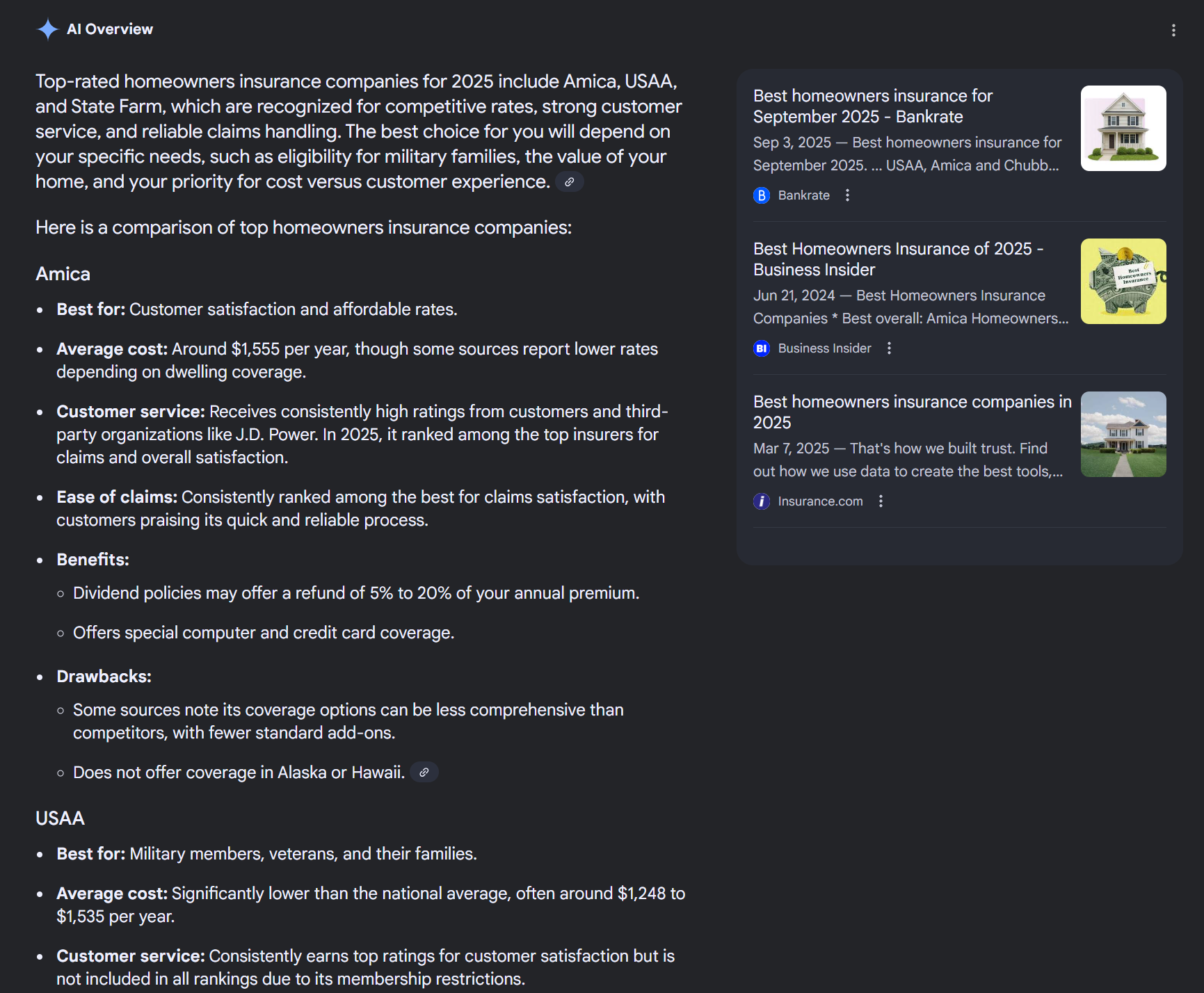
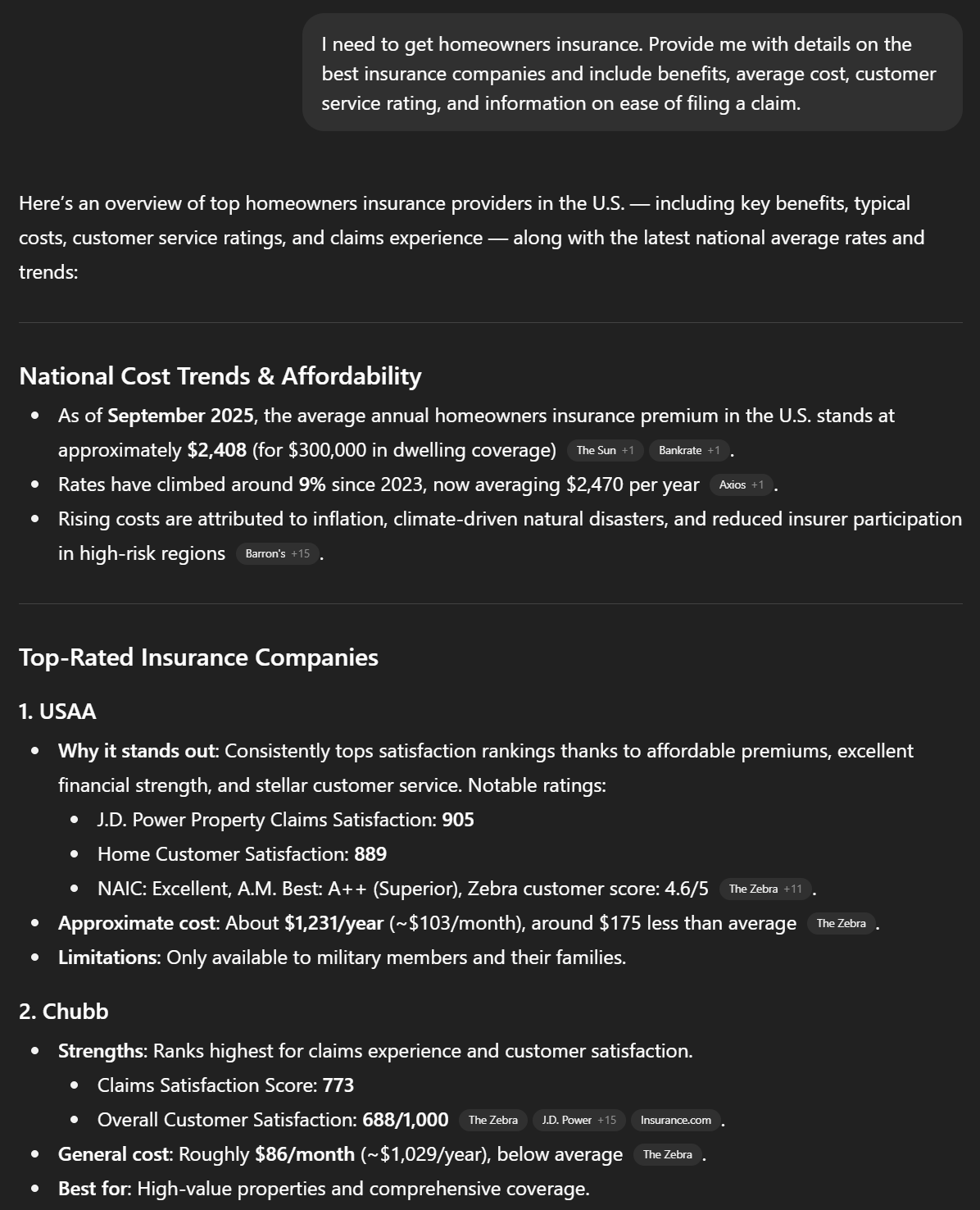
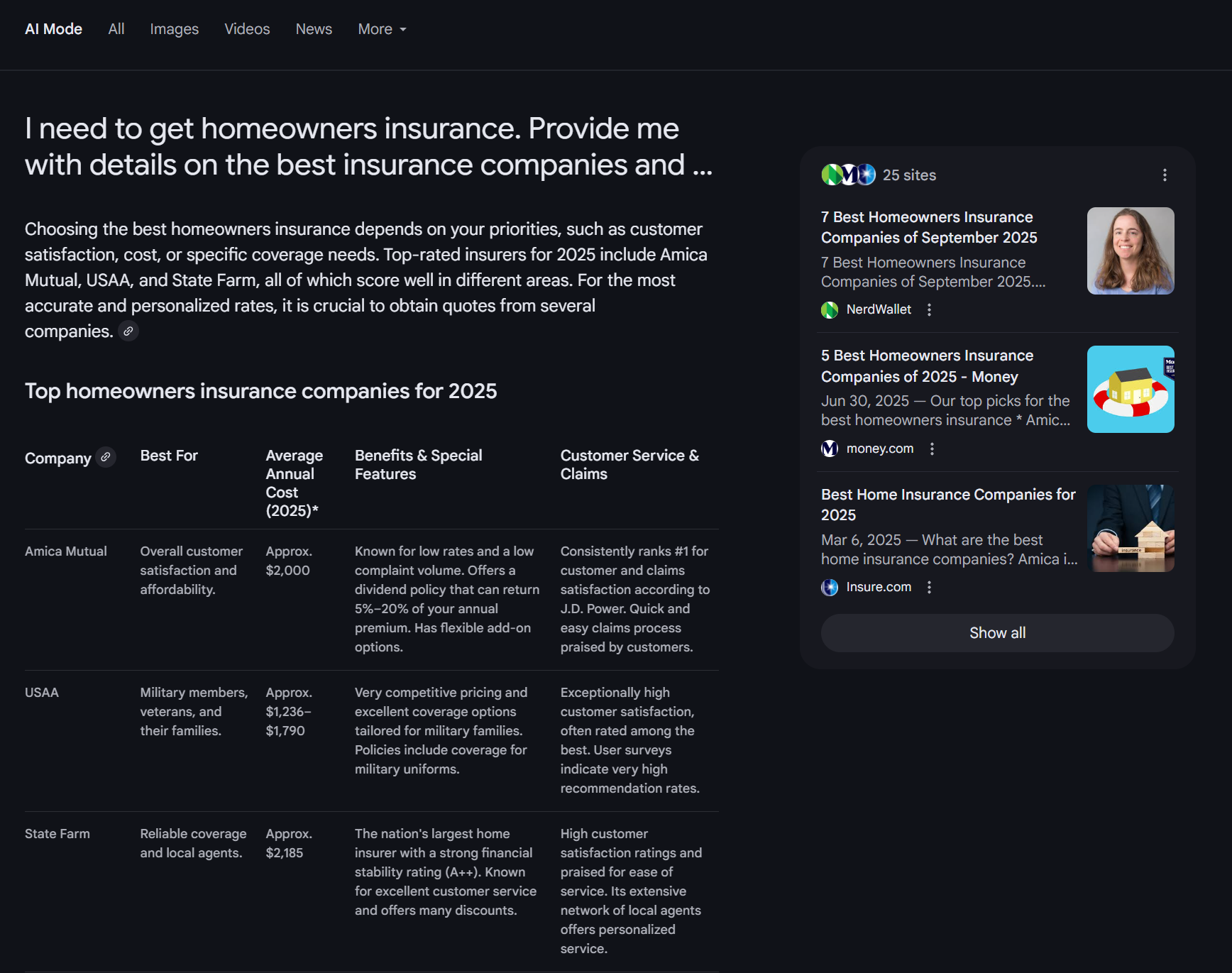
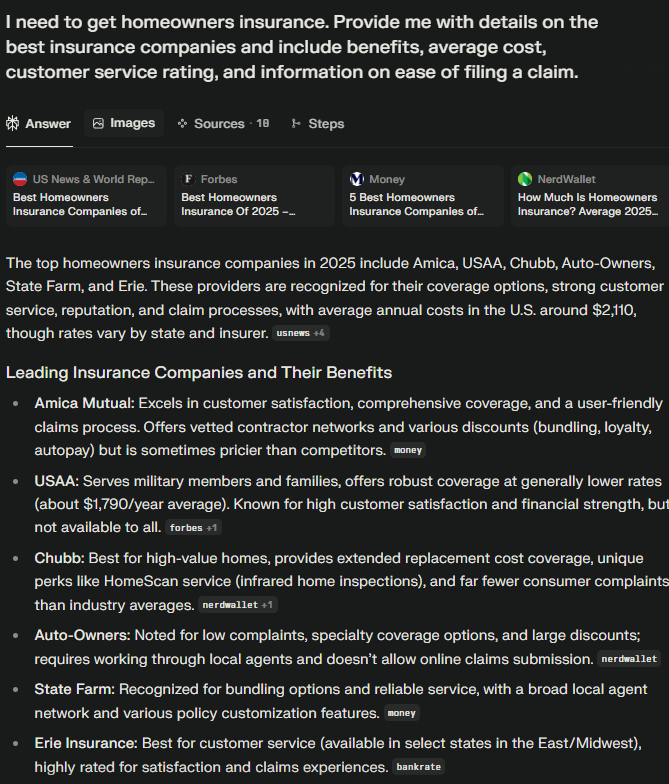
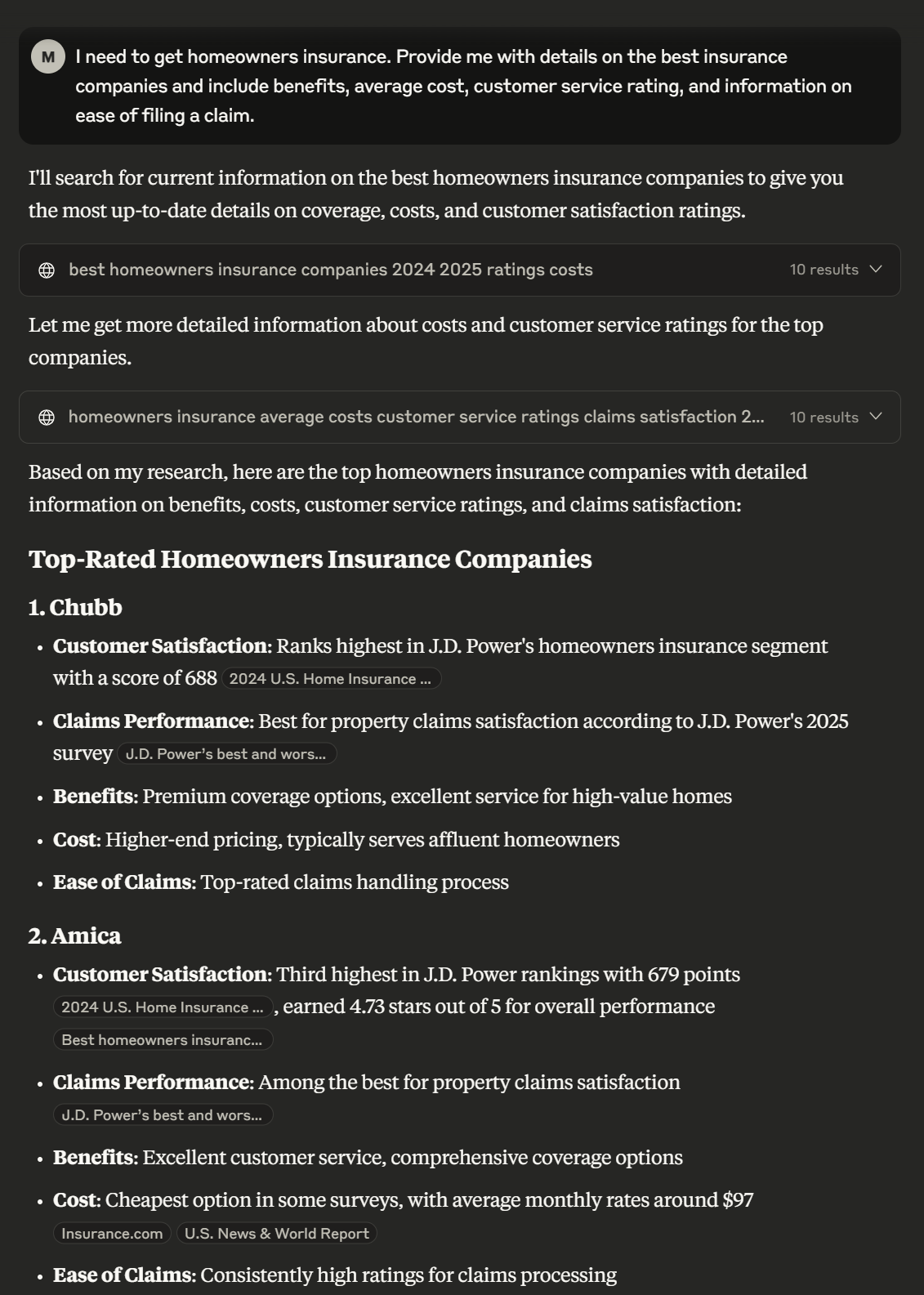
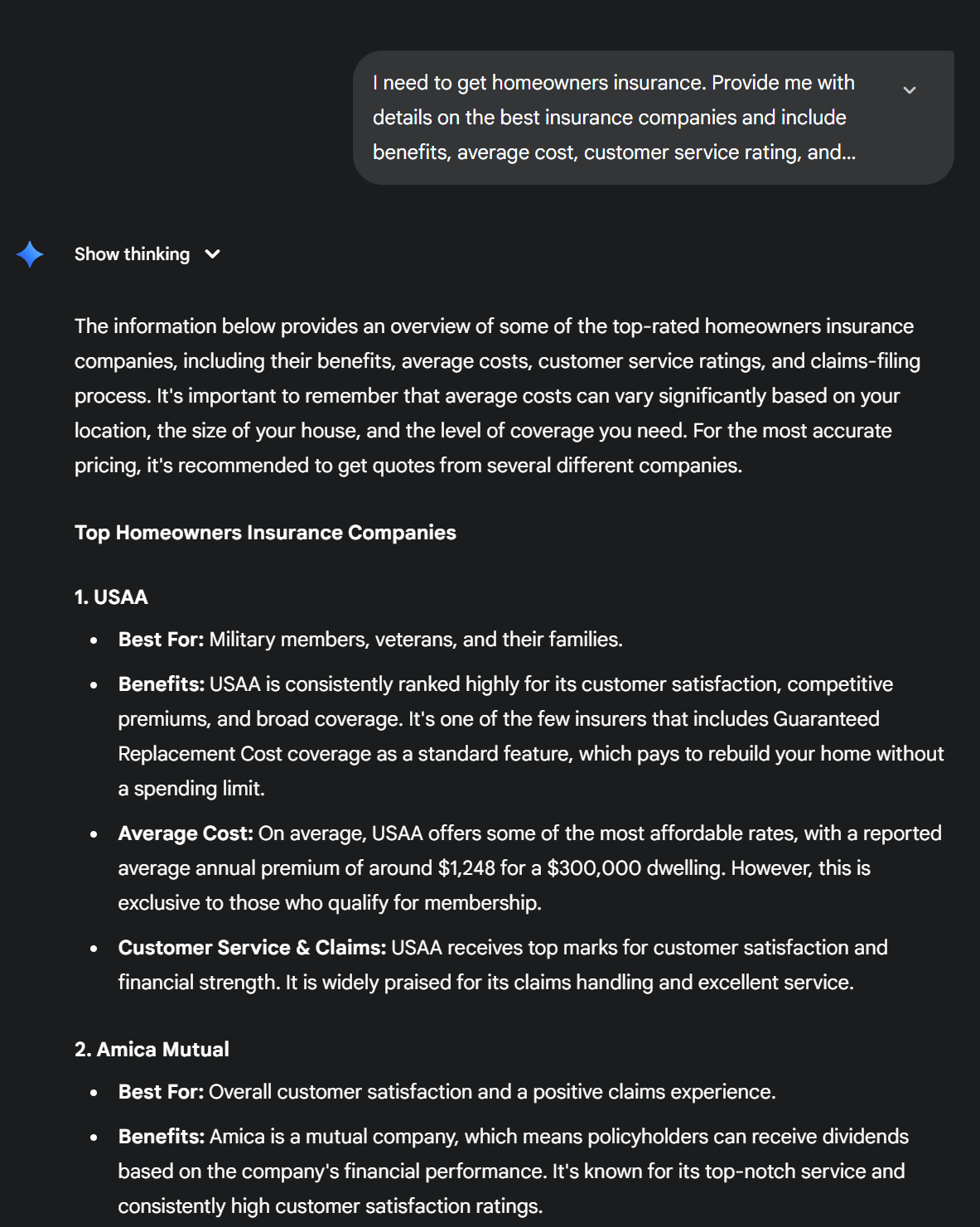
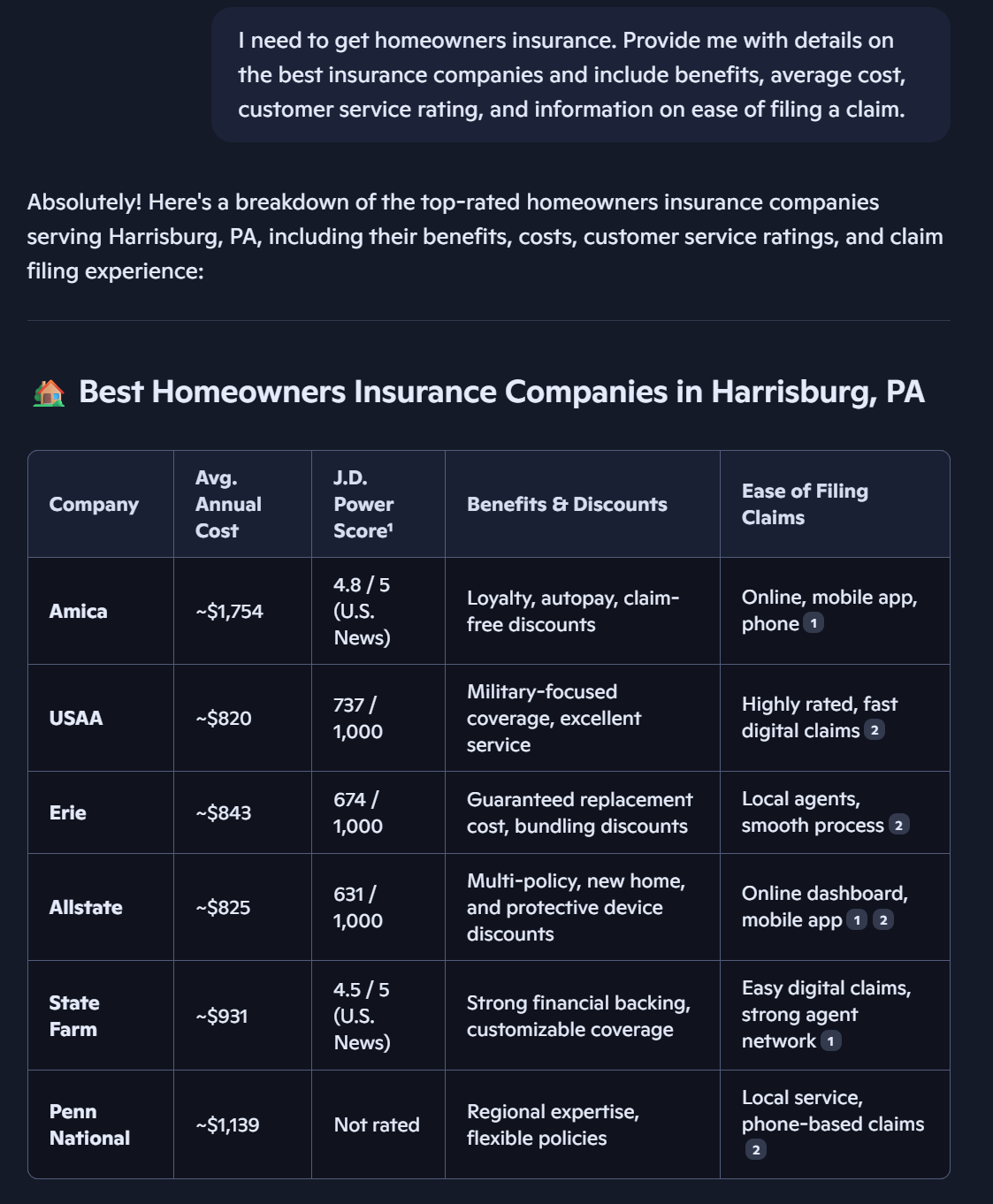
Here are some key insights from these queries:
Copilot, once again, delivered a different experience — it gave me a response with a hint of location-based customization. While it listed the same companies as other generative engines, it did include a Pennsylvania-specific insurance company I could use. So, yet again, the information from Copilot was a little more tailored to me.
How you can take action based on this explorationBased on the exploration of these keywords, here are a few takeaways you can get from this query example.
When in doubt, put the user first
With this exploration, organization was big. The majority of the generative engines presented the information in a table because, ultimately, a user like me is looking to compare to find the company that seems best suited to my needs.
So, instead of reading about each company individually, I can easily see them side-by-side and compare the important aspects I care about (cost, ease of filing a claim, etc.).
That means: When in doubt, put the user first.
Having a page that presents the information in the most logical format is an effective way to help AI bots easily crawl and digest the information, but also provide a positive user experience for anyone who visits your page.
It really means boiling it down to what the user is looking for and what they want from the query. With a query like this one, the indicator is that I would like to compare companies, so AI reflected that.
While inserting something like a table, in this instance, doesn’t mean AI will just pull your entire table, it does make it easier for it to use the information on your page to fill in the blanks (and maybe even get cited!).
Be thorough
If this prompting exploration proves anything, it’s the importance of being thorough. Creating half-rate content with little sustenance won’t satisfy users, no matter what search tool they use. Regardless of how the information was formatted (table or no table), it was thorough and provided what I wanted to know.
That being said, if you want to have a chance at being pulled into the responses from these generative AI tools, you need to be thorough, too. Think about the questions people might ask around a topic and build from there.
So, for example, if someone is looking for the best home insurance companies, what information would they want to know? Likely, they’d want to know things like cost or claim success. Making sure you include that core information in your page makes you more likely to get pulled in AI responses.
Query type #3: Shopping-basedFor this query type, I opted for a simple query that people often ask, “where can I buy [item]”. So, I explored this query type with the question “Where can I buy smoked meats online?”
Here were the responses:
Image examples
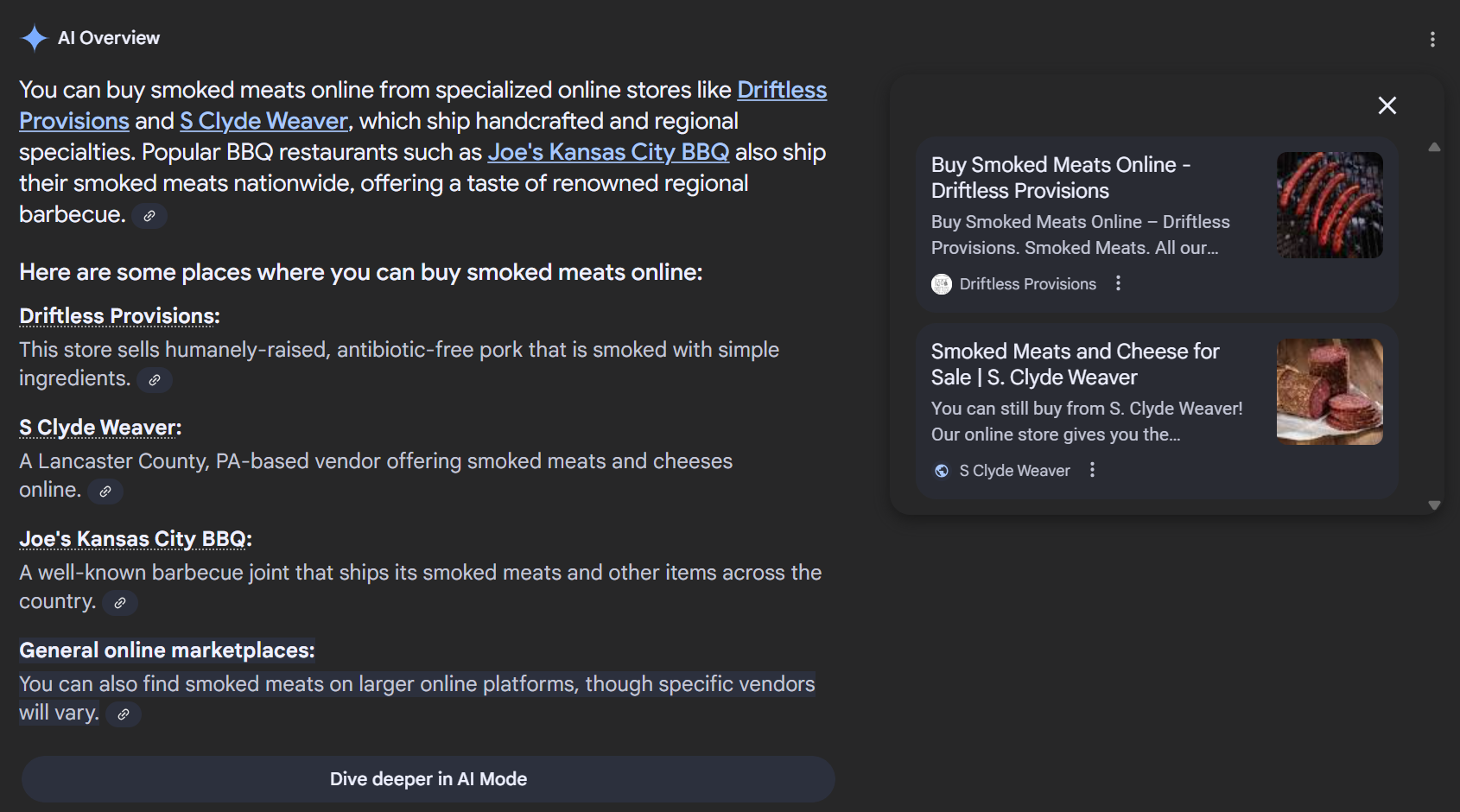
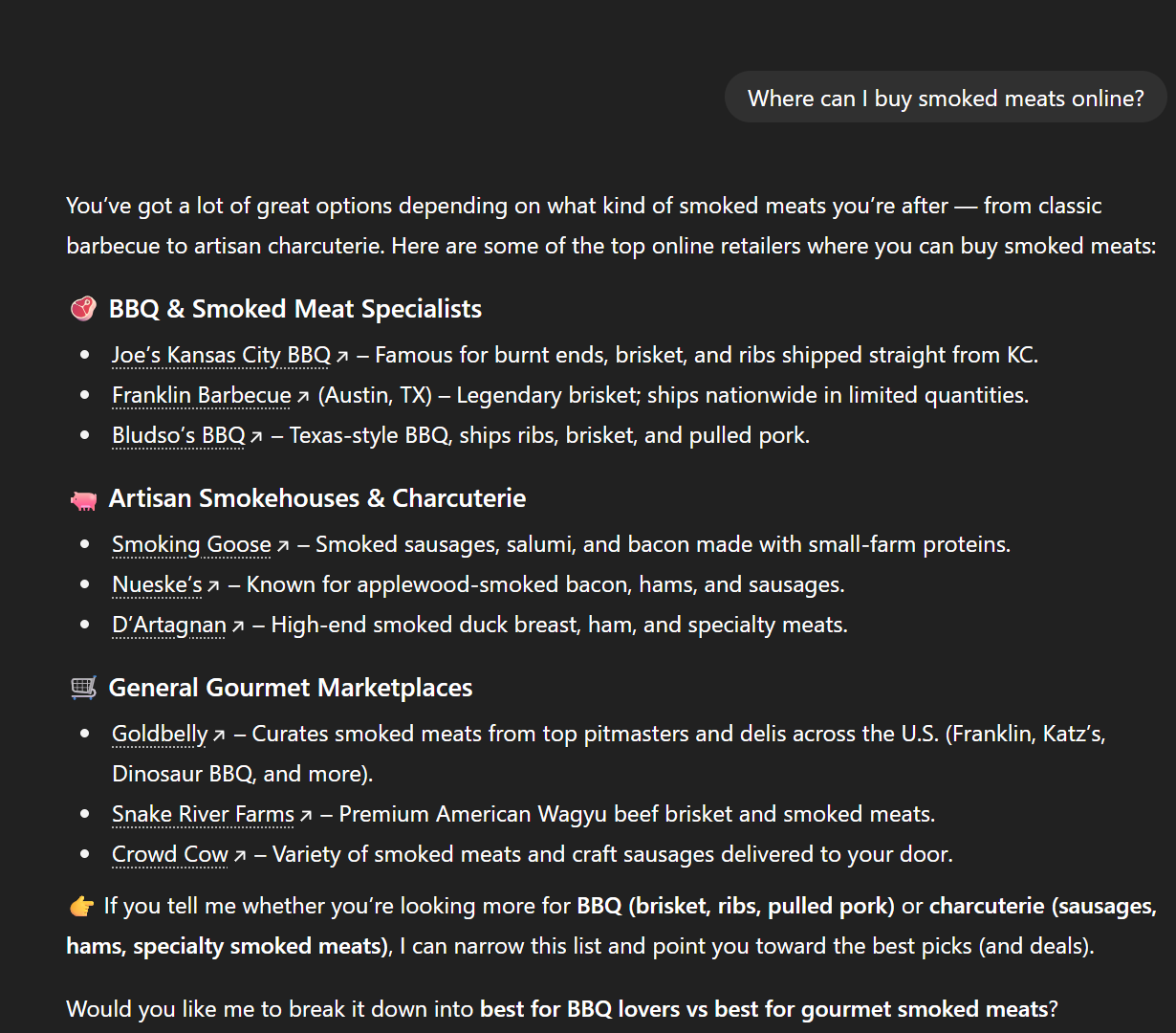
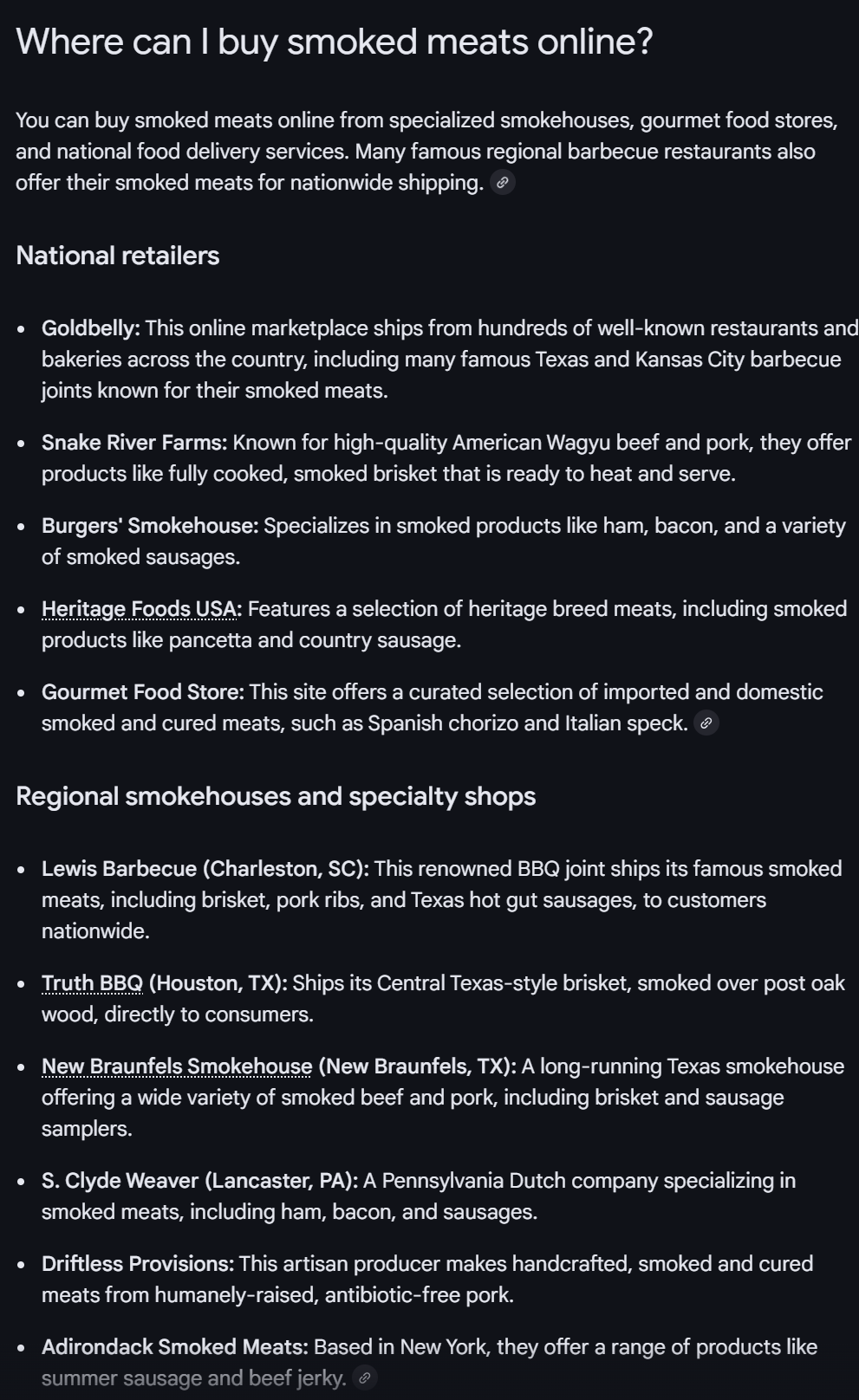
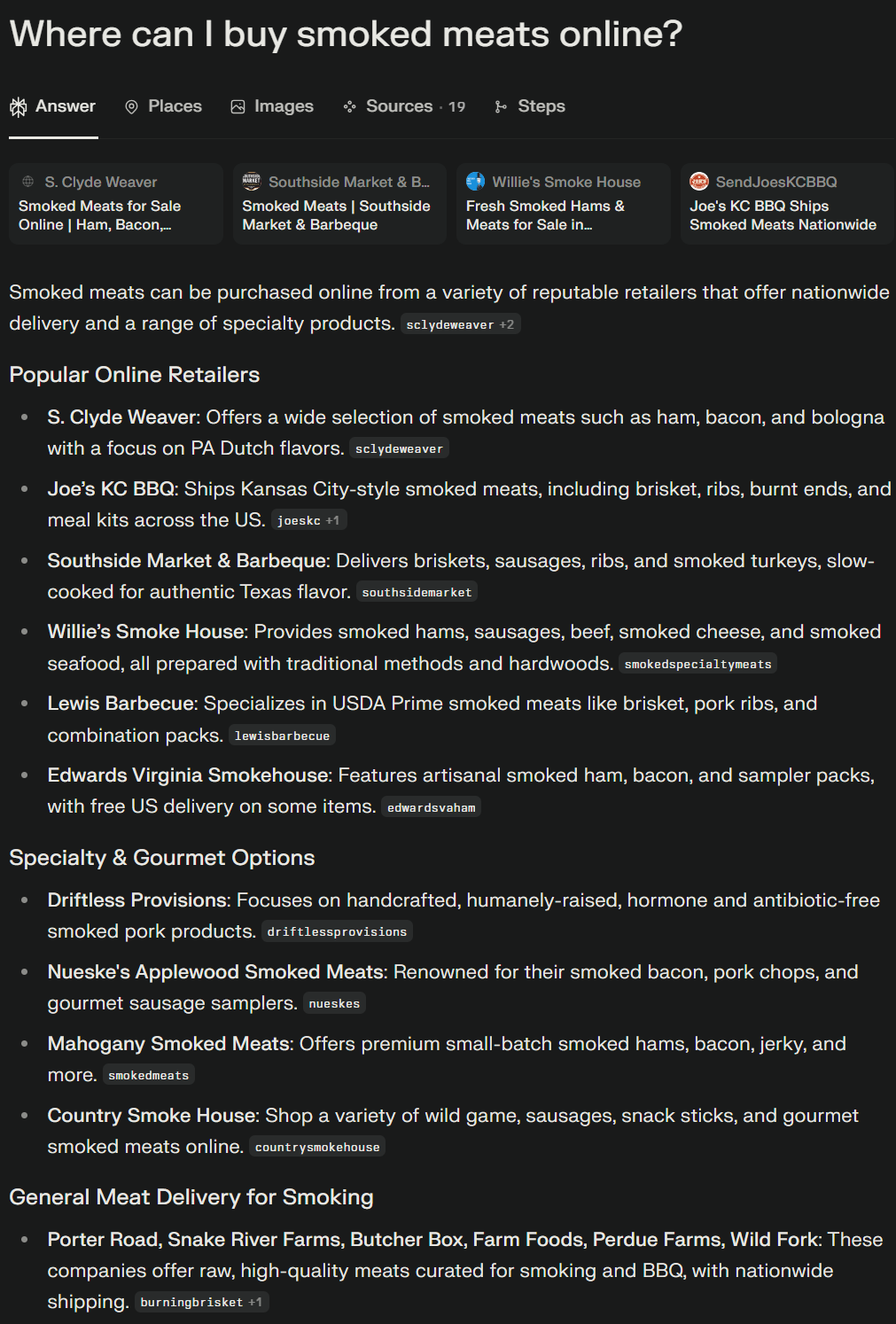
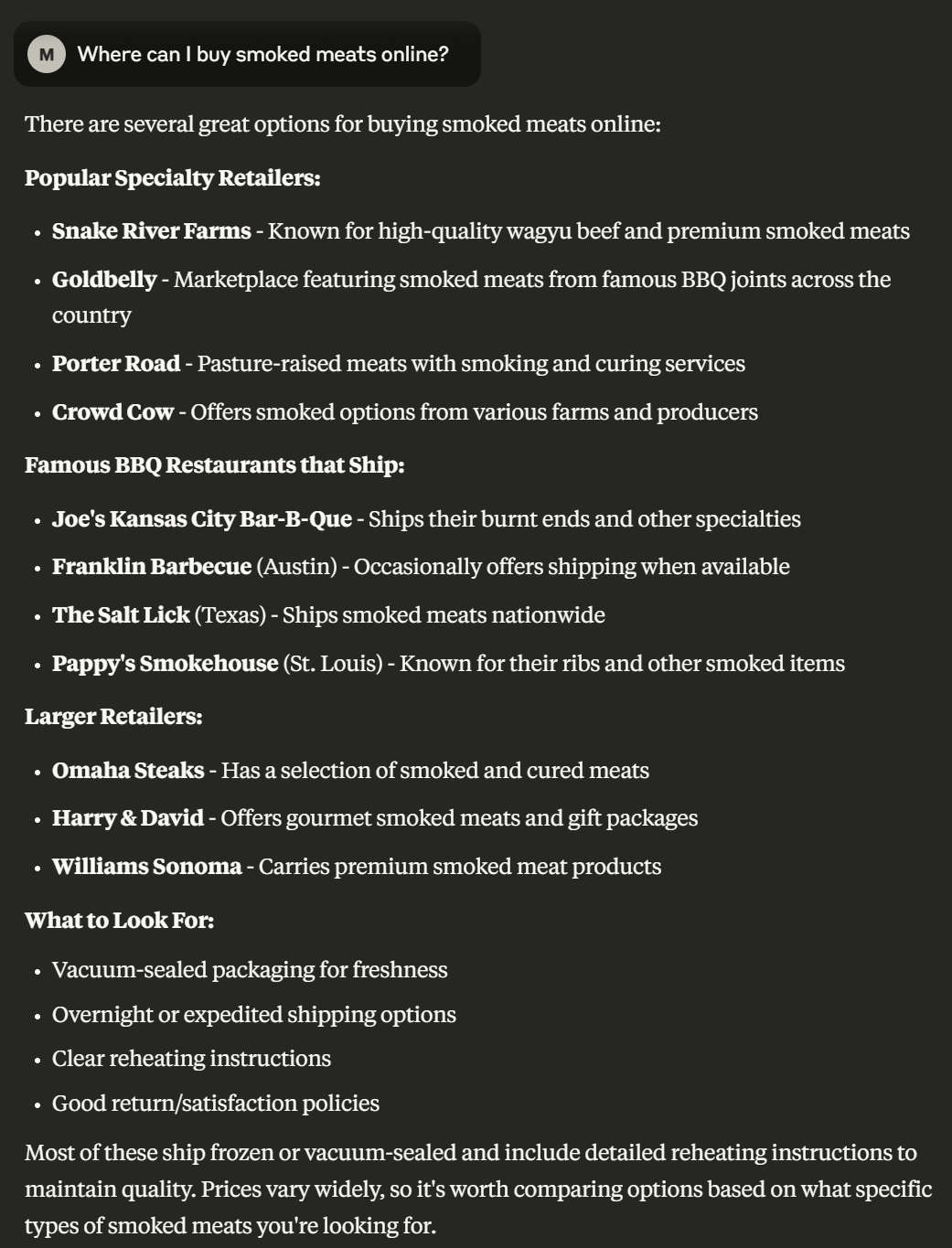
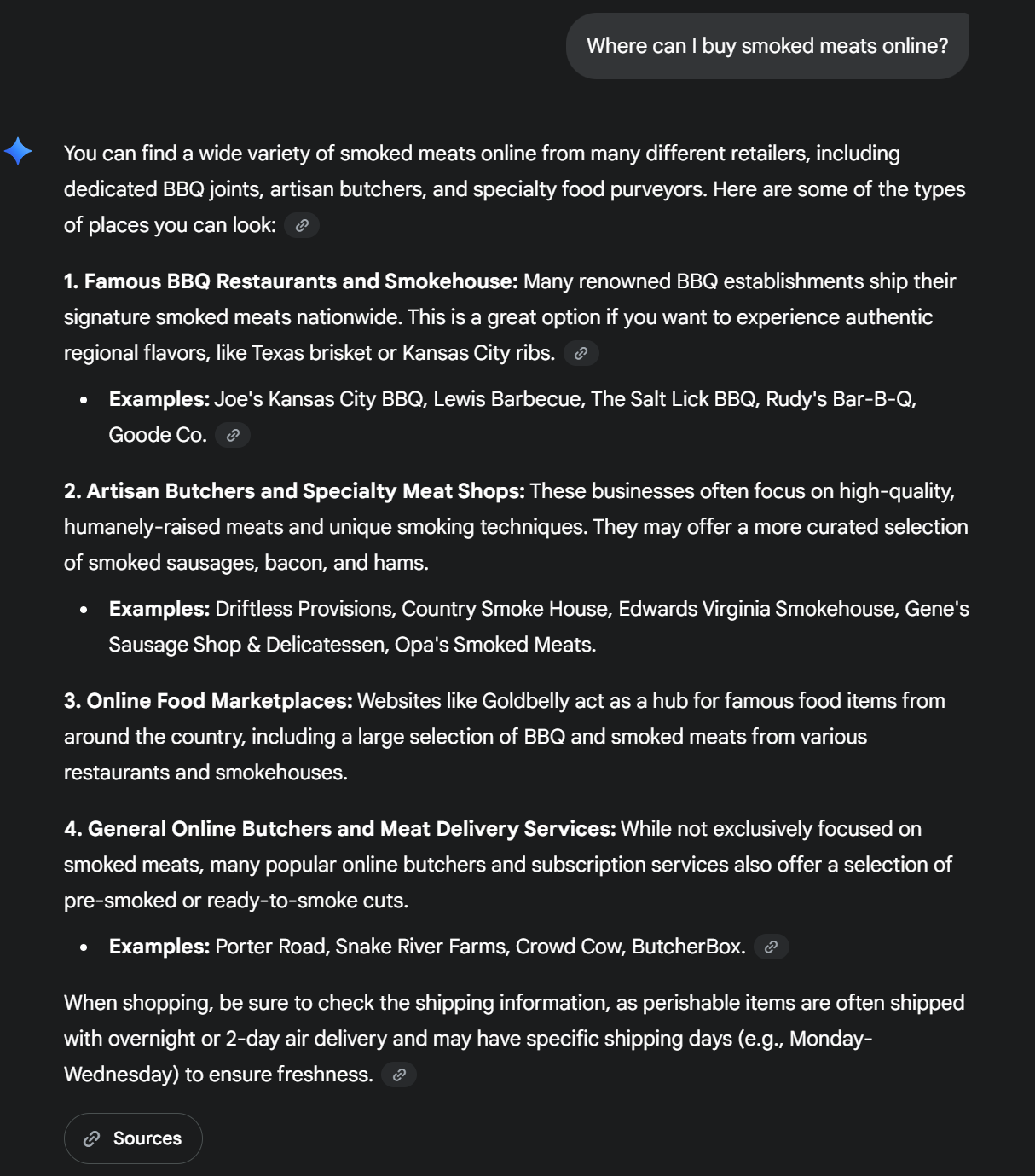
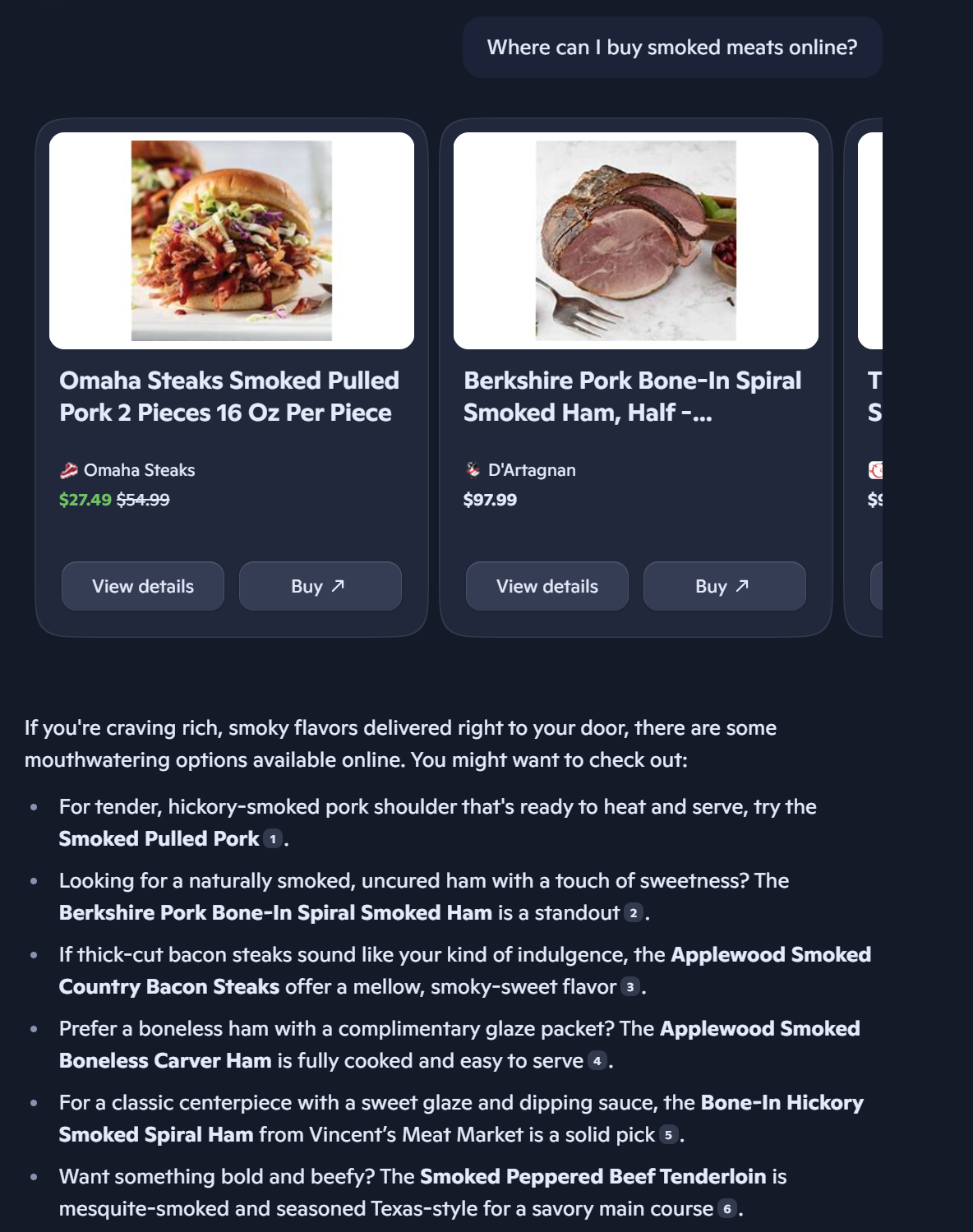
Here are some key insights from these queries:
Yet again, Copilot differentiated its response from the pack. Most of the responses categorized the places to buy smoked meats and shared a description of what that place offers. Copilot, instead, shared shoppable listings with specific products, taking a more product-first approach vs. brand-first approach like the other generative engines did.
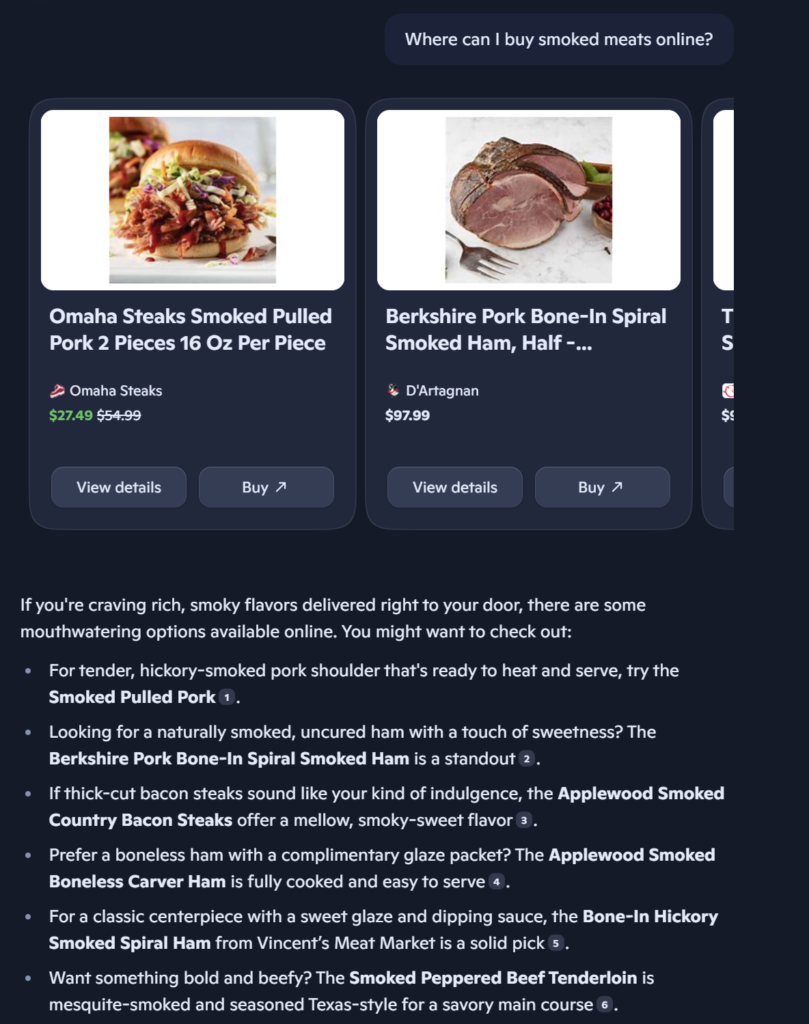
If you opted to get more information about the product, you could see information like star rating, brand, and weight. Copilot also integrates price history data to help you understand if you’re getting the best deal.

So, if you’re targeting shopping-based queries, what can you take away from this exploration?
Build your branding
For purchase-intent searches like this one, building your branding is crucial. You need to build a strong association between your brand and what you offer (products or services). So, that way, your brand shows up in the mix of results.
Build up keyword associations with your brand. So, like in this example, a place that sells smoked meats would target keywords related to that product to help build brand association between their company and their product.
Enhance your product or service descriptions
With bottom of the funnel searches, providing a thorough description of your product that can provide context for generative engines is a must.
In the example query, many of the generative engines categorized the options — they’re plugged into categories like “national retailers,” or “artisan options.” By integrating descriptors like this into your product listings, you can help provide context for AI, but also let it know where to slot your business in results.
Query type #4: Location-basedThe last type of query we’ll look at is the location-based query. For this local query, I used the question “Where is the best Italian restaurant in Manhattan?”
Here were the responses:
Image examples
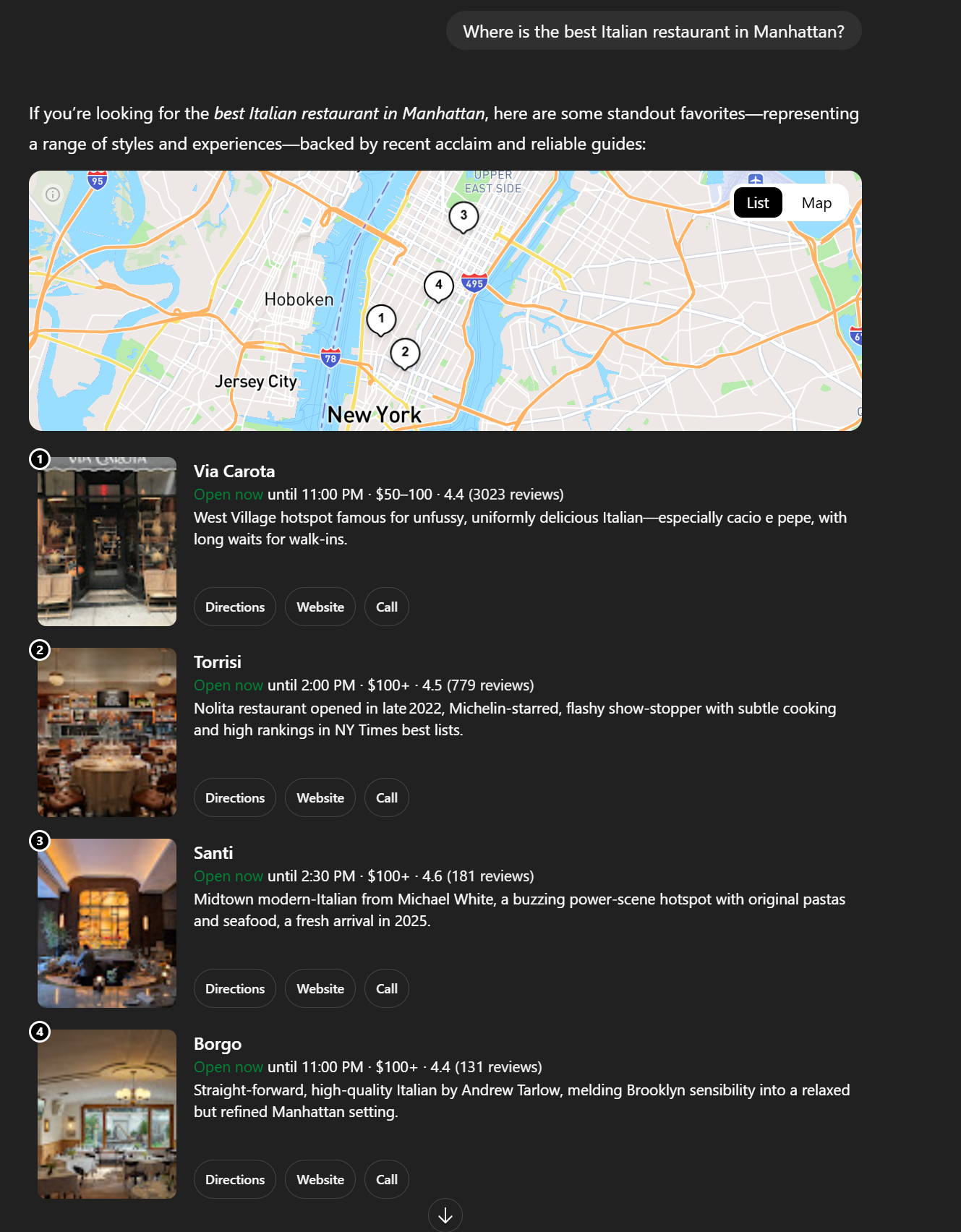
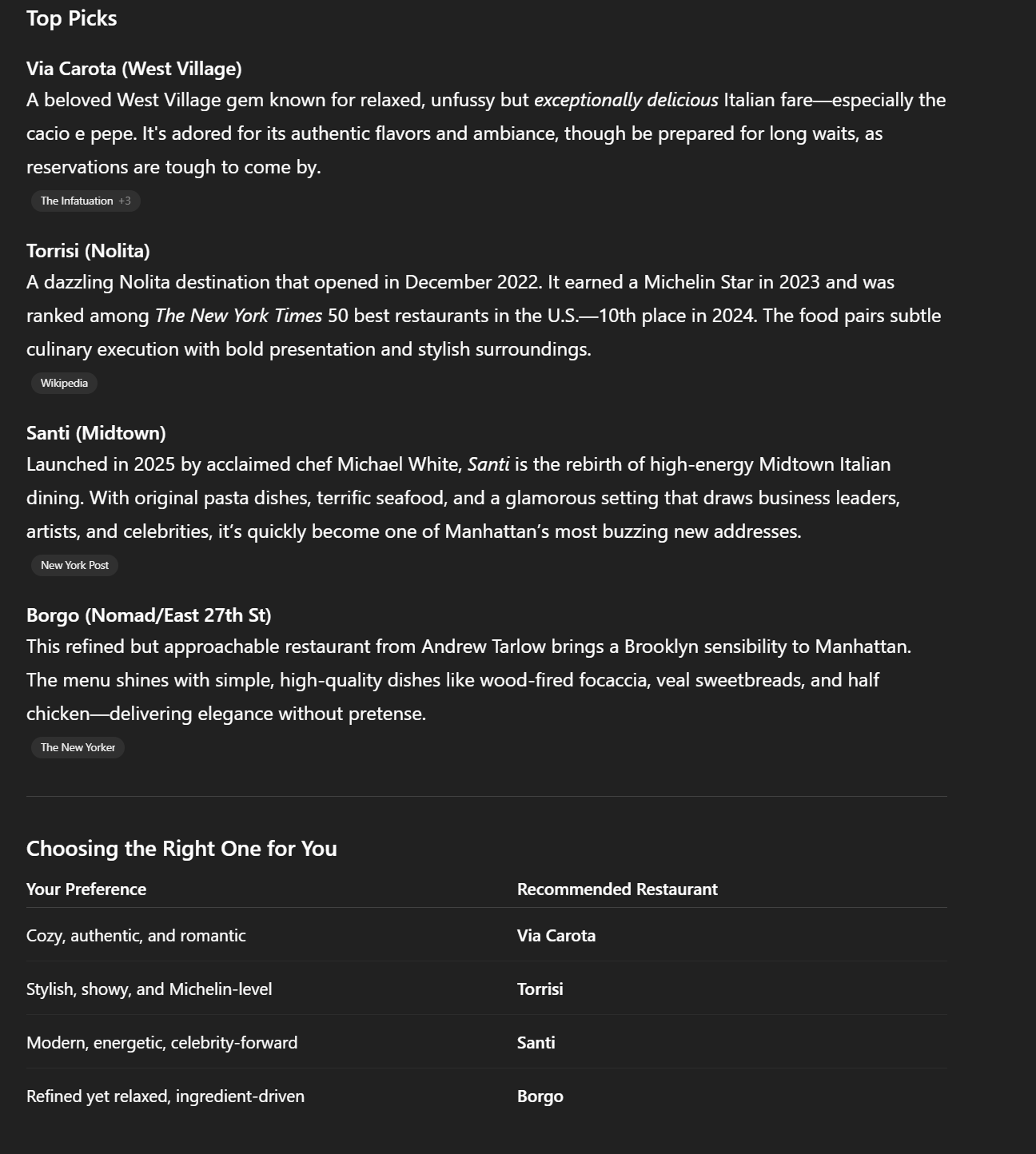
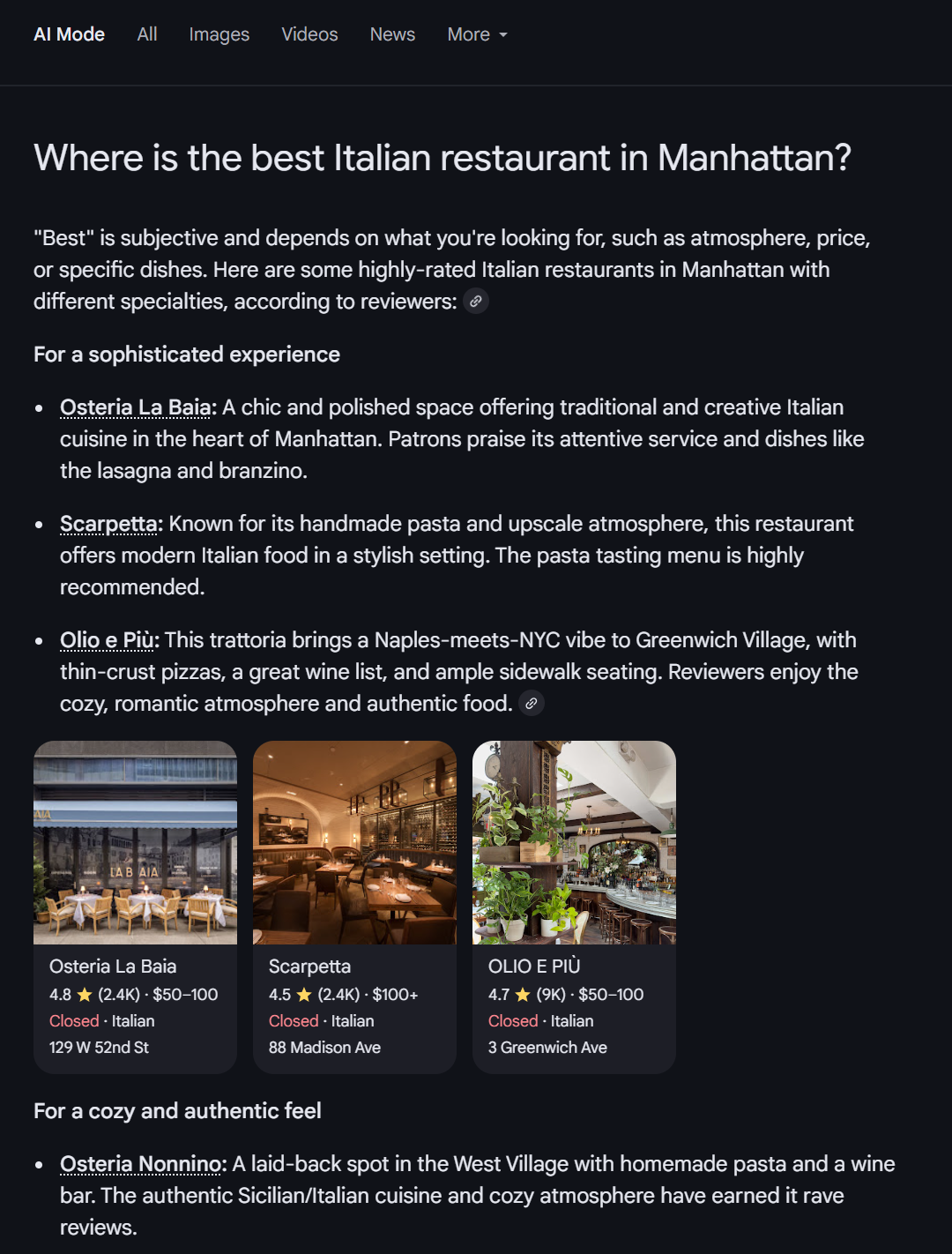
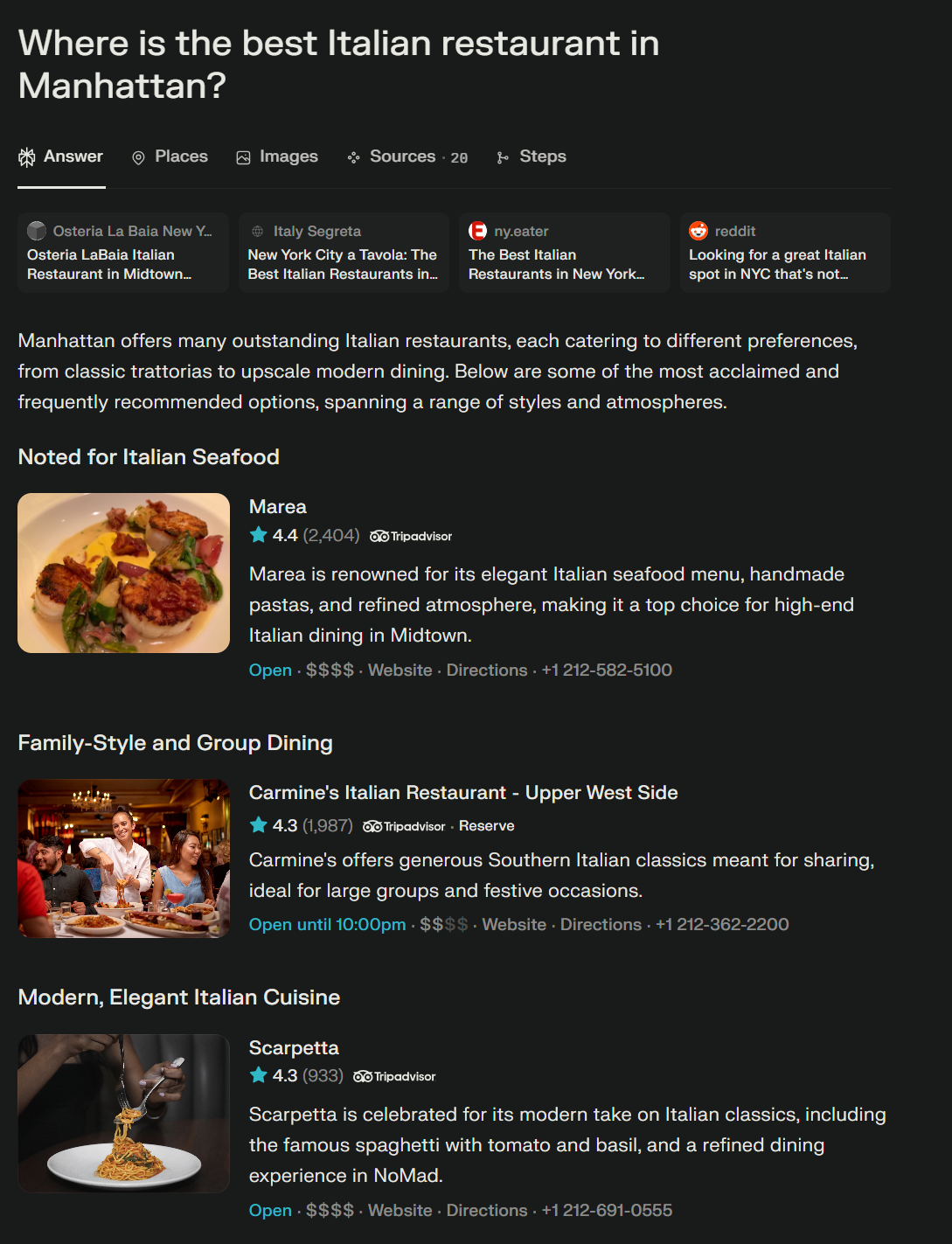

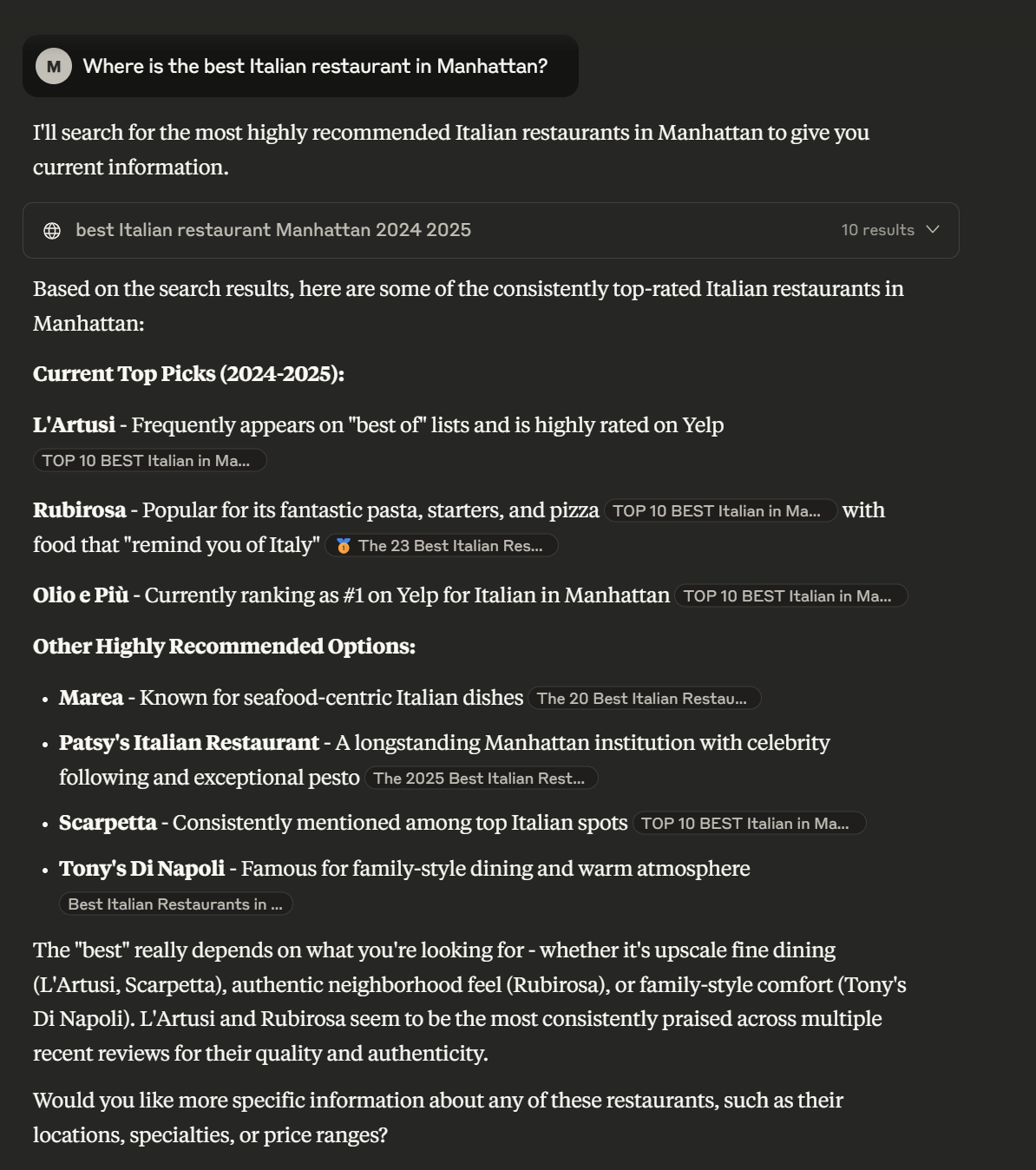
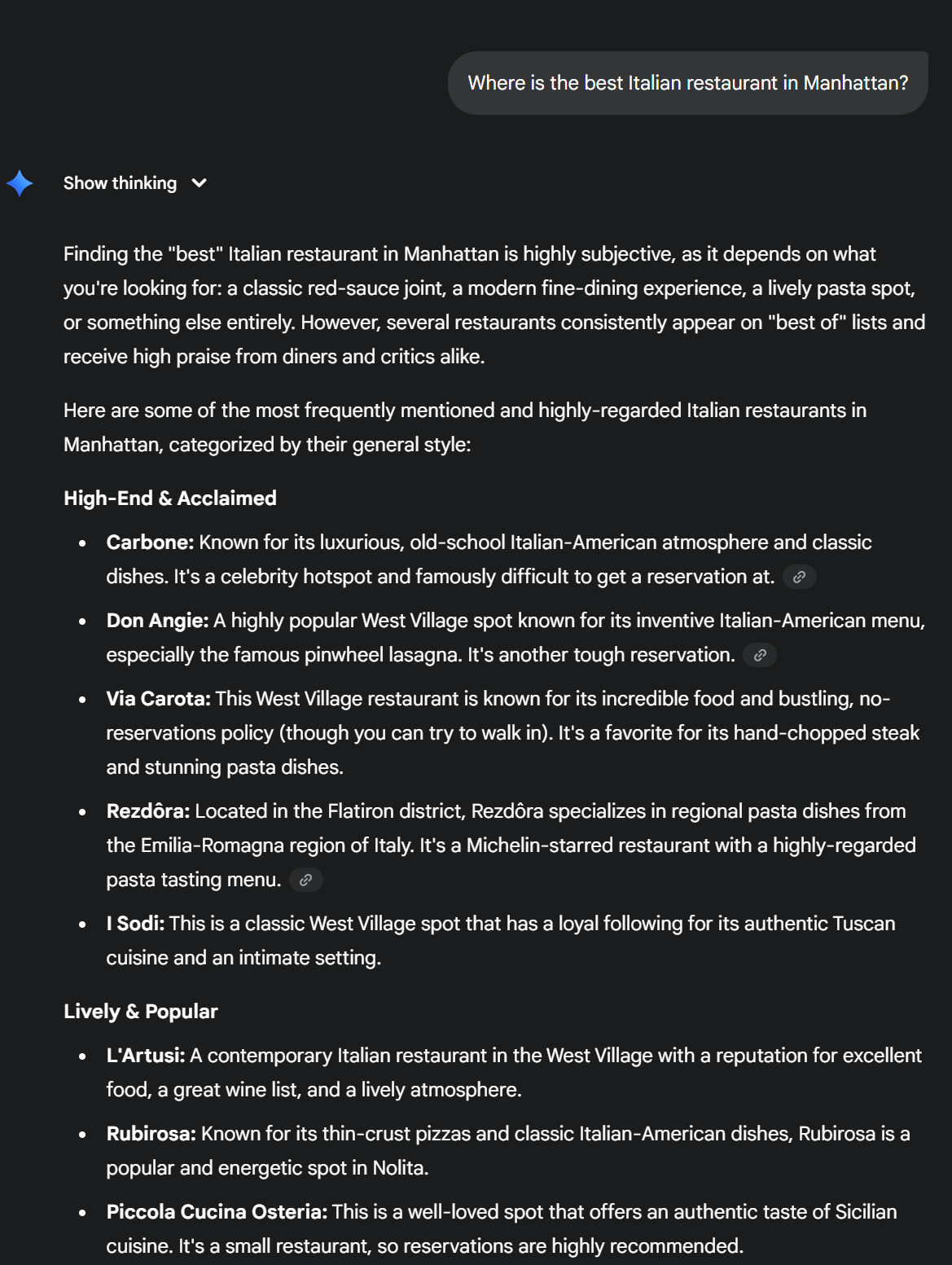
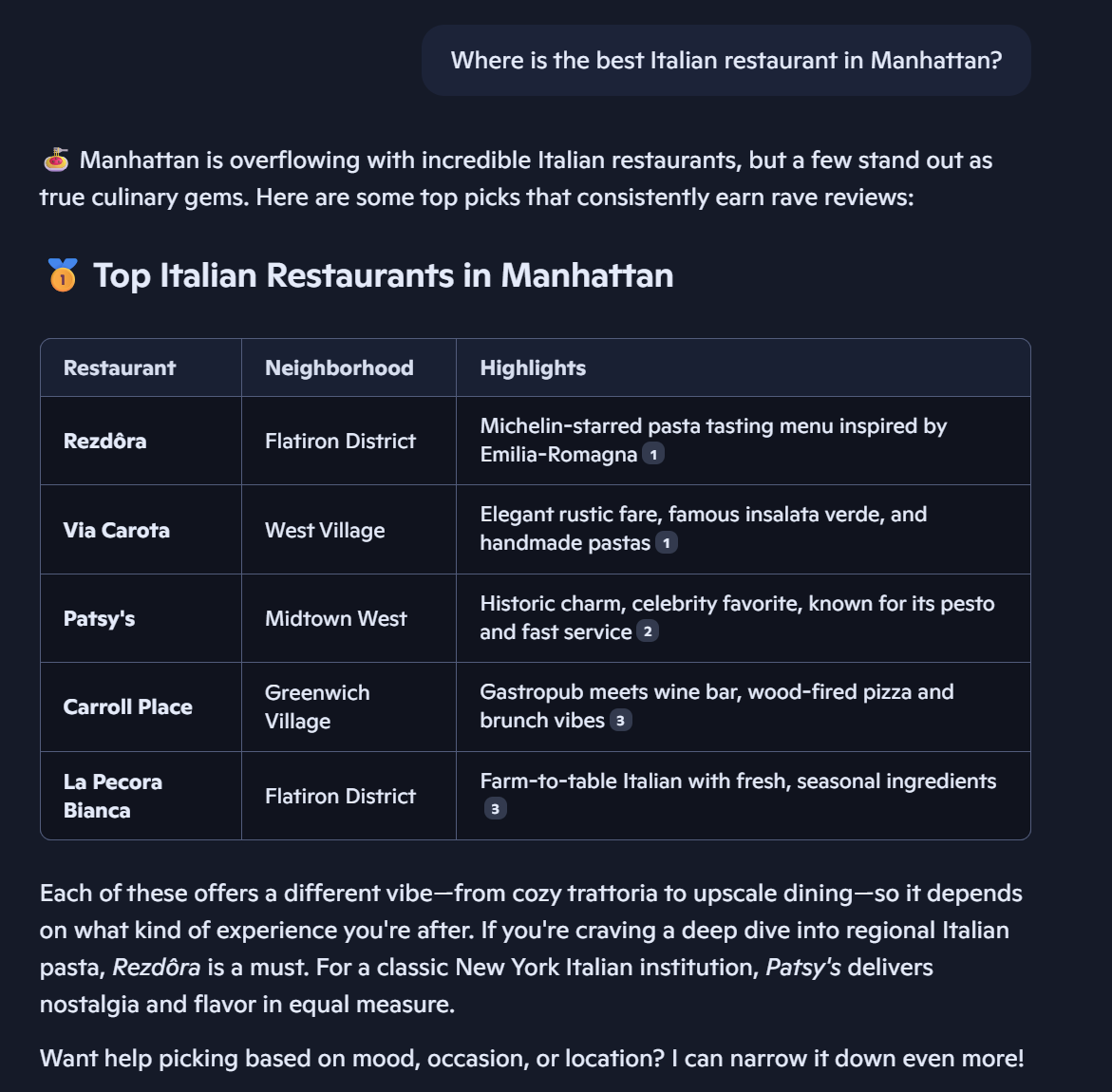
Here are some key insights from these queries:
Now that you have an idea of how different generative engines respond to the same local query, what can you do to optimize your business’s presence in them? At the base of it, following local SEO best practices will turn out the best results.
Here are some especially important things to do:
Prioritize optimizing your local information
Optimizing your local business information is crucial for appearing in generative AI searches. If you’re trying to appear in AI Mode, Perplexity, or ChatGPT, it’s especially important since they present local listings to searchers.
But overall, local searches (no matter the engine) call for local information, so it’s important that your business’s local information is well established. This includes optimizing information like your:
Keep this information up-to-date will help ensure these engines know your website is relevant to the local search, but also ensure your information is accurate if, and when, it appears.
💡 Bonus tip: Build up reviews on your profile. Reviews will help build trust with your brand, which can help you improve visibility in local and AI searches.
Diversify your local business appearances
None of the generative engines had exactly the same business listings, which means they’re likely pulling from different sources. That means you’ll want to diversify where your business appears across the web, so you’re more likely to get pulled into the search results.
So, build up your presence in local directories like:
You can also beef up your appearance in industry-niche directories and aggregator sites that pull “best of” lists.
Regardless of where you appear, make sure your information is accurate across the web, including your contact information, hours of operation, and services you provide. This ensures that, as you diversify your presence, everyone will get the same information regardless of where they find it (or where LLMs pull it from).
Overall insights from this generative AI response explorationAfter looking at the different query types and seeing how different generative engines respond to those same queries, there are some overarching themes you can see throughout.
Here are some things to keep in mind, based on the results of this exploration:
In conclusion, generative AI search is not a one-size-fits-all. Different engines prioritize different information, formats, and citations, meaning you need a multi-engine approach to your search strategy.
OmniSEO® keeps you on top of the multi-engine search gameWith search diversifying and generative engines producing variations of answers, you need a tool that keeps you on top of all of it. With OmniSEO®, you can track and monitor your performance across generative engines to see where you (and your competitors) appear across these engines.
Connect with us today to see how we can help you elevate your AI search game to drive real business growth!
| # | Наименование новости | Тональность | Информативность | Дата публикации |
|---|---|---|---|---|
| 1 | I Think AI Is Sharing Wrong Information About My Business. What Do I Do? | 0 | 5.02 | 21-08-2026 |
| 2 | I’m Not Being Cited in AI Answers — Why? Here’s What Our Experts Say | 0 | 8.56 | 20-08-2026 |
| 3 | AI Overviews Ranking Factors in 2026: How Do You Rank in AI Overviews? | 0 | 8.05 | 23-09-2026 |
| 4 | How To Track Brand Mentions Across AI Engines | 0 | 7.97 | 21-08-2026 |
| 5 | Local SEO in Today’s Climate: Why “Near Me” Still Matters and What’s Actually Changed | 0 | 13.96 | 15-09-2026 |
| 6 | You Can’t Ignore Content Freshness in 2026 If You Want to Get In AI Engines | 0 | 10.03 | 19-08-2026 |
| 7 | How To Tell if Your SEO Company Is Working: Free Guide | 0 | 4.79 | 27-08-2026 |
| 8 | What is Content Decay and How Can You Fix It? | 0 | 7.03 | 20-08-2026 |
| 9 | What Is Full-Service SEO? | 0 | 18.69 | 27-08-2026 |
| 10 | Could AI really take over the internet? Here's what experts say. | 0 | 7.2 | 28-09-2026 |