Просмотр новости
Найдите то, что Вас интересует
 Спутники
 РН
РН SpaceX
 Роскосмос
 NASA
NASA
СпутникиРНSpaceXРоскосмосNASAIt was easier for second-generation Irish bands to get ahead in the UK, despite Michael Lowry’s Féile efforts.
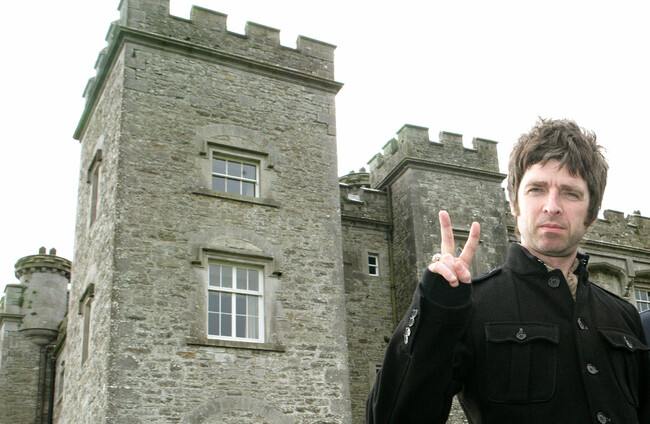
King of the castle; Noel Gallagher ahead of their 2009 Slane gig. Alamy
SeriesCalling 353
It was easier for second-generation Irish bands to get ahead in the UK, despite Michael Lowry’s Féile efforts.

Darach Ó Séaghdha Author and linguist
In Calling 353, bestselling Motherfoclóir author and podcaster Darach Ó Séaghdha casts a linguistic eye on how we talk about what it means to be Irish, the signs we post to each other about Irishness – and what really lies beneath it all.
NOEL GALLAGHER ONCE described his younger brother Liam as “a man with a fork in a world of soup”.
It’s a memorable image, and I often wonder if the elder Gallagher brother had ever heard Lloyd George’s description of negotiating with Éamon De Valera (“like trying to lift mercury with a fork”) when he said it.
The melodious Mancunian brothers are due to visit Ireland next year for another lucrative concert, their long-running feud now buried under a pile of money so high you could break a leg if you fell off it. There’s also a documentary on release about Oasis and their return to the stage, which will no doubt find a willing audience.
Unlike another English musician with Irish heritage who was recently in the news, there’s no debating or dismissing the Gallaghers’ connection to this island. We’ve seen Mammy Gallagher on Gogglebox, and Noel scored a point in Croke Park before committing himself fully to music (he was playing for Lancashire’s CLG Oisín against Kilmacud Crokes, who he still dislikes).
And yet… in a previous Oasis documentary (there have been a few) when discussing other members of the band, Noel remarked that bandmate Tony McCarroll’s family were “very Irish”.
The comment stayed with me, it seemed that there was a lot of feeling buried underneath it.
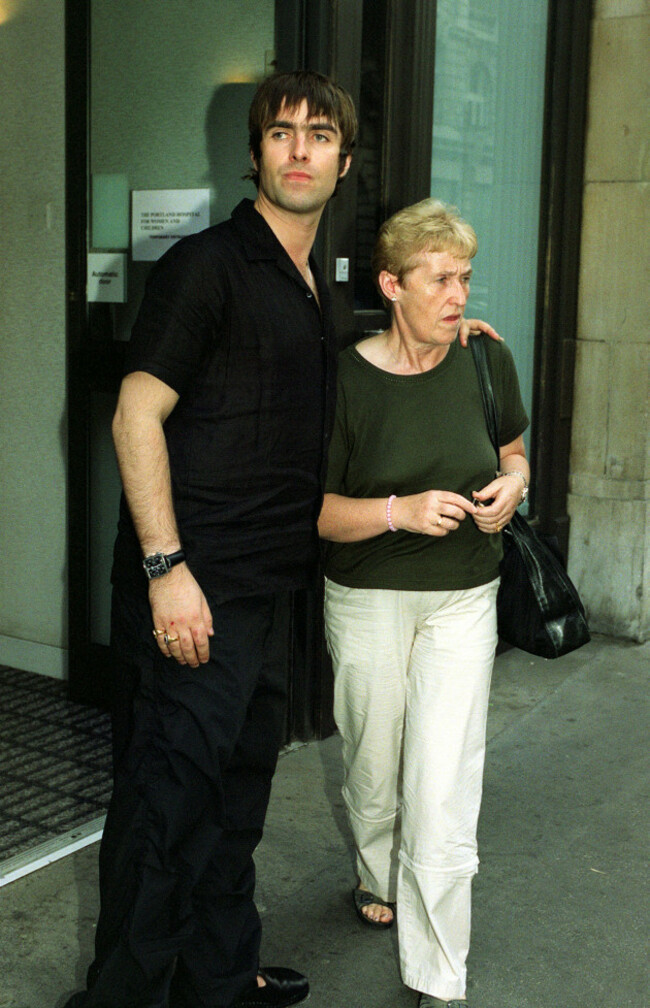
That Noel, with his Irish parents and him and his siblings with Irish names, and their immersion in Manchester’s Irish diaspora would look at another family and think of them as more Irish than his, it seemed like he felt something was lacking in his.
Friends from similar Irish backgrounds in English cities have suggested theories to me as what he might have meant, and overwhelmingly the most common suggestion was that the other family was a very large family, and the father being present was probably a factor.
National identity is a slippery thing to talk about even when it isn’t under the kind of bad-tempered scrutiny that it is currently getting in Ireland. Who gets to be Irish and who gets to decide if someone else gets to be Irish?
Forty years ago, the United Nations commissioned a report on the problem of discrimination against indigenous populations around the world, a task which required a definition of “indigenous” more nuanced than citizenship to make any sense. What they came up with was a list of possible factors, including: occupation of an ancestral land, common ancestry with occupants of that land, practice of culture or cultures of that land, and language practice (the brilliant Irish language journalist Daithí De Mordha has written about this with particular reference to how Irishness is a cultural identity rather than a bloodline).
With this in mind, it is possible to recognise how some people from outside Ireland can have a real and meaningful connection to Irish culture. And it is also possible to recognise that starting their careers in a more mature economy than Ireland’s might be a colossal advantage over their peers in Ireland.
No soup for youPrior to their triumphant return to the stage last year, another news outlet suggested that Oasis might be the best Irish band of all time. This brought back memories of the late ’90s when some music critics would describe Oasis as “the best Irish band since The Smiths” (or, in some cases, The Beatles).
Cute and provocative as these remarks may be, they tell one story while concealing another. Specifically this – in the early ’90s when Oasis were coming up, it was really, really hard for an Irish band to break through. Obviously it was and is hard for any band to break through, but Irish bands were at a particular disadvantage, because it was hard to gig in England.
Before Ryanair, flying to Britain was very expensive – especially with loads of equipment.
The ferry was an option but that took more time – time which was precious if band members still had day jobs to maintain before the music started paying. But were these efforts appreciated? Reader, they were not.
Stephen Ryan, the singer from The Stars Of Heaven (you may have heard Everything But The Girl’s popular cover of their song The Lights of Tetouan on the radio) complained that the music press didn’t think that a band from Ireland were foreign enough to be interesting – they could have been from Sheffield as far as they were concerned.
College radio was breaking a lot of bands in America, and the nerds who ran those stations followed the British music press with interest, so much so that American bands like The Pixies were strategically touring Britain to get noticed on college radio back home. For all the talk of Irish pubs and Irishness becoming cool in the 1990s, it was still hard for Irish bands playing modern pop and rock to crack on.
Furthermore, while Irish bands needed to demonstrate a certain level of popularity to play at Glastonbury, the Irish festival scene was slouching towards Tipperary to be born. Michael Lowry might be more famous for other activities now, but Féile was a pretty big deal and it was resisted all through its existence by “legitimate concerns”.
The ones that didn’t make SlaneSo, despite Alan Parker’s widely-quoted declaration that Dublin in 1990 was “the city of a thousand bands”, the infrastructure to play in Ireland was patchy and the opportunities in the bigger market next door were viciously competitive. One surprising triumph for Irish music at this time, and a perfect example of the exception proving the rule, was Foster & Allen keeping Take That off the number one spot one week. There was an infrastructure in place for a certain kind of Irish music to reach willing audiences at the time.
When Oasis return to Slane next year they will thrill a massive audience of old and new fans, and columnists like me will discuss their Irish heritage yet again. But it would be incomplete to talk about the many wonderful Irish-background bands from England of the 1980s and 1990s without also acknowledging the many brilliant bands from Ireland at the same time who would have been massive if they had been given the same chance.
Darach will be back next Sunday with more thoughts on the words and Irish cultural phenomena that unite us.