Просмотр новости
Найдите то, что Вас интересует
 Спутники
 РН
РН SpaceX
 Роскосмос
 NASA
NASA
СпутникиРНSpaceXРоскосмосNASAApiomerus (“bee-assassin” assassin bugs) is a Neotropical genus of Reduviidae with ecological importance as a group of predatory insects and notable morphological diversity, yet mitochondrial genomic resources have remained unavailable for the genus. We generated low-coverage whole-genome sequencing data from four vouchered specimens collected in Colombia and reconstructed mitochondrial genomes for Apiomerus sp., A. ochropterus, A. luctuosus, and A. nitidicollis. Quality-filtered reads were assembled using an organelle-specific GetOrganelle workflow, and the resulting assembly graphs and candidate sequences were evaluated against initial SPAdes/BLASTN-based reconstructions. GetOrganelle recovered complete circular mitochondrial genomes for Apiomerus sp., A. ochropterus, and A. nitidicollis, whereas A. luctuosus was represented by a single gap-free, non-circularized mitochondrial scaffold in which the control region was not completely recovered. The selected assemblies ranged from 14,943 to 19,405 bp and were strongly AT-rich. Annotation and manual curation recovered the complete complement of 13 protein-coding genes, 22 tRNA genes, and two rRNA genes in all four taxa. Comparative analysis showed complete conservation of mitochondrial gene content, gene order, and transcriptional orientation, with no evidence of gene rearrangements among the sampled species. Phylogenetic analysis based on concatenated mitochondrial protein-coding genes recovered the four Apiomerus taxa as a monophyletic group, with A. ochropterus and Apiomerus sp. forming a sister pair, A. nitidicollis sister to that clade, and A. luctuosus occupying the basal position among the sampled taxa. These assemblies constitute the first mitochondrial genomic resources for Apiomerus and expand the representation of Apiomerini for comparative mitogenomic, taxonomic, and phylogenetic studies.

ALL Metrics
-
Views
Gómez-Palacio A, Uribe-Soto S, Ortiz-Muñoz C and Forero D. Mitochondrial Genome Assemblies of Four “Bee-Assassin” (Hemiptera: Reduviidae: Apiomerus) Recovered Using Shallow Whole-Genome sequencing [version 2; peer review: 2 approved, 2 approved with reservations]. F1000Research 2026, 15:921 (https://doi.org/10.12688/f1000research.179613.2)
▬
✚
Genome Note
Revised
[version 2; peer review: 2 approved, 2 approved with reservations]
https://orcid.org/0000-0002-1069-9199
1,2, Sandra Uribe-Soto3, Carolina Ortiz-Muñoz3,4, Dimitri Forerohttps://orcid.org/0000-0002-6358-757X
5https://orcid.org/0000-0002-1069-9199
1,2, Sandra Uribe-Soto3, Carolina Ortiz-Muñoz3,4, Dimitri Forerohttps://orcid.org/0000-0002-6358-757X
5PUBLISHED 26 Aug 2026
1 Laboratorio de Investigación en Genética Evolutiva - LIGE., Universidad Pedagogica y Tecnologica de Colombia, Tunja, Boyaca, Colombia
2 Grupo de Estudios en Genética y Biología Molecular - GEBIMOL, Universidad Pedagógica y Tecnológica de Colombia, Tunja, Boyacá, Colombia
3 Grupo de Investigación en Sistemática Molecular - GSM, Universidad Nacional de Colombia, Medellín, Colombia
4 Centro de Investigación La Selva, Corporación Colombiana de Investigación Agropecuaria, AGROSAVIA, Rionegro, Antioquia, Colombia
5 Universidad Nacional de Colombia, sede Bogotá, Facultad de Ciencias, National University of Colombia Natural Sciences Institute, Bogotá, Bogota, Colombia
Andrés Gómez-Palacio
Roles: Conceptualization, Formal Analysis, Investigation, Methodology, Writing – Original Draft Preparation, Writing – Review & Editing
Sandra Uribe-Soto
Roles: Conceptualization, Funding Acquisition, Investigation, Project Administration, Supervision, Writing – Review & Editing
Carolina Ortiz-Muñoz
Roles: Formal Analysis, Investigation, Methodology, Writing – Original Draft Preparation, Writing – Review & Editing
Dimitri Forero
Roles: Conceptualization, Data Curation, Funding Acquisition, Investigation, Resources, Supervision, Writing – Review & Editing
OPEN PEER REVIEW
REVIEWER STATUS
Apiomerus (“bee-assassin” assassin bugs) is a Neotropical genus of Reduviidae with ecological importance as a group of predatory insects and notable morphological diversity, yet mitochondrial genomic resources have remained unavailable for the genus. We generated low-coverage whole-genome sequencing data from four vouchered specimens collected in Colombia and reconstructed mitochondrial genomes for Apiomerus sp., A. ochropterus, A. luctuosus, and A. nitidicollis. Quality-filtered reads were assembled using an organelle-specific GetOrganelle workflow, and the resulting assembly graphs and candidate sequences were evaluated against initial SPAdes/BLASTN-based reconstructions. GetOrganelle recovered complete circular mitochondrial genomes for Apiomerus sp., A. ochropterus, and A. nitidicollis, whereas A. luctuosus was represented by a single gap-free, non-circularized mitochondrial scaffold in which the control region was not completely recovered. The selected assemblies ranged from 14,943 to 19,405 bp and were strongly AT-rich. Annotation and manual curation recovered the complete complement of 13 protein-coding genes, 22 tRNA genes, and two rRNA genes in all four taxa. Comparative analysis showed complete conservation of mitochondrial gene content, gene order, and transcriptional orientation, with no evidence of gene rearrangements among the sampled species. Phylogenetic analysis based on concatenated mitochondrial protein-coding genes recovered the four Apiomerus taxa as a monophyletic group, with A. ochropterus and Apiomerus sp. forming a sister pair, A. nitidicollis sister to that clade, and A. luctuosus occupying the basal position among the sampled taxa. These assemblies constitute the first mitochondrial genomic resources for Apiomerus and expand the representation of Apiomerini for comparative mitogenomic, taxonomic, and phylogenetic studies.
Apiomerus, Apiomerini, mitochondrial genome, mitogenome, Reduviidae, Harpactorinae, Neotropical assassin bugs, genome resource
Corresponding author: Andrés Gómez-Palacio Competing interests: No competing interests were disclosed.
Grant information: The author(s) declared that no grants were involved in supporting this work.
Copyright: © 2026 Gómez-Palacio A et al. This is an open access article distributed under the terms of the Creative Commons Attribution License, which permits unrestricted use, distribution, and reproduction in any medium, provided the original work is properly cited. How to cite: Gómez-Palacio A, Uribe-Soto S, Ortiz-Muñoz C and Forero D. Mitochondrial Genome Assemblies of Four “Bee-Assassin” (Hemiptera: Reduviidae: Apiomerus) Recovered Using Shallow Whole-Genome sequencing [version 2; peer review: 2 approved, 2 approved with reservations]. F1000Research 2026, 15:921 (https://doi.org/10.12688/f1000research.179613.2) First published: 12 Jun 2026, 15:921 (https://doi.org/10.12688/f1000research.179613.1) Latest published: 26 Aug 2026, 15:921 (https://doi.org/10.12688/f1000research.179613.2)
Version 2 has been revised in response to the reviewers’ comments and includes substantial changes to the mitochondrial genome assembly and validation workflow. The title was modified from “The complete mitochondrial genomes of four ‘bee-killer’ assassin bugs…” to “Mitochondrial genome assemblies of four ‘bee-assassin’…” to use preferred terminology and to more accurately reflect that one of the four assemblies remains non-circularized.
The abstract was rewritten as a single narrative paragraph and updated to describe the GetOrganelle-based mitochondrial reassembly, read-based validation, revised assembly lengths and completeness, and the conservative classification of the A. luctuosus assembly.
The author list remains unchanged; the corresponding-author contact information was updated.
The main text, particularly the Methods and Results, was extensively revised. Mitochondrial genomes were reassembled using GetOrganelle and compared with the original SPAdes/BLASTN-derived reconstructions. Read mapping, coverage assessment, properly paired-read evaluation, and circular-junction validation were added. Genome annotation and tRNA validation were also clarified.
The figures were reorganized and expanded to include assembly comparison and read-based validation. The tables were revised to distinguish whole-genome/SPAdes statistics from the selected GetOrganelle mitochondrial assemblies.
The underlying-data section was revised to reflect the updated mitochondrial assembly interpretation; the BioProject, SRA, and GenBank accession identifiers remain unchanged.
See the authors' detailed response to the review by Annabel Whibley
See the authors' detailed response to the review by Rui Alves
See the authors' detailed response to the review by Carlos Eduardo Almeida
The genus Apiomerus Hahn (Hemiptera: Reduviidae) is one of the most diverse groups of assassin bugs in the Neotropics, comprising more than 100 described species and exhibiting substantial morphological and ecological diversity.1,2 Species of Apiomerus are predatory and contribute to the regulation of other insect populations.3 However, species-level identification within the genus remains challenging because of marked intraspecific chromatic variation and incomplete morphological documentation, which have complicated taxonomic assessment in some groups.3,4
Mitogenomic data have become an important resource for insect systematics, species identification, and comparative genomic studies.5,6 Animal mitochondrial genomes are typically conserved in structure and generally contain 37 genes, including 13 protein-coding genes (PCGs), 22 transfer RNAs (tRNAs), and 2 ribosomal RNAs (rRNAs). Compared with single-locus markers such as cytochrome c oxidase subunit I (COI; cox1) or 16S rRNA, complete mitochondrial genomes provide a larger set of homologous characters that can support comparative analyses across taxa.7–9
Despite the increasing availability of insect mitogenomes, Reduviidae remains sparsely represented in public databases. For Apiomerus, complete mitochondrial genome resources have been unavailable, limiting genomic representation of the genus and restricting its inclusion in broader comparative studies within Apiomerini and Harpactorinae.2
Expanding mitogenomic resources for Neotropical reduviids is therefore important for improving taxonomic representation in sequence databases and supporting future systematic, comparative, and biodiversity-oriented research.10 In addition, next-generation sequencing approaches enable recovery of mitochondrial genome data from both recently collected and preserved material, increasing the value of entomological collections as genomic resources.10,11
Here, we report the first complete mitochondrial genomes for four Apiomerus taxa, including three species assigned to the Hirtipes group and one unassigned taxon. These genome assemblies provide the first mitogenomic resource for the genus and expand the genomic representation of Apiomerus from Colombia.
Specimens of the assassin bug genus Apiomerus Hahn (Hemiptera: Reduviidae) were collected in Colombia between 2018 and 2025 through active daytime manual searches on vegetation in the departments of Antioquia, Casanare, and Santander, at elevations ranging from 184 to 2369 m a.s.l. Geographic coordinates were recorded for all sampling localities.
Morphological identification was based on external diagnostic characters, particularly hemelytral colour patterns, together with examination of male and female genitalia. Species determinations followed the taxonomic treatments and original descriptions of Forero and Weirauch,12 Gil-Santana et al., 13 and Carl Stål,14,15 and were performed by Dr Dimitri Forero.
The ethanol-preserved specimen used for the mitogenome of Apiomerus ochropterus (voucher UNAL:MEFLG_Apio093; female) was collected on 13 January 2025 in Reserva Forestal El Centello, Jardín, Antioquia, Colombia (5°30′25.729″N, 75°50′50.262″W; 2369 m; cloud forest), and is deposited in the Francisco Luis Gallego Museum, Universidad Nacional de Colombia.
Additional dry-pinned specimens processed for genomic analyses included: Apiomerus nitidicollis (voucher ICN:ICN111295; female), collected on 4 December 2024 in Reserva Natural de la Sociedad Civil San Juan de Tinije, vereda Palmarito, Maní, Casanare (4.8508°N, 72.3719°W; 184 m; gallery forest edge), and deposited in the Instituto de Ciencias Naturales (ICN), Universidad Nacional de Colombia; Apiomerus luctuosus (voucher ICN:ICN111161; female), collected on 8 December 2024 in vereda Las Atalayas, hacienda Pajonales, sitio Cunaviche, Aguazul, Casanare (5.0851°N, 72.5040°W; 242 m; piedmont terra firme forest), and deposited in ICN; and Apiomerus sp. (voucher IAvH:IAvH-E-206069), collected on 21 February 2018 in vereda La Belleza, Carmen de Chucurí, Santander (6°34′11.5″N, 73°34′12.3″W; 847 m; sandy forest), and deposited in the Instituto Humboldt (IAvH).
Fresh specimens were euthanized by freezing and preserved either dry or in 96% ethanol. For each specimen, one leg was dissected and used for DNA extraction. Voucher specimens are curated in publicly accessible institutional collections, ensuring long-term preservation and traceability of the genomic data.
Prior to DNA extraction, each dissected leg was briefly surface-cleaned to reduce potential contamination from external tissues and environmental material. Total genomic DNA was extracted from a single leg of each adult specimen using the DNeasy Blood & Tissue Kit (Qiagen, Germany; cat. no. 69504), following the manufacturer’s instructions with minor modifications for insect tissue. Each extraction included 180 μL Buffer ATL and 20 μL Proteinase K, followed by digestion at 56 °C. For Apiomerus sp., A. luctuosus, and A. nitidicollis, the digestion step lasted 3 h, and DNA was eluted in 100 μL Buffer AE. For A. ochropterus, digestion was extended to 4 h, and DNA was recovered through two sequential elutions of 25 μL each to maximize yield.
DNA concentration and purity were quantified using a NanoDrop 2000/2000c spectro-photometer (Thermo Fisher Scientific, USA; cat. No. ND-2000) and verified by 1% agarose gel electrophoresis in 1× TAE buffer (Invitrogen, USA; cat. No. 15558–042) with GelRed stain (Biotium, USA; cat. No. 41003). Only samples with concentrations ≥1 ng μL−1 and 260/280 and 260/230 ratios between 1.8 and 2.0 were used for sequencing.
High-quality DNA extracts were selected for shallow whole-genome sequencing (approximately 7× coverage). Paired-end libraries (2 × 150 bp, ~350 bp insert size) were prepared using the NEBNext Ultra II DNA Library Prep Kit for Illumina (New England Biolabs, USA; cat. No. E7645L) according to the manufacturer’s protocol, including size selection with AMPure XP magnetic beads (Beckman Coulter, USA; cat. No. A63881). Library concentrations were determined using a Qubit 4 Fluorometer and the Qubit dsDNA HS Assay Kit (cat. No. Q32854). Libraries were pooled equimolarly and sequenced on an Illumina NovaSeq X platform (Illumina, USA) at Macrogen Inc. (Seoul, South Korea), generating approximately 8–10 Gb of raw paired-end data per sample, corresponding to an estimated genomic coverage of ~7 ×.
Raw paired-end Illumina reads were quality-filtered and adapter-trimmed using fastp v0.23.4.16 The resulting reads were initially assembled de novo with SPAdes v3.15.517 using default parameters for short-read data. Contigs of putative mitochondrial origin were identified by BLASTN comparison against the reference mitogenome of Agriosphodrus dohrni (Harpactorinae; NCBI Reference Sequence NC_015842.1). These SPAdes-derived mitochondrial reconstructions were retained as an independent assembly for comparison with the organelle-specific assemblies described below.
The filtered paired-end reads were subsequently reassembled using GetOrganelle v1.7.7.118 in animal mitochondrial mode (-F animal_mt), with the A. dohrni mitogenome supplied as the seed sequence. Assemblies were generated using k-mer sizes of 21, 45, 65, 85, and 105. Sample-specific word sizes and extension-round limits were used to accommodate differences in mitochondrial read coverage and assembly-graph complexity: a word size of 80 and a maximum of 30 extension rounds were used for A. ochropterus; a word size of 100 and 10 extension rounds for A. nitidicollis; a word size of 90 and 20 extension rounds for A. luctuosus; and an automatically estimated word size and 10 extension rounds for Apiomerus sp. Assembly graphs were examined to distinguish closed circular paths from unresolved or linear scaffolds.
The selected GetOrganelle assemblies were compared reciprocally with the original SPAdes/BLASTN-derived mitochondrial reconstructions using BLASTN. Comparisons included nucleotide identity, query coverage, alignment continuity, total assembly length, and the presence of duplicated, additional, or unresolved terminal regions.
The original filtered paired-end reads were independently mapped to the SPAdes/BLASTN-derived and GetOrganelle assemblies using Minimap2 v2.28-r1209.19 Alignment files were processed using SAMtools v1.18,20 and assembly support was evaluated from coverage breadth at ≥1× and ≥10×, read-depth distributions, depth uniformity, and the number of properly paired reads. For each putatively circular GetOrganelle assembly, reads were additionally mapped across a reconstructed circular-junction reference to test whether coverage and paired-read support continued uninterrupted across the sequence boundary. The A. luctuosus assembly was retained as a non-circular scaffold and was therefore not subjected to circular-junction validation. An assembly was classified as circular only when GetOrganelle recovered a closed path without ambiguous bases and the reconstructed junction was supported by continuous read coverage and properly paired reads.
Initial mitochondrial genome annotation was performed with MITOS221 through the Galaxy server. Annotations were subsequently refined by comparison with previously published reduviid mitogenomes and by manual curation of gene boundaries, start and stop codons, and tRNA predictions. Transfer RNA annotations were independently evaluated using tRNAscan-SE v2.0.1222 in organellar mode, and discrepant predictions were resolved through comparison of genomic coordinates, anticodons, predicted secondary structures, and conserved mitochondrial gene order. Circular mitochondrial genome plots and comparative figures were generated in R23 using circlize v0.4.1724 package.
Phylogenetic relationships were inferred using the concatenated amino acid sequences of the 13 mitochondrial protein-coding genes (PCGs: atp6, atp8, cox1–3, cob, nad1–6, and nad4l) from four newly assembled mitogenomes of Apiomerus and 22 representative Harpactorinae species retrieved from GenBank. To ensure balanced taxonomic representation and avoid redundancy, a single complete mitochondrial genome accession was selected per species based on BLAST screening and manual curation of available records. The final dataset included representative taxa such as Epidaus famulus (NC_085748.1), Polididus armatissimus (NC_069625.1), Rhynocoris altaicus (PQ613804.1), R. fuscipes (MZ440304.1), Scipinia horrida (NC_037744.1), Sclomina erinacea (ON116856.1), and S. guangxiensis (ON116892.1). The Triatominae species Triatoma infestans (KY640305.1) was included as outgroup.
Annotated GenBank records were downloaded using NCBI Entrez Direct utilities, and the 13 mitochondrial PCGs were extracted based on annotated coding sequence (CDS) features using a custom Python script. Gene names were standardized across annotations (e.g., cox1/coi, cob/cytb, nad/nd synonyms), and only the first occurrence of each PCG per genome was retained. Amino acid translations were generated from extracted CDS sequences and aligned independently for each gene using MAFFT v7.52525,26 under the automatic algorithm selection strategy.
Individual gene alignments were concatenated into a supermatrix using a custom Python script, and a partition file was generated assigning each PCG as an independent data block. The final amino acid matrix comprised 27 taxa (four Apiomerus species, 22 Harpactorinae representatives, and one outgroup). Maximum likelihood analyses were conducted in IQ-TREE v2.0.327 under partitioned model selection (MFP+MERGE). Branch support was assessed with 1,000 ultrafast bootstrap replicates and 1,000 SH-aLRT replicates.
Sequencing generated 14.3–21.1 million raw paired-end reads per specimen (Table 1). After quality filtering and adapter trimming, 14.1–20.9 million reads were retained, corresponding to retention rates of 98.87–99.05%. A. luctuosus yielded the largest number of clean reads, whereas A. nitidicollis yielded the fewest. The filtered reads were subsequently used for SPAdes-based de novo assembly and GetOrganelle mitochondrial genome reconstruction.
Reciprocal whole-sequence comparisons showed that the shared regions of the original SPAdes/BLASTN-derived reconstructions and the GetOrganelle assemblies had 95.02–99.97% nucleotide identity. Relative to the earlier sequences, the GetOrganelle assemblies were 1,503 bp longer for A. ochropterus, 2,422 bp longer for A. nitidicollis, and 3,302 bp longer for Apiomerus sp., whereas the A. luctuosus scaffold was 994 bp shorter ( Figure 1a). The GetOrganelle assemblies contained 93.76–100% of the earlier sequences, whereas the earlier reconstructions represented only 80.65–100% of the GetOrganelle assemblies. Most differences therefore involved terminal, control-region, or previously unresolved portions rather than extensive divergence across the shared mitochondrial sequence.
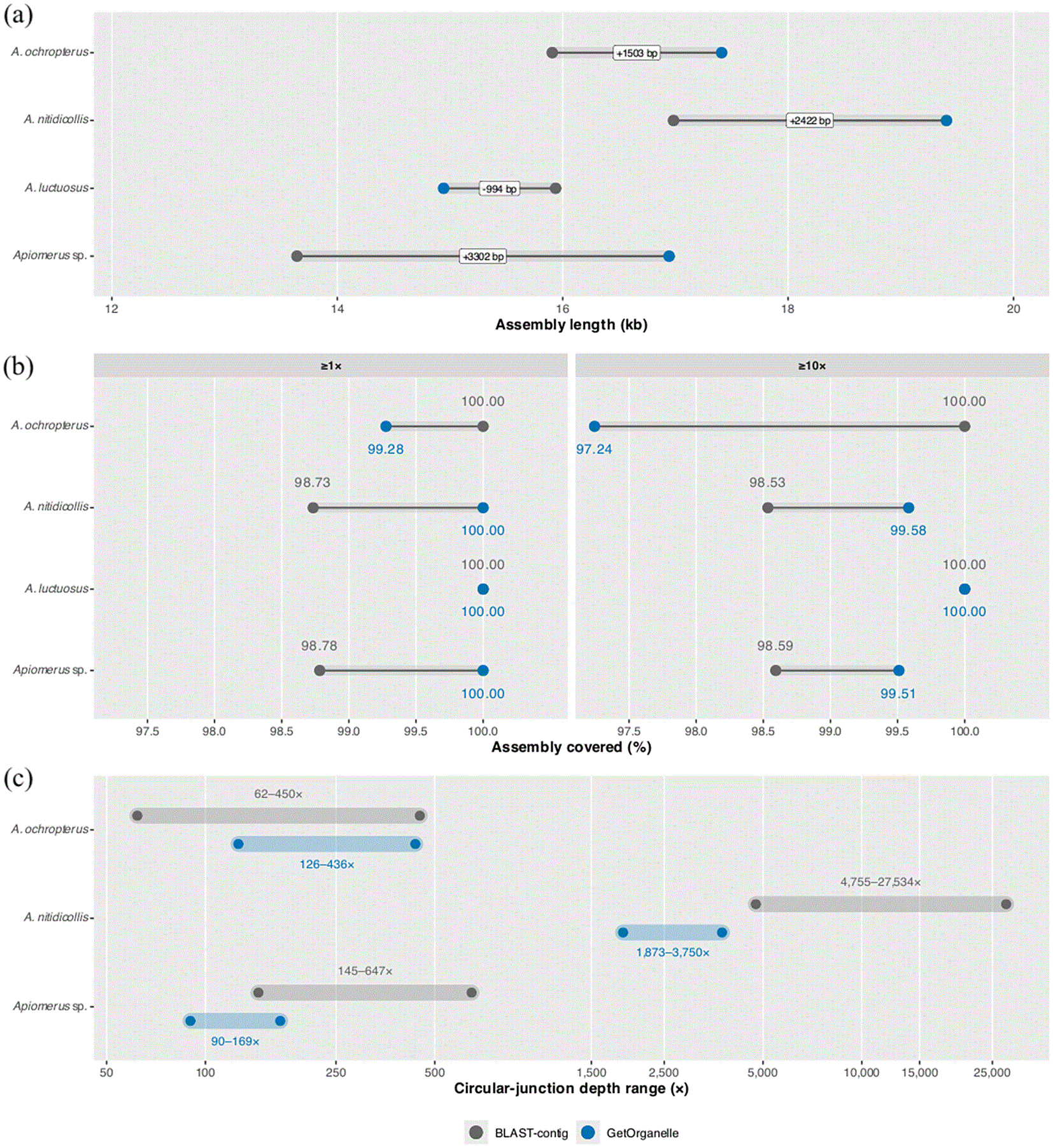
(a) Assembly lengths and length differences. (b) Percentage of each assembly covered at ≥1× and ≥10×. (c) Read-depth ranges across reconstructed circular junctions. Grey and blue indicate BLAST-contig and GetOrganelle assemblies, respectively. A. luctuosus was excluded from panel (c) because its assembly remained non-circularized.
Read mapping supported the selected GetOrganelle assemblies. Coverage breadth ranged from 99.28% to 100% at ≥1× and from 97.24% to 100% at ≥10× (Figure 1b). Read depth was more uniform in the GetOrganelle assemblies of A. nitidicollis, A. luctuosus, and Apiomerus sp., whereas A. ochropterus showed a modest increase in depth variability. Properly paired-read support increased for the GetOrganelle assemblies of A. ochropterus, A. nitidicollis, and Apiomerus sp., but decreased for the shorter A. luctuosus scaffold.
The three circular assemblies showed uninterrupted read coverage across their reconstructed junctions, with no zero-coverage positions within the evaluated windows ( Figure 1c). Mean junction depths were 250.9× for A. ochropterus, 2,816.0× for A. nitidicollis, and 136.8× for Apiomerus sp. The corresponding junctions were supported by 31, 1,506, and 77 properly paired reads, respectively. Because the A. luctuosus assembly remained non-circularized, it was evaluated through terminal-coverage analysis rather than circular-junction validation.
The GetOrganelle assemblies selected after comparative and read-based validation measured 17,410 bp in A. ochropterus, 19,405 bp in A. nitidicollis, 14,943 bp in A. luctuosus, and 16,944 bp in Apiomerus sp., with A+T contents of 72.36%, 73.27%, 70.62%, and 70.25%, respectively (Table 2; Figure 2a). Complete circular mitogenomes were recovered for A. ochropterus, A. nitidicollis, and Apiomerus sp., whereas A. luctuosus was represented by a non-circularized scaffold in which the control region was incompletely recovered. Nevertheless, all four assemblies contained 13 protein-coding genes, 22 tRNA genes, and two rRNA genes.
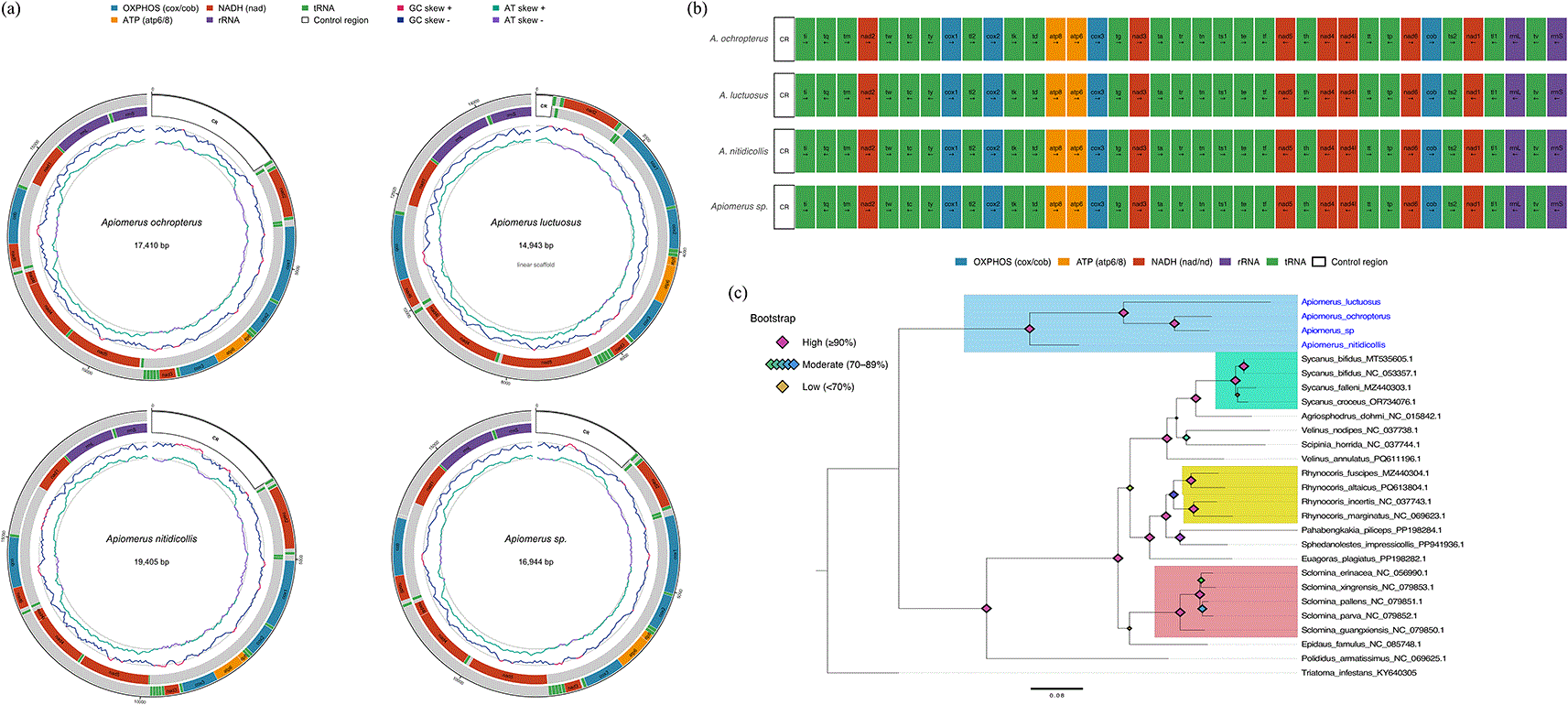
(a) Circular maps of the four selected mitochondrial assemblies, showing gene annotations, control regions, and GC/AT skews. The A. luctuosus scaffold is displayed circularly for comparison. (b) Conserved mitochondrial gene order and transcriptional orientation. (c) Maximum-likelihood phylogeny based on concatenated mitochondrial protein-coding genes, with Triatoma infestans as the outgroup. Node colors indicate bootstrap support from 1,000 replicates.
After annotation refinement and manual curation, the four assemblies showed complete conservation of mitochondrial gene content, gene order, and transcriptional orientation, with no detected rearrangements of protein-coding genes, rRNAs, or tRNAs (Figure 2b). Differences among the assemblies were therefore associated primarily with genome length, control-region recovery, and intergenic spacing rather than with changes in mitochondrial gene organization.
Phylogenetic relationships inferred from concatenated mitochondrial PCGs recovered Apiomerus as a monophyletic group (Figure 2c). Within the genus, A. ochropterus and Apiomerus sp. were recovered as sister taxa, A. nitidicollis was sister to that clade, and A. luctuosus occupied the basal position among the sampled Apiomerus taxa. The broader tree also recovered the other highlighted harpactorine genus-level clades shown in Figure 2c. Bootstrap values were generally high, although support for the A. ochropterus + Apiomerus sp. node was moderate.
This study involved the collection of non-commercial, non-endangered insect specimens (Apiomerus, Hemiptera: Reduviidae) for taxonomic and genomic research purposes. Field sampling was conducted in Colombia under official collection permits Resolución No. 0147 (2023) issued by the Ministerio de Ambiente y Desarrollo Sostenible and Resoluciones No. 0255 (2014) and No. 000697 (2025) issued by the Autoridad Nacional de Licencias Ambientales (ANLA) to the Universidad Nacional de Colombia. All sampling procedures complied with national biodiversity regulations and institutional guidelines. No protected vertebrate species, human subjects, or regulated experimental animals were involved in this research, and no additional ethical approval was required. The authors declare no conflicts of interest related to specimen collection or research activities.
No extended data are associated with this article.
We thank all members of the AGROSAVIA and Universidad Nacional de Colombia field teams who assisted with sample collection.
The author(s) declared that no grants were involved in supporting this work.
© 2026 Gómez-Palacio A et al. This is an open access article distributed under the terms of the Creative Commons Attribution License, which permits unrestricted use, distribution, and reproduction in any medium, provided the original work is properly cited.
Download
Export To
metrics
| Views | Downloads | |
|---|---|---|
| F1000Research | - | - |
| PubMed Central Data from PMC are received and updated monthly. | - | - |
Citations
CITE
how to cite this article
Gómez-Palacio A, Uribe-Soto S, Ortiz-Muñoz C and Forero D. Mitochondrial Genome Assemblies of Four “Bee-Assassin” (Hemiptera: Reduviidae: Apiomerus) Recovered Using Shallow Whole-Genome sequencing [version 2; peer review: 2 approved, 2 approved with reservations]. F1000Research 2026, 15:921 (https://doi.org/10.12688/f1000research.179613.2)
NOTE: If applicable, it is important to ensure the information in square brackets after the title is included in all citations of this article.
track
receive updates on this article
Track an article to receive email alerts on any updates to this article.
Current Reviewer Status: ?
Key to Reviewer Statuses VIEW HIDE
ApprovedThe paper is scientifically sound in its current form and only minor, if any, improvements are suggested
Approved with reservations A number of small changes, sometimes more significant revisions are required to address specific details and improve the papers academic merit.
Not approvedFundamental flaws in the paper seriously undermine the findings and conclusions
Version 2
VERSION 2
PUBLISHED 26 Aug 2026
Revised
Reviewer Report 22 Sep 2026
Feiyun Tu, Hainan Normal University, Haikou, Hainan, China
Approved
VIEWS 0
Are the rationale for sequencing the genome and the species significance clearly described?
Yes
Are the protocols appropriate and is the work technically sound?
Yes
Are sufficient details of the sequencing and extraction, software used, and materials provided to allow replication by others?
Yes
Are the datasets clearly presented in a usable and accessible format, and the assembly and annotation available in an appropriate subject-specific repository?
Yes
Competing Interests: No competing interests were disclosed.
Reviewer Expertise: I focus on mammalian taxonomy and systematics, and phylogeography.
CloseReviewer Report 21 Sep 2026
Carlos Eduardo Almeida, Universidade Federal de São João del Rei, Campus Centro-Oeste “Dona Lindu”, Divinópolis, Brazil
Approved
VIEWS 0
Competing Interests: No competing interests were disclosed.
CloseVersion 1
VERSION 1
PUBLISHED 12 Jun 2026
Reviewer Report 17 Jul 2026
Carlos Eduardo Almeida, Universidade Federal de São João del Rei, Campus Centro-Oeste “Dona Lindu”, Divinópolis, Brazil
Approved with Reservations
VIEWS 0
Are the rationale for sequencing the genome and the species significance clearly described?
Partly
Are the protocols appropriate and is the work technically sound?
Yes
Are sufficient details of the sequencing and extraction, software used, and materials provided to allow replication by others?
Yes
Are the datasets clearly presented in a usable and accessible format, and the assembly and annotation available in an appropriate subject-specific repository?
Partly
Competing Interests: No competing interests were disclosed.
Reviewer Expertise: Molecular ecology
CloseReviewer Report 16 Jul 2026
Rui Alves, University of Lleida, Lleida, Spain
Approved with Reservations
VIEWS 0
Are the rationale for sequencing the genome and the species significance clearly described?
Yes
Are the protocols appropriate and is the work technically sound?
Partly
Are sufficient details of the sequencing and extraction, software used, and materials provided to allow replication by others?
Partly
Are the datasets clearly presented in a usable and accessible format, and the assembly and annotation available in an appropriate subject-specific repository?
Yes
Competing Interests: No competing interests were disclosed.
Reviewer Expertise: Genomics, Systems Biology, Synthetic Biology, Computational Biology
CloseReviewer Report 08 Jul 2026
Annabel Whibley, The University of Auckland, Auckland, Auckland, New Zealand
Approved with Reservations
VIEWS 0
Are the rationale for sequencing the genome and the species significance clearly described?
Yes
Are the protocols appropriate and is the work technically sound?
Partly
Are sufficient details of the sequencing and extraction, software used, and materials provided to allow replication by others?
Partly
Are the datasets clearly presented in a usable and accessible format, and the assembly and annotation available in an appropriate subject-specific repository?
Yes
Competing Interests: No competing interests were disclosed.
Reviewer Expertise: Genomics, Bioinformatics
CloseAlongside their report, reviewers assign a status to the article:
| Invited Reviewers | ||||
|---|---|---|---|---|
| 1 | 2 | 3 | 4 | |
| Version 2 (revision) 26 Aug 26 | read | read | ||
| Version 1 12 Jun 26 | read | read | read | |
Sign up for content alerts