Просмотр новости
Найдите то, что Вас интересует
 Спутники
 РН
РН SpaceX
 Роскосмос
 NASA
NASA
СпутникиРНSpaceXРоскосмосNASAAn Illinois Answers Project analysis revealed that 63 people who died in jails were missing from state data on in-custody fatalities. Now the state is auditing its records.
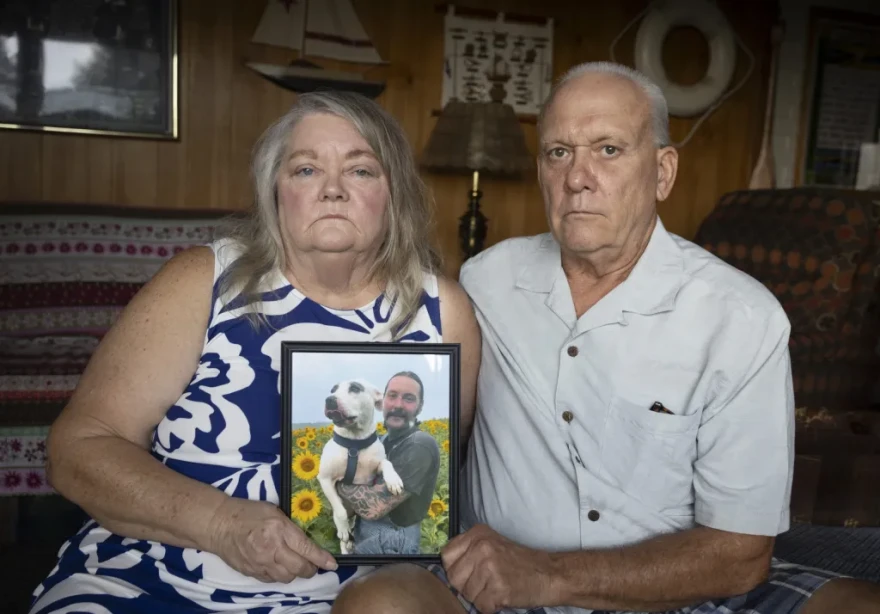
On a Sunday morning in March 2025, hours after Dennis Francis Barrett left his parents’ home in West Alton, Missouri, he got into the fender-bender that led to his death.
Police officers responding to the crash found that Barrett, 38, had a warrant for violating probation on a 2019 marijuana possession charge. He was taken to Granite City Jail before being transferred to Madison County Jail.
Despite repeatedly telling staff at both jails that he’d been in a car accident and was in worsening pain, and asking to be taken to an emergency room, he didn’t get help, according to a report obtained from the Illinois State Police (ISP). Staff and other people who had been in the jail with Barrett later told ISP investigators that as his condition visibly deteriorated, they thought he was going through withdrawal.
Kelly Barrett said that she knew something was wrong with Dennis when she overheard him on a phone call from jail with her husband, Joseph Barrett. “I could just tell, a mother knows,” Kelly said. “We both got to say ‘I love you,’ and that was the last words I ever got to say to him.”
After less than a week in jail, Barrett suffered what the ISP report describes as “an acute medical issue.” Staff found him lying on the floor of his cell and placed him in a wheelchair, where he “appeared to have a seizure.” The jail called emergency services, who did CPR and took Barrett to a hospital. He died a little over an hour later. The coroner determined that he died because his spleen had been ruptured in the car crash.
When St. Charles police arrived at the Barretts’ house to bring them the news of their son’s death, it was dark out. Joseph had already gone to bed, and Kelly was putting the dogs out when she heard the knock at the front door.
“It was awful,” Kelly said. “It was the most awful nightmare.”
Dennis Barrett is one of hundreds of people who died in Illinois county jails, or shortly after being released, between 2019 and 2025. But his case was not included in data on deaths in custody that the Illinois Criminal Justice Information Authority (ICJIA) is required by state law to collect and make public.
He’s not the only one missing from the data. At least 63 of those people — more than a quarter of jail-related fatalities statewide during that time period — did not appear on the state’s list of in-custody deaths, Illinois Answers found.
Families say many of the deaths were preventable. And taxpayers are footing the bill. Since 2019, families of people who died in jails have sued in at least 69 cases statewide, and Illinois counties paid more than $50 million in settlements and legal fees related to jail deaths during that timeframe. Cook County, which has the state’s largest jail, accounted for about one-third of both deaths and settlements.
Many of the deaths happened in facilities that weren’t meeting state standards for how to safely operate a jail, according to an Illinois Answers analysis of inspection reports. Nearly every year, a majority of Illinois jails fail annual inspections, typically for violations around insufficient staffing and supervision. Others violate standards for poor sanitation, healthcare, food services and more.
Credit: Julia Rendleman
State lawmakers tried to improve transparency and accountability around in-custody deaths in 2021, when they passed the Reporting of Deaths in Custody Act (RDCA) as part of the omnibus criminal justice reform legislation known as the SAFE-T Act. The John Howard Association (JHA), a prison watchdog group, spearheaded the RDCA.
“It is deeply concerning when anybody dies in custody,” said Jennifer Vollen-Katz, JHA’s executive director. “They are away from their loved ones. The eyes of the public are not on them. And we have very little information.”
The RDCA aims to make data on in-custody deaths publicly accessible and ensure families receive information about a loved one’s passing. The legislation tasked ICJIA with collecting data, providing recommendations and sharing updates on efforts to prevent deaths in various custodial settings, including jails.
But years after the law’s passage, ICJIA still wasn’t maintaining a complete list of everyone who died in a jail-related incident, while people continued to die from injuries, suicide and withdrawal, Illinois Answers found. ICJIA has acknowledged challenges and said they’ve made efforts to improve data quality, but the agency says many of the underlying issues are beyond its scope.
“The principal challenge is that deaths-in-custody reporting depends on information submitted by different agencies, each with their own personnel, procedures, and recordkeeping systems. Reports may be delayed, incomplete, or contain information that differs from other available records,” ICJIA said in a statement. “These challenges are not unique to Illinois and largely fall outside ICJIA’s statutory authority.”
Illinois Answers found that in most cases where someone was not listed in ICJIA’s official data, counties had reported the deaths to one or more state agencies. In a small number of cases, counties contested whether deaths qualified as “in-custody,” revealing inconsistencies in how agencies define such deaths and interpret reporting requirements.
“I can imagine on any side of the equation that those who are reporting, as well as those who are collecting the information, would say they lack capacity to do this as robustly as they are supposed to or would like to,” Vollen-Katz said. “And I don’t doubt that that’s true. But that’s something that should be addressed.”
Neither the Illinois Department of Corrections (IDOC) nor the office of Governor JB Pritzker, which oversees the department, responded to requests for comment.
After Illinois Answers asked ICJIA about the uncounted deaths, the agency said its staff were working to incorporate the missing fatalities into its data.
“Thank you for notifying ICJIA of the record discrepancies,” the agency said. “The commitment to transparency, accuracy, and accountability remains ICJIA’s highest priority.”
Hundreds died in Illinois county jailsDennis Barrett is one of 238 people who died between 2019 and 2025 while being held in Illinois county jails or shortly after being released, according to coroner records, county and state reports, news articles, obituaries and lawsuits reviewed by Illinois Answers. People are typically detained in county jails while awaiting trial; in some cases, they are serving short sentences after being convicted.
The people who died ranged in age from a teenager to a 94-year-old. The median age was 42. Nearly half of them died within two weeks of being booked into jail; some within a day.
A handful were serving brief sentences, ranging from five days to a month, for offenses such as DUIs. Several had been found unfit to stand trial and were waiting for a bed at a state psychiatric hospital. One man being held for possession of a controlled substance was unable to post a $300 bond and died of suicide days before he was set to be released.
The state’s data recorded the manner of death as missing, undetermined or unavailable for most of these jail deaths. Illinois Answers independently analyzed county coroner reports to determine the manner and cause of each death. The most common manner listed by coroners was natural causes, followed by suicides, accidents and homicides. Coroners marked only four as undetermined.
Statewide, coroners attributed more than a hundred deaths to natural causes. Heart disease was a common cause. A 55-year-old man — a skilled carpenter who loved fishing — died of a heart attack after a little over two weeks at Adams County Jail, where he was being held on a theft charge. His son sued, saying jail staff knew he had a heart condition but didn’t follow medical orders; the case was settled for $5,000. People also died of COVID-19, ulcers, blood clots and septic shock.
At least 65 people died by suicide. One woman remained hanging for an hour and a half before jail staff noticed her. State rules require jail officers to check on detained people every half hour. A state inspector looking into the case of a man who had died by suicide in Stark County Jail determined that staff hadn’t checked on him for three hours, and that they “falsified” records to indicate that checks were done when they were not.
Nearly 50 people died accidentally, according to coroners. The vast majority of those deaths were overdoses — typically from fentanyl or methamphetamine — but others involved choking or other causes. One man in Cook County Jail who had a history of schizophrenia died from drinking too much water, and a young woman in Macon County died of dehydration while she was going through withdrawal. Each of their families settled for millions.
Homicides were less common; there were 14 between 2019 and 2025. People died from beatings and injuries sustained prior to booking, including gunshot and stab wounds.
Some deaths involved interactions with jail staff, according to reports jails submitted to the state. A man in Cook County Jail died of heart disease after a “physical altercation” with staff. Sangamon County Jail reported that when he wouldn’t let medical staff examine him, officers tased Jaimeson Cody, a 39-year-old father of two, and he “became unresponsive.” A wrongful-death lawsuit brought by his family alleges that three jail officers held Cody face down on the concrete floor for several minutes and tased him four more times before he stopped breathing.
The RDCA requires correctional facilities to name a staffer to act as a “dedicated family liaison officer” to contact the family and keep them updated on any investigations. The Barretts spoke to St. Charles police, ISP investigators, and the Madison County Coroner, but said the Madison County Sheriff's Office didn’t contact them. Sheriff Jeff Connor declined to comment on specific cases. “Anytime we have a case like that, we have a case agent that is assigned a case; they’re the liaison with state police and the family,” Connor said.
Many other families similarly expressed frustration about poor communication from county and state officials. Two mothers separately told Illinois Answers that they first heard about a son or daughter’s passing from another person who was being held in the jail. One widow said she initially received a call from the county saying her husband had been released, only to find out later that he had died. Multiple families said they weren’t even aware that ISP had investigated their cases.
Anita Babcock said that after her daughter, Tammy Wolf, died in Vermilion County Jail in 2019, the county coroner was the only agency that gave her any information. “I never got anything from the jail. No written report. No video tapes. No nothing. So all these years I’ve had questions about this jail,” Babcock said. “We always wanted answers.”
State agency failed to count dozens of peopleLike Dennis Barrett, at least 62 other people who died while in the custody of or shortly after being released from a county jail between 2019 and 2025 weren’t captured in ICJIA data, Illinois Answers found. The people missing from the data died in 33 counties across Illinois.
They include mothers, fathers, musicians, cooks, welders, painters and veterans of the Army, Navy and Marine Corps. Their hobbies included riding dirt bikes, scuba diving, piloting airplanes, playing basketball, fishing with family, reading history books, spending time with their dogs and cheering for their favorite teams — the Chicago Cubs, St. Louis Cardinals or Dallas Cowboys. Many had mental illnesses or substance abuse disorders.
Illinois Answers followed up with jails that had uncounted deaths to ask whether they had evidence the deaths had been reported to state officials. Most counties provided records showing that they notified a state agency such as IDOC, ICJIA or ISP. But those incidents still slipped through the cracks in official accounting.
Seven county jails disputed whether some of the incidents Illinois Answers uncovered constituted reportable in-custody deaths. In some of these cases, people had been taken to hospitals before they died. Coroners, sheriffs or state police indicated in reports that the deaths occurred while the people were in custody. In some cases, families also filed wrongful-death lawsuits.
Knox County, for example, said Justin Elijah Main, a 46-year-old man who was found unresponsive in his cell, was no longer in custody when he died at a hospital later that day from complications of diabetes. His daughters filed a wrongful-death suit against the county and the jail’s contracted healthcare provider, alleging they failed to provide medical care.
“When a detainee’s medical condition becomes serious or life-threatening,” the lawsuit states, the provider “employs a strategy of releasing detainees on their own recognizance, discharging them from the jail, and sending them to a hospital, at which point the former detainee becomes responsible for the cost of avoidable emergency medical treatment.”
Fayette County said 32-year-old Sara Sikorski didn’t die in custody because she’d been released to a hospital. But ISP investigated the case as an in-custody death. Fayette County Sheriff Ronnie Stevens, who was the arresting officer in 2019, recalled that Sikorski’s medical emergency began in the jail, and said that she was released from custody because they didn’t have staff to monitor her at the hospital.
“She died some hours after being released, I believe,” Stevens said. “I don’t know why it wasn’t treated as an in-custody death.” Stevens said he was unsure what constitutes an in-custody death and that additional guidance from state officials would be useful.
Some information on in-custody deaths may be lost when counties transfer people across county or state lines, where there may be hospitals or better-equipped facilities. At least 18 people were taken across county lines, including four to St. Louis and one to Indiana, according to coroner records. Others were taken to neighboring counties in Illinois. Two-thirds of them don’t appear in ICJIA’s data.
According to ICJIA, Illinois requires law enforcement to report deaths that occur when someone has been transferred from a jail to a medical facility.
Under federal guidance, if someone, absent the medical condition, would have been in a correctional facility at the time of death, it should be reported as a death in custody. Last year, the National Academy of Sciences recommended the federal law on reporting in-custody deaths be amended to include deaths that occur in a hospital after someone has been released if the person’s condition began or was worsened by being in custody.
State agency audits data, updates proceduresIn addition to the 63 missing deaths, ICJIA’s data contained at least nine errors. In five instances, ICJIA listed deaths twice. In two others, ICJIA listed counties other than where the deaths had actually occurred. In another, ICJIA listed a person who was male as female. The data also marked a man as having died of an overdose in Wayne County Jail even though he’d survived. The man was recently released from prison.
ICJIA said that after Illinois Answers informed the agency of omissions and errors in its data, it “conducted an internal audit to identify these records.” Some reports that had been emailed to ICJIA were not entered during a staff transition, the agency said. At least 25 death records “require manual entry and are being processed.” Staff are working to “determine the origins” of the other missing records.
ICJIA said it has also “strengthened its procedures for tracking submissions, entering reports into the centralized database, reconciling information received through different reporting channels, and transferring responsibilities during staff transitions.”
A former ICJIA researcher who asked to remain anonymous because they currently work for another state agency said they often felt like they were “begging” law enforcement agencies for data. “The state has an issue with criminal justice data in general,” the researcher said, adding that digitization and centralization of records are needed for comprehensive oversight to succeed.
Amid concerns about the accuracy of in-custody death data, the agency began implementing an improved data quality-assurance process in 2024, and it went into full effect last year. ICJIA identified 27 deaths that occurred in 2025 and were missing from its records, according to its annual report. Now, staff follow up every quarter with law enforcement agencies, and consult news reports, a public database of police killings and ISP’s records of lethal uses of force to identify deaths.
To fulfill its requirement to provide recommendations and updates on prevention initiatives, ICJIA said earlier this year it had started a literature review and a series of stakeholder interviews. Asked for an update in August, ICJIA said the literature review was still underway but the stakeholder interviews were not being conducted “due to staffing constraints.” ICJIA said it was also conducting an “environmental scan” of public information to identify and describe prevention initiatives.
According to ICJIA, state law does not require it to investigate deaths. The agency said that law enforcement and correctional agencies are responsible for investigating deaths and determining whether they meet the reporting criteria. When ICJIA identifies a death that’s missing from its records or has questions about how a death was classified, it contacts the law enforcement agency that was involved to request reports or an explanation.
“ICJIA is not responsible for going out and getting the information, but they are responsible for receiving it, compiling it and publishing it,” Vollen-Katz said. “They’ve created some standardized forms to make it easier for these agencies to get the reports to them, but they don’t have a mechanism to compel reporting, which is an imperfect way of collecting information.”
A 2025 Department of Justice report on reducing deaths in custody recommended that jails themselves should identify and mitigate risks associated with in-custody deaths, adequately train staff, deliver mental healthcare to detained people, and conduct ongoing reviews.
“We shouldn’t be relying on people’s better natures to do things that they are required to do by law,” Vollen-Katz said. “We should strengthen our laws so that compliance is taken seriously and enforced and we have oversight bodies that are able to devote the time necessary to making sure that this is happening.”
The nonprofit Justice Information Resource Network (JIRN) was helping state agencies improve reporting of in-custody deaths until last year, when the Trump administration’s Department of Government Efficiency terminated the grant that was supporting that work.
Alexa Singer, a JIRN research associate, said “structural difficulties” hamper comprehensive reporting of deaths in custody. “It’s hard to get that many agencies on the same page,” Singer said. “So we were trying to improve that.”
Miriam Gohara, a Yale law professor, contributed to a 2025 report that found the system for investigating in-custody deaths is fragmented and lacks the resources and coordination necessary to consistently determine how people have died in correctional facilities. The report recommended state and local public-health departments conduct mortality reviews of deaths in custody and report their findings to state attorneys general, who should routinely audit the reporting for accuracy.
An agency holding people in custody “has a responsibility to make sure that people are treated humanely and are not facing life-threatening conditions or serious threats to their health,” Gohara said. “If they’re not transparent about why people died, nobody, including policymakers or people who apportion budgets or anybody, can do anything to try to alleviate the conditions.”
This story was made possible by a grant from The Richard H. Driehaus Foundation.