Просмотр новости
Найдите то, что Вас интересует
 Спутники
 РН
РН SpaceX
 Роскосмос
 NASA
NASA
СпутникиРНSpaceXРоскосмосNASAUkraine Needs Poland as a Partner and Ally
This important international gathering will likely go down in history as one held under the sign of the White Eagle.
The decision on the host city for the traditional Ukraine Recovery Conference was not made overnight. Then, just a week before the event, Polish President Karol Nawrocki announced that Ukrainian President Volodymyr Zelensky would be stripped of the Order of the White Eagle, Poland's highest state decoration. As Nawrocki later explained, "Kyiv's actions have crossed the pain threshold for the Polish people." Kyiv's response was swift: Zelensky visited a Nova Poshta branch and mailed the decoration back to Warsaw.
The days leading up to the conference were dominated by speculation over whether Zelensky would attend the event in Gdańsk. In the end, the issue was resolved. The Ukrainian delegation was led by Prime Minister Yuliia Svyrydenko, while senior officials and participants from partner countries arrived as scheduled and took part in the conference's numerous discussions and panel sessions.
Has the Gdańsk conference become the turning point after which emotional reactions and symbolic political gestures will give way to a more measured approach—one guided by genuine national interests rather than political calculations or personal ambitions?
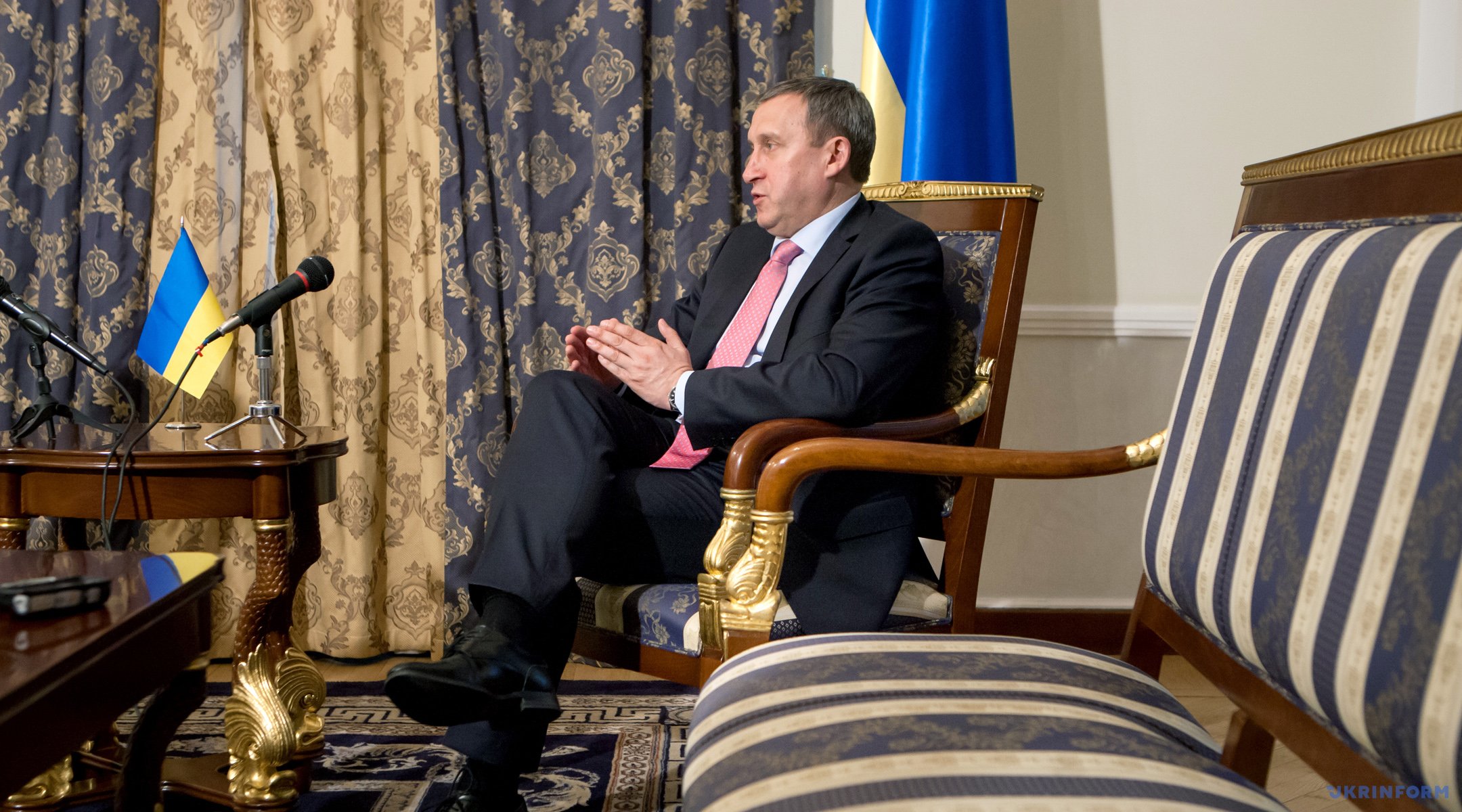
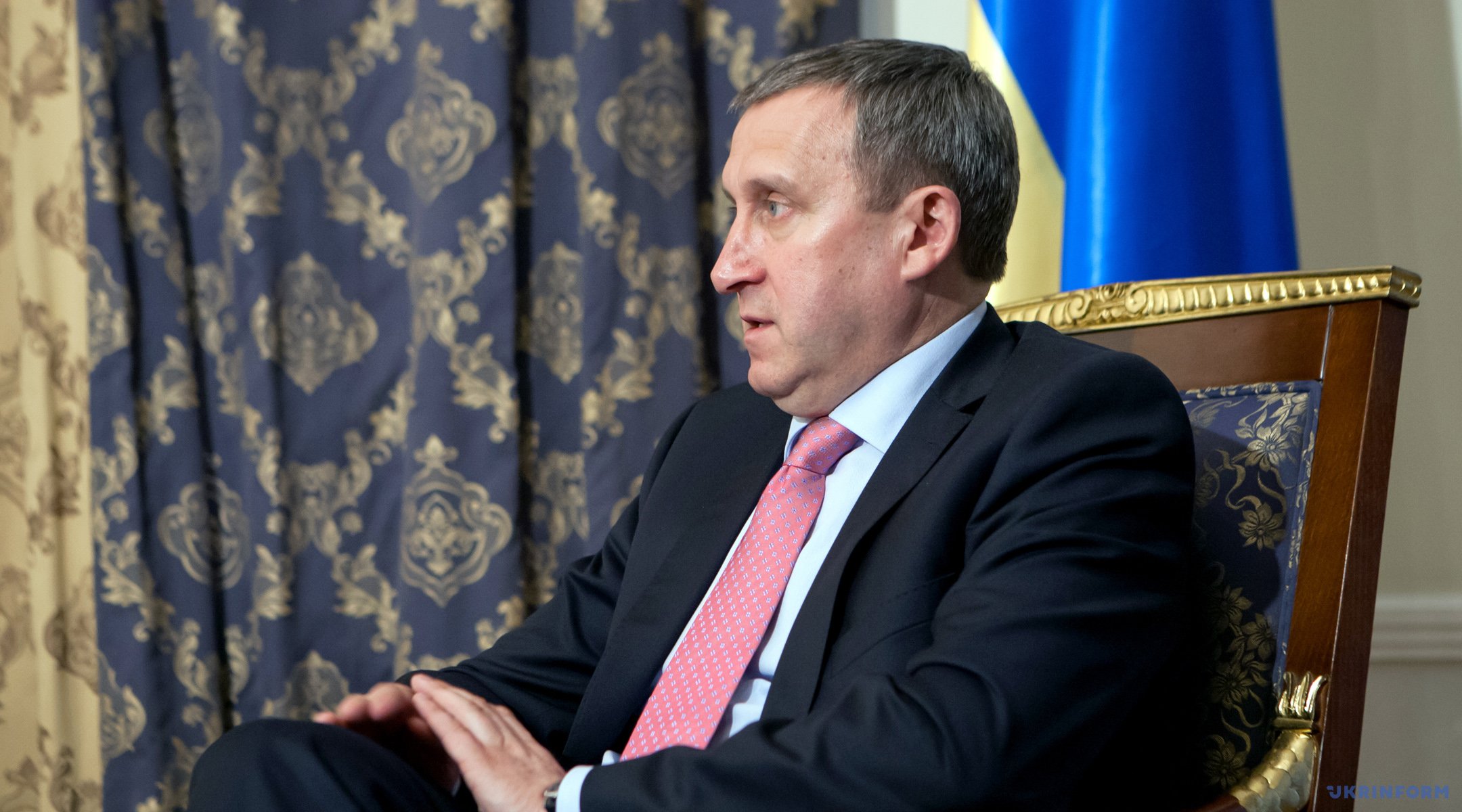
Ukrinform put that question to Andrii Deshchytsia, Ukraine's former foreign minister and former ambassador to Poland, who is attending the conference. He shares not only his impressions of the event but also his assessment of the current state of Ukrainian-Polish relations and the prospects for restoring them.
Ukrinform (UI): Despite the difficult atmosphere in the run-up to the event and the speculation surrounding it, the Ukraine Recovery Conference has opened successfully. What is the atmosphere like in Gdańsk and behind the scenes of the conference?
Andrii Deshchytsia (AD): I would say the atmosphere here is one of intense work. The conference has drawn a large number of participants, and the mood is both businesslike and constructive. People are open, engaged, and eager to exchange ideas. Naturally, there are many discussions about what needs to be done on the political and diplomatic fronts, but when it comes to business, everyone here seems determined to move forward with cooperation.
UI: So, the conference has gotten off to a promising start. But we cannot avoid returning to the events that preceded it. It seems this gathering will go down in history as an extraordinary one, marked by a scandal at the highest political level. Unfortunately, that is the reality. From your perspective on the ground, has this incident—and the sharp deterioration in relations between the presidents of the two countries—affected the conference or its agenda?
AD: I would not say it has gone unnoticed. Quite the opposite. Many of the people I have spoken with here have brought it up. That includes Ukrainian officials, business representatives—including arms manufacturers exhibiting at the conference—as well as members of civil society, politicians, and experts. Virtually everyone agrees that it would have been better had those statements and actions in the days leading up to the conference never occurred.
That said, I believe a pragmatic approach is prevailing. The general attitude is: what's done is done, so let's focus on moving forward and continuing to work together, because it serves the interests of both countries.
As for the implications of those actions and statements—particularly those made by President Nawrocki—it is still too early to assess them. We should remember that, on the Polish side, most of the people attending this conference are broadly aligned with or supportive of the current government.
These are representatives of the constructive part of Polish society that remains committed to cooperation with Ukraine. The more radical segment of the political spectrum, particularly the right-wing opposition, is not represented here. For that reason, it is difficult at this stage to predict how relations and cooperation with those political forces will evolve in the wake of the statements and actions that preceded the conference.
UI: Polish Prime Minister Donald Tusk said he viewed President Zelensky's decision not to attend the conference as "a gesture of de-escalation." Of course, President Zelensky's presence would have added greater political weight to the event. Still, it is worth remembering that conferences of this kind—this being the fifth since the start of Russia's full-scale invasion—are organized by the governments of Ukraine and the host country. Moreover, if I recall correctly, President Zelensky did not attend every wartime recovery conference in person. He was not in Lugano, and he was also absent from the London conference, where he addressed participants via video link. In other words, the president's personal attendance is not a prerequisite.
So, let's take a pragmatic view and judge the conference by its outcomes. For me, the key political question is whether the Ukraine Recovery Conference in Gdańsk can help restore the strategic partnership between Ukraine and Poland.
AD: We should also keep in mind that, alongside Ukrainian and Polish representatives, the conference has brought together many of our Western partners. They emphasize that the very fact the conference is taking place sends an important signal to the international community that continues to support Ukraine. Of course, President Zelensky's presence would have been welcome, but even in his absence we have partners here with whom we can meet, cooperate, and discuss our plans for the future.
I believe that is, ultimately, the conference's most important purpose.
Will it lead to concrete projects being implemented in Ukraine? Only time will tell. But even now, politicians and business leaders are holding talks, negotiating agreements, and signing cooperation deals covering assistance to and investment in Ukraine. That, in itself, is an encouraging start.
As for Ukrainian-Polish cooperation, as I mentioned above, many of the conference participants are closely associated with the current Polish government, which remains committed to working with Ukraine. Judging by the people gathered here, Polish-Ukrainian cooperation has every chance of continuing to develop.
I also believe it is important to showcase successful examples of such cooperation. They could serve as a foundation for broadening this constructive approach across Polish society, including among the country's right-wing political forces.
UI: As reported by the media, both civil society and official events took place in Gdańsk even before the conference formally opened. One of them was the Civil Society Forum, which, as I understand it, was intended to send a message and generate momentum from civil society—not only for governments but also for the wider Polish and European communities. A meeting of the Ukrainian-Polish Interparliamentary Assembly was also held. What was said at these events about the current state of affairs and the future of relations between the two neighboring countries?
AD: It seems to me that, despite several decades of intensive work by historians, politicians, experts, and religious leaders to foster cooperation between Ukraine and Poland and to help overcome historical disputes, neither Ukrainian nor Polish society has yet gained a full understanding of its neighbor.
That is why we still have important work to do in explaining to Polish society the role the Ukrainian Insurgent Army (UPA) played in Ukraine's struggle for statehood during and after the Second World War, as well as what the organization actually represented. In Poland, perceptions of the UPA tend to be highly generalized and are viewed predominantly through a negative lens. At the same time, we ourselves do not always have a sufficiently comprehensive understanding of the UPA's history, which makes it difficult to present this tragic chapter of the Second World War to our Polish partners in all its complexity.
There are, after all, different interpretations of the wartime events that culminated in what Poles refer to as the Volhynia tragedy. These issues should be discussed at both formal and informal meetings involving civil society organizations, politicians, members of parliament, and experts. One of the underlying problems, in my view, is that neither side fully understands how these chapters of history are presented and perceived in the neighboring country's public discourse.
That is precisely where more work is needed—to help bridge these differences. I don't think this can be accomplished at a single conference, but we have to start somewhere and gradually expand efforts to educate our societies about our shared past. After all, it is a lack of knowledge that often gives rise to categorical judgments and, at times, accusations based on an incomplete understanding of historical events.
UI: I couldn't agree more. We need to devote greater attention to these issues. At the same time, a country at war is hardly in the best position to focus on the past and the lessons of history when the future itself—whether there will be one and what it will look like—is at stake. That doesn't mean these issues should be ignored, but we have to recognize our priorities. Right now, our priority is defeating the enemy and rebuilding Ukraine.
With that in mind, let's return to the conference and its official agenda. Heads of state and government addressed the gathering, European Commission President Ursula von der Leyen announced the first tranche of a major loan package for Ukraine, and several other important statements were made. What messages are European leaders conveying?
AD: First and foremost, European leaders are calling for restraint when discussing sensitive historical issues. Similar appeals had already come from representatives of both the Polish and Ukrainian business communities. Statements by the Polish Business Council and the Ukrainian-Polish Chamber of Commerce urged calm and called for continued cooperation.
At the political level, the message is to build on the progress already made and to continue supporting Ukraine's path toward membership in the European Union. But an even more pressing task is to bring the war to an end by ensuring Ukraine's victory. Without that, all other initiatives will matter very little if we fail to prevail.
There is, in general, an understanding of this. Yet at times one gets the impression that our Western partners—even in Poland—feel far more secure than we do. They are members of the European Union and NATO. They see Ukraine holding back Russia, while they are able to modernize their armed forces in relatively comfortable conditions—according to long-term plans rather than under the pressure of immediate necessity.
As a result, they do not always fully appreciate our priorities. At times, they lose sight of the fact that, for us, the overriding objective is to bring this war to a successful conclusion—to win it. Our priority is to prevent Russia from advancing further into Ukraine or reasserting control over our country.
I believe this difference in perspective also explains why Ukrainians and our Western partners, including Poland, sometimes place different emphasis on different priorities. Unfortunately, we still have to remind them that Ukraine remains at war. The war is ongoing, and that reality must always be taken into account.
UI: Alongside the main conference, a wide range of side events are also taking place. Ukraine's Minister of Energy, Denys Shmyhal, has announced that Gdańsk is hosting the fourth meeting of the Ukraine Energy Coordination Group—the so-called Energy Ramstein. What other events have taken place, and what is still ahead?
AD: Panel discussions are currently underway across the conference's five main thematic pillars. One of the key topics is security and defense cooperation, which is of critical importance both to Ukrainian defense manufacturers and to our international partners. The focus is not only on military assistance to Ukraine but also on expanding joint defense production. Parliamentary events have also taken place, including meetings between Ukrainian and Polish lawmakers, and I believe those discussions are equally important.
UI: Finally, I'd like to ask about the Ukrainian community in Gdańsk. Is there a visible Ukrainian presence? Are any cultural events taking place alongside the conference?
AD: Absolutely. The presence of Ukraine and Ukrainians here is, in my view, both impressive and inspiring. Ukrainians are highly active, open, and visible throughout the conference. A number of events are also being organized by youth organizations. For example, I attended a meeting hosted by one of the foundations, where young Ukrainians—including students completing internships in Poland—came together to exchange ideas and experiences. They are optimistic and see genuine opportunities for deeper cooperation with Poland.
In other words, Ukrainians are presenting themselves in a very positive light. There had been concerns because of the atmosphere on social media in the days leading up to the conference, but once people arrived, many were pleasantly surprised by the warm welcome they received—not only from the organizers, but also from people in Gdańsk, whether in hotels or on public transport. The atmosphere has been overwhelmingly positive. In my opinion, Ukrainians are demonstrating that they are a confident, forward-looking European nation, standing shoulder to shoulder with the other participants at the conference.
UI: As far as I know, one of the events taking place in Gdańsk is a joint photo exhibition organized by Ukrinform and the Polish Press Agency (PAP). I would encourage everyone to visit it and recommend it to friends and colleagues.
I don't believe Ukraine's participants need any encouragement to do everything possible in Gdańsk to help restore political dialogue at the highest level, as befits the relationship between Ukraine and Poland. We all hope that Gdańsk will prove to be a turning point—marking a return to normal, constructive engagement instead of escalating tensions.
Of course, I have serious doubts that the current President of Poland will ever receive a Ukrainian state decoration. Nevertheless, I hope the presidents of our two friendly countries will find a way to overcome the current difficulties and meet face to face. Such an opportunity will come very soon, with the NATO Summit in Ankara just around the corner.
What are your expectations?
AD: I believe we need to find common ground. That will not be easy at the level of the two sitting presidents alone. Nevertheless, there are other diplomatic mechanisms and channels that should be used. I am convinced that Ukraine needs to work closely with Poland and maintain strong, constructive relations with it.
Poland must remain our partner and ally. The disagreements and disputes we see today undoubtedly create obstacles, but I believe they can be overcome if approached constructively. I also think this is what our European and Western partners expect. They do not fully understand why this is happening between Ukraine and Poland. Their message is simple: we do not need you to quarrel. I believe that is a reasonable appeal, and I hope that, with the support of our Western partners, the current disputes can be resolved.
UI: We have no alternative. We must live together, stand together, and achieve victory together. I am confident that is exactly what we will do.
Glory to Ukraine!
AD: Heroes of Glory!
Ihor Dolhov led this conversation
Watch the conversation in full on Ukrinform’s YouTube channel
| # | Наименование новости | Тональность | Информативность | Дата публикации |
|---|---|---|---|---|
| 1 | Edwin Bendyk, Polish Publicist | 0 | 8.79 | 26-06-2026 |
| 2 | Министр обороны Польши обратился к Украине с призывом | 0 | 5 | 20-07-2026 |
| 3 | Украина предложила Польше обратиться к религиозным лидерам двух стран | 0 | 5 | 03-07-2026 |
| 4 | Oleksandr Motsyk, Former Ambassador of Ukraine to the United States | 0 | 10 | 17-08-2026 |
| 5 | Ukraine not to join EU while hostilities ongoing — Polish Foreign Ministry | 0 | 7.72 | 24-08-2026 |
| 6 | Masashi Nakagome, Ambassador Extraordinary and Plenipotentiary of Japan to Ukraine | 0 | 6.94 | 21-08-2026 |
| 7 | Премьер Польши призвал ЕС быстро дать Украине статус кандидата и вооружение для обороны | 0 | 0 | 15-03-2022 |
| 8 | Ukraine requests grain transit from neighboring states — acting foreign minister | 0 | 10 | 05-08-2026 |
| 9 | Глава МИД Польши обратился к Украине с призывом из-за Бандеры | 0 | 20 | 24-07-2026 |
| 10 | Зеленский призвал развивать отношения Украины с дружественной России страной | 0 | 10 | 03-08-2026 |