Просмотр новости
Найдите то, что Вас интересует
 Спутники
 РН
РН SpaceX
 Роскосмос
 NASA
NASA
СпутникиРНSpaceXРоскосмосNASAFor American Society, Supporting Ukraine Is a Matter of Morality and Principles
On the eve of the 250th anniversary of U.S. independence, Ukraine's Ambassador to the United States, Olha Stefanishyna, spoke with Ukrinform about a new chapter in U.S.-Ukraine relations, bipartisan support for Ukraine in Congress, prospects for defense cooperation, sanctions on Russia, and the lessons American democracy offers Ukraine.
GEORGE WASHINGTON APPROVED THE BOUNDARIES OF THE DISTRICT OF COLUMBIA IN WHAT IS NOW UKRAINE'S EMBASSY
Ukrinform (UI): Madam Ambassador, our conversation is taking place on the eve of the 250th anniversary of U.S. independence. What does this milestone represent for Americans, and what does it mean for Ukraine?
Olha Stefanishyna (OS): For Americans, it is not merely a celebration of victory in the War of Independence. It is also an opportunity to reflect on 250 years of safeguarding that independence, building democracy, and strengthening the American state.
I believe this is an important example for Ukraine as well. We regained our independence only 35 years ago, and today we are fighting to defend it in a war unleashed by Russian aggression. It is also an occasion for our own reflection, because the principle of the separation of powers and the system of checks and balances are among the democratic foundations first established in the United States.
The United States is a nation of diverse ethnic groups, nationalities, and cultures. As a result, it has always had to find common ground that allows people to coexist, build mutual understanding, and unite around shared values. Americans often point out that despite their diverse cultural backgrounds, different historical experiences, and varying interpretations of history, the United States has prospered for 250 years, become the world's leading power, and consistently found ways to preserve unity at home.
UI: Ukraine's Embassy in the United States is housed in a building directly connected to the founding of the United States. I imagine that, during this anniversary year, it is receiving particular attention.
OS: Yes. Ukraine's Embassy is located in Georgetown, Washington's historic district. The building was purchased with the support of the Ukrainian community in the early 1990s.
We are speaking in the Washington Room. Behind us, on the wall, hangs the proclamation defining the boundaries of the District of Columbia, signed on March 29, 1791—just over twenty years after the War of Independence. It was in this very room, in what is now known as the Forrest-Marbury House, that George Washington and the owners of the land that would become the District of Columbia agreed on its boundaries.
Both this room and the building itself are part of American history.
In that sense, the 250th anniversary of U.S. independence is, to some extent, our celebration as well. We are very proud of that connection. We regularly welcome visitors here, share this remarkable story with them, and work closely with the Washington city government to promote awareness of this unique historical link.
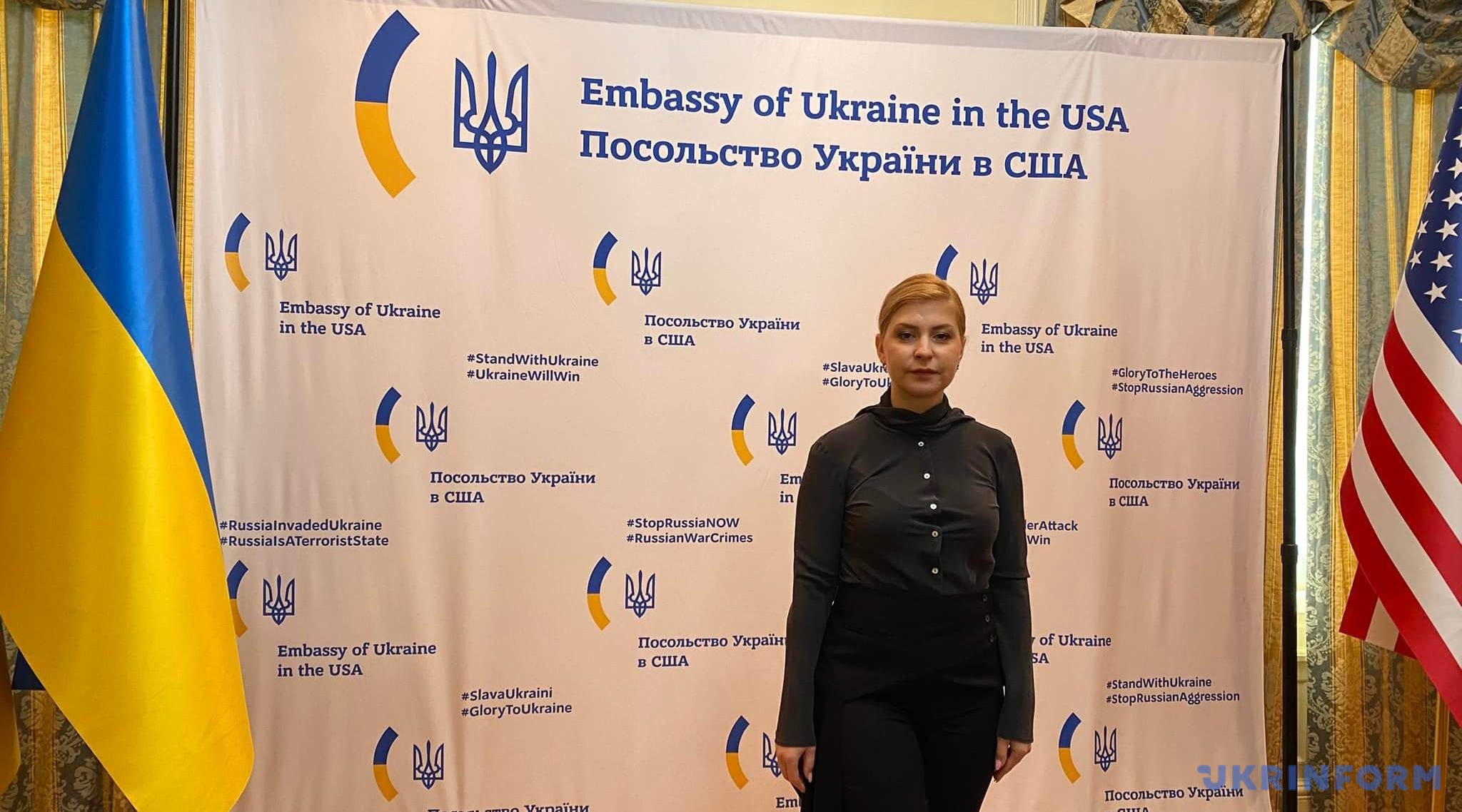
NO LAWMAKER IN EITHER PARTY FUNDAMENTALLY OPPOSES SUPPORT FOR UKRAINE
UI: During your time as ambassador, have you noticed any changes in relations with the U.S. administration?
OS: I do not measure my time in office in days or months. I think people in this country remember well how my appointment unfolded. All the necessary decisions were made very quickly. In less than two weeks, my credentials had been forwarded to the President of the United States, and I presented my letters of credence. The entire process moved remarkably fast, reflecting strong support for my appointment.
At the same time, everyone understands that we are working under exceptionally challenging circumstances. U.S.-Ukraine relations today are different from what they were in previous years. That is why I prepared very thoroughly before coming to the United States. After leaving the government, I devoted two full months to preparing for this assignment. By the time I assumed office as ambassador, I had a clear action plan, and I am very pleased that we have been able to implement it.
First and foremost, we have established systematic working relationships with virtually the entire U.S. administration—the White House, the Department of State, the Department of the Treasury, the Department of Energy, and the Office of the U.S. Trade Representative. It is an exceptionally broad network of institutional contacts.
Building effective mechanisms for cooperation is not easy at a time when official rhetoric continues to evolve, the U.S. president's level of engagement in diplomatic efforts to end the war fluctuates, and American negotiators, despite their considerable efforts, have yet to achieve tangible progress on the diplomatic track.
That said, I can say with confidence that Ukraine enjoys strong bipartisan support in Congress. Certainly, there are political considerations, and lawmakers continue to debate individual legislative initiatives. But there are no members of either the Democratic or the Republican Party who fundamentally oppose support for Ukraine. For many of them, this is a matter of moral principle. Of course, there are individual skeptics, but we engage with them as well.
UI: The State Department's rhetoric has clearly shifted over the past two or three months. Once again, we are hearing calls for an immediate and unconditional ceasefire, as well as statements reaffirming support for Ukraine's sovereignty. For some time after the Anchorage talks, that language was largely absent. How do you explain this evolution?
OS: Following the meetings in Anchorage and the numerous rounds of consultations with Moscow at various levels—and I am referring not only to the publicly known visits by American negotiators—there is now a much clearer understanding of the limits of what can realistically be negotiated. Those limits are fully consistent with Ukraine's interests.
In my view, the key question today is the path by which we reach those agreements and bring the war to an end. It is important to define the institutional roles of the Department of State and the White House, determine who will lead the negotiating process, clarify Congress's role, and understand how the current diplomatic efforts fit into the broader framework for ending the war.
We are talking about the path to achieving that goal, not about a ready-made plan with 28—or however many—points, or demands that someone hand over the Donetsk region. There is already clarity on those issues. Ukraine's position is unequivocal. Our task is to work with all the relevant institutions to ensure that this path is clearly defined and that we can move forward more quickly.
We regularly invite Ukrainian officials and experts with specialized expertise in a wide range of fields to the United States. For example, the President's Commissioner for Sanctions Policy, Vladyslav Vlasiuk, recently visited Washington. We also host military personnel, veterans, representatives of the National Guard, teams from the Ministry of Defense, as well as officials from the Ministry of Economy and other government institutions.
It is essential for Ukraine to maintain a constant presence in the United States and to ensure that its voice is heard.
We also expect the Verkhovna Rada to play as active a role as possible in strengthening ties with the U.S. Congress. There are strong working relationships between the Speaker of the Verkhovna Rada and the Speaker of the U.S. House of Representatives, and individual members of parliament regularly travel to the United States.
But this is such a vast country that the efforts of one—or even several—people can never be enough.
So yes, the rhetoric within the U.S. government is evolving. But it is not shifting in favor of either Ukraine or Russia. Rather, it is becoming more consistent. A deeper understanding of Ukraine is taking shape, and long-term frameworks for cooperation are being established.
There is also a clear recognition that Ukraine is a trustworthy partner—one that can be relied upon, engaged in an honest dialogue, and counted on to speak candidly.
Drawing on my own political and professional experience, I have always believed that the key is to build a strong foundation and maintain engagement across the full spectrum of contacts every single day. Then, when decisions are being made or when it is essential for the right voice to be heard, that foundation is already in place.
UI: Speaking of the cards Ukraine holds, Americans seem to be saying with increasing frequency that they are learning from Ukraine's conduct of modern warfare, particularly its use of drones.
OS: Ukraine's resilience and its ability to innovate under wartime conditions have already changed the world. Today, we see that both the U.S. government and the American defense industry need Ukraine because it offers agility, cost-effective solutions, and the ability to respond rapidly to emerging threats.
When the U.S. operation in Iran triggered immediate repercussions across the region, Ukraine offered its assistance to the Gulf states. It was clear that we were uniquely positioned to provide that kind of support.
In March, the embassy, together with the state defense innovation platform Brave1, organized the first U.S. investment roadshow for Ukrainian defense startups. For the first time, more than 400 American investors had the opportunity to meet Ukrainian companies developing technologies that are reshaping the nature of 21st-century warfare.
The U.S. subsidiary of the Ukrainian company Swarmer, which develops AI-powered drone swarm management systems, has been listed on the Nasdaq stock exchange. It is now the second Ukrainian company represented on Nasdaq. We will continue working to expand the presence of Ukrainian companies on U.S. capital markets.
Ukrainian companies have also been selected to participate in the Pentagon's Drone Dominance program, which aims to procure hundreds of thousands of drones for the U.S. military.
Today, Ukraine possesses one of the strongest defense-industrial capabilities in Europe. That assessment has been publicly acknowledged by the U.S. Secretary of Defense.
Ukrainian manufacturers and technology companies are eager to expand, build partnerships with American defense firms, and compete for Pentagon contracts.
For decades, American companies have worked to become Pentagon contractors. Today, that opportunity is also available to Ukrainian manufacturers. And it will continue to expand—it is a process that can no longer be stopped.
I very much hope we will be able to translate this opportunity into concrete political decisions. That would enable us to further strengthen the capabilities of Ukraine's defense industry.
Building on the productive discussions in Evian during the G7 Summit, we are working to arrange a meeting between the Presidents of Ukraine and the United States on the sidelines of the NATO Summit in Ankara. It would be an excellent opportunity to discuss the future of defense cooperation.
I know the President places great importance on expanding cooperation with individual U.S. states, where we can reach agreements on attracting investment and establishing joint manufacturing projects. We have already put forward a number of proposals and hope they will receive support.
Having gained experience working in the United States, together with my broader political and legal background, I understand that it is essential to engage not only with the federal government but with individual states as well. We need to travel across the United States and forge agreements both with the federal government in Washington and with individual states.
We should not overlook the fact that states such as Texas, California, Wyoming, Kentucky, and Virginia have major defense industries and extensive military training facilities. Each state has unique strengths that could be of tremendous value to Ukraine.

WE EXPECT THE FINAL VERSION OF THE U.S. DEFENSE AUTHORIZATION BILL TO PRESERVE PROVISIONS THAT ARE IMPORTANT TO UKRAINE
UI: At the beginning of June, the House of Representatives passed the Ukraine Support Act, the first Ukraine-related bill to be approved by the chamber in quite some time. How do you assess its prospects in the Senate, as well as the broader outlook for other Ukraine-related legislative initiatives in Congress?
OS: Throughout 2025 and 2026, a substantial number of Ukraine-related bills have been introduced in both the House of Representatives and the Senate.
The very fact that the House passed a bipartisan bill in support of Ukraine sent a powerful signal throughout Congress. It demonstrated that Ukraine remains a priority and that support for our country is fundamentally a matter of morality, principle, and conviction.
It is equally significant that the legislation received support from members of both parties.
Ukraine also has many friends in the Senate and continues to enjoy strong bipartisan backing there.
The immediate focus may not necessarily be on passing this particular bill. At the same time, other legislative initiatives are already taking shape in the Senate. One of the most notable is the bipartisan bill being advanced under the leadership of Senator Lindsey Graham. It could emerge either as a comprehensive sanctions package or as part of a broader legislative package incorporating several measures.
For that reason, we are confident that the time for a Senate vote will come.
I have met with Senator Lindsey Graham and remain in regular contact with Senator Richard Blumenthal. We also maintain close communication with Senator Jeanne Shaheen and Senator Thom Tillis. In other words, we have a strong bipartisan coalition of supporters.
In addition to the legislation already passed by the House of Representatives, the Senate has included $750 million in funding for Ukraine in the U.S. defense authorization bill. This provision has already been approved by the Senate Armed Services Committee. The proposed funding is nearly three times the amount allocated for the current fiscal year.
Work is now underway to reconcile the Senate and House versions of the National Defense Authorization Act for fiscal year 2027. For Ukraine, it is critically important that the Senate Armed Services Committee's version would extend the Ukraine Security Assistance Initiative (USAI) through 2029. This is the Department of Defense's principal mechanism for providing long-term security assistance to Ukraine.
The Senate version also provides for the establishment of a U.S.-Ukraine Strategic Defense Innovation Working Group, with a particular focus on advancing unmanned technologies. In addition, it directs the Pentagon to continue providing Ukraine with intelligence support to help defend and liberate its internationally recognized territory.
At the same time, the House version of the bill does not currently include those provisions. Instead, it requires the Department of State and the Pentagon to prepare a joint report on religious persecution carried out by Russia in Ukraine and the temporarily occupied territories, and provides for sanctions against those responsible.
The next crucial stage will be reconciling the Senate and House versions of the legislation. We expect the final text to retain the provisions that are essential to Ukraine's security and defense.
I would also highlight one point that may not be immediately obvious. The Senate committee approved these provisions despite the launch of the operation in Iran and the Pentagon's growing focus on other security challenges. At the same time, there were no significant disruptions in the flow of military assistance to Ukraine.
That demonstrates that Ukraine remains a priority. After all, we are talking about defense, air defense, and the protection of Ukrainian cities.
I believe we should express our gratitude to the United States both for these decisions and for the fact that, despite the Pentagon's attention being drawn to other priorities, no decisions were made that would have seriously undermined Ukraine's ability to defend itself.
UI: Turning to sanctions, you have already mentioned your meetings with Senator Lindsey Graham. Do you see opportunities for the United States to further strengthen its sanctions policy?
OS: Certainly. We had expected U.S. sanctions policy to be much more decisive and far-reaching. After all, it was during President Trump's first term that the toughest sanctions against the Nord Stream 2 project were imposed.
We therefore hoped that, while discussions or hesitation might continue within the European Union or the G7, the United States would take an even firmer stance on sanctions.
That has not happened so far.
At the same time, the sanctions imposed by President Trump on Russia's energy sector, including measures targeting Lukoil and Rosneft, represent an important step forward.
Naturally, we are not entirely satisfied that the U.S. Department of the Treasury has repeatedly extended a number of exemptions. At the same time, we understand that these exemptions are temporary. They are subject to expiration, and if circumstances change, they can be withdrawn.
We expect the Senate to pass legislation that will also win the support of the House of Representatives. For the first time, sanctions and Russia's legal responsibility for its aggression would be codified in U.S. law. That would mean the sanctions would remain in force unless Congress passed another law repealing them—a highly unlikely scenario.
That is why we are focusing our efforts on ensuring that sanctions against Russia are enshrined in legislation.
UI: Would that also cover the use of frozen Russian assets, or is that a separate issue?
OS: There are several legislative initiatives that provide for comprehensive solutions of that kind. Some specifically address the use of frozen Russian assets. So there remains considerable scope for further work in Congress.
THE FACT THAT MOSCOW HAD NOT BURNED SINCE NAPOLEON SPEAKS VOLUMES ABOUT UKRAINE'S CAPABILITIES
UI: What do you think are the prospects of Ukraine obtaining a license to manufacture Patriot missiles, as President Zelensky has suggested?
OS: The President knows exactly what he is talking about. Given the current momentum, I believe there are good reasons to expect that such a decision will eventually be made.
I work closely with the Department of State, including the team responsible for export licensing, and I can say with confidence that this is a realistic possibility. It is something that requires sustained effort.
Such a decision would be strategically important not only for Ukraine, but for Europe's security as a whole, for the capabilities of the U.S. security and defense architecture, and, more broadly, for the global geopolitical balance.
This is not the kind of issue that can be resolved through a one-off agreement. It requires building an entire framework around such a decision.
I would also point out that America respects winners.
I remember being in the United States with Volodymyr Zelensky in late 2024, before I was appointed ambassador. He came with his Victory Plan, which called for providing Ukraine with long-range strike capabilities so that Russia, as a terrorist state, could no longer destroy Ukrainian cities with impunity. That was one of Ukraine's key strategic requests to the United States.
At the time, those proposals received only partial support—and certainly not on a scale that could have produced, by the end of 2024, the results we are witnessing today.
But President of Ukraine and Commander-in-Chief Volodymyr Zelensky—and anyone who knows Volodymyr Oleksandrovych understands this—never abandoned that objective, even without receiving full U.S. support at the time.
Today, the entire world recognizes Ukraine's achievements. Ukraine is now capable of striking targets that, only two years ago, could have been reached only with American long-range weapons.
That is why Americans admire Ukraine's capabilities, ingenuity, and resilience in resisting Russian aggression.
UI: So, this is also influencing how Ukraine is perceived in the United States?
OS: Absolutely. The realization that Moscow had not burned since Napoleon's campaign speaks volumes about the nature of this war, Russia's vulnerabilities, and Ukraine's capabilities.
As a result, even the most determined skeptics—as well as those advocating the normalization of relations with Russia—are finding their position increasingly difficult to defend. The United States simply has no compelling reason to tilt toward supporting Russia.
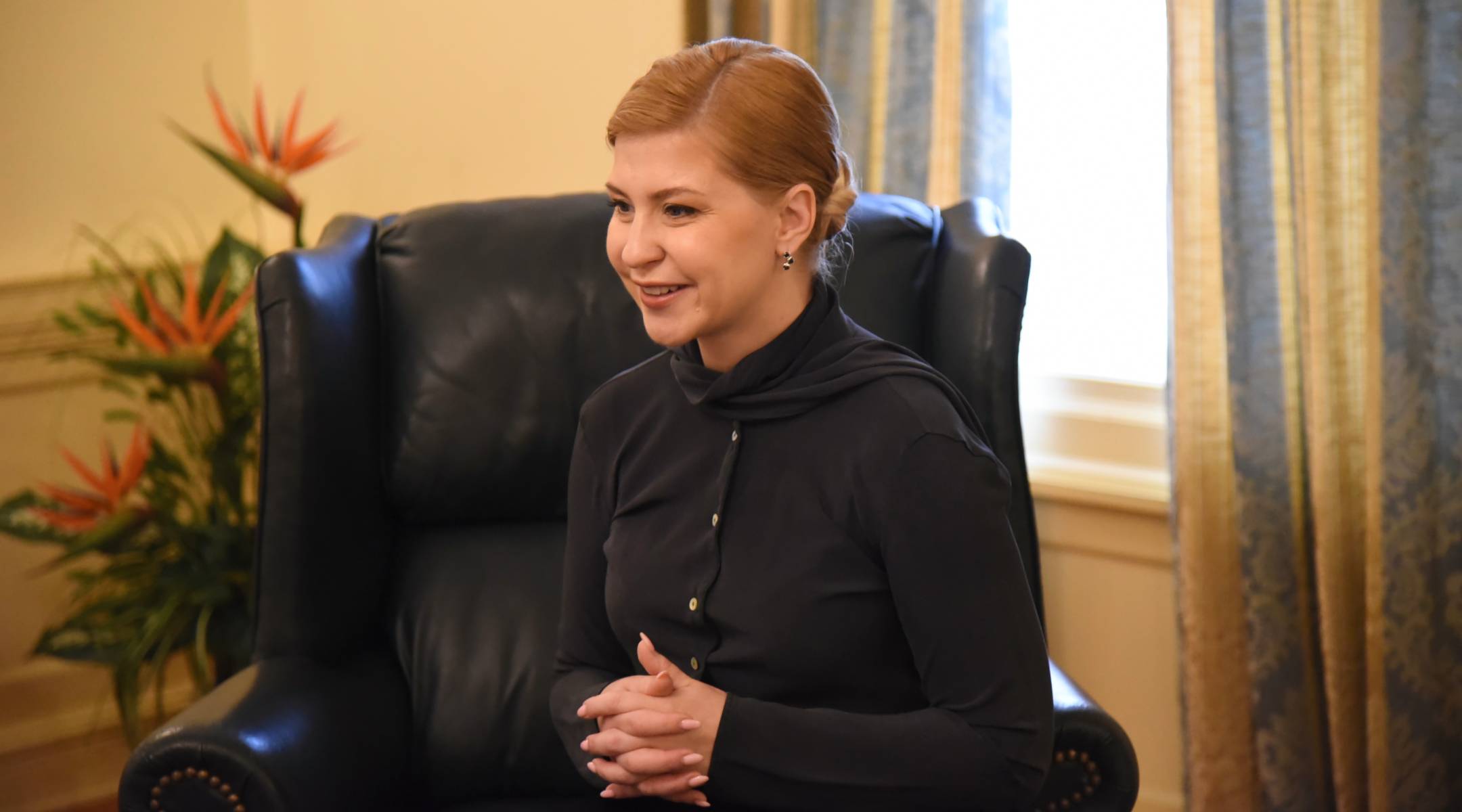
NO THINK TANK ADVISING THE U.S. GOVERNMENT HAS BEEN OVERLOOKED
UI: American society generally supports Ukraine. In your view, however, what issues are the most difficult to explain to ordinary Americans?
OS: Opinion polls show that more than 60 percent of Americans support Ukraine. Moreover, both public opinion surveys and our own experience engaging with people across the United States—as well as with members of the Senate and the House of Representatives, the administration, conservative circles, and the many organizations and institutions that help shape government policy—confirm one simple fact: support for Ukraine is fundamentally a matter of morality, values, and personal conviction. It is not a partisan political issue.
In conversations with Americans, you rarely hear expressions such as "Ukraine policy" or "policy toward Ukraine." Instead, people talk about the war against Ukraine. And they see it first and foremost as a moral issue. It is about war crimes, terrorism, the attempted destruction of the Ukrainian nation, the abduction of children, and ultimately the struggle between good and evil.
That is why support for Ukraine remains so strong. There are, of course, political debates and critical opinions, but when you speak with people individually, virtually no one tells you they support the war or are indifferent to the shelling of Ukrainian cities or the destruction of churches.
The real challenge is translating that support into political decisions. That is where our work lies.
I can say with confidence that no think tank or analytical organization that prepares recommendations or policy assessments for the U.S. government—or for the business and philanthropic communities that influence decision-making—has escaped our attention.
We maintain close cooperation and regular dialogue with virtually every major think tank, regardless of its political orientation—from conservative organizations and advocates of an "America First" approach to our longstanding friends and partners with whom we have worked for many years.
I believe we need to engage with everyone. Even difficult and sometimes uncomfortable conversations with experts on Russia or the war are worthwhile. They help us better understand our partners' perspectives and provide valuable insights that we can take into account.
So, I believe support for Ukraine in the United States remains unquestionably strong. Our challenge now is to ensure that this support is translated into concrete action.
There can never be too much effort in that regard. The work we are doing is already producing tangible results—in Congress, at the Department of State, and in our cooperation with the Pentagon.
UI: Are there any particularly notable examples of American companies becoming involved in Ukraine's recovery and reconstruction?
OS: We have had a positive experience working with the U.S. International Development Finance Corporation (DFC), the U.S. government agency that provides financing for projects under the U.S.-Ukraine minerals agreement, as well as for defense-related initiatives.
However, by American standards, these projects are still not ambitious enough. From a purely economic standpoint, Ukraine remains a relatively small market for the United States.
Unfortunately, despite the strong support for Ukraine, some American companies have also had disappointing experiences in the Ukrainian market. I am referring to cases dating back about a decade, particularly involving energy companies that attempted to enter Ukraine but, for various reasons, were unable to establish a lasting presence.
At the same time, we see the United States maintaining highly successful economic partnerships with countries such as Kazakhstan.
That said, our current cooperation in the energy sector is strengthening bilateral relations. I believe the teams at Ukraine's state-owned energy companies have been doing an excellent job.
Most recently, at the conference in Gdańsk—where the U.S. delegation was the largest and highest-level among all participating countries—we launched what is perhaps the most significant bilateral initiative of its kind to date. Under the program, the Export-Import Bank of the United States (EXIM Bank) will provide $300 million in financing for the purchase of equipment needed to restore Ukraine's gas transmission system, which has suffered repeated damage from Russian attacks.
In addition, assistance programs totaling nearly $900 million are already underway to support Ukraine's recovery from Russian strikes on its energy infrastructure.
We are also working to purchase American natural gas as an element of Ukraine's energy resilience in the face of continued Russian attacks.
These are not entirely new initiatives, but they require sustained, systematic effort. And in the United States, it is precisely that kind of consistent work that delivers results.
THE UKRAINIAN DIASPORA IS AN EXTRAORDINARY SOURCE OF STRENGTH, AND WE ARE COMMITTED TO HARNESSING THAT STRENGTH
UI: How do you assess the role of the Ukrainian diaspora? Has that role changed during the war?
OS: In Ukraine, we still do not fully appreciate the role the Ukrainian diaspora in the United States has played in preserving Ukrainian identity and statehood, as well as in shaping U.S. policy toward our country.
For example, a good friend of mine, former Republican Congressman from Ohio Robert McEwen, once told me that back in 1987, while campaigning in his district, he met with members of the Ukrainian community, who told him that if he wanted their votes, he would have to commit himself to supporting Ukraine's independence. He promised that he would—and he kept that promise.
The Ukrainian community here is extraordinarily strong. The United States is home to a large network of Ukrainian churches and cultural institutions, including the Ukrainian Institute of America and the Ukrainian Museum in New York.
I only wish I had more opportunities to visit places with large Ukrainian communities—North Dakota, Delaware, New Jersey, Texas, California, Chicago, and many others.
In my work, I rely heavily on Ukrainian organizations. These include the Ukrainian Congress Committee of America and the U.S.-Ukraine Foundation, founded by Nadia and Robert McConnell. They helped establish the relationship with Congresswoman Marcy Kaptur, who now co-chairs the Congressional Ukrainian Caucus.
We also work closely with newer organizations such as Nova Ukraine, Razom, United Help Ukraine, US Ukrainian Activists, and many others. We are deeply grateful for their work and sincerely celebrate their achievements.
More than 90 Ukrainian organizations are active across the United States. There is hardly a city where you cannot find Ukrainians ready to lend a hand and offer their support. The diaspora is an extraordinary source of strength, and we are committed to building on that strength.
SUPPORT FOR UKRAINE ACROSS KEY U.S. STATES IS THE FOUNDATION OF SUSTAINED AMERICAN BACKING
UI: In Ukraine, people often think of America primarily as Washington and New York...
OS: America is first and foremost a country of states—not just those two cities. Every political decision made in Washington ultimately has its roots in the states.
Take South Dakota, for example. Although it has a relatively small population, it is represented by Senator John Thune, the Republican leader in the Senate.
Even members of Congress who have spent decades in Washington remain deeply engaged in their home states. That is where public support is built, priorities are shaped, and political positions are formed.
That is why I believe one of Ukraine's most important long-term tasks is to develop a much deeper understanding of the United States. Our expertise in this area remains far too limited. We need to understand not only Washington, but also Texas, California, North Carolina, South Carolina, North Dakota, and every other state.
For example, Colorado Governor Jared Polis recently traveled to Ukraine's Volyn region and spent several days there strengthening bilateral ties. That demonstrates that even U.S. governors are prepared to travel halfway around the world to Ukrainian regions because they recognize the importance of those relationships.
But this requires a deliberate, long-term strategy. We already have 11 regional partnerships and nearly 80 sister-city relationships. That may sound like an impressive number, but it is still far from enough.
This convinces me that if we work systematically across the United States, support for Ukraine will not depend on electoral cycles or political shifts in the United States.
I am talking about building lasting frameworks for assistance programs, defense-industrial cooperation, and economic partnership.
Strong support within the United States—at the level of individual states and key regions—is the foundation of sustained American support for Ukraine.
UI: How significant do you expect the Ukraine issue to be during this year's midterm elections?
OS: I sincerely hope Ukraine will not become part of partisan political competition. At the moment, there are no signs that this is happening. Both parties have taken a measured approach.
There have been attempts at provocation and disinformation—for example, false claims that Ukraine was using "combat" pigeons or mosquitoes, or that the United States had established biological laboratories on Ukrainian territory. As we have seen, however, those narratives failed to achieve their intended effect, and Ukraine's response also helped minimize their impact.
Our assessment is that whichever party ultimately secures a majority, the margin will be very narrow. I believe everyone is focused on that reality, and it is encouraging that both the Republican and Democratic parties have developed a solid understanding of Ukraine.
We have consistently worked to ensure that policymakers in both parties have access to accurate information, organizing meetings with a broad range of policy institutes and experts so that there are no "gray areas," misunderstandings, or opportunities for manipulation.
So, we will see what happens. Anything is possible, but we certainly hope Ukraine will not become a political football during the election campaign.
UI: The allegations about biological laboratories were made by then-Director of National Intelligence Tulsi Gabbard shortly before she left office. What do you make of that? It almost sounded as though she had been taking her cues from Moscow.
OS: We do not always have the full picture. But as we mark not only the 250th anniversary of American independence but also 250 years of American democracy, it is worth remembering that one of democracy's greatest strengths is transparency.
Perhaps future political cycles will shed more light on the origins of those statements. We were able to refute the claims quite easily. There is ample information in the public domain—both publicly available material and evidence presented during Senate hearings—that leaves little room for manipulation. That is why it is difficult to assess what motivated those remarks.
When someone makes such statements while leaving office, it is reasonable to assume they were influenced by particular circumstances or subjected to pressure from individuals who encouraged such actions.
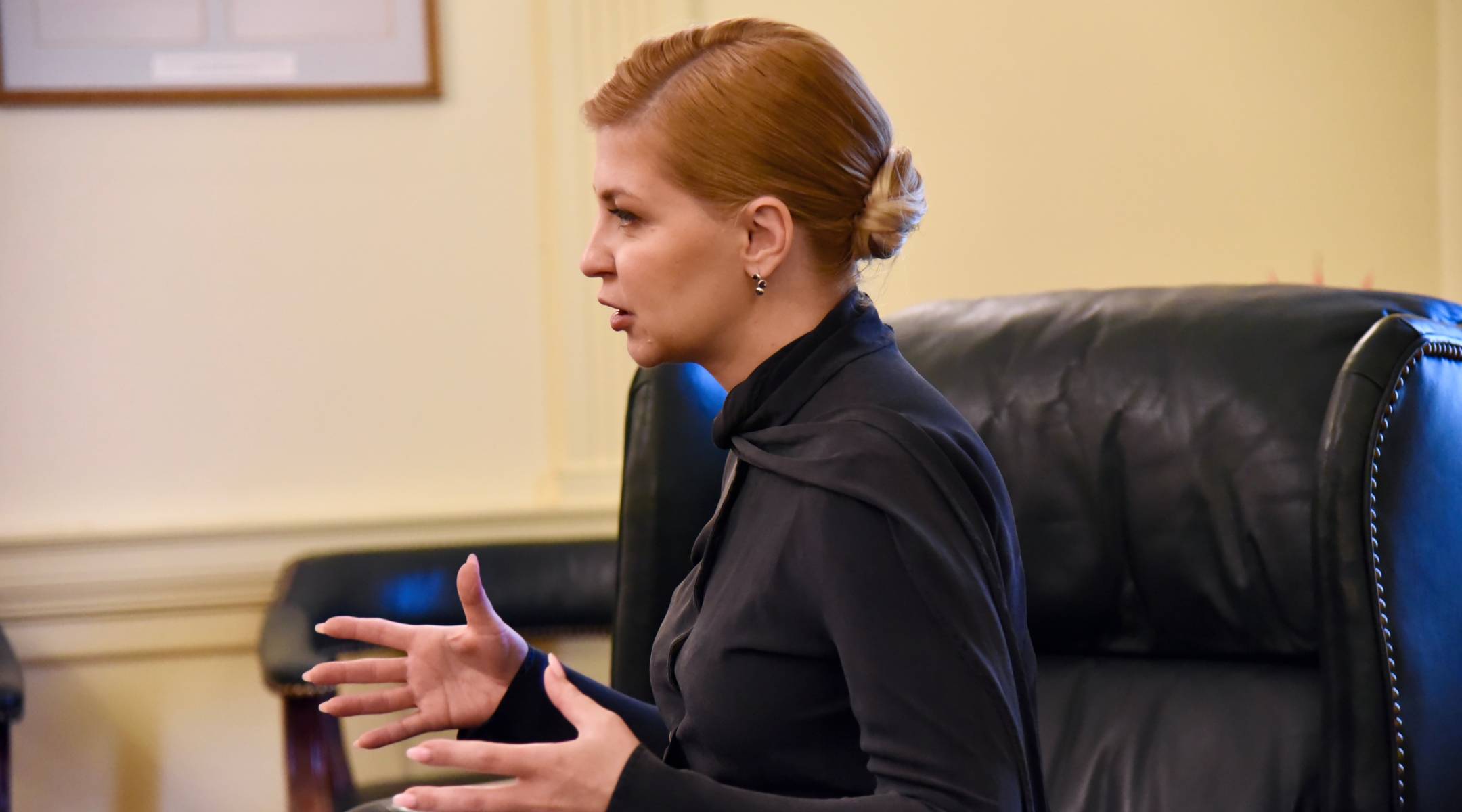
THE RETURN OF ABDUCTED CHILDREN HAS BECOME A DISTINCT PRIORITY OF OUR POLITICAL EFFORTS
UI: How are the United States helping to secure the return of children abducted by Russia? It is well known that First Lady Melania Trump has also taken an interest in this issue.
OS: The return of abducted children and their reintegration has now become a distinct priority of our political efforts.
The Department of State has already announced a program that will provide funding for Ukrainian and American organizations working to locate and verify information about abducted children, facilitate their return, and support their reintegration.
The voice of the First Lady of the United States cannot be overstated. Her support helps keep this issue on the American agenda and ensures that these crimes are neither ignored nor manipulated for political purposes.
It is also worth noting that six months ago the U.S. Senate held hearings at which Ukrainian organizations and individuals directly involved in efforts to bring these children home gave testimony. Their evidence has been fully documented, entered into the official record, and submitted in writing.
These children must be returned to their families and to their homeland, no matter how long it takes.
UI: Thank you, Madam Ambassador, for speaking with us.
OS: Thank you, Ukrinform. Let me conclude by saying that it is a great honor to represent Ukraine in the United States during the year marking the 250th anniversary of American independence.
I am confident that the Ukrainian-American partnership will continue to grow stronger—for the benefit of our two nations and our shared security.
My warmest congratulations to the American people on this historic anniversary.
Volodymyr Ilchenko led this conversation, New York–Washington
| # | Наименование новости | Тональность | Информативность | Дата публикации |
|---|---|---|---|---|
| 1 | Новый посол Украины в США приступила к работе | 0 | 0 | 15-09-2025 |
| 2 | Украинский посол в США объяснила, почему покинула свой пост | 0 | 5.43 | 03-08-2026 |
| 3 | Посол Украины рассказала, меняется ли риторика США по Украине | 0 | 5 | 04-07-2026 |
| 4 | Oleksandr Motsyk, Former Ambassador of Ukraine to the United States | 0 | 10 | 17-08-2026 |
| 5 | Natalka Cmoc, Ambassador of Canada to Ukraine | 0 | 10 | 01-07-2026 |
| 6 | На Украине пожаловались на санкционную политику США в отношении России | -3 | 5 | 04-07-2026 |
| 7 | Бывший посол Украины в США назвала причину увольнения | 0 | 6.01 | 03-08-2026 |
| 8 | Посол Украины в США заявила, что Вашингтон учтет позицию Киева на переговорах с Россией | 0 | 0 | 30-12-2021 |
| 9 | Зеленский уволил посла Украины в США | 0 | 10 | 03-08-2026 |
| 10 | Зеленский выдвинул Стефанишину на пост посла Украины в США | 0 | 0 | 17-07-2025 |