Просмотр новости
Найдите то, что Вас интересует
 Спутники
 РН
РН SpaceX
 Роскосмос
 NASA
NASA
СпутникиРНSpaceXРоскосмосNASAMcLuckie said his business doesn't have the money to cover that bill
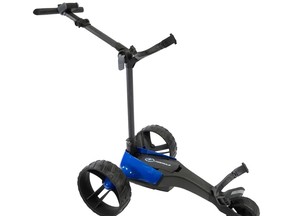 The owner of a small Canadian business that imports electric golf carts from China says his company is now in jeopardy because the federal government has billed him for more than $178,000 after placing his three-wheeled buggies in the same import category as electric vehicles (EVs). Photo by Supplied
Article content
OTTAWA — The owner of a small Canadian business that imports electric golf carts from China says his company is now in jeopardy because the federal government has billed him for more than $178,000 after placing his three-wheeled buggies in the same import category as electric vehicles (EVs).

THIS CONTENT IS RESERVED FOR SUBSCRIBERS
Enjoy the latest local, national and international news.
SUBSCRIBE FOR MORE ARTICLES
Enjoy the latest local, national and international news.
REGISTER / SIGN IN TO UNLOCK MORE ARTICLES
Create an account or sign in to continue with your reading experience.
THIS ARTICLE IS FREE TO READ REGISTER TO UNLOCK.
Create an account or sign in to continue with your reading experience.
or
Article content
Joseph McLuckie, who founded JPSMGolf in 2006 in his Toronto basement, said Friday that he has exhausted his appeals with Canada Border Services Agency (CBSA) after the federal department confirmed its ruling that his company’s golf carts are considered sport vehicles because they “are conveyances used by the golfer to get their bag and associated accessories across the golf course during play.”
Article content
Article content
Article content
The re-classification was made during a 17-month window when Canada was applying a surtax of 100 per cent on Chinese-made EVs, part of a trade war with China that was calmed earlier this year. The company, which has six employees, had previously and has since been paying 6.1 per cent surtax on its Chinese-made imports.
Article content
Article content
Instead, he was informed that his shipment of “Formula” trolleys from about a year earlier was now subject to a surtax of $169,882.35, plus GST of $8,494.12. The bill has since grown by more than $4,500 because of interest charges as he tries to fight the ruling.
Article content
McLuckie said his business doesn’t have the money to cover that bill. “If I have to pay (this bill), I’m screwed.”
Article content
In the May 14 letter from Juliana Leung, a senior officer of trade compliance with CBSA, quotes from two dictionaries that define a vehicle as “a machine that commonly has wheels and an engine, that is used for transporting goods or people.”
Article content
The letter from CBSA, obtained by National Post, concludes that its review of the matter found that no error was made and that the department correctly ruled that the golf trolleys should be classified as EVs and hit with a 100 per cent import tax. “Undoubtedly, the golf trolleys under review meet the definition of motor vehicle, as they employ an electric motor for propulsion, and are used to transport goods.”
Article content
Article content
The Formula models, whose price tags range from $1,299 to $2,499, are one of five brands sold by JPSMGolf. Not to be confused with four-wheeled golf vehicles, the electric Formula devices travel alongside their owner and are just large enough to carry a golf bag.
Article content
Article content
Leung couldn’t be reached for comment Friday.
Article content
Karine Martel, a CBSA spokesperson, said the department couldn’t comment on specific company cases, nor does it have the authority to deviate from the wording of surtax rules. Requests for remission, she said, are handled by the Department of Finance in consultation with other pertinent departments.
Article content
McLuckie said that request has already been made.
Article content
Phone calls and emails on Friday were not returned by the Department of Finance, MP Juanita Nathan, who represents McLuckie’s federal riding, or the office of Public Safety Minister Gary Anandasangaree, who is responsible for CBSA.
Article content
JPSMGolf, which sells its imported goods only in Canada, has sold about 25,000 units over the last two decades, amassing about $33-million in total sales.
Article content
The 100-per-cent surtax on Chinese-made EVs was implemented in 2024 by the Justin Trudeau government in a bid to protect the Canadian auto industry. It was in line with similar policies by the United States and some other western countries.
| # | Наименование новости | Тональность | Информативность | Дата публикации |
|---|---|---|---|---|
| 1 | Trump imposes 50% tariffs on Canadian goods | 0 | 10.99 | 21-07-2026 |
| 2 | Trump unleashes shock 50 percent tariffs on Canada in explosive trade war over wine, cars and hockey sticks day after friendly exchange with Mark Carney at World Cup final as PM responds | 0 | 11.18 | 21-07-2026 |
| 3 | Trump hits countries, including Canada, with forced labour tariffs | 0 | 6.81 | 24-07-2026 |
| 4 | U.S.-Canada trade talks collapse, setting new 50% tariffs in motion | 0 | 10.39 | 22-08-2026 |
| 5 | Китай по итогам расследования введет тарифы на некоторые товары из Канады | 0 | 0 | 08-03-2025 |
| 6 | Trump imposes 50% tariffs on Canadian goods, citing disputes over autos, alcohol and cheese | -5 | 7 | 21-07-2026 |
| 7 | Forced labour or leverage: What Trump's new tariffs are really about | 0 | 10.35 | 24-07-2026 |
| 8 | Today’s News: Canadians are 😠 about those tariffs. Plus a wildfires update | 0 | 12.82 | 22-07-2026 |
| 9 | Trump slaps 50% tariffs on Canada after World Cup meeting with Carney | 0 | 12.74 | 21-07-2026 |