Просмотр новости
Найдите то, что Вас интересует
 Спутники
 РН
РН SpaceX
 Роскосмос
 NASA
NASA
СпутникиРНSpaceXРоскосмосNASAMike Bismeyer — often known as “The Kindness Guy” — has spent more than 17 years in public transit and mobility, serving in industry leadership roles, speaking across North America, and advocating for stronger workplace cultures. But his message doesn’t come from theory. It comes from lived experience.
Mike Bismeyer — often known as “The Kindness Guy” — has spent more than 17 years in public transit and mobility, serving in industry leadership roles, speaking across North America, and advocating for stronger workplace cultures. But his message doesn’t come from theory. It comes from lived experience.
*Summarized by AI
Leadership conversations often default to structure, systems, and performance metrics — those matter. But as my recent conversation with Mike Bismeyer makes clear, the real foundation of strong organizations is far more human.
Bismeyer — often known as “The Kindness Guy” — has spent more than 17 years in public transit and mobility, serving in industry leadership roles, speaking across North America, and advocating for stronger workplace cultures. But his message doesn’t come from theory. It comes from lived experience.
And at the center of that message is a simple but powerful idea:
Kindness isn’t soft. It’s strategic.
The Personal Story Behind the Leadership MessageBismeyer’s’s belief in kindness as a leadership principle didn’t originate in a boardroom. It began in childhood.
After experiencing bullying at a young age, one unexpected act of kindness shifted his outlook entirely. That moment didn’t just change his perspective; it reshaped how he sees leadership, influence, and responsibility.
That early experience became a lifelong lens: the way we treat people matters. Not only morally, but organizationally.
It’s easy to dismiss kindness as a personality trait. Bismeyer challenges that assumption. In his view, kindness is a decision. And decisions compound into culture.
From Managing Down to Empowering UpOne of the central themes in our conversation was how leadership has evolved.
The traditional model — command-and-control, manage down, enforce compliance — is fading. Today’s workforce expects something different. They expect to be heard. They expect development. They expect purpose.
Empowering up, as Bismeyer describes it, means:
Organizations that fail to make this shift often struggle with engagement, retention, and succession planning. Not because their strategy is flawed — but because their culture is brittle.
Mentorship Is Not Optional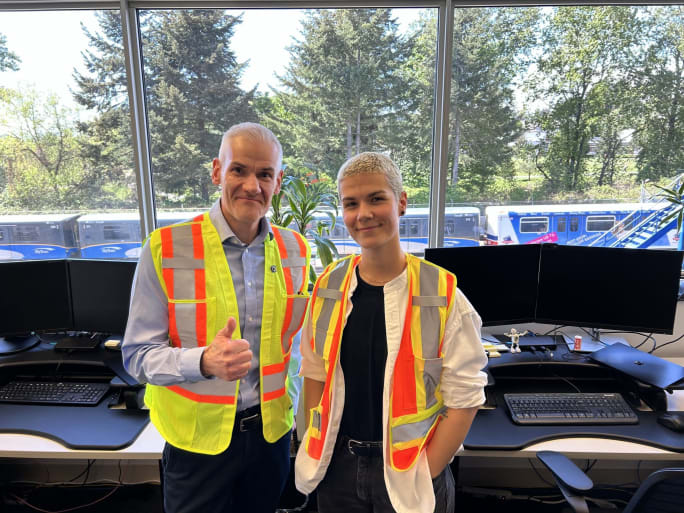
According to Mike Bismeyer, leadership begins with how we treat people—and small daily decisions shape lasting organizational culture.
Credit:
Brian Dickson/Mike Bismeyer
Succession planning often gets reduced to “Who replaces whom?” But as Bismeyer emphasized, real succession is built long before transitions occur.
It’s built through mentorship.
It’s built when leaders actively develop others.
It’s built when knowledge flows freely rather than being hoarded as leverage.
Organizations suffer when individuals become “guardians of information.” When expertise is protected instead of shared, growth stalls. Trust erodes. And continuity becomes fragile.
A mentorship culture, by contrast, strengthens resilience. It prepares future leaders without panic. It distributes capability across the organization.
That isn’t sentimental. It’s operationally sound.
Cross-Department Empathy Reduces FrictionAnother recurring theme in our discussion was internal understanding.
Most workplace friction doesn’t come from bad intent — it comes from lack of visibility. Teams don’t understand what other teams are carrying. Departments operate without context.
Bismeyer advocates something deceptively simple: exposure.
Job shadowing. Cross-functional conversations. Learning what your colleagues actually do.
When people see the pressure, complexity, and responsibility others face, empathy increases. And when empathy increases, collaboration improves.
It’s difficult to blame someone once you understand their constraints.
Recognition: The Quiet Culture BuilderRecognition rarely shows up in strategic plans, yet its absence is immediately felt.
Bismeyer shared how some organizations gradually shift from celebrating wins to communicating only when something goes wrong. That transition — from appreciation to correction — slowly erodes morale.
A thank-you.
A note of acknowledgment.
A moment of public appreciation.
These aren’t grand gestures. But they are powerful signals.
They communicate value.
They reinforce behavior.
They build loyalty.
And over time, they define culture.
At the heart of Bismeyer’s leadership philosophy is a simple framework:
People. Passion. Purpose.
When leaders understand what drives their team members — not just professionally, but personally — they can align work with meaning. And meaning increases engagement.
This is especially critical in service-based industries like transportation, where the daily work can become routine. Leaders who connect roles to purpose create staying power.
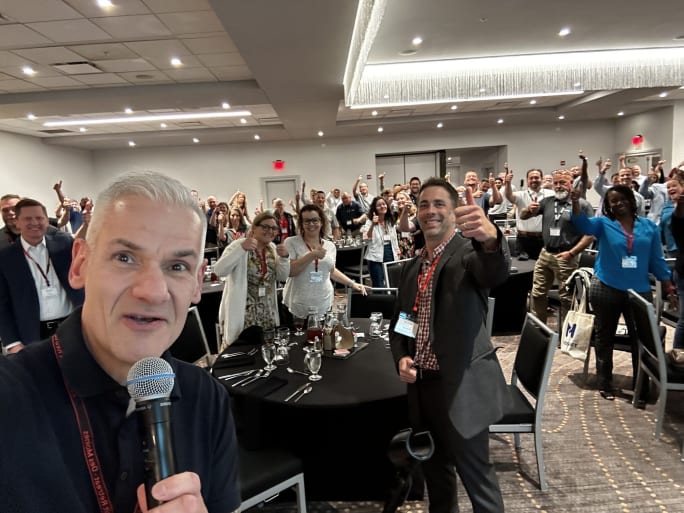
Mike Bismeyer, known throughout the transit industry as "The Kindness Guy," encourages leaders to put people first and build cultures rooted in trust and purpose.
Credit:
Brian Dickson/Mike Bismeyer
Throughout our conversation, one idea surfaced repeatedly:
These choices may feel minor in isolation. But multiplied across teams and over time, they define the environment people experience every day.
That’s why kindness is strategic.
Not because it feels good.
But because it works.
Perhaps the most important takeaway is that leadership is not confined to executives.
Culture is influenced at every level.
Every employee contributes to brand reputation, morale, and organizational climate. Every interaction shapes perception.
When individuals take ownership of their behavior, their professionalism, and their treatment of others, culture strengthens from within.
Final ReflectionTechnology advances. Markets shift. Systems evolve.
But the human side of leadership remains constant.
Strong cultures are built through:
As Bismeyer put it in our conversation, culture doesn’t change through slogans — it changes through decisions.
And leadership starts with how we treat people.
For Mike, kindness isn’t branding — it’s a personal philosophy carried into leadership, advocacy, and workplace culture.
Prefer to listen to the full conversation on Ground Transportation Insights?
You can access the complete audio post and companion article here.
Kindness is strategic in leadership because it fosters strong workplace cultures and human connections, which form the foundation of effective organizations.
*Summarized by AI
| # | Наименование новости | Тональность | Информативность | Дата публикации |
|---|---|---|---|---|
| 1 | How Data, Strategy, and Community Engagement Are Reshaping Transit | 0 | 9.88 | 05-08-2026 |
| 2 | How Data, Strategy, and Community Engagement Are Reshaping Transit | 0 | 9.88 | 20-07-2026 |
| 3 | Just be nice | 0 | 8.62 | 22-07-2026 |
| 4 | New Tricks for Old Bureaucracies: Joshua Schank on Making Transit Innovation Stick | 0 | 7.29 | 07-08-2026 |
| 5 | AC Transit’s Cecil Blandon on Building the Next Generation of Transit Maintenance Leaders | 0 | 10.39 | 22-07-2026 |
| 6 | The changing face of loyalty and rewards | 0 | 7.46 | 08-03-2026 |
| 7 | Trust can make history – and begins with kindness | 0 | 1 | 01-07-2026 |
| 8 | Seeing is believing: Why industrial AI adoption starts with trust | 0 | 8.86 | 13-03-2026 |
| 9 | Businesses have to learn to turn the ship around, says BMW’s Thomas Dose | 0 | 5 | 10-07-2026 |