Просмотр новости
Найдите то, что Вас интересует
 Спутники
 РН
РН SpaceX
 Роскосмос
 NASA
NASA
СпутникиРНSpaceXРоскосмосNASABackground Medical leadership and soft skills are critical for effective healthcare; those competencies are crucial for day-to-day medical practice, particularly in low to middle-income countries like Morocco, where leading teams and managing patients present greater challenges due to human and material resource constraints. Yet Moroccan medical training remains disproportionately focused on technical competencies. This study assessed the professional experience of 32 interns in a low- to middle-income developing nation to investigate the alignment between their learning priorities and professional realities. Methods A cross-sectional survey was conducted involving the full cohort of interns at Tangier University Hospital. We assessed learning priorities, daily work time allocation, conflict management history, and communication quality using an anonymous questionnaire. Results While interns ranked conflict management as their lowest learning priority, they spent 23% of their daily time dealing with conflicts and 47.3% on administrative tasks. Furthermore, communication with colleagues was rated poorly (4/10), and 36% of interns expressed dissatisfaction with existing conflict resolution processes. Conclusion Our findings highlight a fundamental gap and a paradox between the skills interns value and the competencies actually required in their high-stress work environments. Soft skills and leadership abilities are essential not only for enhancing the work environment and clinical performance but also for reducing legal disputes and minimizing friction with patients and families. Ultimately, these skills support the act of “caring,” not just “curing.”

Hjiej G, Abbassi I and Fourtassi M. From Curing to Caring: Bridging the Leadership and Soft-Skills Gap in Moroccan Medical Education [version 1; peer review: awaiting peer review]. F1000Research 2026, 15:1375 (https://doi.org/10.12688/f1000research.180178.1)
Brief Report
[version 1; peer review: awaiting peer review]
1 Laboratory of Life and Health Sciences, Faculty of medicine and Pharmacy of Tangier,, Universite Abdelmalek Essaadi, Tetouan, Tangier-Tetouan, Morocco
2 Universite Abdelmalek Essaadi, Tetouan, Tangier-Tetouan, Morocco
Ghita Hjiej
Roles: Conceptualization, Data Curation, Formal Analysis, Methodology, Software, Validation, Visualization, Writing – Original Draft Preparation
Ikram Abbassi
Roles: Data Curation, Formal Analysis, Funding Acquisition, Methodology, Software
Maryam Fourtassi
Roles: Conceptualization, Formal Analysis, Methodology, Project Administration, Supervision, Validation, Writing – Review & Editing
OPEN PEER REVIEW
REVIEWER STATUS AWAITING PEER REVIEW
Medical leadership and soft skills are critical for effective healthcare; those competencies are crucial for day-to-day medical practice, particularly in low to middle-income countries like Morocco, where leading teams and managing patients present greater challenges due to human and material resource constraints. Yet Moroccan medical training remains disproportionately focused on technical competencies. This study assessed the professional experience of 32 interns in a low- to middle-income developing nation to investigate the alignment between their learning priorities and professional realities.
MethodsA cross-sectional survey was conducted involving the full cohort of interns at Tangier University Hospital. We assessed learning priorities, daily work time allocation, conflict management history, and communication quality using an anonymous questionnaire.
ResultsWhile interns ranked conflict management as their lowest learning priority, they spent 23% of their daily time dealing with conflicts and 47.3% on administrative tasks. Furthermore, communication with colleagues was rated poorly (4/10), and 36% of interns expressed dissatisfaction with existing conflict resolution processes.
ConclusionOur findings highlight a fundamental gap and a paradox between the skills interns value and the competencies actually required in their high-stress work environments. Soft skills and leadership abilities are essential not only for enhancing the work environment and clinical performance but also for reducing legal disputes and minimizing friction with patients and families. Ultimately, these skills support the act of “caring,” not just “curing.”
Softskills – Leadership - Moroccan Medical Training
Corresponding author: Ghita Hjiej Competing interests: No competing interests were disclosed.
Grant information: The author(s) declared that no grants were involved in supporting this work.
Copyright: © 2026 Hjiej G et al. This is an open access article distributed under the terms of the Creative Commons Attribution License, which permits unrestricted use, distribution, and reproduction in any medium, provided the original work is properly cited. How to cite: Hjiej G, Abbassi I and Fourtassi M. From Curing to Caring: Bridging the Leadership and Soft-Skills Gap in Moroccan Medical Education [version 1; peer review: awaiting peer review]. F1000Research 2026, 15:1375 (https://doi.org/10.12688/f1000research.180178.1) First published: 14 Aug 2026, 15:1375 (https://doi.org/10.12688/f1000research.180178.1) Latest published: 14 Aug 2026, 15:1375 (https://doi.org/10.12688/f1000research.180178.1)
Medical leadership has become a cornerstone of training for both physicians and residents. Its efficacy and necessity are now well established, not only in terms of reducing institutional costs but also in enhancing the work environment and patient clinical outcomes.1 Cultivating leadership skills is essential for improving communication among colleagues and with patients, fostering creativity, supporting strategic problem-solving, and managing team dynamics.2 Given this tangible impact, leadership development programs for medical students and physicians have proliferated in recent years, reflecting the increasing emphasis on leadership in healthcare. However, although evaluating these programs remains challenging—largely due to a lack of standardized and validated frameworks—these interventions have consistently yielded positive outcomes across the Kirkpatrick levels.3
In Moroccan medical schools, even though the medical curriculum has undergone a reform, it remains largely centered on hard skills, delivered through a modular format during both the pre-clinical and clinical cycles.4 While communication modules have been introduced, its teaching remains poorly managed, relying on passive and predominantly teacher-centered methods.4 Concurrently, other essential soft skills—such as conflict resolution, stress management, and teamwork—are still largely absent from the curriculum. Yet, these competencies are crucial for day-to-day medical practice, particularly in low-income countries like Morocco, where leading teams and managing patients present greater challenges due to human and material resource constraints.4
University hospitals in Morocco typically host between 30 and 80 interns each year, depending on the city. These interns are medical students who have passed a competitive, knowledge-based written examination granting access to a two-year internship. During this period, they play a central role in the functioning of emergency departments, working alongside residents, while also rotating through medical and surgical specialties—despite receiving no formal preparation for the responsibilities they are expected to manage independently.
We aimed to assess the work experience of interns, identify their learning priorities, and quantify how they allocate their daily working time.
Main Text
We conducted a cross-sectional study to evaluate the professional experiences and learning priorities of medical interns at the Tangier University Hospital. The assessment was performed prior to the interns’ participation in a dedicated medical leadership workshop in May 2024 to establish a baseline of their current working environment and educational needs and expectations.
The study targeted the entire cohort of interns practicing at the hospital. A total of 32 interns were invited to participate, representing a 100% response rate of the available cohort. Participation was voluntary, and all data were collected anonymously to ensure confidentiality.
Data5 were gathered using a structured, anonymous questionnaire consisting of closed-ended questions. The instrument was divided into four primary domains:
- Socio-demographic Profile: Including age, gender, and assigned clinical department.
- Educational Priorities: Participants were asked to rank five learning objectives during their internship—clinical reasoning, technical skills, therapeutic updates, communication/empathy, and conflict management—based on perceived importance.
⇨ Scoring Logic: A weighted ranking system was used where 5 points were assigned to the highest priority and 1 point to the lowest. Cumulative scores were then calculated to determine the overall hierarchy of needs.
- Time allocation: Interns estimated the percentage of their daily working hours dedicated to three core activities: active learning, conflict management, and administrative/organizational tasks.
- Interprofessional Communication: The perceived quality of communication with different hierarchical levels (Heads of Department, Seniors, and Professors) was assessed using a Likert-style scale ranging from 1 to 10.
- Conflict Analysis: A binary “Yes/No” section identified prior conflicts with peers (juniors, colleagues of the same level, residents, or seniors). For those reporting conflicts, follow-up questions addressed whether the issue was resolved and the level of satisfaction with the resolution.
Written informed consent was obtained from all participating interns prior to their inclusion in the study. They were informed about the study’s purpose and the anonymity of their responses.
A total of 32 interns participated in the study. The mean age of the participants was 25.32 ± 1.43 years. At the time of the study, 21 (66%) participants were assigned to medical departments, while the remaining 11 (34%) were rotating in surgical departments.
From this assessment, several patterns emerged ( Figure 1). Clinical reasoning ranked highest among their learning priorities with a score of 160 points, followed by the acquisition of technical skills with 129 points then communication and empathy with 80 points, while conflict management was placed at the bottom of their priority list receiving only 48 points. However, when asked to estimate the distribution of their daily working time, a different picture emerged. On average, administrative and organizational tasks accounted for the largest share at 47.3% of their working time, followed by active learning at 28%, and conflict management which occupied 23% of their time in the hospital.
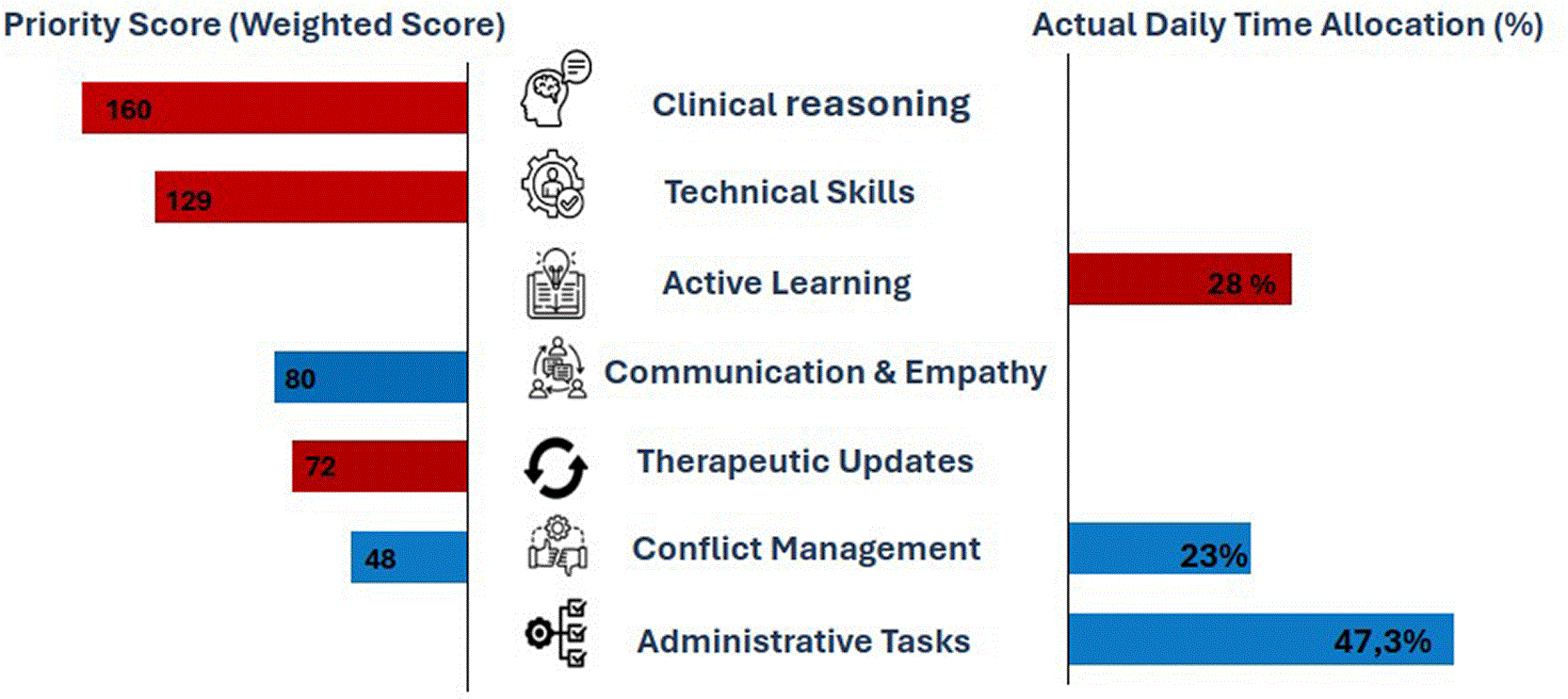
Within our intern group, communication and interactions with both junior and senior colleagues were poorly rated, with an average score of 4 out of 10. Moreover, 36% of interns indicated they had experienced a conflict and were dissatisfied with its management, and 32% stated they still had unresolved conflicts.
The weighted scores revealed a clear hierarchy of perceived needs, with clinical reasoning (160 points) being more valued than conflict management as an example of soft skills (48 points). However, a stark contrast was observed in time distribution 70.3% of the interns’ workday was consumed by non-clinical tasks « administrative duties and conflict resolution », leaving only 28% for active learning.
These findings showcase that learning objectives are poorly identified and tend to be diluted within the wide range of tasks assigned to interns, who operate with a level of autonomy that could even be described as dangerously high. As a result, interns and residents are often left to define their own learning objectives during each rotation, based on personal priorities that do not necessarily align with daily working needs as practitioners. Ironically, although interns ranked conflict management as their lowest learning priority, they spent nearly a quarter of their time (23%) dealing with it. This creates a paradox where interns dedicate a large share of their workday to tasks unrelated to direct clinical practice, failing to support the learning goals they consider most important. Most patient complaints today are not about technical competences but stem from poor communication and perceived distance, and a lack of meaningful connection with their physicians. These are issues that are improved by soft skills acquisition through strengthening the ability to communicate and lead.6 Hence, if patients expect physicians to master their technical skills—which they ultimately do—they also need doctors who are highly competent in human relationships. Moreover, being unable to resolve conflict highlights a significant gap in communication and collegial interaction, and undermines interprofessional collaboration—a process that relies on the ability to adapt to others to serve the patient effectively and avoid harming colleagues. Conflicts in healthcare are exacerbated by high stress levels tasks, long working hours, and the weight of responsibility for human health, this makes conflict-management skills necessary. Such competencies are essential to maintaining a proactive, cohesive healthcare team and ensuring patient safety.7–8
Overall, a fundamental gap exists between the skills Moroccan physicians perceive as necessary in daily practice and the competencies they need to function effectively in a highly stressful work environment, and that while interns are focused on clinical mastery, their daily reality is dominated by interprofessional and organizational challenges for which they feel neither prepared nor motivated to prioritize.
Soft skills and leadership abilities are essential not only for enhancing work environment and clinical performance, but also for reducing legal disputes and minimizing friction with patients and their families through improved communication and conflict management. After all, the essence of the medical profession lies in therapy from therapeia—the act of caring—not solely in curing.6
Our study acknowledges certain limitations, primarily its single-center design and restricted sample size, which may limit the generalizability of our findings. However, these factors are counterbalanced by the recruitment of the targeted population, ensuring strong internal validity and minimizing selection bias.
Furthermore, this study is observational in nature, reflecting the participants’ subjective perceptions of their professional status and educational needs. Nevertheless, it highlights a distinct paradox between the low priority assigned to soft skills—such as communication and conflict management—and the significant proportion of working time these tasks actually demand.
A distinct strength of this research is its setting: it was conducted in a recently established university hospital benefiting from modern infrastructure and optimized working conditions. This context is particularly revealing; it highlights that despite some facilities, the systemic challenges typical of an emerging economy persist. This allows for a unique analysis of medical leadership in a transitional environment.
The study was conducted in accordance with the principles of the Declaration of Helsinki. Written informed consent was obtained from all participating interns prior to their inclusion in the study. They were informed about the study’s purpose and the anonymity of their responses. Ethical review, approval, and consent to participate are deemed unnecessary according to national regulations- Law No. 28–12, Article 2 - due to its nature as an educational quality assessment and the absence of patient-identifiable data.
not applicable.
not applicable.
The author(s) declared that no grants were involved in supporting this work.
© 2026 Hjiej G et al. This is an open access article distributed under the terms of the Creative Commons Attribution License, which permits unrestricted use, distribution, and reproduction in any medium, provided the original work is properly cited.
Current Reviewer Status:
AWAITING PEER REVIEW
AWAITING PEER REVIEW
?
Key to Reviewer Statuses VIEW HIDE
ApprovedThe paper is scientifically sound in its current form and only minor, if any, improvements are suggested
Approved with reservations A number of small changes, sometimes more significant revisions are required to address specific details and improve the papers academic merit.
Not approvedFundamental flaws in the paper seriously undermine the findings and conclusions
Open Peer Review
AWAITING PEER REVIEW
Sign up for content alerts
| # | Наименование новости | Тональность | Информативность | Дата публикации |
|---|---|---|---|---|
| 1 | Агидель: Ночь 20 дек, Чт | 0 | 0 | 19-12-2018 |
| 2 | Вучич назначил парламентские выборы в Сербии на 26 апреля | 0 | 0 | 04-03-2020 |
| 3 | Teaching a Social Justice Approach to Leadership in Law Schools | 0 | 6.46 | 07-08-2026 |
| 4 | Malifaux Burns Remade and Reforged Preview | 0 | 0 | 04-11-2021 |
| 5 | Seier til både Lillehammer og Storhamar | 0 | 0 | 21-02-2025 |
| 6 | 0 | 0 | 28-02-2025 | |
| 7 | El Barça jugará contra el Bathco Torrelavega por el título de la Copa de España de balonmano | 0 | 0 | 08-02-2025 |
| 8 | The Captain | 0 | 0 | 01-03-2025 |
| 9 | 💼 Дайджест свежих вакансий уже тут. ПАО Сбербанк приглашает на ... | 0 | 0 | 21-02-2025 |
| 10 | Продам катер "Прогресс-4" с мотором Mercury 50 – Отличное состояние! ... | 0 | 0 | 26-02-2025 |