Просмотр новости
Найдите то, что Вас интересует
 Спутники
 РН
РН SpaceX
 Роскосмос
 NASA
NASA
СпутникиРНSpaceXРоскосмосNASAMainers can take steps to conserve water and help avoid the potential for their wells to run dry.
 Rocks appear above the surface of water Tuesday in Bond Brook in Augusta. (Joe Phelan/Staff Photographer)
With central Maine in the midst of a drought, officials say there are ways residents can help conserve water to ensure it’ll still flow when they turn on their taps.
All of Lincoln, Sagadahoc, Knox, and Waldo counties, as well as portions of Kennebec, Somerset, Hancock, Cumberland, Androscoggin and York counties, are designated as in “moderate drought” conditions, as of the July 30 U.S. Drought Monitor report. Most residents in this area, outside of cities and towns, rely on wells for their water.
Mainers, according to recommendations from the Maine Drought Task Force, can help conserve water, and make it less likely their well will run out. Those actions include:
· Fix household leaks, such as from toilets, faucets and showers
· Limit outdoor watering to essential uses only, and avoid watering during the day when evaporation is highest
· Plant native or drought-resistant plants
· Run full loads in dishwashers and washing machines
The Maine Drinking Water Program does not recommend adding water to a dry drinking water well. Officials said it is often ineffective, can introduce contaminants, and can cause damage to the well or pump. Instead, bottled water should be considered for temporary emergency water supply.
 Dry brown grass is seen in the photo taken Tuesday at Capitol Park in Augusta. The Maine State House is seen the background. (Joe Phelan/Staff Photographer)
Drought conditions have worsened recently, leading to concerns more private wells could go dry.
Paul Styslinger, natural hazards planner for the Maine Emergency Management Agency, said residents and property owners whose wells run dry should report it to the state, through the Dry Well Survey, a voluntary reporting tool that helps the Maine Drought Task Force, and others, monitor statewide groundwater trends. He said it is one of several data sources the task force uses to asses and verify drought information.
“This information is enormously helpful to town, county, and state emergency management officials for situational awareness,” Styslinger said.
The Maine Drought Task Force is made up of representatives from a wide range of relevant groups including the U.S. Geological Survey, the National Weather Service, the Maine Emergency Management Agency, the Maine Geological Survey, state departments including Agriculture, Conservation and Forestry, and Health and Human Services, the Maine Public Utilities Commission, the Maine Rural Water Association, and others, that coordinates drought monitoring, assessment and response across Maine to help communication and situational awareness and provide recommendations to the governor or other officials and organizations.
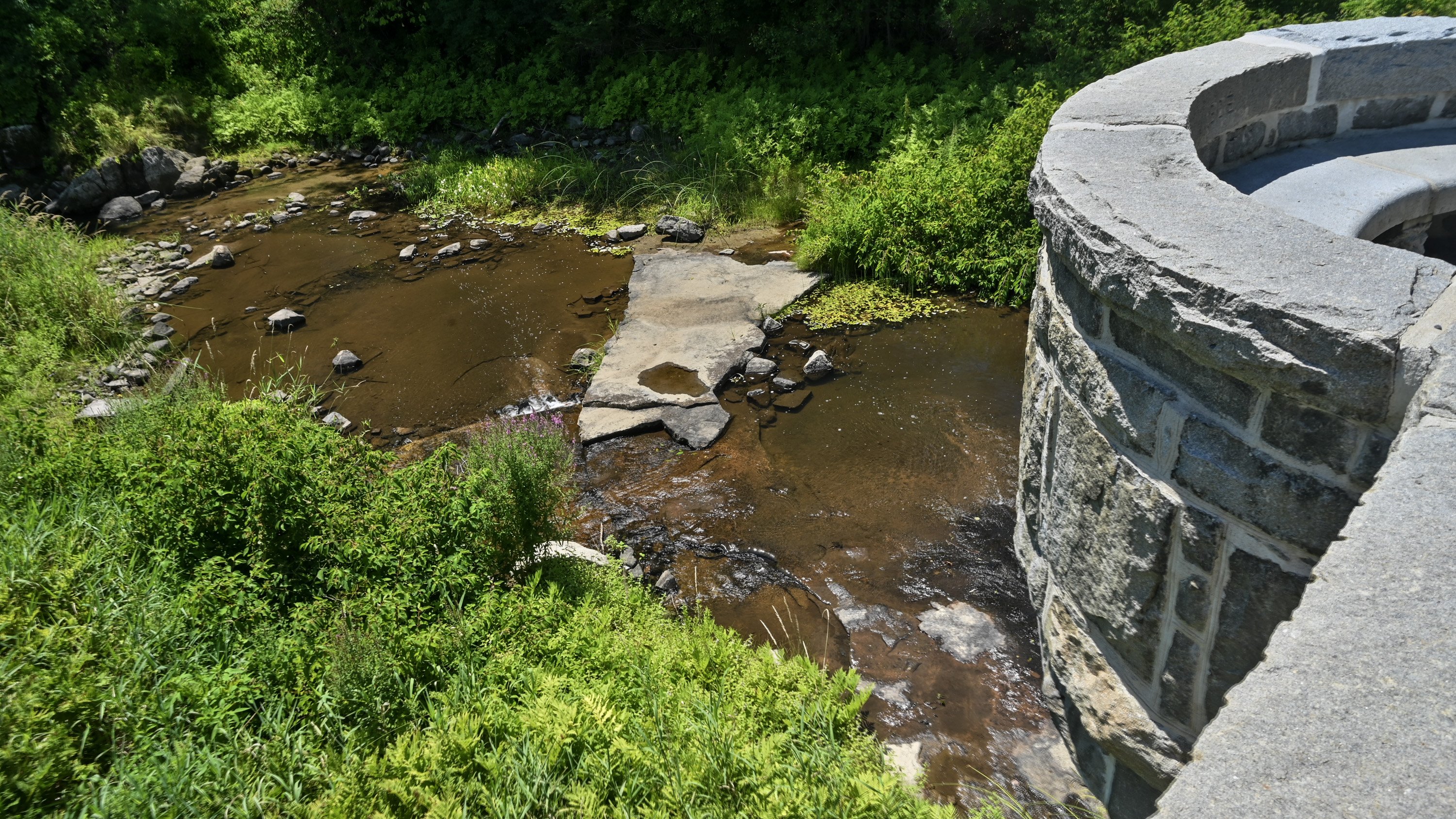 Rocks poke above the surface of Vaughan Brook on Tuesday in Hallowell. (Joe Phelan/Staff Photographer)
The task force is activated only when abnormally dry conditions become elevated across the state, based on the U.S. Drought Monitor, precipitation deficits, streamflow and groundwater levels, and reported impacts such as dry wells.
Styslinger said the task force is currently only in a monitoring state, and has not been activated, despite parts of the state still being in drought conditions.
The task force last met in December of 2025, and Styslinger said they expected to start monthly meetings in the spring, based on drought conditions over the winter. However, he said a better-than-expected rainfall season and improvements in drought classifications across Maine prompted them to decide not to reconvene the task force.
But Styslinger noted that could change as “this most recent dry spell has been on the radar of our core scientific partners, and we will continue to assess the trends to determine if and when a full task force meeting is warranted.”
 Dry brown grass is seen Tuesday at Capitol Park in Augusta. (Joe Phelan/Staff Photographer)
Cobbossee Watershed District officials, who regularly monitor water levels in its watershed, said in a July 28 report all its lakes are below “full pond” levels. They noted that’s not unusual for this time of year, but said the rate of water level decline was increasing. Variations within the watershed ranged from 11 inches below full pond levels on Narrows Ponds, where there is no dam to control the level, to 2 inches below full pond on Pleasant Pond, which is dam controlled.
The report noted “rain would be welcome” as June precipitation at the district office in Winthrop measured 3.05 inches, 1 inch below average and, as of July 28, July precipitation of 1.82 inches was also below average, and only at 47% of the normal monthly July average.
Editor’s note: This story was updated to correct the spelling of Paul Styslinger’s name.
| # | Наименование новости | Тональность | Информативность | Дата публикации |
|---|---|---|---|---|
| 1 | Maine’s aging water systems face a growing funding gap | Opinion | 0 | 35.62 | 21-07-2026 |
| 2 | Drought conditions worsening again in Maine | 0 | 39.33 | 30-07-2026 |
| 3 | Slow-moving system to bring multiple rainy days to Maine | 0 | 36.77 | 27-07-2026 |
| 4 | Maine farmers want Hannaford to buy more local produce. What’s the holdup? | 0 | 34.37 | 06-08-2026 |
| 5 | Reducing road salt could improve water quality and reduce rust. But what about slip-and-falls? | 0 | 38.96 | 10-04-2026 |
| 6 | This Portland man is growing grapes in his backyard – and dreaming big | 0 | 35.46 | 11-08-2026 |
| 7 | Maine farm nonprofit raising funds and food to feed the hungry | 0 | 33.87 | 28-07-2026 |
| 8 | Data centers vs. communities: The fight for water, land, and power intensifies | 0 | 16.45 | 15-08-2026 |
| 9 | Exploring the Orange River Water Trail | Column | 0 | 39.25 | 11-08-2026 |
| 10 | Maine Democrats largely stand by Graham Platner amid D.C. worries | 0 | 35.91 | 06-06-2026 |