Просмотр новости
Найдите то, что Вас интересует
 Спутники
 РН
РН SpaceX
 Роскосмос
 NASA
NASA
СпутникиРНSpaceXРоскосмосNASAWe are proud to release an interactive visualization of thousands of research papers using or citing Common Crawl data.
Thousands of research papers mention, use, or cite Common Crawl data, making it difficult to get a meaningful overview from traditional academic search engines like Google Scholar. To make exploration easier, we built an interactive visualization, available as a space on Hugging Face.
The visualization is implemented as a map-like web application in which 10,000+ research papers are displayed as markers on a map interface. Users can explore the papers visually by dragging and zooming. A search bar allows the user to find papers by their titles.
The positions of the papers on the map are defined by their semantic similarity. Specifically, we use SciNCL paper embeddings based on paper titles and abstracts in combination with UMAP dimensionality reduction. The different paper topics are visualized with different colors. For topic detection we use LDA in combination with Anthropic’s Claude to come up with human readable topics.
Clusters of Research PapersThe visualization provides a clear overview of the research areas directly or indirectly using Common Crawl data. Some topic clusters dominate, but many others are clearly visible too. A few examples are listed below:
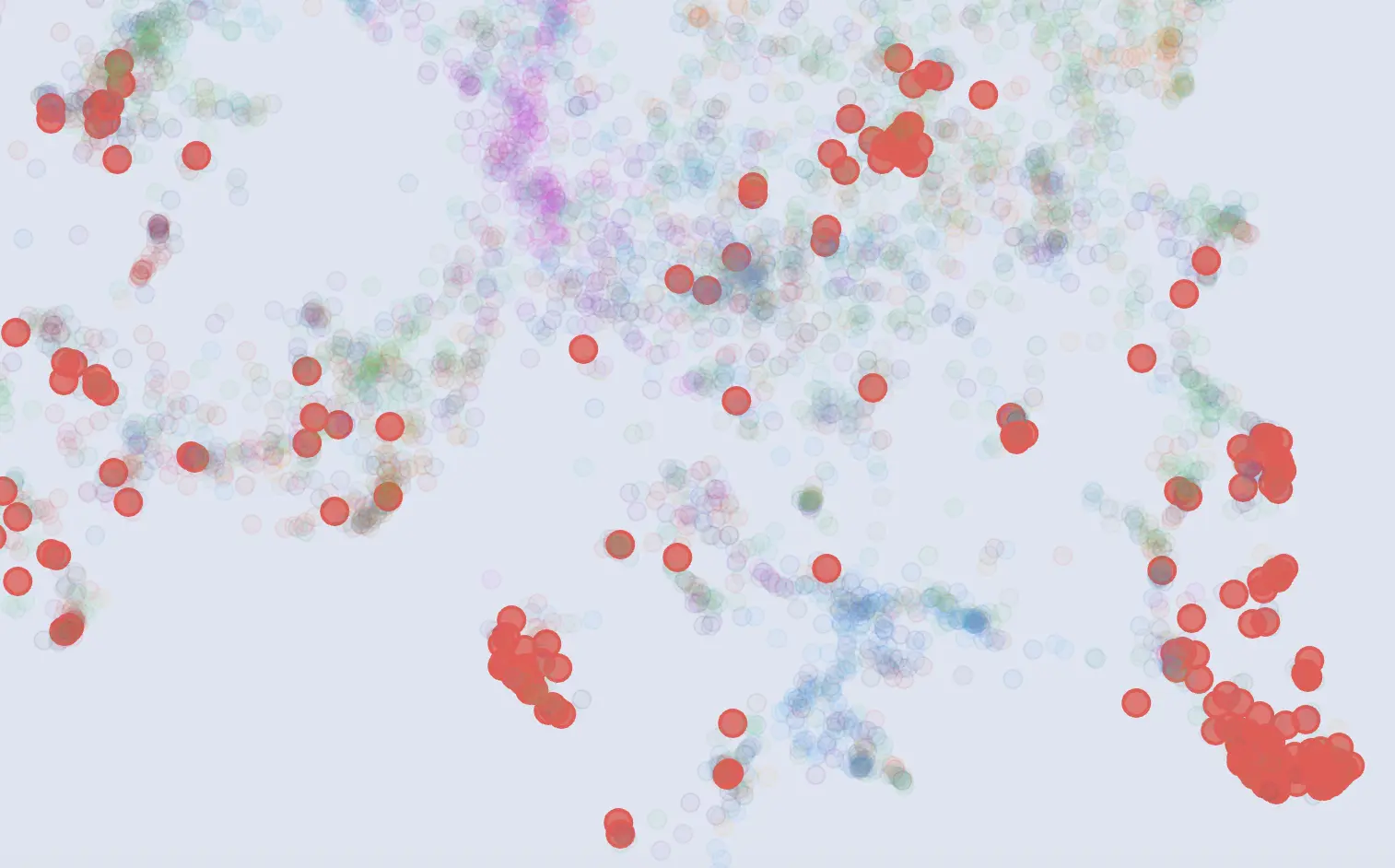
Security & Attack DetectionThe topic of security and attack detection appears in several areas and clusters in the visualization (displayed in red). Below are a few examples of papers from this topic:
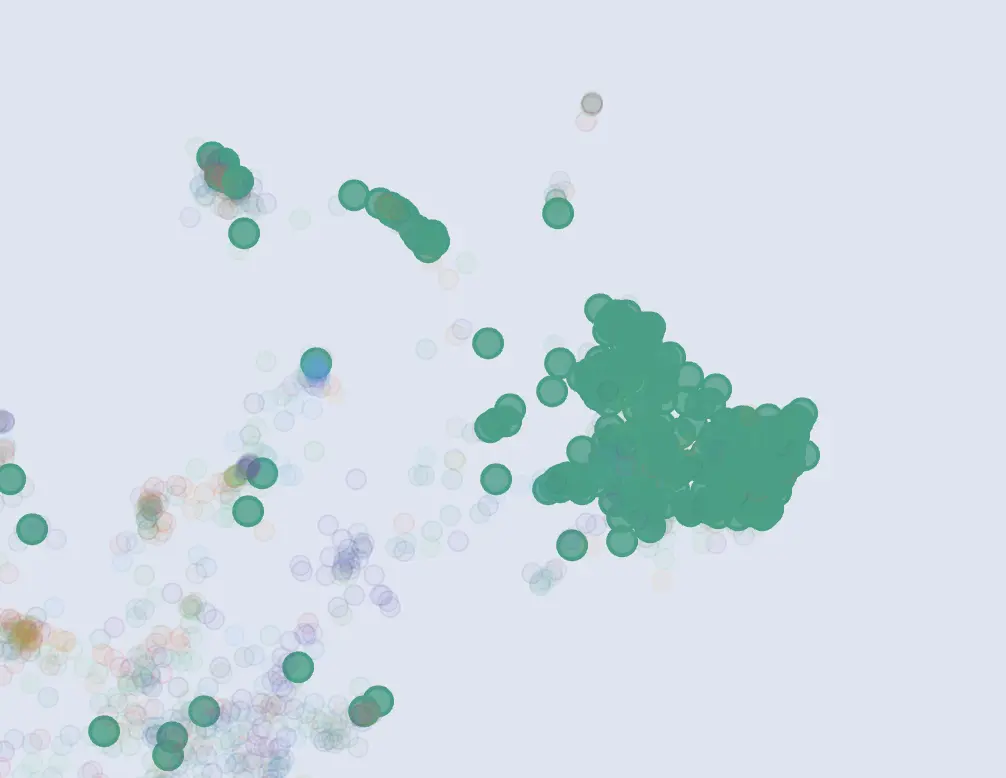
One isolated topic cluster in the top-right corner is about machine translation research and related topics (displayed in green). The cluster contains papers like:
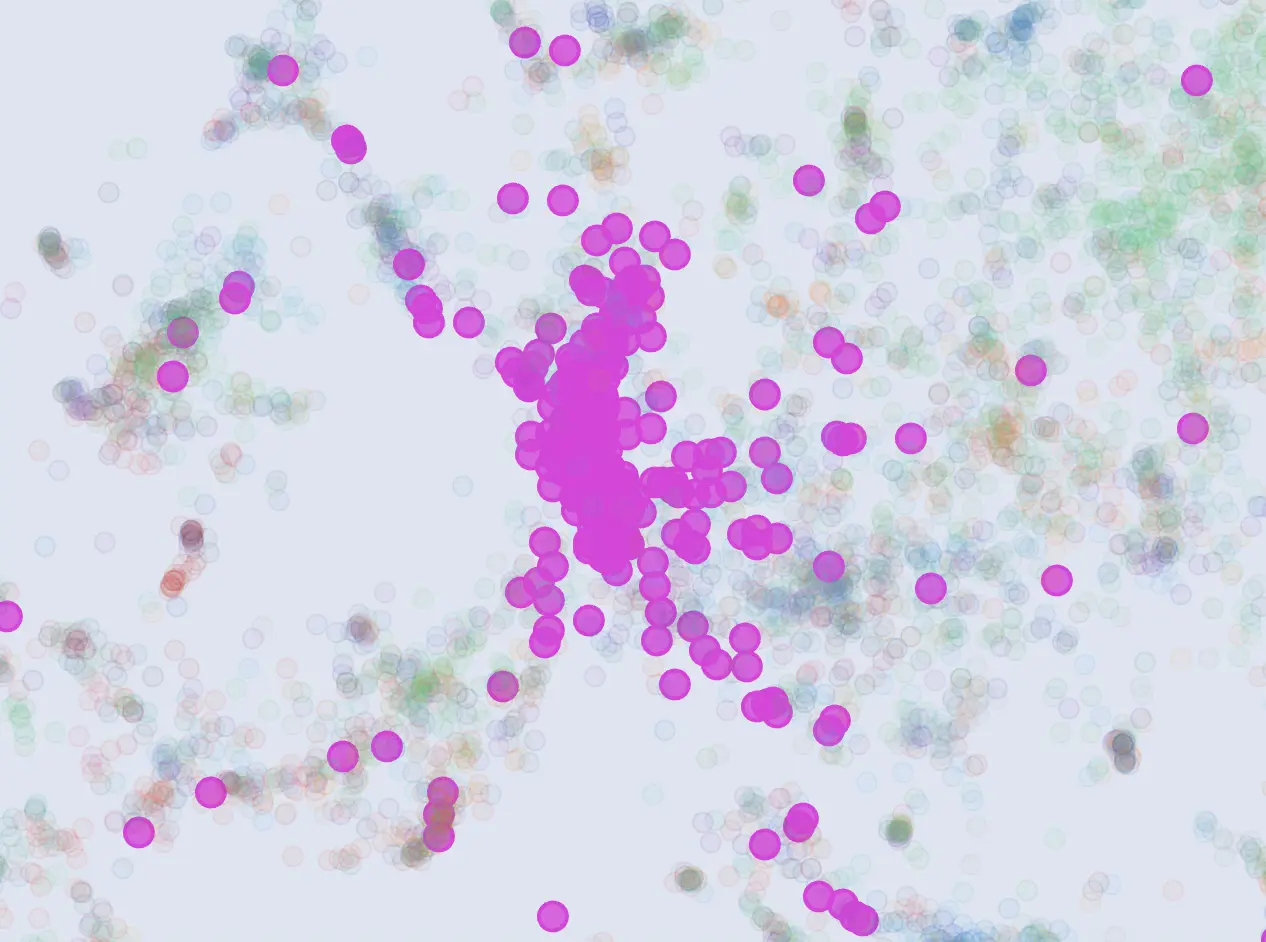
At the very center of the map, there is a cluster about ethics and governance. The cluster contains papers such as Multidimensional tie strength and economic development (Aiello et al., 2022).
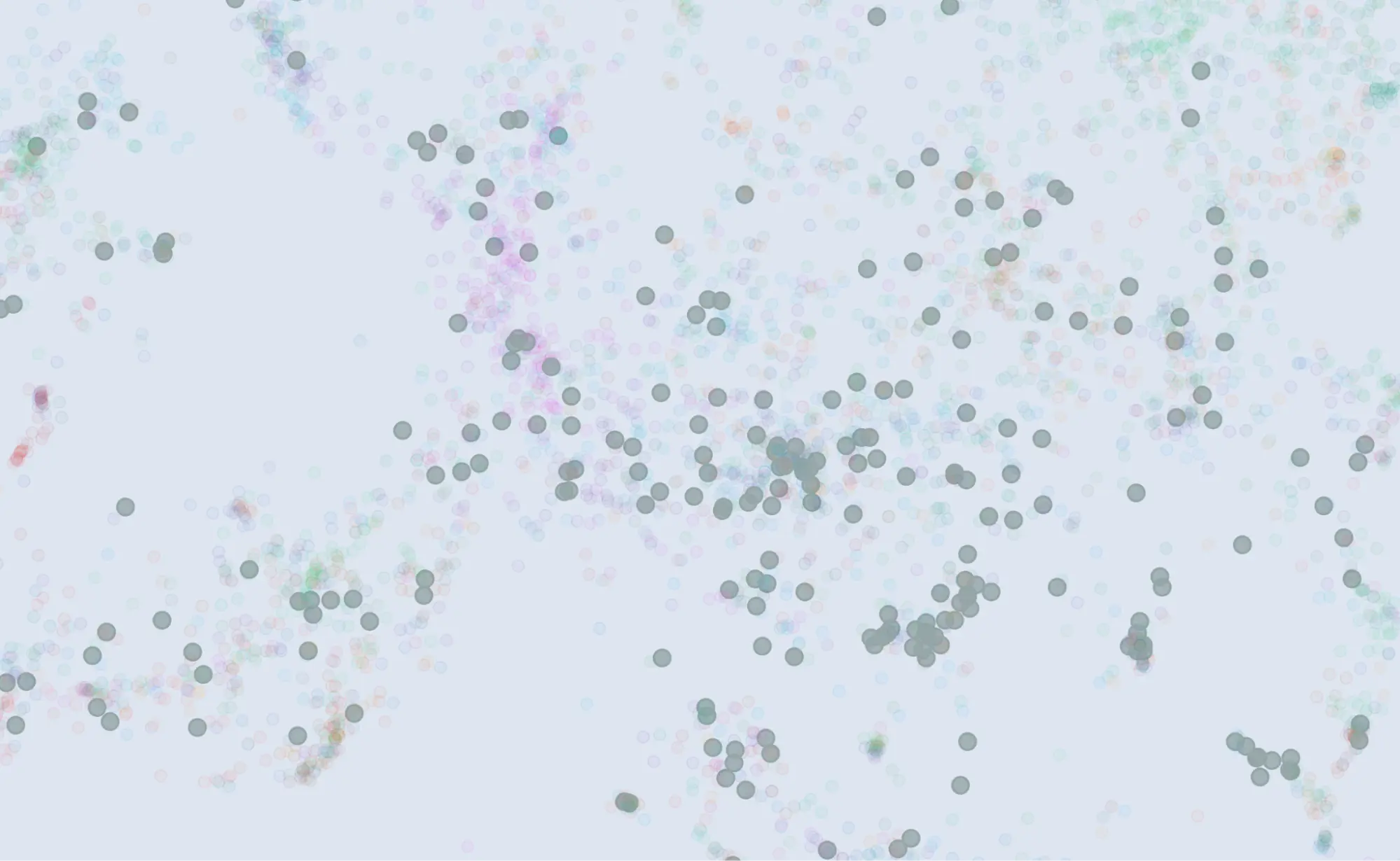
All research papers that cannot be assigned to a specific topic cluster are highlighted as “Other” (grey color). For example, Tracking and Identifying International Propaganda and Influence Networks Online (Hanley, 2025) or Determining How Citations Are Used in Citation Contexts (Färber and Sampath, 2019) are part of this cluster.
There are many more interesting research papers hidden here. Please feel free to go and explore the interactive visualization on your own.
| # | Наименование новости | Тональность | Информативность | Дата публикации |
|---|---|---|---|---|
| 1 | Announcing the First Stable Release of CC-Downloader | 0 | 12.78 | 10-08-2026 |
| 2 | You can now build directly on Common Crawl from the browser | 0 | 6.69 | 06-05-2026 |
| 3 | Measuring Crawled Coverage of a Website in Common Crawl | 0 | 7.2 | 20-07-2026 |
| 4 | CommonLID: Re-evaluating State-of-the-Art Language Identification Performance on Web Data | 0 | 14.97 | 10-02-2026 |
| 5 | Announcing the Whirlwind Tour of Common Crawl's Datasets Using Java | 0 | 10.93 | 26-02-2026 |
| 6 | Common Crawl Joins Project Tapestry | 0 | 7.23 | 27-07-2026 |
| 7 | April 2026 Crawl Archive Now Available in a Hugging Face Storage Bucket | 0 | 7.81 | 20-05-2026 |
| 8 | Announcing a Change to Common Crawl Dataset Size Reporting | 0 | 8.33 | 01-04-2026 |
| 9 | django-crawl - An in-process site crawler using Django’s test client | 0 | 28.18 | 28-07-2026 |
| 10 | From single pull requests to full software packages: Detecting malicious code at scale | 0 | 8.8 | 02-06-2026 |