Просмотр новости
Найдите то, что Вас интересует
 Спутники
 РН
РН SpaceX
 Роскосмос
 NASA
NASA
СпутникиРНSpaceXРоскосмосNASAFrom startup culture to sovereign capability Advanced artificial intelligence is no longer just a software market in which startups compete to build better tools. It is becoming a strategic infrastructure of state power, comparable to energy grids, telecommunications, satellites, financial networks, defence supply chains and cyber capabilities. The actors that control large models, data centres, ... Read more
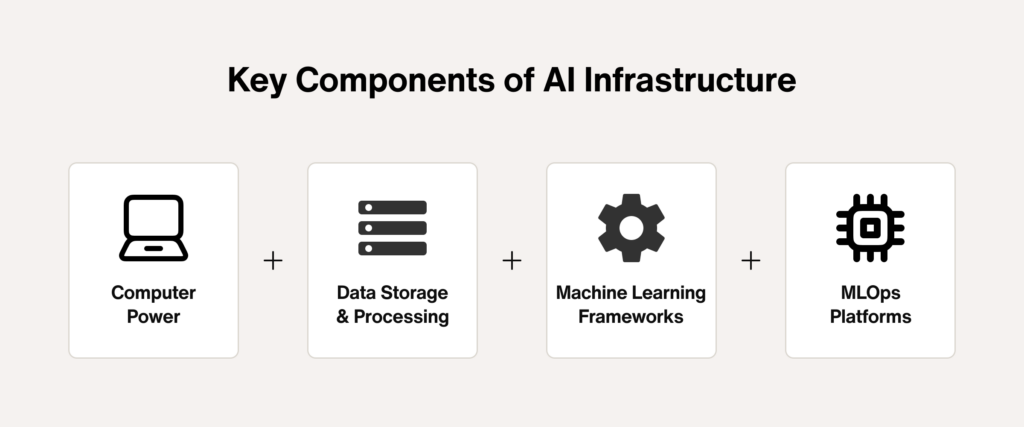
Advanced artificial intelligence is no longer just a software market in which startups compete to build better tools. It is becoming a strategic infrastructure of state power, comparable to energy grids, telecommunications, satellites, financial networks, defence supply chains and cyber capabilities. The actors that control large models, data centres, chips, datasets, security tooling, and deployment channels are not merely competing for customers. They are competing for influence over the operating systems of economies and states.
This is the deeper shift behind the current fascination with “recursive self-improvement”. Frontier AI labs still present themselves as research-driven innovation companies. Yet their real position increasingly resembles that of strategic contractors in a new political economy of compute, security and national advantage. They work with defence departments, intelligence agencies, cloud monopolies, cybersecurity institutions and critical infrastructure operators. Governments, in turn, no longer view AI only as a productivity tool. They see it as a capability that may shape military readiness, economic competitiveness, cyber resilience, surveillance capacity and geopolitical leverage.
This does not mean that AI is inherently authoritarian. It means that when AI is developed inside closed corporate systems, financed by extreme concentrations of capital, trained on opaque data, deployed through proprietary clouds and integrated into national security architectures, it cannot be treated as a neutral scientific instrument. It becomes a technology of sovereignty. The political question is then unavoidable: sovereignty for whom, under whose control, and with what democratic accountability?
The mythology of self-improving intelligenceThe idea of recursive self-improvement has enormous narrative power. It suggests that an AI system may soon design better versions of itself, accelerating technological progress beyond normal human limits. As a technical hypothesis, this deserves careful study. As a political narrative, it does something else. It turns AI into an almost inevitable historical force, one that societies are expected to adapt to rather than govern.
That is where the danger lies. When an AI company says that its model accelerates AI development, it is pointing to a real trend. AI tools can write code, find bugs, assist researchers, summarize literature, generate experiments and help engineers move faster. But that is not yet autonomous science. It is not independent judgment. It is not democratic goal selection. It is acceleration within human, corporate and state decision chains.
The mythology begins when this acceleration is converted into a claim for political exceptionalism. Because something allegedly unprecedented is coming, companies ask for more capital, more compute, more data access, closer state partnerships, faster deployment and weaker public scrutiny. The language of existential risk and the language of national supremacy then reinforce each other. One says: only we understand the danger. The other says: we must win before our rivals do. The result is a concentration of power in a small number of firms and state agencies.
Public science or private arsenal?The crucial issue is not whether states will use AI. They will. The issue is under what terms. Will AI become a publicly governed infrastructure, built on open standards, auditable systems, open scientific evaluation, public procurement rules and democratic oversight? Or will it become a set of proprietary black boxes embedded in defence, intelligence, policing, welfare, taxation and public administration?
The second path is the more dangerous one. It creates a new form of digital mercantilism. The state does not merely buy innovation. It protects selected companies as national champions. The companies do not merely sell products. They become part of the state’s strategic capacity. Public money, public legitimacy and public power are used to increase private valuations, while the social return remains unclear.
This is not good for science. Science requires reproducibility, access to methods, contestable claims, shared benchmarks, independent evaluation, and plural research ecosystems. It cannot flourish when the most important models are closed, the training data is opaque, the evaluation is selective, and the strongest incentives are linked to market dominance or classified deployment. Nor is this good for democracy. Democracy requires accountability, separation of powers, public reasoning, rights, contestation, and institutional checks. A closed AI model used in cybersecurity, military planning, public services, or surveillance without meaningful oversight is technological power without sufficient political responsibility.
The public-interest alternativeThe answer is not technological rejection. AI can support medicine, climate adaptation, public administration, accessibility, translation, education, scientific discovery and small business productivity. But to serve those goals, it must be developed as shared infrastructure rather than as a private arsenal.
A progressive European strategy should rest on four principles. First, public money must create public code, public data and public knowledge. Second, critical AI systems used by the public sector should rely on open standards, auditable architectures, documented models and sovereign or locally controlled infrastructure. Third, European compute initiatives, including AI Factories, should not become subsidized fuel for private startups alone. They should serve universities, public research, SMEs, municipalities, hospitals and social needs. Fourth, public AI must be governed through algorithm registers, model cards, dataset documentation, risk assessments, human responsibility and sunset clauses.
Open models are not a magic solution. Some open-weight systems can also be misused. But openness changes the balance of power. It allows universities, civil society, public authorities, independent auditors, and smaller companies to examine, adapt and improve systems. It prevents a future in which the only meaningful AI capacity belongs to a handful of firms with privileged access to states. It enables public digital capacity rather than permanent dependency.
The mythology of self-improving intelligence should not become the new doctrine used to justify the privatization of public power. The real test of AI progress will not be which company can best persuade investors and governments that it is closest to a technological miracle. The real test will be whether societies can turn AI into a democratic, open, sustainable, and accountable infrastructure. The future of AI should not be a race toward global hegemony. It should be a struggle to build public intelligence in the service of public purpose.
Article source: glossapi.gr| # | Наименование новости | Тональность | Информативность | Дата публикации |
|---|---|---|---|---|
| 1 | The AI Infrastructure Race: Why Big Tech Is Spending Hundreds of Billions? | 0 | 7.2 | 28-06-2026 |
| 2 | Local Open AI Models from rented intelligence to sovereign infrastructure | 0 | 6.62 | 28-06-2026 |
| 3 | Local Open AI Models: Public Infrastructure Instead of Digital Dependency | 0 | 5.42 | 30-05-2026 |
| 4 | Data Fabrics: The Infrastructure for Useful and Trustworthy Local AI | 0 | 7.47 | 01-06-2026 |
| 5 | Artificial Intelligence Must Not Become a New Cold War | 0 | 9.11 | 29-06-2026 |
| 6 | From Prompt Engineering to Collective Intelligence | 0 | 8.71 | 19-07-2026 |
| 7 | America’s AI Strategy: Infrastructure, Regulation, and Global Competition | 0 | 16.84 | 25-01-2026 |
| 8 | The AI Revolution Mirrors the Green Transition | 0 | 5.92 | 09-06-2026 |
| 9 | Africa: Africa's AI Moment - How the Continent Can Quantum Leap into the Future--Today | 0 | 5.67 | 25-07-2026 |
| 10 | Why AI Infrastructure Is The Key To Enterprise AI Success | 0 | 6.21 | 21-04-2026 |