Просмотр новости
Найдите то, что Вас интересует
 Спутники
 РН
РН SpaceX
 Роскосмос
 NASA
NASA
СпутникиРНSpaceXРоскосмосNASAFrom open space, a Western way of life to modern-day agriculture and events such as Glenwood Springs’ Strawberry Days and Steamboat Springs’ Winter Carnival, the impacts of Colorado’s early homesteaders and ranchers exist across today’s...
From open space, a Western way of life to modern-day agriculture and events such as Glenwood Springs’ Strawberry Days and Steamboat Springs’ Winter Carnival, the impacts of Colorado’s early homesteaders and ranchers exist across today’s mountain communities.
“We haven’t always been a resort community,” said Kathy Heicher, president of the Eagle County Historical Society. “We were a community of really hardworking and homesteading ranchers who wanted to be here because they were ambitious, they loved doing that and they loved the country. … They set the stage for the community that we are now.”
The early homesteaders: everyone’s gotta eatAgriculture has been around as long as humans.
In Colorado, the Ancestral Puebloan peoples in Mesa Verde developed technologies over a millennium ago to harness rainfall in a dry climate and farm corn, squash, melons and beans, said Rachael Storm, a curator at History Colorado and author of Colorado Department of Agriculture’s new book on the state’s agricultural legacy, “Setting Colorado’s Table.”
The Ute or Nuchu people were also original residents of Colorado, a nomadic tribe whose creation starts in the Rocky Mountains. As miners, settlers and explorers moved into their territories in the 1860s, the U.S. government began to restrict their land up to 1881, when many of the Utes were removed from across Colorado and sent to reservations in southwest Colorado and western Utah.
However, it’s during the period immediately preceding and following Colorado’s statehood in 1876 that some of the Western Slope’s first agricultural settlers arrive, drawn by new opportunities in land and industry.
“You don’t become a state in the United States if you don’t have enough money to support yourself,” Storm said. “And so when we applied for statehood multiple times and didn’t get it until the fifth time, it was one of those things where by the time we became a state in 1876, we had an incredibly strong mining and agricultural industries. Both were really just powerhouses by that point.”
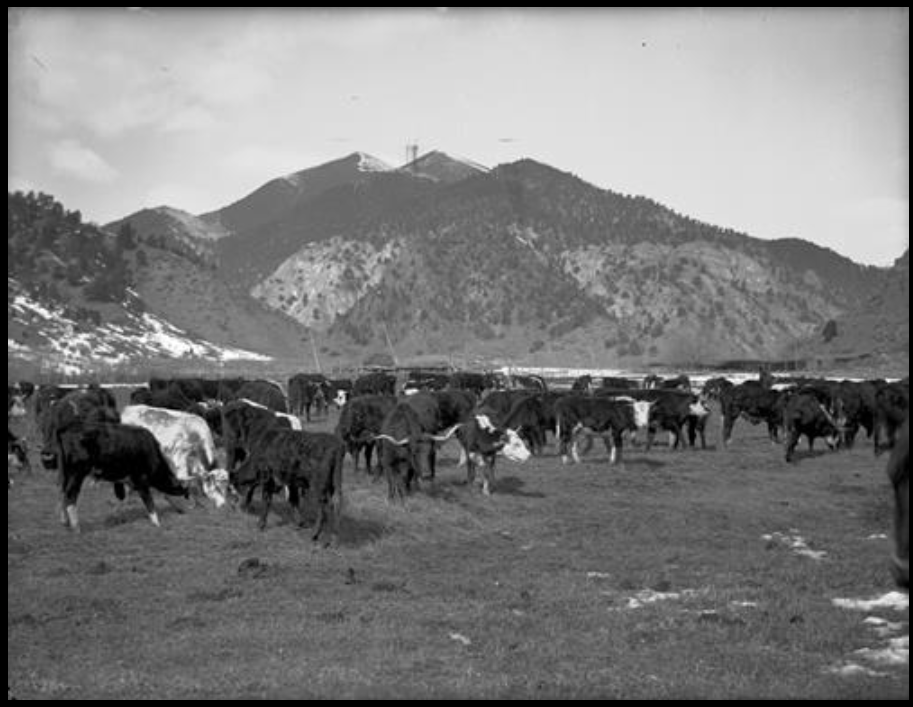
In 1859, “agriculture immediately follows the discovery of gold,” Storm said, with settlers seeing an opportunity to build an industry feeding miners. “That same year, the first cattle drive happened up from Texas.”
The 1909 Homestead Act allowed homesteaders to claim 320 acres, double the amount of the law’s 1862 predecessor, and led to additional settlements across the state. However, many had begun claiming land through preemption, Storm said.
All four sets of Tony Vagneur’s great-grandparents came to the Roaring Fork Valley in the 1880s, seeing the prospect of ranching in the Aspen area as mining boomed. This included his mother’s family, the Stapletons, who came to the U.S. from Ireland and ended up in Leadville.
“My great-granddad was working in a mine, and somebody said that there might be some mining near Aspen, and he thought, ‘You know what? If they’re going to mine over there, they’re going to need some farmers,’ Vagneur said. “So he picked up, he came over and he homesteaded what is the airport now.”
Similar stories befell two of Vagneur’s other great-grandparents. On his maternal side, great-grandfather Stirling Sloss co-owned a dairy ranch in Ashcroft with his brother during the silver boom before homesteading land that became Sopris Mountain Ranch, Vagneur said. Sloss later bought the Cap-K Ranch along the Fryingpan River in 1902. On his paternal side, great-grandfather Jeremie Vagneur emigrated from northern Italy to the Woody Creek area around 1888 at the urging of his wife’s cousin, Frederick Clavel.
“The miners had to eat while they were here and so did the animals,” Vagneur said. “It was kind of a farmer’s paradise, really. They could sell everything they could grow, and so anything you could grow in a garden, they were growing around here: radishes, carrots, onions, potatoes, hay, grain, pigs, cattle, chickens and eggs.”
As the mining industry waned, some families left, thinking the agricultural market would leave town with the miners; however, many stuck around.
“By then, there were a lot of the people from northern Italy here, and there are people like my great-granddad, who didn’t know anything but working hard,” Vagneur said. “So they started buying up these homesteads as people were leaving the valley. They were getting a lot of land really cheap. And the thing that saved it was the fact that the railroad was here.”
The railroads throughout Colorado’s mountains would allow for ranching to develop as an industry, giving homesteaders a way to ship their goods elsewhere.
Many of the early homesteaders in the mountain communities tried their hand at mining before transitioning to ranching.
“Mining is so volatile,” Heicher said. “People got exhausted by it, and they started looking around and going, ‘Hey, I think I could grow something around here,’ and began homesteading.”
Eagle County was incorporated in 1883 as mining took off in the region. Eventually, families spilled into the Eagle River Valley from the mining communities of Red Cliff, Gilman, Fulford and Leadville to chase a new opportunity, Heicher said.
“By the turn of that century, agriculture revenues in Eagle County were exceeding mining revenues,” Heicher said.
Grand County Commissioner and fifth-generation rancher Merrit Linke does not know exactly what led his great-grandfather, Emile, to homestead on Eight Mile Creek in Coulter in 1883. He does know, however, that his German-born ancestor made his way to Denver as a carpenter for railroad car manufacturer Pullman Company, where “he got a little caught up in the silver boom and exploration,” Linke said.
This led Emile to Silverton, where he and two partners “hit a pretty good vein of silver,” but soon after his partners were killed, one in a cave collapse and the other in an avalanche, Linke said. Without the money to develop the vein and seeing the fate of his partners, Emile sold the claim and, after some periods in Leadville as well, moved back to Denver, where he met Linke’s great-grandmother, Sophie.
“Apparently, my great-grandpa liked to party and drink and dance and raise hell and all that. Sophie calmed him down,” Linke said. “They fell in love and got married.”
Newly settled down — and perhaps with some persuasion from a friend — took the Linkes northwest in a wagon with hired cowboys to bring cattle over the newly constructed Berthoud Pass. They would eventually have 11 children, nine of whom reached adulthood, Linke said.
“When mining ran its course, many stayed and found homestead land or bought up homestead claims from those who went back,” said Katie Adams, curator at the Steamboat Springs History Museum. “They’ve stayed because of the community; the area’s beauty makes it hard to leave — and their deep roots.”
Building community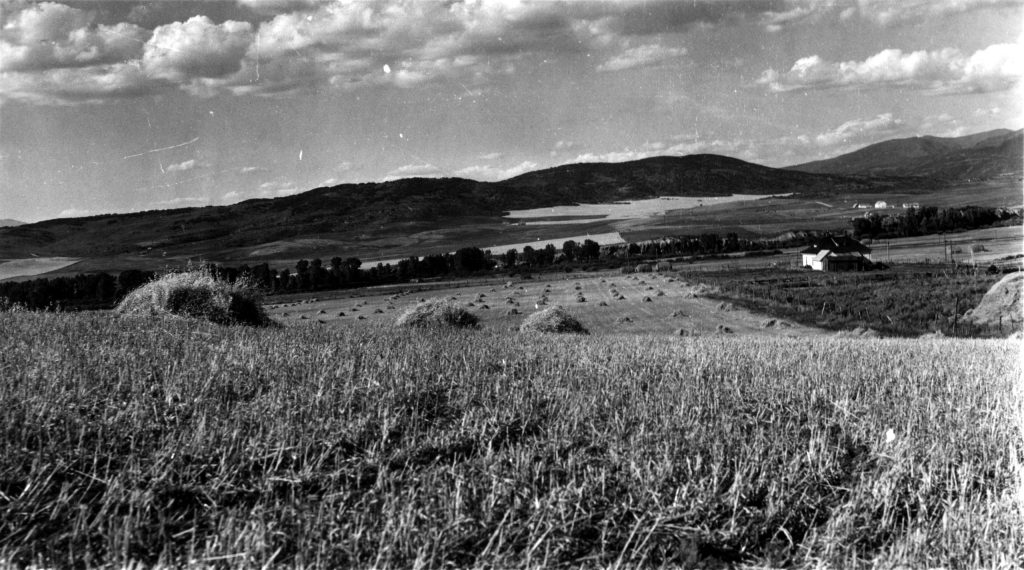
While many mining towns are now ghost towns — Ashcroft, Chihuahua, Gilman, Mount Harris — today’s northwest Colorado towns and cities were built around some of the region’s first homesteaders.
“For mining, it was mostly single men coming out, or men who were married but left their families behind,” Storm said. “Farmers and ranchers were coming with their whole family — grandparents, siblings — and that really propelled growth in the state.”
In 1907, Austrian immigrant Peter Stanko Sr. purchased 160 acres along the Yampa River near Steamboat Springs from Logan Crawford, the son of the town’s founder. He would ultimately amass over 750 acres by 1930, mainly growing grain, hay and raising cattle.
“He raised his family here in Steamboat,” said Jim Stanko, Peter’s grandson. “There are very few families that can say this, but we’ve had four generations graduate from Steamboat Springs High School.”
Every generation of the family — starting with Peter Stanko Sr., who co-founded the Rural Electric Administration to build electric lines through the valley, created a farm co-operative to build a grain elevator in Steamboat Springs and more — has been involved in many levels of community affairs, including Jim and his wife Jo‘s son, Patrick.
“We didn’t have the boom towns of gold and silver mining; we had the coal miners here for generations, but really what developed this area was agriculture,” said Patrick Stanko. “That is really what allowed Steamboat Springs, as a resort and a town, to grow.”
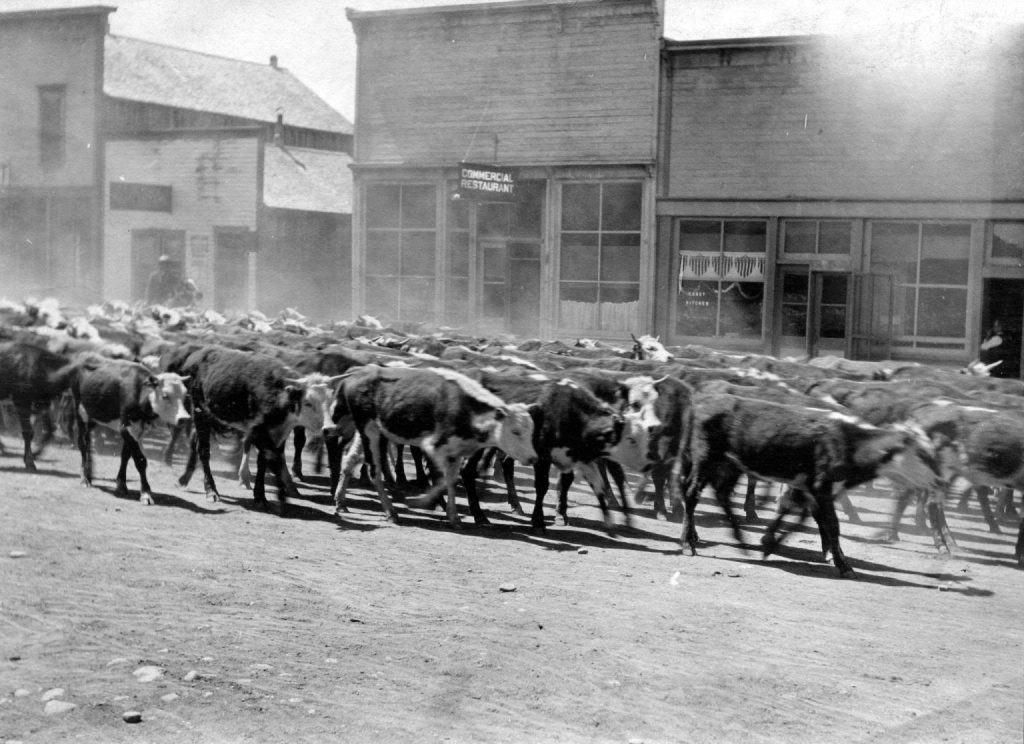
In 1908, the railroad arrived and the city’s depot became one of the largest shipping points for cattle in the West, Adams claimed.
“Homesteaders joined their efforts to bring services to towns that everyone could benefit from,” Adams said.
At this time, Steamboat Springs became the supply center for the valley ranches, with businesses like F.M. Light and J.W. Hugus & Company taking up in town, said Jim Stanko. However, it was the schools that were the most critical for building community, he said.
“I think we ended up with 64 different country schools,” he said. “They formed all these little communities around these country schools.”
For early mountain communities, schools were not only for education, but for meetings, dinners, barn dances, church, voting and more. Vagneur said it is where many early settlers would meet their spouses in the Aspen area.
“Everyone’s survival and success depended on one another in a lot of ways; for help when sick, injured or having babies, for harvesting and branding,” Adams said.
Sometimes getting around to each other required skis, Patrick Stanko said, recalling stories about how George Cheek would “have to ski over from his ranch to our ranch to pick up water to take it over to the schoolhouse.”
“Skiing was a way of living and getting around,” Patrick said. “That’s how they had to survive; it wasn’t just a fun activity.”
Many of the region’s long-held events have ties back to some of the early gatherings. The Steamboat Springs Winter Carnival started in 1914, not just for ski jumps and fun, but as a way for the community to check in on one another and stock up on supplies for the rest of winter, said Jim Stanko.
“That was started to bring ranchers that had been stuck in snow on their ranches into town,” he said.
In Glenwood Springs, where agriculture grew to serve Roaring Fork Valley miners, the Strawberry Festival started in 1898 as a way to celebrate the area’s abundant agricultural production, said Peg Vidakovich, an archivist at the Frontier Museum in Glenwood Springs.
“Strawberry Days grew out of the local people wanting to let folks in the state know just what they were doing over here in terms of the production of crops and the beef and cattle industries,” Vidakovich said.
Finding a way to stay
Throughout history, ranchers’ creativity and ability to diversify and figure out what works have not only led their work to evolve and adapt, but their communities as well. Ranching can be a bit of a gamble, Heicher said, adding that most producers tend to be brave and industrious.
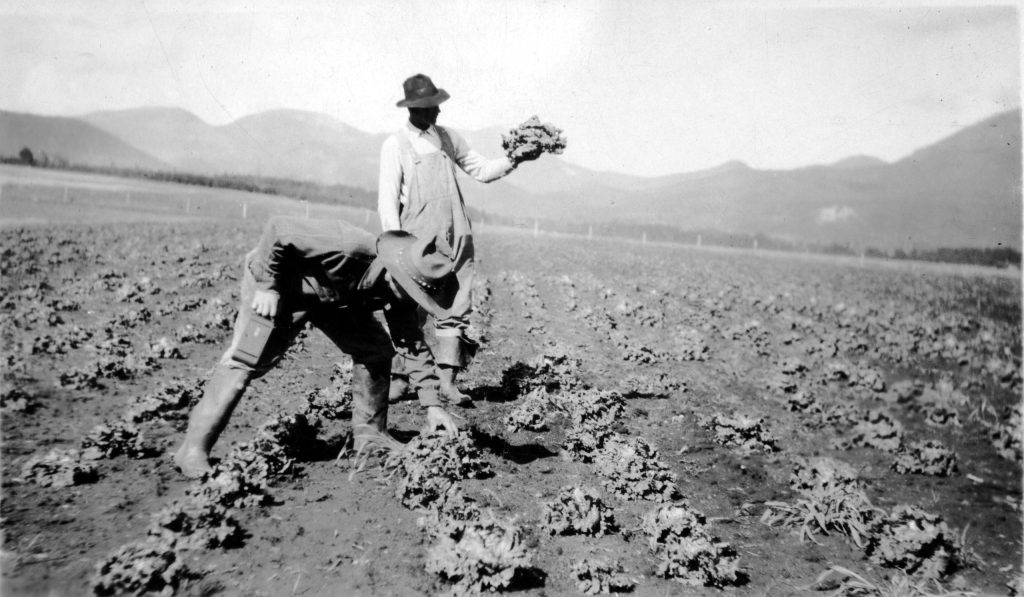
For many, finding out what worked included a lot of trial and error. And one thing that worked for a period in many mountain towns was lettuce or “green gold.”
Minturn declared itself the lettuce capital of the U.S., with it exploding as the county’s large cash crop in the 1930s. Luke and Margaret Smith’s ranch — now Keystone Ranch — leaned on lettuce farming in the 1940s to help revive Summit County’s economy as mining declined. At its peak in 1922, Yampa shipped more carloads of mountain iceberg lettuce than anywhere in the state, Adams said. Linke said that “Granby lettuce” was listed on a menu at New York’s Waldorf Astoria Hotel during a boom in lettuce production.
In many areas, like Grand County, the best use of the land for agriculture is now grazing, Linke added.
“It’s a really good country for grazing,” Linke said. “It’s a really good environment for that for the same reason that tourists like to come here. It’s nice and cool. There’s fresh air, cool water, and it’s a nice place to summer.”
Tim Ritschard, president of the Middle Park Stockgrowers Association, is the fifth generation of his family to ranch in Kremmling. His great-great-grandfather immigrated from Switzerland and homesteaded on Carter Mountain in the Muddy Creek Valley in 1887. Ritschard said they spent two or three winters living on the mountain before moving into the valley due to the hardships of the season.
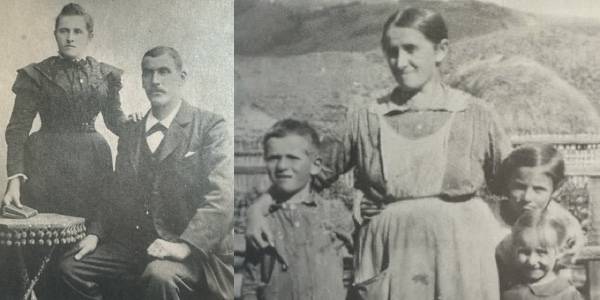
“It was just a rough life,” he said. “You’re living off the land. You’re using the resources around you. It’s new territory. It’s not something that you’re used to. They probably built 100 acres of ground. They built ditches up there to irrigate the ground to improve it.”
While ranching has certainly evolved with new technologies and practices over the generations, some things never change.
“In the sense of how we operate, we’re still stewards of the land. We’re still using the land in the same capacity that they did,” Ritschard said. “The cow trails are still the same. I almost guarantee it from the 1930s or ’40s, even in the early 1900s. I mean, it’s all the same country. It’s just adjusted to today’s times, and there’s really nothing wrong with that.”
All of which “they just kept passing it down and down and down,” Ritschard added.
This desire to make it work has been consistent across the history of Colorado’s mountain communities.
“As mining waned and [settlers] loved being here, they looked for other means of staying employed or living here,” said Sally Queen, board president and senior researcher at the Summit Historical Society.
Ben and Mabel Rice serve as an example of how it played out in Summit County, Queen said. Ben Rice met his wife, Mabel, in the now ghost town of Chihuahua, before applying for one of the county’s first homesteads in 1898, 6 miles from Dillon. In addition to farming, Rice would go on to become a county commissioner, start a hauling business and buy up more land.
“He continued to work hard. He raised hay. They had children,” Queen said. “The son, Earl, continues to buy up neighboring ranches until he builds up 958 acres that then becomes Summit County’s first subdivision, Summit Cove.”
In the Yampa Valley, Adams said that starting “around the 1950s, ranchers opened their lands to hunting, which developed into specialized guided trips” for everything from fishing, dude ranching and skiing to photography, movie and reality TV access.
Evolving with the land, industries and times is why these communities still exist today.
“People who want to live here find a way to be employed,” Queen said, adding that it’s true whether they are miners, ranchers, school teachers, business owners or hospitality workers. “It’s an environment that we want to live in, and while we can name mining towns that are gone now, what’s evolved to today is the towns that meet the modern-day desire to live here.”
Land and legacies preservedThe legacy of these agricultural families — whether they still ranch or not — helped pave the way for Colorado’s modern mountain communities.
While Vagneur is certain Aspen was bound to turn to skiing and recreation at some point — “You couldn’t miss with Aspen Mountain,” and the abundance of 14ers near town, he remarked — the value of the open space provided by the remaining ranches, in addition to the food that they produce, is “priceless.”
While much of Eagle County’s ranch land was sold to make way for developments — including Hanson Ranch, which paved the way for Vail Village, and the Nottinghams’ homestead in Avon, before they moved their ranch to Burns — many are now protected as open space or by conservation easements.
“Ranches are really a boon to land conservation,” Heicher said.
Agriculture, Ritschard said, has allowed for generations to take care of the land as stewards, ensuring it doesn’t get overburdened or overrun by invasive species or weeds, and ensuring open spaces exist for wildlife.
“We try to make it better for the next generation or for the next people coming in,” Ritschard said.
This open space also lends itself to the views that many visit Colorado’s Western Slope for. “People don’t necessarily want to come to Grand County to look at a bunch of other houses,” Linke said.
In Steamboat Springs, Jim Stanko said that the homesteaders built the “rural Western tradition that all the newcomers come to town wanting to be a part of.”
“The legacy that they left is a rural lifestyle and an independence of doing things and taking care of the land,” he said.
Both Jim and his son, Patrick Stanko left Steamboat Springs before returning to take over the family ranch. Keeping this legacy and community alive is important, they said.
“There’s a reason it’s called agriculture, right? It’s a culture,” Patrick said. “Family heritage is important, but it’s really about preserving the way of life, the ties to the land, and keeping what generations before you have done in working condition as best as you can.”
In years like this one, where Colorado is facing one of its worst droughts in history, as the fifth generation, Ritschard said the family’s legacy is part of what keeps him going.
“My mindset is my family’s made it through since 1895 to today, so I say ‘I don’t know why we can’t keep doing it today,'” he said, adding that hard work is built into his DNA.
Linke said that he and his wife stayed in agriculture because “it’s a good way to raise kids” and grandkids, of which they now have five.
“Hopefully, they will continue on — not that they have to go into ag. — but just that they learn the importance of a work ethic, learn that they’re accountable for things that they do or don’t do, and know that if they screw up, they have to fix it,” Linke said.