Просмотр новости
Найдите то, что Вас интересует
 Спутники
 РН
РН SpaceX
 Роскосмос
 NASA
NASA
СпутникиРНSpaceXРоскосмосNASA“It is a great honour to be selected as the leader of Arctic Ocean 2050,” says Renaud. “It is something of a dream to work in the Arctic Ocean with more than 500 researchers, advanced technologies and models, and innovative tools from both the natural and social sciences over the next decade.” Arctic Ocean 2050 […]
“It is a great honour to be selected as the leader of Arctic Ocean 2050,” says Renaud. “It is something of a dream to work in the Arctic Ocean with more than 500 researchers, advanced technologies and models, and innovative tools from both the natural and social sciences over the next decade.”
Arctic Ocean 2050 is one of Norway’s largest research initiatives, bringing together the Norwegian research community in a shared interdisciplinary program. Over the next decade, the program will generate both fundamental and applied knowledge. Its goal is to support updated principles for managing the new blue Arctic Ocean.
Renaud will commence the position on 1 October 2026.
Chair of the Arctic Ocean 2050 Board, Jørgen Berge, welcomes the appointment“Paul Renaud is a highly experienced and accomplished researcher with extensive Arctic experience,” says Berge.
According to Berge, Renaud has played an active role in developing the Arctic Ocean 2050 science plan and thus has a strong understanding of the program’s objectives and ambitions leading up to and throughout the upcoming International Polar Year (IPY).
“I look forward to working with Paul as program director in the years ahead. At the same time, I would like to extend my sincere thanks to interim director Bodil Bluhm. She has done an excellent job and laid a very strong foundation for the work Paul is now taking on,” Berge concludes.
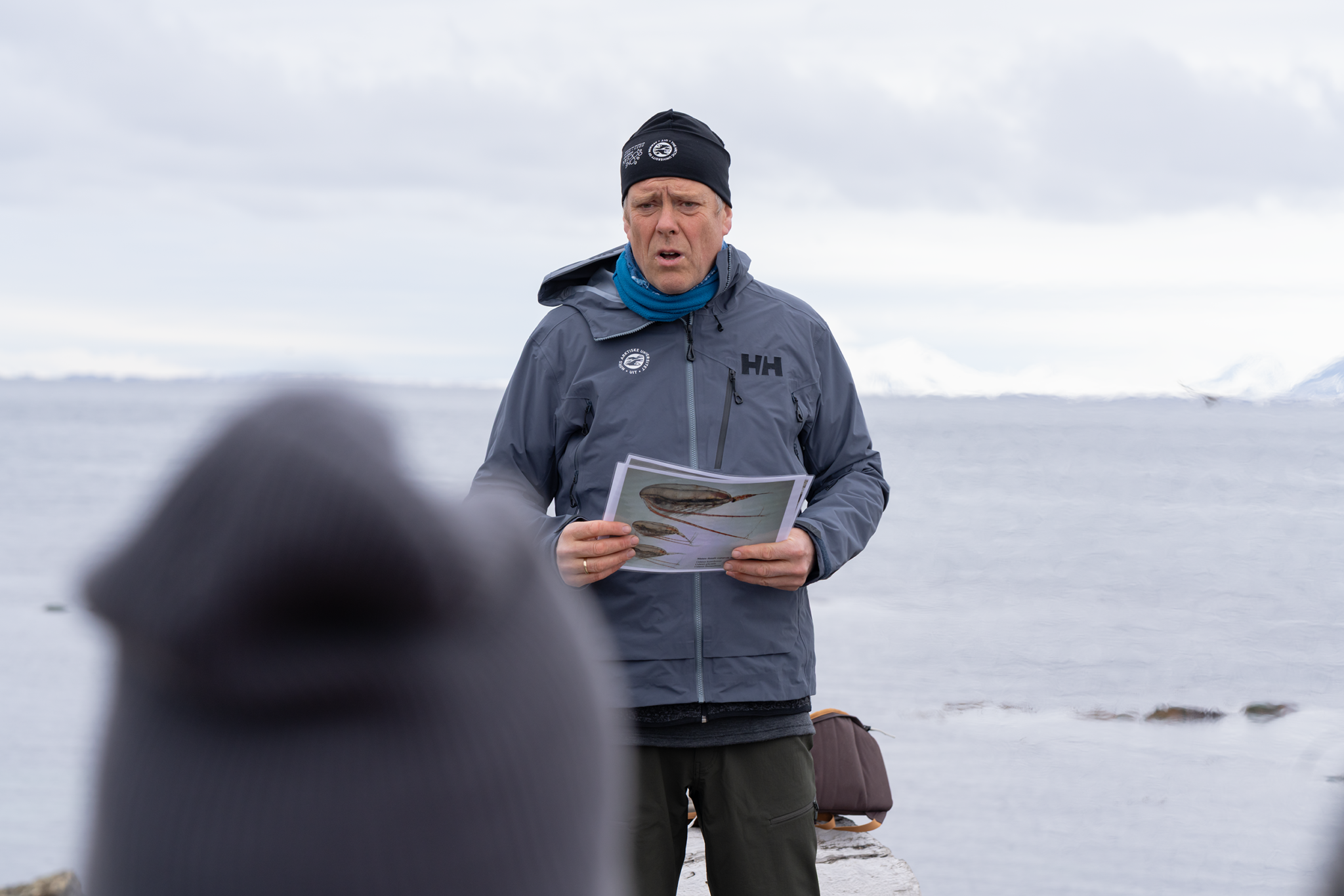 Board Chair Jørgen Berge is pleased with the appointment. Photo: Ingrid Ballari Nilssen
Renaud has extensive knowledge of a marine region that will be central to Norwegian and international research in the decades ahead. He has participated in several of Norway’s largest Arctic marine research initiatives, including The Nansen Legacy, and will now lead the largest of them all.
“Throughout my career, I have worked extensively on interdisciplinary scientific questions from academic, industrial, and management perspectives. I have sought to make research more visible and useful to a wide range of stakeholders. In Arctic Ocean 2050, we are fortunate to have many experts with the ambition and expertise to connect new knowledge with the needs of different users,” says Renaud.
The need for Arctic knowledge has never been greater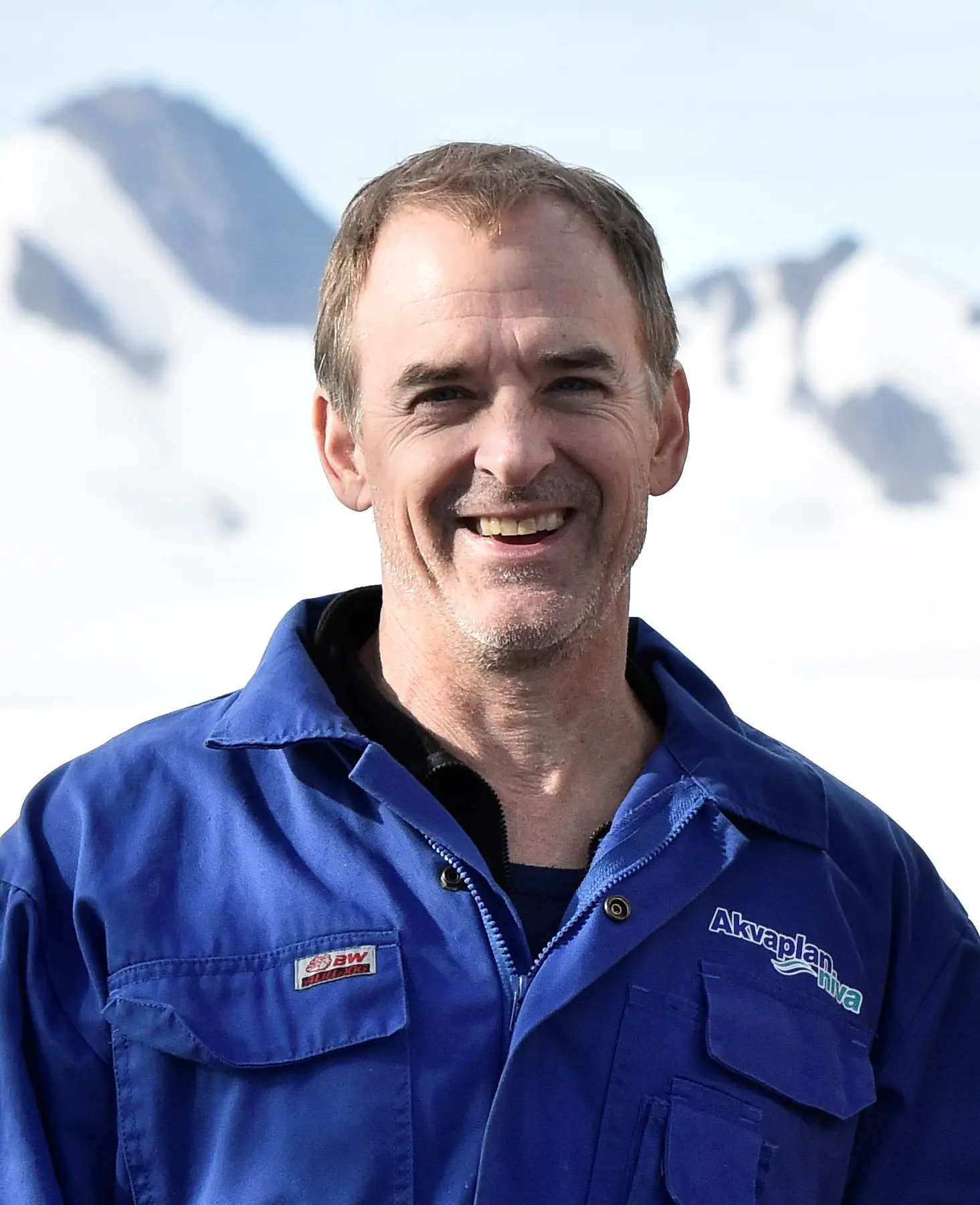 Paul E. Renaud conducting fieldwork in Svalbard for Akvaplan-niva. He will now lead Arctic Ocean 2050 and contribute to new knowledge about a changing Arctic Ocean. Photo: Fredrik Broms
“We must balance a strong need for conservation with aspirations for resource use. That requires a broad spectrum of knowledge, ranging from climate change and ocean-atmosphere interactions to biodiversity and ecosystem vulnerability,” says Renaud.
Over more than 30 years as a polar researcher, Renaud has witnessed major changes in both the natural environment and society’s interest in the Arctic.
“One could point to changes in species composition or sea ice cover, but what has impressed me most is the growth in interest—not only from the research community, but also in areas such as security and preparedness, industry, geopolitics, and governance. Everyone wants to learn more about the opportunities, challenges, and future of the Arctic, and Arctic Ocean 2050 will help provide those answers,” says Renaud.
Renaud has extensive experienceRenaud joins the program from his position as Director of Climate and Ecosystems Research at Akvaplan-niva, where he has worked since 2005. He also served as an adjunct professor at The University Centre in Svalbard (UNIS) from 2009 to 2025.
Over more than three decades, he has established himself as a leading Arctic marine biologist, with extensive field experience in the Barents Sea, around Svalbard, and northward toward the Arctic Ocean. His research has focused particularly on benthic ecology, biodiversity, and the impacts of climate change on Arctic marine ecosystems. At Akvaplan-niva, he has also contributed important scientific knowledge supporting environmental monitoring and management in northern regions.
Renaud is expected to contribute to a greater understanding of a warming Arctic and to the development of knowledge relevant to policymakers and society as they respond to rapid change in the Arctic Ocean.
| # | Наименование новости | Тональность | Информативность | Дата публикации |
|---|---|---|---|---|
| 1 | UNIS marine biologists join the first Arctic Ocean 2050 expedition | 0 | 10.73 | 29-07-2026 |
| 2 | Нарышкин указал на значимость Арктики для будущих поколений россиян | 0 | 0 | 26-05-2023 |
| 3 | Олег Леонов принял участие в круглом столе «Северный вектор: диалог ... | 0 | 4 | 26-07-2026 |
| 4 | РФ в рамках председательства в Арктическом совете усилит социально-экономическую повестку | 0 | 0 | 25-11-2020 |
| 5 | "Арктика: настоящее и будущее" представит масштабную программу по арктической тематике | 0 | 0 | 29-11-2021 |
| 6 | Explore the tundra from your phone: a digital journey into Arctic biology | 0 | 21.52 | 23-06-2026 |
| 7 | Крупные инфраструктурные и промышленные проекты, развитие Северного морского пути, цифровизация, ... | 0 | 7.94 | 14-08-2026 |
| 8 | Александр Макаров: лед в Арктике будет сохраняться в ближайшие десять лет | 0 | 0 | 22-06-2025 |
| 9 | Трутнев: интерес мирового сообщества к развитию Арктики требует большего регулирования | 0 | 0 | 12-03-2025 |
| 10 | Longyearbyen named Norway’s top student city for the fourth year in a row | 0 | 6.53 | 27-05-2026 |