Просмотр новости
Найдите то, что Вас интересует
 Спутники
 РН
РН SpaceX
 Роскосмос
 NASA
NASA
СпутникиРНSpaceXРоскосмосNASAProperty rights are no less worthy of protection just because intangible property is at stake.
Wen Fa and Justin Owen | 8.13.2026 12:45 PM
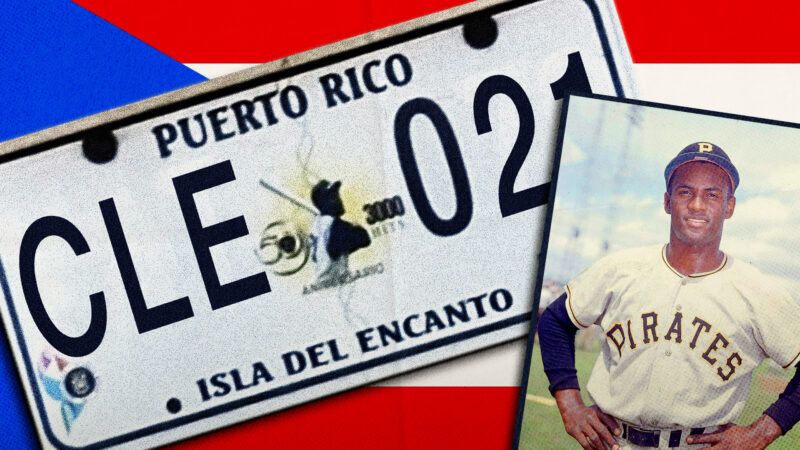
(Photo: Wikimedia Commons. Illustration: Fatima Ruiz.)
Roberto Clemente needs no introduction to baseball fans. In his nearly two decades with the Pittsburgh Pirates, the Hall of Famer won two World Series titles, an MVP Award, and a dozen Gold Gloves. Clemente was known just as well for his work off the field. In 1972, just months after collecting his 3,000th hit, Clemente died in a plane crash while en route to deliver aid to earthquake victims in Nicaragua.
For more than 50 years, the Clemente family has used the Roberto Clemente trademark to preserve his legacy. The Clementes license the trademark sparingly, using it for causes like the Clemente Museum in Pittsburgh and the Roberto Clemente Foundation, which honor the life he built.
Puerto Rico wanted to capitalize on his brand. In 2022, the commonwealth forced cash-strapped Puerto Ricans to pay for commemorative license plates with Clemente's name and image, despite the family's objections. The government pocketed roughly $15 million from the trademark and paid the Clementes nothing. Worse, angry Puerto Ricans blamed the family for the new fee—even though the Clementes had opposed it from the start.
We at the Beacon Center of Tennessee represent the Clementes. In June, we asked the Supreme Court to take the case, as the stakes reach far beyond one baseball legend's good name.
The Constitution's Takings Clause says the government must pay "just compensation" when it takes private property. The rule has long been simple: The government must pay for what it takes.
This should have been an easy case based on that principle. Puerto Rico must pay because it took the Roberto Clemente trademark for its own use. But the U.S. Court of Appeals for the 1st Circuit ruled for Puerto Rico earlier this year by drawing an artificial line. The court held that the simple pay-for-what-you-take rule protects only tangible property such as land, cars, and crops. Intangible property like trademarks, trade secrets, and patents, the court said, doesn't deserve the same protection.
That distinction makes no sense. The plain text of the Takings Clause itself prohibits the government from taking "private property" for public use without just compensation. As the Supreme Court has recognized in Horne v. Department of Agriculture in 2015, the Constitution protects private property "without any distinction between different types."
It could hardly be otherwise. A central aspect of a property right is the fundamental right to exclude. The government can't force you to share your house, let strangers harvest your fields, or hand your car keys to whoever wants a ride. Your property isn't really yours if others can use it at their leisure.
The right to exclude is no less fundamental for Americans who own intangible property. A trade secret can't be a secret if you must divulge it to others. A patent isn't a patent if others can make your product and sell it as their own. And a trademark, which is tied to a person's name and reputation, can't be a trademark if others are allowed to use it. So when Puerto Rico sold the Clemente trademark on its license plates, it didn't just dent the trademark's value—it obliterated the very thing that made it a trademark in the first place, just as surely as if the government had bulldozed a building.
If this ruling stands, the damage won't stop with the Clementes. Every trademark, copyright, patent, and trade secret in America would lose its constitutional shield. A city could slap a local business's logo on merchandise and sell it for profit. A state could lift a small inventor's patented product and manufacture it itself. Universities could sport valuable brands like Nike or Adidas on their athletic apparel without paying those companies a dime.
The Clementes' case presents the Supreme Court with the chance to put some common sense back into the law: Property rights are no less worthy of protection just because intangible property is at stake. The government still must pay for what it takes.
Roberto Clemente spent his life giving to others. His family has spent the decades since making sure that generosity outlives him. It would be a fitting tribute if Clemente, five decades after his final at-bat, could hit one more home run for property owners everywhere.
NEXT: She Spent 7 Months in Legal Hell After Cops Used Flock Surveillance To Identify the Wrong Car
Supreme CourtTakingsProperty RightsFifth AmendmentSportsPuerto RicoBaseballConstitution| # | Наименование новости | Тональность | Информативность | Дата публикации |
|---|---|---|---|---|
| 1 | Court rules against cruise lines in Cuban confiscation case | 0 | 5 | 21-05-2026 |
| 2 | Trump’s Cruelty Is Strangling Cuba — Its Oil Reserves Could Be Empty by March | -8 | 6 | 25-02-2026 |
| 3 | Court rules for Exxon Mobil in Cuban confiscation case | 0 | 5 | 23-06-2026 |
| 4 | SCOTUS Case on Munitions in Guam Could Set Precedent for Indigenous Rights | 0 | 7 | 20-03-2026 |
| 5 | El Supremo de EE UU abre la puerta a compensaciones por propiedades confiscadas por el régimen cubano | 0 | 5.92 | 21-05-2026 |
| 6 | Virginia Man Argues His 'FTP&ATF' License Plate Is Free Speech. The Supreme Court Might Hear His Case. | 0 | 8.22 | 14-08-2026 |
| 7 | ГП подала иск о возврате государству имущества экс-мэра Владивостока Николаева | 0 | 0 | 26-05-2025 |
| 8 | Court rules against cell service providers over right to jury trial in FCC proceedings | 0 | 5 | 04-06-2026 |
| 9 | Путин: более эффективная защита прав предпринимателей крайне необходима | 0 | 0 | 19-03-2019 |