Просмотр новости
Найдите то, что Вас интересует
 Спутники
 РН
РН SpaceX
 Роскосмос
 NASA
NASA
СпутникиРНSpaceXРоскосмосNASASouth African scientist’s breakthrough research shows soil fungus could be used in fight against devastating crop pestHearing about fields full of dead caterpillars enveloped in a mysterious white substance intrigued the South African scientist Letodi Luki Mathulwe. Something was killing off the African armyworm – one of the most devastating pests for farmers in east and southern Africa.The white substance was a naturally occurring fungus and it was wiping out the caterpillar, which gained its name from its march-like advance through fields of crops. Continue reading...
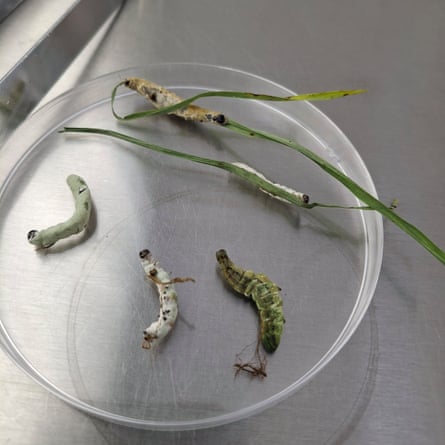
Hearing about fields full of dead caterpillars enveloped in a mysterious white substance intrigued the South African scientist Letodi Luki Mathulwe. Something was killing off the African armyworm – one of the most devastating pests for farmers in east and southern Africa.
The white substance was a naturally occurring fungus and it was wiping out the caterpillar, which gained its name from its march-like advance through fields of crops.
An outbreak of African armyworm (Spodoptera exempta) in 2025 had started in northern South Africa and by April had reached the eastern province of KwaZulu-Natal, where Mathulwe was working for the agriculture department. Every day she was getting panicked calls from local farmers who were finding the caterpillars in their fields.
Mathulwe went out to the KwaZulu-Natal countryside to see for herself and it was there, in the fields of Kikuyu grass – crucial grazing for livestock – that she realised she had made an important discovery.
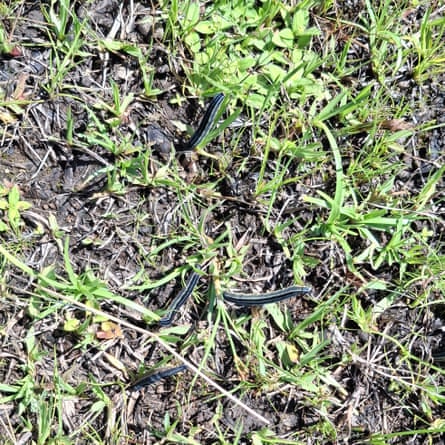
“Something was killing the insects naturally. I was intrigued because in other areas the insects were alive and destroying the grass but as soon as they come here, there’s something that is killing them,” she said.
As an entomologist who had studied the use of fungi to kill insect pests, Mathulwe immediately gathered samples of the dead armyworms and the fungus to test at her laboratory in Pietermaritzburg.
Her team’s results, now presented in a peer-reviewed research paper, showed she was right in her hunch that the fungus could be used in the fight against the armyworms.
It was a major breakthrough, said Mathulwe, because while there are chemical treatments for dealing with the caterpillars in the early stages of life, nothing has proven effective against mature populations.
The African armyworm not only eats staple crops such as maize and sorghum but also releases a chemical compound in grass that can make cattle sick.
The impact can be brutal for farmers. One outbreak in 2017 was estimated to have destroyed up to 40% of Zambia’s maize production.
It also sends food prices soaring and puts strain on government budgets. Last year’s outbreak caused problems for farmers in countries such as Zimbabwe, where inflation had hit 736% in 2024, and Malawi, where it reached 35% in 2024.
The African armyworm causes the most damage in its caterpillar stage but is also hard to control when it develops into a moth, allowing populations to migrate.
“When we discovered this fungus, we realised we could develop this into a product that can be eventually used when the next outbreak happens,” said Mathulwe.
“I think it will be a great thing – it will eventually eliminate the fear for farmers that the insect creates because once it’s present within grazing fields, farmers start to panic.”
Mathulwe said there was still more work and more testing to do in developing a product for use by farmers.
“I think it will create a lot of hope for farmers, because it will mean that their animals won’t get sick if the farmer is able to control the presence of the insects within their field,” she said.
| # | Наименование новости | Тональность | Информативность | Дата публикации |
|---|---|---|---|---|
| 1 | Africa: Can a Newly Discovered Soil Fungus Stop the Devastating African Armyworm When Chemicals Have Failed? | 0 | 7.4 | 28-07-2026 |
| 2 | This small soil upgrade cut locust damage and doubled yields | 0 | 5.79 | 24-01-2026 |
| 3 | Stellenbosch Art Mile spotlights growing PSHB beetle crisis | 0 | 10.71 | 03-09-2026 |
| 4 | A promising tale from Senegal of fish, rice .... and dangerous worms | 2 | 6 | 12-07-2026 |
| 5 | The fungal network hidden beneath our feet: Secret web of fungi could circle Earth 2.7 TRILLION times | 0 | 7 | 24-06-2026 |
| 6 | Drought is bad news for earthworms, but gardeners can help them out | 0 | 10 | 15-08-2026 |
| 7 | Микроскопический гриб из почвы Западной Сибири поможет бороться с болезнями пшеницы | 7 | 8 | 07-05-2026 |
| 8 | En África y Asia, fondo ambiental ayuda a agricultores a reescribir su historia con pesticidas | 0 | 8.69 | 14-05-2026 |
| 9 | A 37-year soil experiment revealed a hidden climate threat | 0 | 7.62 | 14-07-2026 |
| 10 | Transforming agricultural waste into water and energy solutions in Mozambique | 5 | 6 | 06-04-2026 |