Просмотр новости
Найдите то, что Вас интересует
 Спутники
 РН
РН SpaceX
 Роскосмос
 NASA
NASA
СпутникиРНSpaceXРоскосмосNASA Safe Room is a moving film about a group of strangers who survived the October 7 attack by Hamas and came together in the safe room of Dr. Gedalya Fendel.
‘What struck me was that it wasn’t a huge story. It was a very small story. But it represented what happened that day in a deeply human way,” said Haley Geffen, the award-winning American director of the documentary Safe Room, which will be shown on August 17 at the National Library of Israel as part of the DocuText Festival, which runs until August 20.
Safe Room is a moving film about a group of strangers who survived the October 7 attack by Hamas and came together in the safe room of Dr. Gedalya Fendel late in the day, where they found themselves virtually transformed into a family in the aftermath of the massacre. This group of survivors has stayed in touch and still gets together.
“There are countless horrific October 7 stories. As I prepared the film, I kept wondering whether I should tell one of the bigger ones... one of the well-known stories,” said Geffen, who will be present for a Q&A at DocuText after the screening. Two of the interviewees, Merav Fendel and Dr. Tamar Schlesinger, will also take part.
“But I kept coming back to this one because these are ordinary people…If I could get audiences to watch a story about someone who feels like them – someone completely relatable – then maybe they could set aside their biases. Maybe they could simply love a person because he’s a person, not because he’s Jewish or Israeli.”
Geffen met Gedalya Fendel on a 2024 trip to Israel, and she was fascinated when she heard him tell the story of the family that was created in his safe room. Fendel, who lives on Moshav Shuva in the Gaza border region, left his wife, Merav Fendel, and four children at home and set up an improvised field hospital on the road near his home. At a certain point, realizing that the roads were not safe, he sent some of the survivors who arrived there and did not need urgent medical care to his home, where they were welcomed by his wife and children, rather than to a hospital.
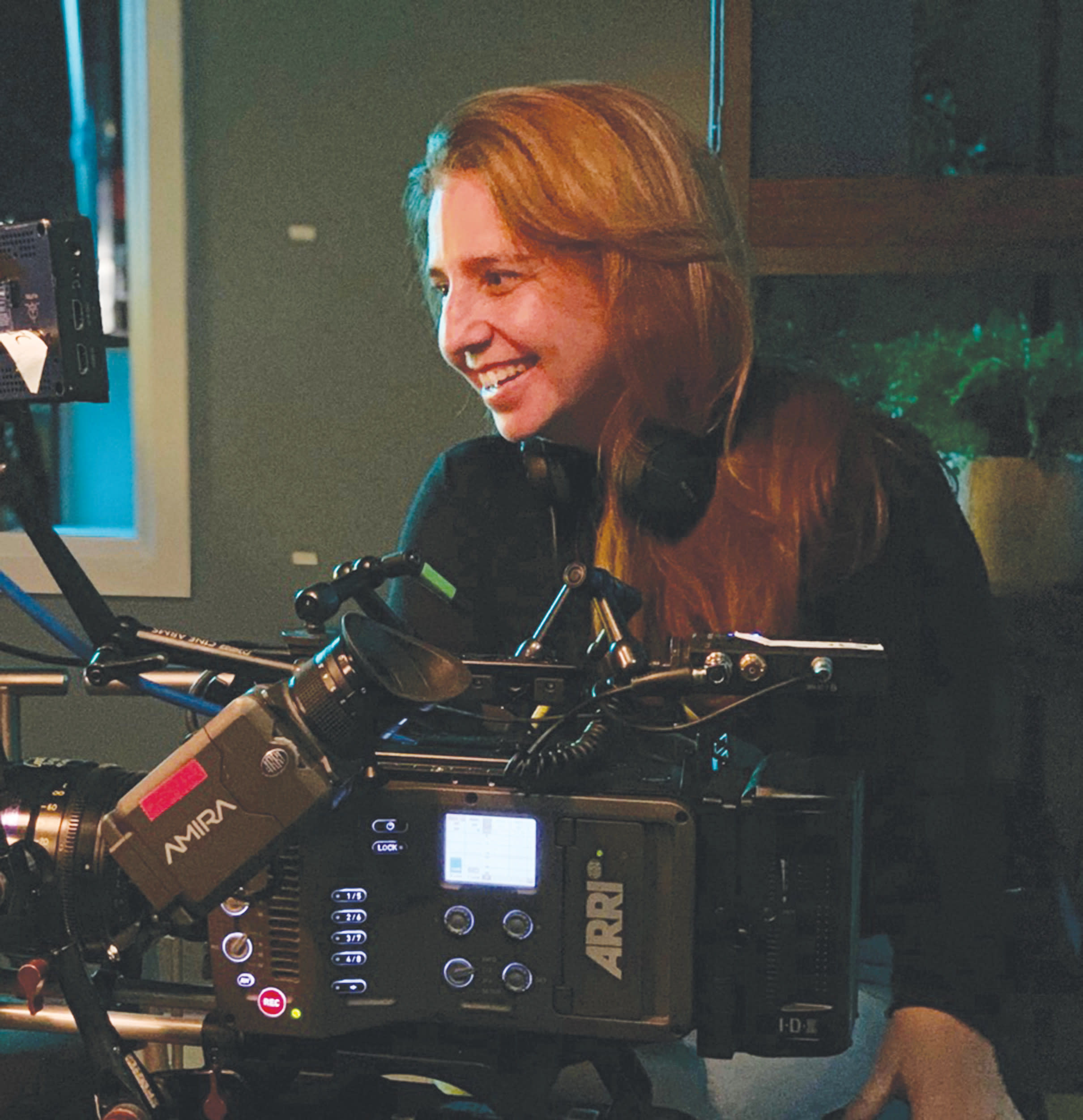 IT'S A story that ‘felt almost like fiction, a real-life narrative with a beginning, middle, and end,’ according to director Haley Geffen. (credit: EVAN JAKE COHEN)
These survivors included Sapir Ben Ezra, a pregnant woman approaching her due date, who was terrified because terrorists set her house on fire, and she could no longer feel the baby moving after spending hours in her safe room. Fendel realized that she just needed rest, food, and care, which his family could provide. Aliza and Tzachi Gad had spent 13 hours hiding in their home on Kibbutz Be’eri before arriving at the Fendels.
Two children, Michael Idan, then 9, and Amalia Idan, 6, joined the group after their rescue from their home on Kibbutz Kfar Aza. They saw the murders of their mother, Smadar Mor Idan, and their father, Roee Idan, and were certain that their sister, Avigail Idan, had also been killed.
Michael and Amalia hid in a closet for 14 hours, counseled over the phone by Schlesinger, a social worker interviewed in the film. Schlesinger helped protect them all those hours, telling them not to open the door when terrorists knocked, and giving them warmth and support as they hid. Their sister Avigail was held hostage in Gaza for 50 days, and the three Idan children were adopted by their aunt, Leron Mor, and their uncle, Zoli Guyongyosi, who are also interviewed in the film.
“What I found was a story that felt almost like fiction, a real-life narrative with a beginning, middle, and end. It wasn’t simply about horror. It contained death, survival, hope, beauty, love, and ultimately life.”
The film examines the concept of a safe roomTHE MOVIE is also an examination of the concept of a safe room, which is explained in detail for American audiences, including by Brig.-Gen. (res.) Tzviki Tessler, who acted as a Home Front Command spokesman during the war.
She chose the title Safe Room for the film. “There’s nothing Jewish, there’s nothing about Israel. Just Safe Room,” she said.
“One of my editors, who’s Israeli, was constantly coming to me with ideas. She said, ‘I think you should dive deeper into safe rooms – the evolution of safe rooms.’ And I said, ‘The truth is, the world has no idea that Israel, in and of itself, is a safe room.’ The whole country has lived under missile attacks since its existence. So, I thought, maybe I should explain that. Maybe I should start the whole movie by explaining that.”
She had finished about half the movie when the war with Iran broke out in June 2025. She watched clips of Israelis fleeing to shelters when she was in the hospital with her daughter, who was having surgery, in the US.
“I was watching all these moments of people coming together in safe rooms. Before the Iran war, the safe-room experience that I was dealing with in this film was death and torture and nightmare. But during the Iran war, I was seeing Israeli life in the safe rooms – the love of life, the way people came together, the way people were bonding. And the world was actually watching it this time.”
The movie opens with videos of Israelis running to shelters in 2025.
“I asked myself: What is the most neutral way for me to start this film? It was simply to show that missiles come into Israel and explain that it is required by law in Israel that people go to a safe space when they hear a siren. I neutralized it from the start: This happens, and you go to a safe room.”
Protection from missiles, not terroristsLater, she realized she should explain that safe-room doors do not lock and are designed for protection from missiles, not terrorists. While Israelis certainly know all about safe rooms, she said that she thinks it is important for Israeli audiences to see the movie as well.
“First, they need to understand how little the world knows about Israel. By watching this movie, maybe Israelis will realize: The world doesn’t know that we live with missile attacks. The world doesn’t actually know how we exist.”
Geffen, who has spent a great deal of time in Israel and who alternates between “they” and “we” when talking about Israelis, kept the focus of the movie on how these safe-room survivors bonded.
“What I did know was that Gedalya humanized them at the worst, lowest moment of their lives. They saw someone who – I remember him saying this the first night I met him – made them smile... If you can make someone smile – if you can give them an expression that isn’t horror or terror, even for a moment – you’ve taken them out of that experience. That’s what he did for each of them,” she said.
When asked to explain to people who might prefer to forget the horrors of October 7 why they should see this movie, Geffen said, “A lot of people don’t like to go back to that place because it was very hard. What I say to them is: Yes, this is not that easy to watch; however, you will be surprised by how you feel at the end of it. And everyone confirms that that is very accurate; they didn’t realize that they would leave the movie feeling so many different things. They were able to get through the parts that were really hard because of the wonderful feelings they were able to walk away with.”
Follow us on Google