Просмотр новости
Найдите то, что Вас интересует
 Спутники
 РН
РН SpaceX
 Роскосмос
 NASA
NASA
СпутникиРНSpaceXРоскосмосNASA There is no objective way to measure whether the Supreme Court has become more political than judicial. But several observable trends have led scholars, journalists, and the public across […]
There is no objective way to measure whether the Supreme Court has become more political than judicial. But several observable trends have led scholars, journalists, and the public across the political spectrum to conclude that politics plays a larger role on the Court than in earlier periods.
Patterns in voting often fall along ideological lines in recent years. Abortion, presidential powers, gun rights, affirmative action, administrative law, and voting rights have frequently been decided 6-3, with the Court’s “conservative” justices in the majority and its “liberal” justices in dissent. While unanimity remains common in routine cases, the politically prominent ones often divide predictably.
Since the 1980s, the confirmation process has become increasingly political. The Senate’s rejection of Robert Bork, the controversial Clarence Thomas hearings, the Senate’s refusal to consider Merrick Garland, and the rapid confirmation of Amy Coney Barrett shortly before the 2020 presidential election are all examples of how the process has become intensely partisan. These events have reinforced the perception that Supreme Court appointments are political contests.
Recent decisions involving presidential immunity, executive authority, abortion, administrative agencies, environmental regulation, and election law directly affect national politics. Despite the Court applying legal principles, the practical consequences are highly political.
Polling over the past several years has shown that confidence in the Court has fallen substantially compared to historical levels. Many Americans now view the Court through a partisan lens.
There are others, however, who argue the Court remains primarily judicial. Every Court decision and opinion relies on constitutional text, statutes, precedent, or judicial philosophy. Even sharply divided cases often contain lengthy legal analyses rather than political arguments. Cases less likely to grab headlines are frequently decided unanimously. There are also notable cross-ideological coalitions, with conservative and liberal justices occasionally joining together depending on the legal issue.
Many disagreements within the Court reflect competing methods of constitutional interpretation — originalism, textualism, living constitutionalism, and pragmatic or purposive approaches. Supporters argue these are genuine legal methodologies rather than merely political preferences.
History shows the Court has always been political in some sense. The Court has long issued decisions with enormous political consequences, including Dred Scott v. Sanford, Brown v. Board of Education, Bush v. Gore, and most recently, Dobbs v. Jackson Women’s Health Organization. Each generated accusations the Court was acting politically.
Researchers have documented increasing ideological polarization among the justices over recent decades and generally agree that ideological blocs are more stable today than during much of the mid-20th century. The appointment process has become more polarized, and public perception has followed suit.
Whether the Court has become more political than judicial ultimately depends on how one defines those terms. However, there is broad agreement that the appointment and confirmation process is more political than it was several decades ago. The Court is deciding more cases with major political implications, and ideological divisions among the justices are more visible in many high-profile cases.
Critics argue that ideology increasingly determines outcomes, while defenders contend that differing judicial philosophies lead to different interpretations of the Constitution. Both perspectives have support among respected legal scholars, and the available evidence does not conclusively establish that the Court has ceased functioning as a judicial institution. What is clear, however, is that the Court’s legitimacy hinges on public trust — and that trust is eroding.
The opinions of the author do not necessarily reflect the positions of the CPUSA.
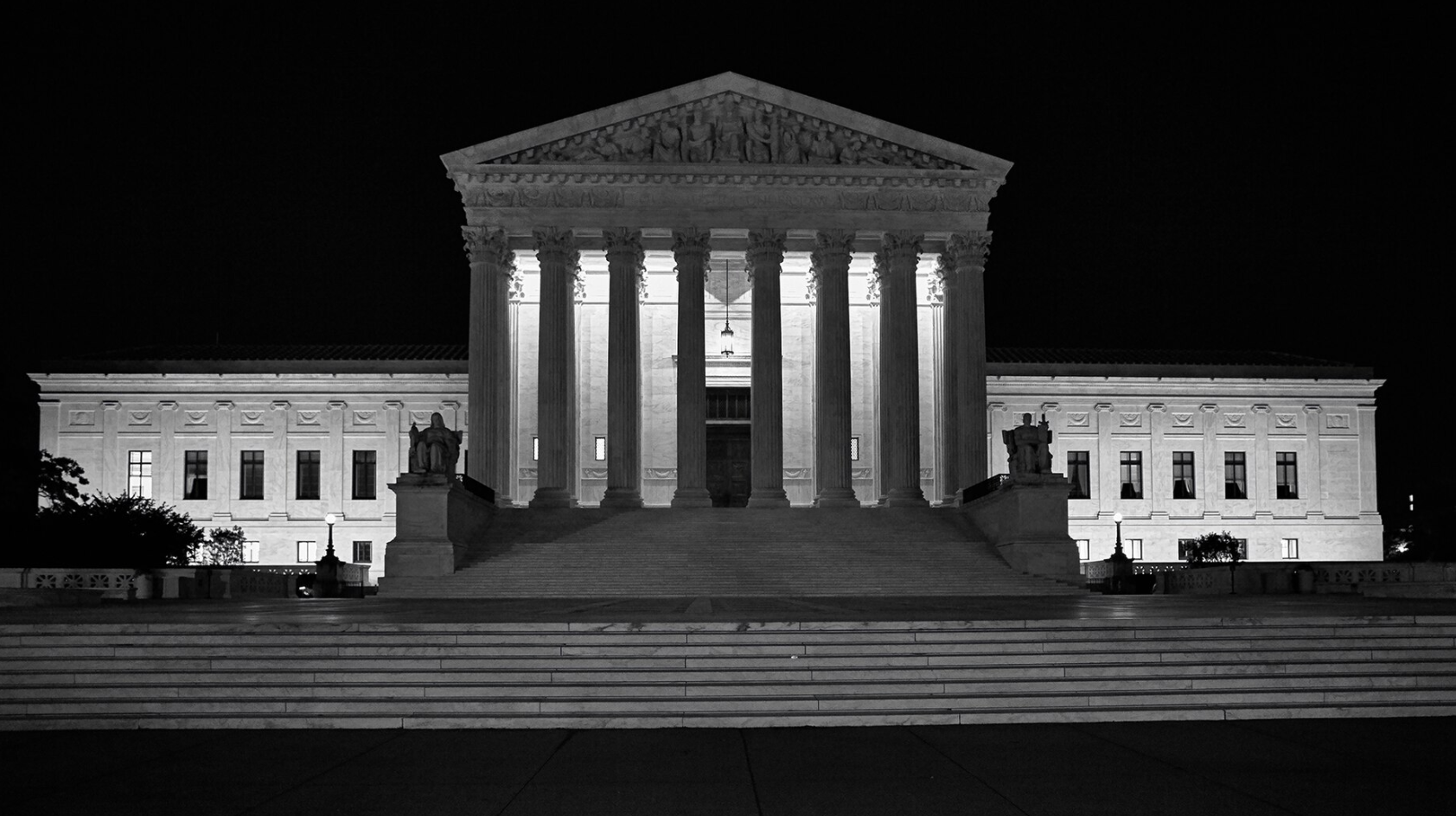
Image: Supreme Court of the United States. Wikimedia Commons.
| # | Наименование новости | Тональность | Информативность | Дата публикации |
|---|---|---|---|---|
| 1 | The 2025-26 Supreme Court in review | 0 | 2 | 02-07-2026 |
| 2 | A primer on “packing” the U.S. Supreme Court | 0 | 18.71 | 22-07-2026 |
| 3 | U.S. Supreme Court — closing out the term | 0 | 23.8 | 01-08-2026 |
| 4 | Trump ramps up war with Supreme Court as he bucks 'final word' on priorities | 0 | 8.82 | 11-08-2026 |
| 5 | The Supreme Court has become a great place to build your brand | -2 | 5 | 07-05-2026 |
| 6 | ‘The Supreme Court refuses to become partisan in two fights over the midterms’ | 0 | 7.38 | 22-09-2026 |
| 7 | Is the U.S. Supreme Court Facing a Crisis of Democratic Legitimacy? A Review Article | 0 | 7.35 | 02-07-2026 |
| 8 | Breaking Down The Vote: The High Court Term In Review | 0 | 7 | 02-07-2026 |
| 9 | John Roberts Bemoans Americans for Viewing SCOTUS Justices as “Political Actors” | -3 | 6 | 08-05-2026 |
| 10 | Breaking Down The Vote: The High Court Term In Review | 0 | 5 | 02-07-2026 |
