Просмотр новости
Найдите то, что Вас интересует
 Спутники
 РН
РН SpaceX
 Роскосмос
 NASA
NASA
СпутникиРНSpaceXРоскосмосNASAThe World Cup’s excitement may be over, but one of the most fascinating sports phenomena hasn’t been visible on fields or courts. A cadre of athletes has been channeling their professional star power to develop commercial real estate projects. And some of those ventures are happening in those athletes’ hometowns. Hence, an intriguing addition to […]
The World Cup’s excitement may be over, but one of the most fascinating sports phenomena hasn’t been visible on fields or courts. A cadre of athletes has been channeling their professional star power to develop commercial real estate projects. And some of those ventures are happening in those athletes’ hometowns.
Hence, an intriguing addition to the real estate deal-maker’s playground has been the rise of the athlete-developer.
Athletes from the NBA, NFL and other leagues, both active and retired, are reinventing themselves. They are learning the fundamentals of commercial real estate. They are forming key relationships in the industry. Potentially, they constitute a catalyst for urban development — an assist as effective as a ball court pass from Jalen Brunson or A’ja Wilson.
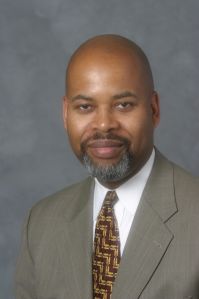 G. Lamont Blackstone. Courtesy: Project REAP
To illustrate, former NFL player Ndamukong Suh — who grew up in Portland, Ore. — is developing a hotel and conference center in his hometown via his company HMS Development. And the former Chicago Bulls star Derrick Rose has announced his involvement in a $7 billion mixed-use project planned for Chicago’s Near West Side.
Both Suh and Rose serve as examples of athletes who are coupling their financial capital with the acquisition of intellectual capital — i.e., the knowledge that enables them to be active partners in hometown development projects. Suh had previously graduated from college with a degree in construction engineering. Rose is taking real estate classes for a year to learn the commercial real estate business.
But this phenomenon hasn’t gone completely unnoticed. Troy Vincent Sr., executive vice president of football operations for the National Football League, looks favorably on this intersection of professional sports and commercial real estate. Expressing kudos to Project REAP, a national CRE training program honored in the Congressional Record, Vincent recently stated, “… Project REAP is assisting professional athletes and emerging leaders to see what’s possible beyond traditional career paths … .” Vincent was instrumental in assisting REAP’s outreach to professional football.
While financial capital and real estate intelligence are resources that highly compensated athlete-developers can bring to community development, they have yet another source of competitive advantage. They have relationship capital. That speaks to the unique ability of hometown heroes and marquee athletes to mobilize the excitement and support of political leaders, equity investors and even commercial tenants.
I have witnessed elements of this triad in action. Over 20 years ago, I financed the development of an urban shopping center in the City Heights neighborhood of San Diego, an area then deemed one of the most blighted in that city. At that time, basketball legend Magic Johnson had formed a joint venture with Starbucks to open branded coffee shops in inner-city areas.
To be clear, Earvin Johnson was not raised in San Diego. But he was no stranger to communities of color. Johnson’s team saw the potential of the City Heights project that other food service retailers would have dismissed.
So, stakeholders in the nation’s urban markets — mayors, economic developers and legislators — should take notice of this sports phenomenon. And I suggest they encourage it by inviting star athletes to explore development opportunities in their jurisdictions. Unlike many conventional developers, enterprising athletes who hail from such communities — or cities like them — can see possibilities that others won’t. That clarity of vision where others see inordinate risk is a type of birthplace effect that can be potent for urban revitalization.
The “dumb jock” trope of pop culture was always more fiction than fact. Roger Staubach definitively proved that in the 1970s. Decades later, so did Emmitt Smith. Hence, athlete-developers are consigning that trope to the trash bin of dead stereotypes. Many successful athletes are no longer content with just signing passive product endorsement deals — as lucrative as those may be. Consequently, they see the ability to both effectuate impactful change and preserve their wealth.
We should keep that top of mind when we cheer their latest three-point shot or reception in the end zone. They are more than just kinetic entertainers — they are potential CRE entrepreneurs.
G. Lamont Blackstone is a steering committee member for Project REAP’s Pro Players Property (3P) program, a new collaboration with Hampton University. He is also an urban development consultant and planning board member in Mt. Vernon, N.Y.
| # | Наименование новости | Тональность | Информативность | Дата публикации |
|---|---|---|---|---|
| 1 | Future of Marketing Briefing: What World Cup breakout stars Haaland and Zlatan can teach marketers about sports stardom | 5 | 6 | 17-07-2026 |
| 2 | Tumbler Ridge pumped for June FIFA World Cup event | 0 | 10 | 13-05-2026 |
| 3 | Brands and the beautiful game | 0 | 8.71 | 28-06-2026 |
| 4 | The great tier-2 shift: How Gen Z is redrawing India’s real estate map | 0 | 12.34 | 13-06-2026 |
| 5 | The Best Salespeople Train Like Elite Athletes | 0 | 10.64 | 03-08-2026 |
| 6 | Виртуальное реальное: недвижимость мира киберспортсменов и геймеров | 0 | 8.98 | 01-12-2020 |
| 7 | Is Sports Diplomacy Still Possible? | 0 | 5 | 02-07-2026 |
| 8 | How beauty brands are popping up around World Cup festivities | 0 | 5 | 01-07-2026 |
| 9 | Why brands are bringing creators to the World Cup sidelines | 5 | 5 | 02-07-2026 |
| 10 | Эксперт: развитая инфраструктура в Москве создает благоприятные условия для девелоперов | 0 | 0 | 03-06-2021 |