Просмотр новости
Найдите то, что Вас интересует
 Спутники
 РН
РН SpaceX
 Роскосмос
 NASA
NASA
СпутникиРНSpaceXРоскосмосNASAChildhood adiposity is a major driver of cardiometabolic risk; however, the relative contribution of fat distribution and ectopic fat remain an area of active research. The review presents evidence on childhood adiposity, focusing on adiposity distribution, its pathophysiological links to cardiometabolic risk, and its implications for clinical assessment. An extensive literature search across scientific databases, including Google Scholar, PubMed, and Web of Science, was conducted, focusing on childhood adiposity, cardiometabolic risk, and methods of assessing adiposity. The available literature shows that both central and ectopic fat in childhood were associated with early metabolic disorders such as dyslipidaemia, insulin resistance, and hypertension, as well as subclinical cardiovascular alterations, including arterial stiffness, endothelial dysfunction, and carotid intima-media thickening. These modifications serve as predictors of future cardiovascular disease risks. Body mass index (BMI) was reported as a commonly used tool for assessment, but it was not adequate on its own. Indicators of central adiposity (waist circumference and waist-to-height ratio), along with novel indices and metabolic profiling, were reported to be preferable to BMI. Obesity in childhood has several clinical implications for cardiometabolic risk factors, where early changes in metabolism and blood vessels can continue into adulthood. The inclusion of body fat distribution indices in clinical practice will aid in early diagnosis and preventive interventions.
The rapid increase in the prevalence of childhood and adolescent obesity has become a recent major public health concern, affecting both rich and poor globally.1–3 Based on WHO statistics, there have been significant increase in the prevalence rates of obesity and overweight among children and adolescents during the last four decades, with over 390 million affected worldwide.1–4 Obesity and overweight are characterised by abnormal and excessive fat accumulation resulting from an imbalance in body energy (intake and expenditure). This excessive fat accumulation is influenced by changes in eating habits, a sedentary lifestyle, and urbanisation.1–5 Also, other determinants include environmental, psychological, and genetic factors.2,5 Excessive adiposity in early life has been reported to be a critical determinant of cardiometabolic risk, and it is strongly associated with obesity and metabolic abnormalities from childhood into adulthood.5–7 Overweight and obese children are likely to stay obese into adulthood, and also likely to develop noncommunicable diseases such as diabetes and other cardiovascular diseases.2,5–7
Futhermore, several studies have reported that total body fat distribution, particularly central or visceral depots, rather than total adiposity alone, is a key predictor of cardiometabolic risk.8–10 The measurement of central obesity includes waist circumference (WC), waist-to-height ratio (WHtR), or assessment of visceral fat by imaging techniques.8–10 While body mass index (BMI) is the simplest and most commonly used method to assess obesity, it does not adequately capture fat distribution.11,12 Studies have suggested that WHtR is better than BMI in predicting cardiometabolic risk in children, regardless of age, gender, and ethnicity.11–14 The pathophysiology involved in these associations is complex.15,16 Understanding these facts is critical to developing measures to prevent or effectively intervene, especially in low and middle-income countries that have recorded increases in both communicable and non-communicable diseases.5,15–17 In children and adolescents, abdominal fat accumulation is strongly associated with early markers of cardiometabolic dysfunction, including impaired glucose tolerance, elevated triglycerides, reduced high-density lipoprotein cholesterol, and increased blood pressure.18 The review aimed to present the link between childhood adiposity and cardiometabolic risk, as well as the need for appropriate assessment tools.
Obesity among children, which was earlier thought to be a problem in developed countries, is now becoming a health challenge for Low- and Middle-Income Countries (LMICs), owing to factors such as urbanisation, nutrition transition, physical inactivity, and social inequities.1–3 According to statistics in 2021, about 3.7 million deaths have been registered in people having higher than optimal body mass index due to noncommunicable diseases like heart diseases, diabetes, cancer, neurological illnesses, chronic respiratory diseases, and digestive ailments.2,4 Statistics reveal that 1 in 8 persons on earth is obese, where more than 390 million children and adolescents between the ages of 5 and 19 were overweight in 2022, including 160 million who were obese.1,2,4 In 2024, more than 35 million children under five years of age were obese.1,2,4 Overweight was once considered a problem in high-income countries, but that isn’t the case based on global statistics.2,19 Almost half of all overweight children under 5 years lived in Asia, and one quarter lived in Africa where there is an increase of almost 12.1% since 2000.2,19 In South Africa, a 2025 UNICEF report indicates that approximately 1 in 10 school-aged children were obese, with higher prevalence observed among adolescents and girls.19,20 It also reported that this increase in the percentage of overweight South African children, from 9% in 2000 to 21% in 2022, was because of exposure to ultra-processed market foods.19,20 Girls showing higher prevalences of overweight and obesity are influenced by their sociocultural norms, such as reduced physical activities and biological differences in fat distribution.1,2 In North America, especially in the United States, approximately 19–22% of children and adolescents aged 2–19 years are obese, with central adiposity and clustering of cardiometabolic risk such as hypertension, dyslipidaemia, and insulin resistance.21
The rising prevalence of childhood adiposity has been linked to several factors contributing to cardiometabolic risk, with obese children presenting at least one risk factor ( Figure 1).2,4,19,22 The causes of childhood adiposity have been linked to complex interactions among lifestyle, behavioural factors, environmental exposures, and genetic susceptibility.2,4,19,22 The fact that both undernutrition and obesity coexist in one community is said to result from poor nutritional status during pregnancy, infancy, and childhood. Also, exposure to a diet rich in fat and calories, lacking in vitamins and minerals, coupled with a lack of exercise, is an added factor.2,19,22 The World Health Organisation (WHO) recommended strategies to reduce and prevent childhood overweight and obesity include limiting food portion sizes and increasing consumption of fruits, vegetables, legumes, whole grains, and nuts.2,4 It also encourages children to engage in at least 60 minutes of regular, developmentally appropriate, moderate-to-vigorous-intensity physical activity each day.2,4
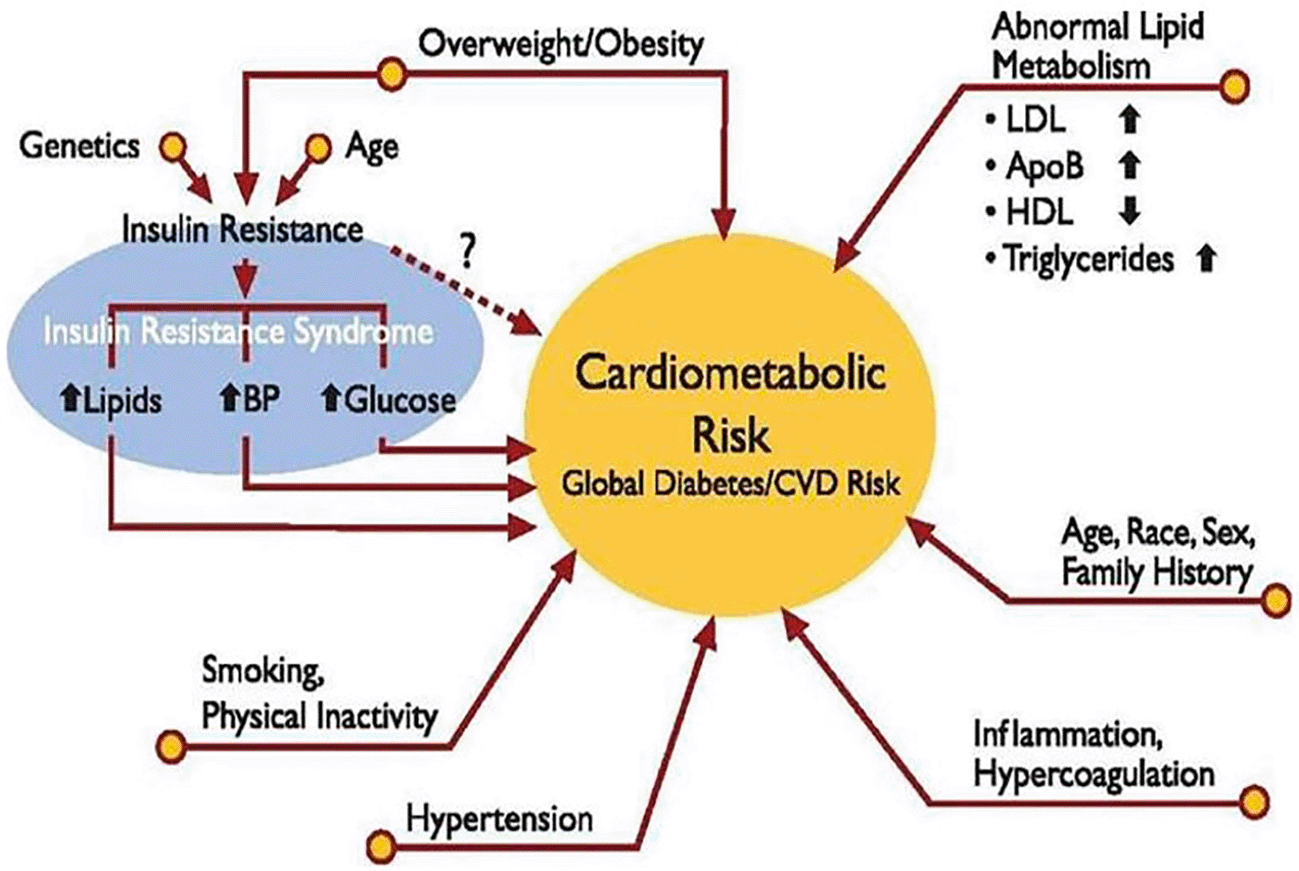
Excess body fat, particularly visceral fat, has been linked to triggering a cascade of metabolic disturbance through several interrelated mechanisms.15,16 They promote insulin resistance by increasing the release of free fatty acids and pro-inflammatory cytokines, which exacerbates metabolic dysregulation.15,16 Some of these mechanisms included: adipose tissue dysfunction, dysregulated adipokine secretion, insulin resistance, ectopic fat deposition, chronic inflammation, oxidative stress, and endocrine disruptions ( Table 1).15,16
Adipose tissue is an immune and endocrine organ with Visceral adipose tissue (VAT) exhibiting increased metabolism.23 The VAT dysfunction caused by cell enlargement, hypoxia, and cellular stress results in adverse metabolic events, including increased lipolysis, ectopic lipid deposition, and abnormal adipokine secretion, leading to insulin resistance and systemic inflammation.15,16,23
Adipose tissues, as an immune organ, secrete leptin, adiponectin, and resistin.15 In obesity, uncontrolled adipokine secretion plays a central role in metabolic dysfunction, contributing to insulin resistance, chronic low-grade inflammation, and the development of cardiometabolic diseases.15,24,25 Circulating leptin levels increase, but resistance develops, leading to impaired satiety and energy balance.15,24,25 On the other hand, adiponectin levels decrease, and this reduction is linked to increased insulin resistance and atherogenesis.15,24,25 Also, elevated resistin, plasminogen activator inhibitor-1 (PAI-1), and visceral adiposity index (VAI) further signal metabolic dysfunctions and the development of cardiometabolic risk.24–26
In children and adolescents, insulin resistance is a central pathophysiological mechanism linking adiposity to cardiometabolic risk.15,27,28 Insulin resistance decreases the responsiveness of peripheral tissues, such as adipose tissue, skeletal muscle, and the liver, to insulin, resulting in impaired glucose uptake and metabolism.29 Excessive adipose tissue expansion leads to increased release of free fatty acids (FFAs), adipocyte hypertrophy, and ectopic lipid accumulation, which disrupts insulin signalling pathways.27 Elevated free fatty acids (FFAs), which result from excessive adipose tissue expansion, promote intracellular lipid intermediates such as diacylglycerol (DAG).28 This leads to impaired insulin signalling via insulin receptor substrate - Phosphatidylinositol 3-Kinase – Protein Kinase B (IRS-1/PI3K/AKT) pathway, hindering glucose uptake.28
Fat deposition that takes place outside adipose tissue results from an overflow of subcutaneous fat’s storage of energy, which causes fat to accumulate in muscles, liver, and pancreas.15,16,27 The fat that has accumulated outside adipose tissue interferes with the metabolic activities of these organs, thereby leading to NAFLD, heart complications, and type 2 diabetes.15,16,27 A chronic low-grade inflammatory state results from Hypertrophic adipocytes that attract macrophages and secrete inflammatory cytokines (TNF-α, IL-6).15,16,27 It activates the nuclear factor kappa-light-chain-enhancer of activated B cells (NF-κB) and Suppressor of Cytokine Signalling (SOCS) pathways.15,16,27 These pathways interfere with insulin signalling in the liver, muscle, and adipose tissue, exacerbate insulin resistance and the development of cardiometabolic abnormalities.15,16,27,28
Oxidative stress (OS), which occurs when the levels of reactive oxygen species (ROS) exceed those of the body’s antioxidant defence mechanisms, is also important.30,31 Excessive expansion of adipose tissue, particularly VAT, increases reactive oxygen species (ROS) production via multiple pathways, including hypoxia and mitochondrial stress.27,29 In addition, oxidative stress causes endothelial dysfunction by decreasing nitric oxide availability and increasing vascular stiffness, ultimately leading to hypertension and atherosclerosis.30,31 Oxidative stress also amplifies a chronic, low-grade inflammatory state by activating the NF-κB pathway.27,32 This will lead to increased production of pro-inflammatory cytokines (TNF-α and IL-6), which further exacerbate metabolic disturbance.27,32
Furthermore, another mechanism is endocrine dysfunction, which interrelates with insulin resistance and oxidative stress.15,33 Alterations in adipokine secretion by adipose tissue (leptin, adiponectin, and resistin) due to adipose tissue expansion, especially in obesity, promote insulin resistance and endothelial dysfunction.15,27,33 This endocrine dysfunction further increases secretion of pro-inflammatory cytokines (TNF-α and IL-6), which then amplifies chronic low-grade inflammation and impairs insulin signalling pathways.15,27,32–34 In addition, obesity-induced changes in endocrine function affect important hormonal pathways, such as the hypothalamic–pituitary–adrenal (HPA) axis, leading to increased cortisol production, which favours central fat deposition and worsens insulin resistance.33 Further disturbance in the growth hormone (GH)–insulin-like growth factor-1 (IGF-1) axis leads to decreased lipolysis and increased adiposity.35
Adiposity is classified into three main categories: overall (general) body fat, fat distribution, and ectopic fat depots, with each assessed using different measurement techniques ( Table 2).1,2,8–14 Overall adiposity is defined as the total amount of body fat, without considering its location.1,2,12 This overall adiposity is characterised by excessive energy storage within the entire body.1,2 Although general adiposity is commonly measured by body mass index (BMI), it does not distinguish between fat and fat-free mass nor determine fat distribution.1,11,12 Other direct methods for determining body fatness include skinfolds, bioelectrical impedance analysis (BIA), and dual-energy X-ray absorptiometry (DXA).1,11,12 The DXA provides more reliable estimates of total body fat and fat-free mass, as well as better cardiometabolic risk assessment, than BMI.1,8,9
Fat distribution is classified into central (visceral) and peripheral (subcutaneous) fat.8–10 Central adiposity refers to the deposition of fat around the abdomen, especially VAT surrounding the internal organs.8–10 Central adiposity is strongly associated with dyslipidemia, insulin resistance, hypertension, and atherosclerotic CVD.8–10 Compared to other fat categories, central adiposity is associated with greater morbidity and mortality than total body fat mass.8–10 Indirect ways of assessing central adiposity include waist circumference (WC), waist-to-hip ratio (WHR), and sagittal abdominal diameter (SAD).11–14 Peripheral obesity refers to the deposition of fats mostly in the hips, legs, thighs and buttocks (gynoid distribution).36 These fats are mainly subcutaneous and are considered relatively metabolically inactive, with potential beneficial influences on cardiometabolic health being reported.8–10,36 Peripheral obesity is measured through hip circumference, peripheral skinfolds, and DXA scan for gynoid fat mass.8–10,36 However, the gold-standard imaging methods for measuring VAT and SAT are computed tomography (CT) and magnetic resonance imaging (MRI).8–12
Ectopic adiposity represents the deposition of fat into non-adipose tissue such as the liver, heart, muscles, and even around blood vessels.8–10 The major ectopic fat sites are epicardial adipose tissue (EAT) and perivascular adipose tissue (PVAT).8–10 Both play an active role in stimulating vascular inflammation, endothelial dysfunction, and atherosclerosis.8 Ectopic fat can be assessed with CT and MRI, both of which can accurately quantify hepatic, cardiac, and perivascular fat. Another non-ionising alternative technique increasingly used to assess visceral and epicardial fat thickness is Ultrasound.8–12
Early functional and structural changes in the cardiovascular system have been associated with childhood adiposity in some studies, even before the onset of clinically signs and syptoms of CVD .37,38 Some of these subclinical alterations, such as endothelial dysfunction, arterial stiffness, and increased carotid intima-media thickness (cIMT), are precursors of atherosclerosis.37 Obese children have been reported to demonstrate increased arterial stiffness and impaired vascular function compared to normal weight children, indicating that vascular injury begins at an early age.38,39
These early vascular changes have been shown to be strongly associated with central obesity and metabolic dysfunction, including dyslipidaemia and insulin resistance, emphasising the need for early detection and intervention.37,40 For the effective prevention of cardiometabolic disease, early screening and identification of high-risk adiposity phenotypes are essential.41
Furthermore, BMI-for-age is recommended for annual screening for obesity and overweight in children aged 2–18 years.41 However, due to the clinical heterogeneity of childhood adiposity, there is a need for improved strategies to categorise patients into different risk levels beyond BMI alone.8–10 BMI alone has been reported to not adequately capture differences in fat distribution or cardiometabolic status, especially in children with excess visceral or ectopic fat despite relatively modest BMI elevations.8,37
In addition to central adiposity measures, such as waist circumference and waist-to-height ratio, new indices, such as the visceral adiposity index (VAI) and lipid accumulation product (LAP), have been identified as better indicators of cardiometabolic risk.42 Notably, not all obese children are exposed to equal risk of developing cardiometabolic disorders.40 Therefore, incorporating metabolic profiling (metabolically healthy obesity (MHO) versus metabolically unhealthy obesity (MUO)) into routine clinical assessment is important for accurate risk stratification and early intervention.40
Childhood adiposity is one of the key modifiable risk factors for cardiometabolic health in early life and throughout the entire lifespan. Cardiometabolic risk in children is driven not only by adiposity levels but also by their distribution. Central and ectopic fat are key determinants of early metabolic dysfunction. Tools for easy, effective screening and early intervention programs are critical for mitigating future risk and disease. Childhood obesity and its strong relationship with early cardiometabolic abnormalities have significant clinical and policy implications. There is consistent evidence that dependence on BMI alone can result in an underestimation of cardiovascular risk, particularly in cases where there is excess visceral or ectopic fat in individuals who are either of normal body weight or moderately overweight. Therefore, greater attention needs to be paid to central adiposity indicators (waist circumference (WC) and waist-to-height ratio (WHtR)), which are critical in diagnosis.
All articles used for the review have been referenced and are available online.
| # | Наименование новости | Тональность | Информативность | Дата публикации |
|---|---|---|---|---|
| 1 | Early weight gain is linked to lifelong health consequences | 0 | 7.25 | 11-04-2026 |
| 2 | Circadian gene variants offer new indicator of obesity risk in children | 0 | 8.52 | 28-07-2026 |
| 3 | Место арГПП-1 и арГПП-1/ГИП в комплексной прегравидарной подготовке у женщин с ожирением | 0 | 12.87 | 26-10-2025 |
| 4 | Spectrum of Aldosteronism and Cardiovascular Outcomes | 0 | 6.27 | 01-04-2026 |
| 5 | Evaluation of the Effects of the Mediterranean Diet Quality Index (KIDMED) on Waist Circumference and Body Mass Index in Children Aged 7-17 Years | 0 | 5 | 17-07-2026 |
| 6 | Эксперт Симакова: детское ожирение может стать причиной сахарного диабета | 0 | 0 | 20-09-2025 |
| 7 | Раскрыто неожиданное влияние COVID-19 на ожирение в России | 0 | 5 | 29-06-2026 |
| 8 | "Не нужно лишать любимой еды": как распознать детское ожирение и бороться с ним | 0 | 0 | 25-12-2020 |
| 9 | Медикаментозное лечение ожирения у женщин на этапе прегравидарной подготовки | 1 | 13.2 | 30-03-2026 |
| 10 | Knee injury not associated with fat mass gains in youth athletes | 0 | 9.99 | 27-07-2026 |