Просмотр новости
Найдите то, что Вас интересует
 Спутники
 РН
РН SpaceX
 Роскосмос
 NASA
NASA
СпутникиРНSpaceXРоскосмосNASADianthus helenae Vved. is an endemic medicinal species of the Nuratau Mountains, Uzbekistan, and its genomic resources have remained largely unavailable. In this study, we sequenced, assembled, and characterized the complete chloroplast genome of D. helenae and evaluated its phylogenetic position within Dianthus. The plastome exhibited a typical circular quadripartite structure with a total length of 149,569 bp, comprising a large single-copy (LSC) region of 82,856 bp, a small single-copy (SSC) region of 17,105 bp, and a pair of inverted repeats (IRs) of 24,804 bp each. The genome contained the typical set of chloroplast genes, including protein-coding genes, transfer RNAs, and ribosomal RNAs, with duplicated genes located in the IR regions. Phylogenetic analysis based on complete chloroplast genome sequences strongly supported the placement of D. helenae within Dianthus and recovered it as a distinct lineage relative to other sampled species. Sliding window analysis of nucleotide diversity revealed uneven sequence variation across the plastome, with higher variability in the SSC and LSC regions than in the IRs. Several highly variable loci, including trnK-UUU , rps16–trnQ-UUG , rpl32, ycf1, and ndh-associated regions, were identified as potential molecular markers. These results provide an important genomic resource for Dianthus and establish a foundation for future phylogenetic, taxonomic, conservation, and molecular identification studies of this endemic Central Asian species.

Ergashov I, Mingboev F, Rasulov F et al. The complete Chloroplast Genome of Dianthus Helenae, an Endemic Species with Medicinal Potential from the Nuratau Mountains, Uzbekistan [version 3; peer review: 1 approved, 1 approved with reservations]. F1000Research 2026, 15:727 (https://doi.org/10.12688/f1000research.180038.3)
Genome Note
Revised
[version 3; peer review: 1 approved, 1 approved with reservations]
Previosuly titled: " The complete chloroplast genome of Dianthus helenae, an endemic medicinal plant from the Nuratau Range, Uzbekistan"
https://orcid.org/0000-0002-0991-1076
1, Farkhodjon Mingboev1, Farruhbek Rasulov2, [...] Diyorjon Hamrayev1, Davronjon Sultonov3, Risolat Achilova4, Saidkamol Xaydarov3, Bakhrom Khujamkulov5, Feruza Utayeva6, Oysha Jabborova7, Ziyoviddin Yusupov1https://orcid.org/0000-0002-0991-1076
1, Farkhodjon Mingboev1, [...] Farruhbek Rasulov2, Diyorjon Hamrayev1, Davronjon Sultonov3, Risolat Achilova4, Saidkamol Xaydarov3, Bakhrom Khujamkulov5, Feruza Utayeva6, Oysha Jabborova7, Ziyoviddin Yusupov11 Institute of Botany, Academy of Sciences of Uzbekistan, Tashkent, Uzbekistan
2 Andijan State Medical Institute, Andijan State Medical Institute, Andijan, Uzbekistan
3 Department of Botany and Biotechnology, Fergana State University, Fergana, Uzbekistan
4 Department of Foreign Language Teaching Methodology, Bukhara State Pedagogical Institute, Bukhara, Uzbekistan
5 Karshi State University, Kashkadarya, Uzbekistan
6 Bukhara State University, Bukhara, Uzbekistan
7 Bukhara State Medical Institute named after Abu Ali ibn Sino, Bukhara, Uzbekistan
Ibrokhimjon Ergashov
Roles: Writing – Original Draft Preparation
Farkhodjon Mingboev
Roles: Formal Analysis, Software, Writing – Review & Editing
Farruhbek Rasulov
Roles: Investigation, Resources, Writing – Review & Editing
Diyorjon Hamrayev
Roles: Formal Analysis, Resources
Davronjon Sultonov
Roles: Investigation, Methodology
Risolat Achilova
Roles: Investigation, Software
Saidkamol Xaydarov
Roles: Investigation, Writing – Review & Editing
Bakhrom Khujamkulov
Roles: Methodology, Resources, Writing – Review & Editing
Feruza Utayeva
Roles: Formal Analysis, Writing – Review & Editing
Oysha Jabborova
Roles: Formal Analysis, Writing – Original Draft Preparation
Ziyoviddin Yusupov
Roles: Conceptualization, Supervision
OPEN PEER REVIEW
REVIEWER STATUS
Dianthus helenae Vved. is an endemic medicinal species of the Nuratau Mountains, Uzbekistan, and its genomic resources have remained largely unavailable. In this study, we sequenced, assembled, and characterized the complete chloroplast genome of D. helenae and evaluated its phylogenetic position within Dianthus. The plastome exhibited a typical circular quadripartite structure with a total length of 149,569 bp, comprising a large single-copy (LSC) region of 82,856 bp, a small single-copy (SSC) region of 17,105 bp, and a pair of inverted repeats (IRs) of 24,804 bp each. The genome contained the typical set of chloroplast genes, including protein-coding genes, transfer RNAs, and ribosomal RNAs, with duplicated genes located in the IR regions. Phylogenetic analysis based on complete chloroplast genome sequences strongly supported the placement of D. helenae within Dianthus and recovered it as a distinct lineage relative to other sampled species. Sliding window analysis of nucleotide diversity revealed uneven sequence variation across the plastome, with higher variability in the SSC and LSC regions than in the IRs. Several highly variable loci, including trnK-UUU , rps16–trnQ-UUG , rpl32, ycf1, and ndh-associated regions, were identified as potential molecular markers. These results provide an important genomic resource for Dianthus and establish a foundation for future phylogenetic, taxonomic, conservation, and molecular identification studies of this endemic Central Asian species.
Caryophyllaceae, chloroplast genome, endemic species, Dianthus
Corresponding author: Ibrokhimjon Ergashov Competing interests: No competing interests were disclosed.
Grant information: The author(s) declared that no grants were involved in supporting this work.
Copyright: © 2026 Ergashov I et al. This is an open access article distributed under the terms of the Creative Commons Attribution License, which permits unrestricted use, distribution, and reproduction in any medium, provided the original work is properly cited. The author(s) is/are employees of the US Government and therefore domestic copyright protection in USA does not apply to this work. The work may be protected under the copyright laws of other jurisdictions when used in those jurisdictions. How to cite: Ergashov I, Mingboev F, Rasulov F et al. The complete Chloroplast Genome of Dianthus Helenae, an Endemic Species with Medicinal Potential from the Nuratau Mountains, Uzbekistan [version 3; peer review: 1 approved, 1 approved with reservations]. F1000Research 2026, 15:727 (https://doi.org/10.12688/f1000research.180038.3) First published: 13 May 2026, 15:727 (https://doi.org/10.12688/f1000research.180038.1) Latest published: 29 Jul 2026, 15:727 (https://doi.org/10.12688/f1000research.180038.3)
This revised version addresses the reviewers’ comments and improves the accuracy and biological context of the manuscript. We corrected inconsistencies in the reported chloroplast genome size and the lengths of the LSC, SSC, and IR regions and ensured that these values are consistent throughout the Abstract and Results. The legend of Figure 2 was revised to clarify that the values in parentheses after gene names represent codon usage bias. We also clarified that the phylogenetic analysis included all suitable Dianthus chloroplast genome sequences available in public databases at the time of the study, while acknowledging the limitation of current taxon sampling. In addition, the Introduction was expanded to better explain the medicinal relevance of Dianthus helenae and the potential application of its plastome sequence in species authentication, molecular marker development, and conservation research. Minor corrections were also made throughout the manuscript to improve clarity, consistency, and scientific presentation.
See the authors' detailed response to the review by Hoang Dang Khoa Do
See the authors' detailed response to the review by Ruslan Kalendar
Dianthus L. is one of the major genera of Caryophyllaceae and represents a taxonomically complex and evolutionarily important lineage within Caryophyllales. Recent taxonomic work has provided the first broad phylogenetic framework for the genus using plastid markers together with nuclear ITS data and has recognized 384 accepted species, confirming that Dianthus is far more diverse than traditionally assumed (Fassou et al., 2022). At the same time, phylogenetic reconstruction in the genus remains challenging. Previous studies have shown that genetic distances among many Dianthus taxa are very low, species-level relationships are often weakly resolved, and plastid haplotypes may be deeply shared among related species, suggesting rapid radiation and a complex evolutionary history (Fassou et al., 2022). More recent molecular analyses have nevertheless begun to recover major lineages within the genus. Combined plastid and nuclear datasets support the monophyly of Dianthus and indicate clear geographic and sectional structuring, while plastome-based analyses have resolved two strongly supported major clades among sampled species, demonstrating that chloroplast data are informative for understanding evolutionary relationships in the genus (Lin et al., 2022; Mnxati & Mankga, 2025).
Beyond its phylogenetic importance, Dianthus is also notable for its ornamental, economic, and medicinal value. Several species are widely cultivated, while others are used in traditional medicine because they contain naturally occurring compounds with potential biological and medicinal activities (Lin et al., 2022; Raman & Park, 2015; Meng et al., 2023). Dianthus helenae contains bioactive phytochemical compounds that may contribute to its medicinal potential (Yusupova et al., 2022). The complete chloroplast genome provides a valuable reference for accurate species identification, authentication of plant materials, and the development of molecular markers for conservation studies.
In this context, complete chloroplast genomes provide a particularly useful source of evidence because they are generally conserved in structure and gene content, maternally inherited in most angiosperms, and widely used in comparative genomics, DNA marker development, and phylogenetic reconstruction (Nikitina et al., 2025; Alieva et al., 2025; Tojiboeva et al., 2025; Dekhkonov et al., 2025; Ergashov et al., 2026a, b, c). Previous plastome studies in Dianthus have shown that chloroplast genomes are structurally conserved and phylogenetically informative, but taxon sampling remains limited and is still insufficient to fully clarify relationships across the genus (Lin et al., 2022; Yang et al., 2021). Dianthus helenae Vved., an accepted species originally described in 1941, remains poorly studied at the genomic level (Fassou et al., 2022). Therefore, characterization of its complete chloroplast genome will not only provide a new genomic resource for the genus, but will also help clarify its phylogenetic placement within Dianthus, contribute to comparative plastome studies, and support future taxonomic and conservation research on this endemic medicinal species from the Nuratau Mountains of Uzbekistan.
Fresh leaves of Dianthus helenae Vved. were collected from a wild population in the Nuratau Range, Uzbekistan ( Figure 1). Species identification was carried out by N. Beshko, and the voucher specimen is deposited in the National Herbarium of Uzbekistan (TASH) under accession number TASH139868.
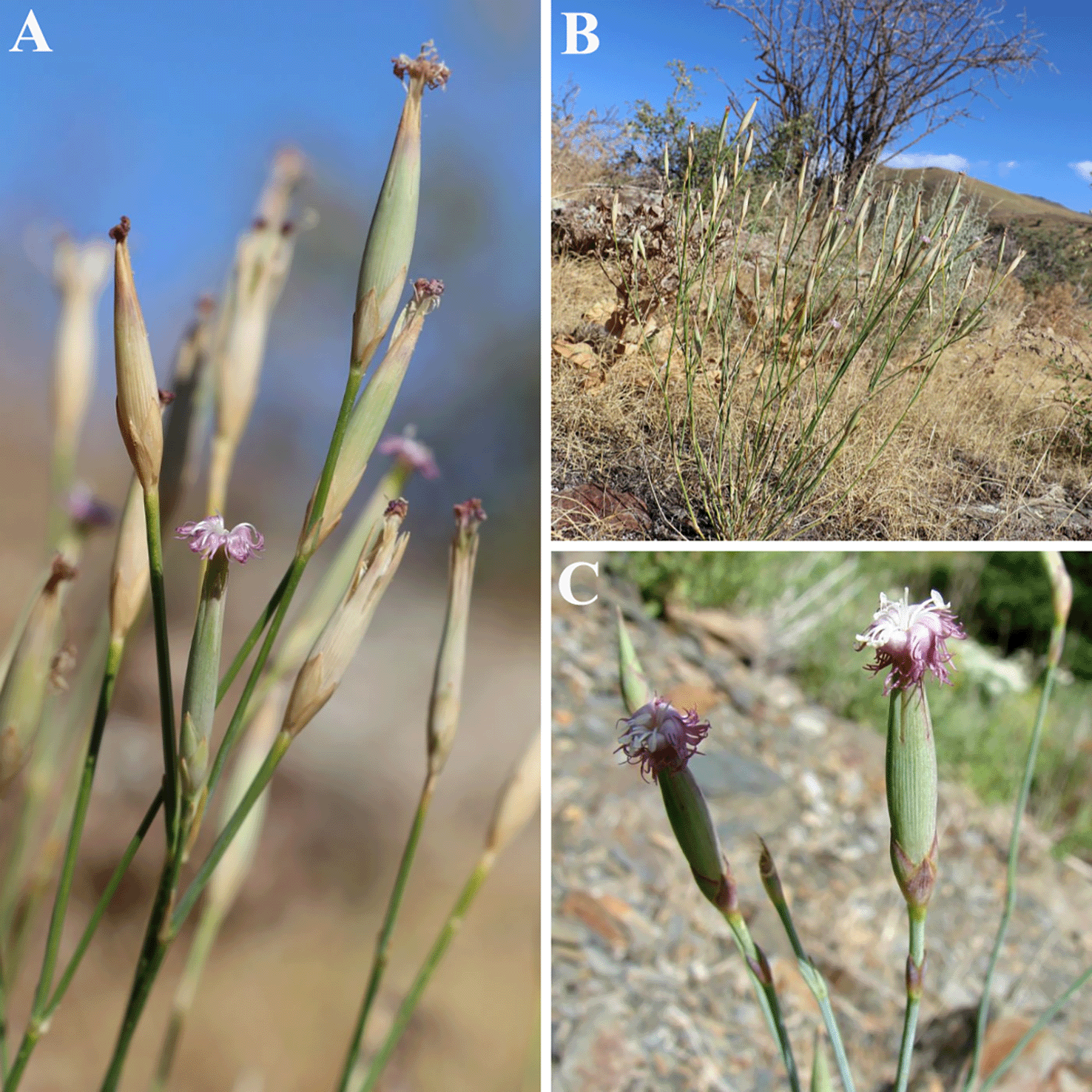
A – Close-up of reproductive shoots of D. helenae; B – Whole plant in its natural habitat; C – Close-up of flowering individuals. Various individuals of D. helenae in a shrub–grassland-steppe community on rocky and fine-soiled slopes in the Ustuksay area, Nuratau Range, Uzbekistan (approximately 1450 m a.s.l.; 4 July 2024; photograph by N. Beshko).
Total genomic DNA was extracted from approximately 100 mg of fresh leaf tissue using a Tiangen Plant Genomic DNA Kit (Tiangen Biotech Co., Beijing, China; Cat. No. DP305) following the manufacturer’s protocol. Sequencing libraries were prepared using ~1 μg of purified DNA with the NEBNext Ultra II DNA Library Prep Kit for Illumina (New England Biolabs, USA; Cat. No. E7645S), including fragmentation to ~350 bp, end repair, adapter ligation, and PCR amplification. Library quality and fragment size distribution were assessed using an Agilent 5400 system. Qualified libraries were sequenced on an Illumina platform at Novogene Bioinformatics Technology Co.
Raw reads were first quality-filtered to remove adapter sequences, low-quality reads, and reads containing ambiguous bases. The resulting clean reads were then used for de novo plastome assembly with NOVOPlasty (Dierckxsens et al., 2017). Gene annotation was performed in Geneious Prime using Dianthus chinensis (GenBank accession OP136025) as the reference genome and manually verified for start and stop codons as well as exon–intron boundaries (Kearse et al., 2012). A circular chloroplast genome map was generated using OGDRAW (Greiner et al., 2019). The assembled chloroplast genome was deposited in GenBank under accession number PZ251004.
Nucleotide diversity (Pi) was calculated using DnaSP v6.12.03 based on the aligned plastome sequences of eight Dianthus species, including D. helenae (Rozas et al., 2017). A sliding-window analysis was performed with a window length of 1000 bp and a step size of 500 bp.
For phylogenetic reconstruction, 22 plastome sequences representing nine Dianthus species and one outgroup taxon (Petrorhagia saxifraga) were retrieved from NCBI GenBank ( Table 1). Complete chloroplast genomes were aligned using MAFFT (Katoh & Standley, 2013). Maximum likelihood analysis was performed in RAxML with 1,000 bootstrap replicates (Stamatakis, 2014). The GTR + G model was selected using jModelTest v2.1.4 under the Akaike Information Criterion (Darriba et al., 2012).
Bold accession means sequenced sample for this study.
The chloroplast genome map of Dianthus helenae revealed a typical circular quadripartite structure, consisting of a large single-copy (LSC) region of 82,856 bp, a small single-copy (SSC) region of 17,105 bp, and a pair of inverted repeats (IRa and IRb) of 24,804 bp each, giving a total genome length of 149,569 bp ( Figure 2). The genome contained the usual set of plastid genes involved in photosynthesis, ATP synthesis, transcription, and translation, including protein-coding genes, transfer RNAs, and ribosomal RNAs. As shown in the map, genes were distributed on both strands, while several genes located in the IR regions were duplicated, including rRNA and some tRNA/protein-coding genes. This agrees well with comparative studies showing that Dianthus chloroplast genomes are highly uniform in overall architecture, generally falling within a narrow size range and containing largely conserved gene sets, with only limited variation at IR/SC boundaries (Lin et al., 2022; Meng et al., 2023; Wicke et al., 2011; Daniell et al., 2016; Yang et al., 2021).
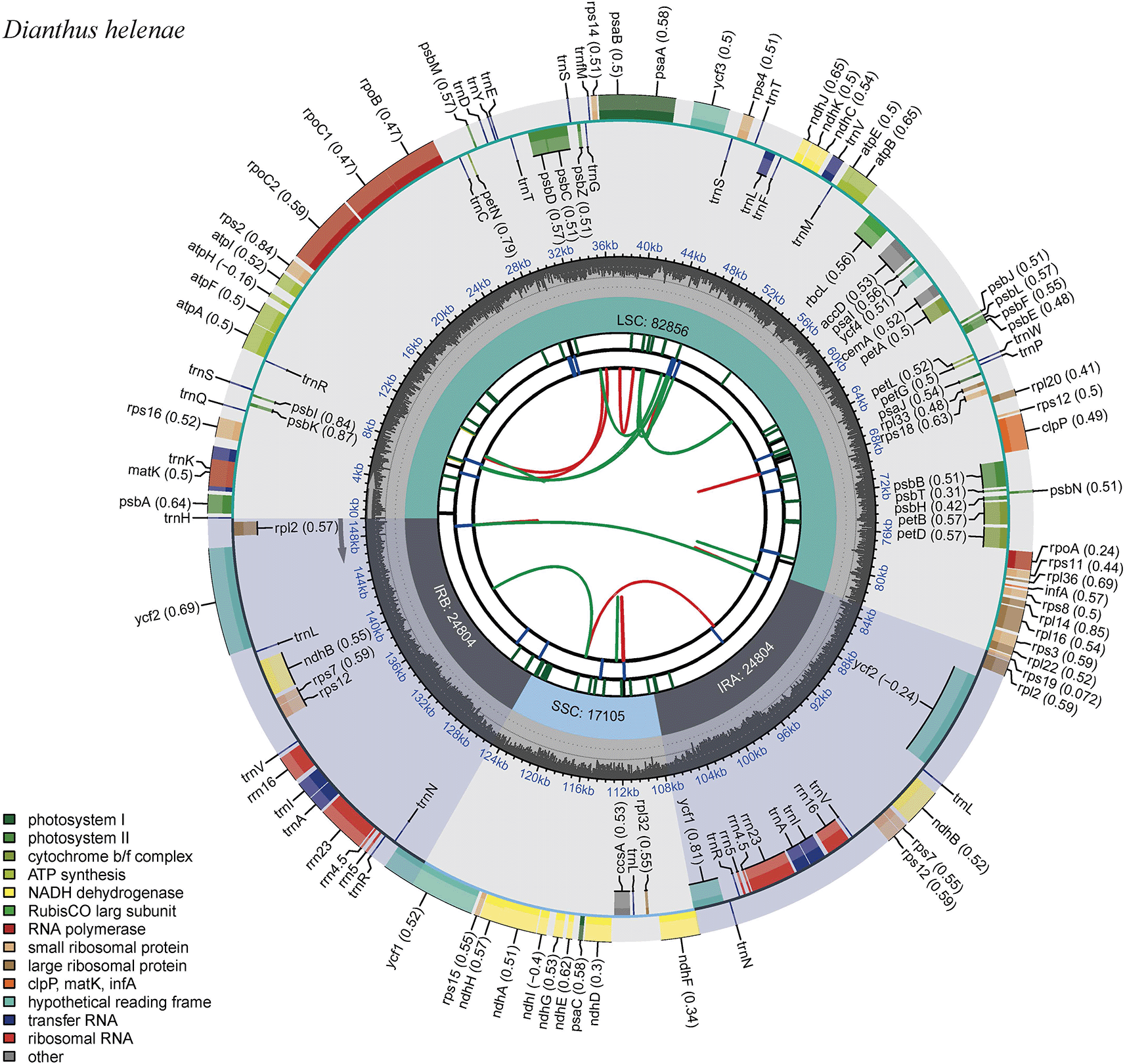
From the center outward, the map consists of six concentric rings. The innermost ring shows forward and reverse repeats, connected by red and green arcs, respectively. The second ring indicates tandem repeats, while the third ring displays microsatellite sequences. The fourth ring shows the sizes of the large single-copy (LSC), small single-copy (SSC), and two inverted repeat regions (IRa and IRb). The fifth ring represents the distribution of GC content. The outermost ring displays genes grouped according to their functional categories with the corresponding codon usage bias values shown in parentheses after each gene name.
Phylogenetic analysis based on complete chloroplast genome sequences strongly supports the placement of D. helenae within the genus Dianthus ( Figure 3). The maximum likelihood tree reveals that D. helenae forms a well-supported clade closely related to D. chinensis and D. caryophyllus, with high bootstrap values (≥100), indicating robust phylogenetic inference.
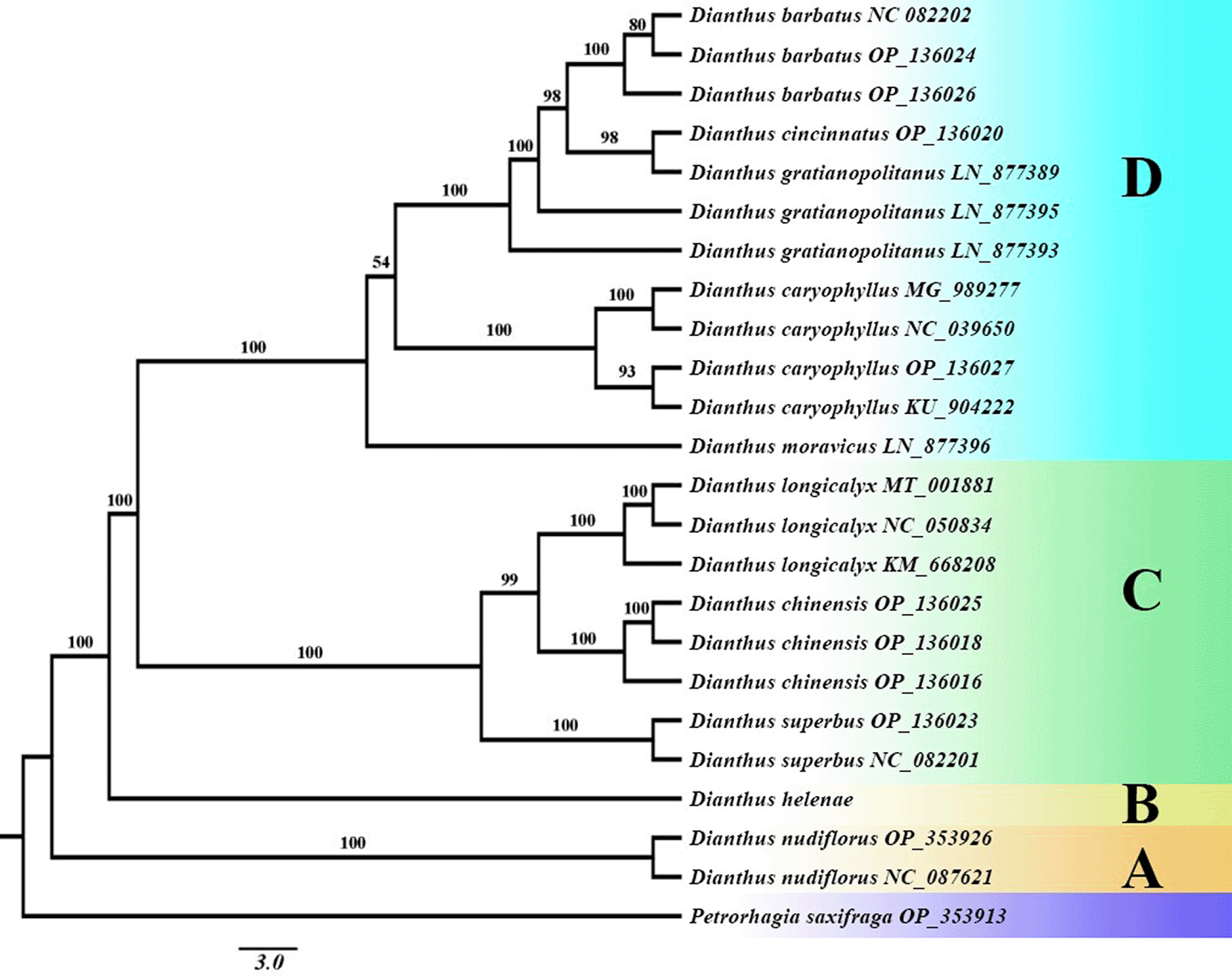
Phylogenetic relationships inferred from complete chloroplast genome sequences. Bootstrap values are shown at the nodes. Petrorhagia saxifraga was used as the outgroup.
The clustering pattern is consistent with previous plastome-based phylogenies, confirming the reliability of whole chloroplast genome data fogeir resolving relationships within Caryophyllaceae. The distinct positioning of D. helenae suggests its independent evolutionary trajectory within the genus. This is broadly compatible with previous whole-plastome analyses, which also resolved two major, well-supported chloroplast groups within Dianthus, one centered on D. caryophyllus, D. barbatus, and D. gratianopolitanus, and the other on D. superbus, D. chinensis, and D. longicalyx (Lin et al., 2022).
Sliding window analysis of nucleotide diversity (Pi) revealed heterogeneous variation across the plastome ( Figure 4). The SSC region exhibited higher variability compared to LSC and IR regions, consistent with patterns observed in other angiosperms. Several highly variable regions were identified, including coding regions such as ycf1, rpl32 and intergenic spacers ndh-ndhE, rps16-trnQ-UUG. These hotspots represent potential candidate regions for molecular marker development and phylogeographic studies. In contrast, IR regions showed significantly lower nucleotide diversity, reflecting their conserved nature and the stabilizing effect of gene duplication.
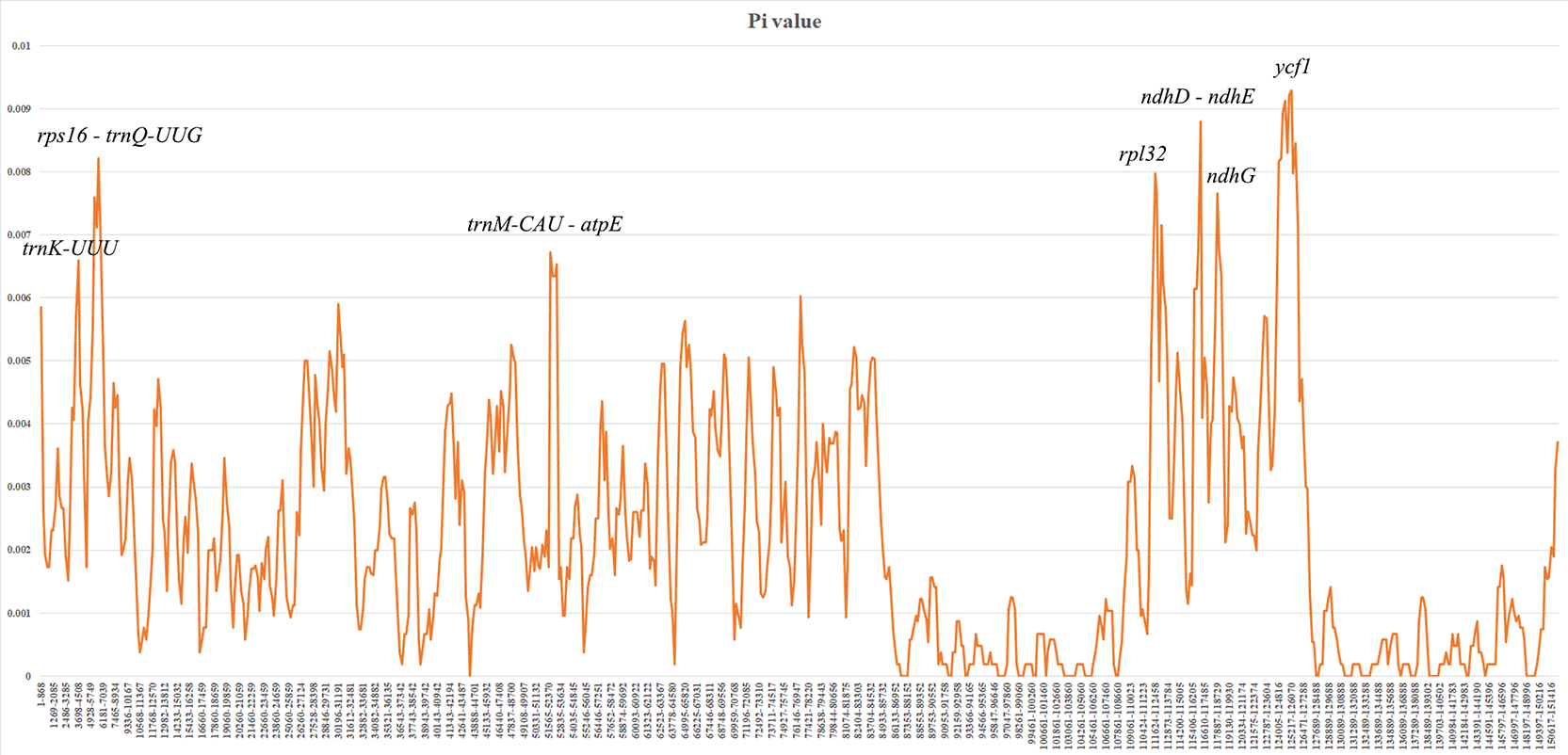
Nucleotide variability (Pi) is plotted along the genome sequence. The window length was set to 800 bp with a step size of 200 bp.
Overall, the present results show that D. helenae combines strong plastome structural conservatism with enough sequence divergence in a small number of highly informative loci to support phylogenetic placement and future species-level identification. Because D. helenae is an accepted Central Asian species of medicinal interest and several phytoecdysteroids have already been reported from it, the plastome resource generated here should be valuable for molecular authentication, population-level marker development, and future conservation-oriented studies of the genus in the region (Yusupova et al., 2022).
This study did not involve human participants or animals. Ethical approval and informed consent were therefore not required.
NCBI GenBank: Dianthus helenae chloroplast genome. Accession number PZ251004.
The accession numbers of comparative chloroplast genomes used in this study are provided in Table 1.
No custom code was used in this study.
Software used in the analysis included NOVOPlasty, Geneious Prime, OGDRAW, DnaSP v6.12.03, MAFFT, RAxML, and jModelTest v2.1.4, as cited in the Methods section.
This research was supported by the State Program “Digital Nature: Development of a digital platform for the flora of Central Uzbekistan”, implemented by the Institute of Botany of the Academy of Sciences of the Republic of Uzbekistan for the period 2025-2029. This research was also supported by the project titled “Assessing climate change adaptation in endangered plants of Uzbekistan: A DNA barcoding approach” (AL 9224104464).
The author(s) declared that no grants were involved in supporting this work.
Published: 29 Jul 2026, 15:727
Published: 01 Jun 2026, 15:727
Published: 13 May 2026, 15:727
© 2026 Ergashov I et al. This is an open access article distributed under the terms of the Creative Commons Attribution License, which permits unrestricted use, distribution, and reproduction in any medium, provided the original work is properly cited. The author(s) is/are employees of the US Government and therefore domestic copyright protection in USA does not apply to this work. The work may be protected under the copyright laws of other jurisdictions when used in those jurisdictions.
Current Reviewer Status: ?
Key to Reviewer Statuses VIEW HIDE
ApprovedThe paper is scientifically sound in its current form and only minor, if any, improvements are suggested
Approved with reservations A number of small changes, sometimes more significant revisions are required to address specific details and improve the papers academic merit.
Not approvedFundamental flaws in the paper seriously undermine the findings and conclusions
Version 3
VERSION 3
PUBLISHED 29 Jul 2026
Revised
Reviewer Report 31 Jul 2026
Hoang Dang Khoa Do, Nguyen Tat Thanh University, Ho Chi Minh City, Ho Chi Minh, Vietnam
Approved with Reservations
VIEWS 0
Competing Interests: No competing interests were disclosed.
Reviewer Expertise: Chloroplast genome evolution.
CloseVersion 2
VERSION 2
PUBLISHED 01 Jun 2026
Revised
Reviewer Report 19 Jun 2026
Ruslan Kalendar, University of Helsinki, Helsinki, Finland
Approved
VIEWS 0
Are the rationale for sequencing the genome and the species significance clearly described?
Yes
Are the protocols appropriate and is the work technically sound?
Yes
Are sufficient details of the sequencing and extraction, software used, and materials provided to allow replication by others?
Yes
Are the datasets clearly presented in a usable and accessible format, and the assembly and annotation available in an appropriate subject-specific repository?
Yes
Competing Interests: No competing interests were disclosed.
Reviewer Expertise: molecular genetics, diversity and genomics
CloseReviewer Report 05 Jun 2026
Hoang Dang Khoa Do, Nguyen Tat Thanh University, Ho Chi Minh City, Ho Chi Minh, Vietnam
Approved with Reservations
VIEWS 0
Competing Interests: No competing interests were disclosed.
Reviewer Expertise: Chloroplast genome evolution.
CloseVersion 1
VERSION 1
PUBLISHED 13 May 2026
Reviewer Report 21 May 2026
Hoang Dang Khoa Do, Nguyen Tat Thanh University, Ho Chi Minh City, Ho Chi Minh, Vietnam
Approved with Reservations
VIEWS 0
Are the rationale for sequencing the genome and the species significance clearly described?
Yes
Are the protocols appropriate and is the work technically sound?
Yes
Are sufficient details of the sequencing and extraction, software used, and materials provided to allow replication by others?
Yes
Are the datasets clearly presented in a usable and accessible format, and the assembly and annotation available in an appropriate subject-specific repository?
Yes
Competing Interests: No competing interests were disclosed.
Reviewer Expertise: Chloroplast genome evolution.
CloseOpen Peer Review
Alongside their report, reviewers assign a status to the article:
| Invited Reviewers | ||
|---|---|---|
| 1 | 2 | |
| Version 3 (revision) 29 Jul 26 | read | |
| Version 2 (revision) 01 Jun 26 | read | read |
| Version 1 13 May 26 | read | |
Sign up for content alerts
Alongside their report, reviewers assign a status to the article:
Approved - the paper is scientifically sound in its current form and only minor, if any, improvements are suggested
Approved with reservations - A number of small changes, sometimes more significant revisions are required to address specific details and improve the papers academic merit.
Not approved - fundamental flaws in the paper seriously undermine the findings and conclusions