Просмотр новости
Найдите то, что Вас интересует
 Спутники
 РН
РН SpaceX
 Роскосмос
 NASA
NASA
СпутникиРНSpaceXРоскосмосNASABackground Climate change has become a major challenge for marginalized communities, particularly the 13 Particularly Vulnerable Tribal Groups (PVTGs) of Odisha, whose livelihoods depend heavily on forests and natural resources. Traditional activities such as shifting cultivation, collection of minor forest produce, hunting, handicrafts, and wage labour are increasingly threatened by cyclones, floods, droughts, and erratic rainfall. Despite growing concern over climate change, limited research has examined its specific impact on the livelihoods and resilience of Odisha’s PVTGs. Methods This study adopts a doctrinal method supported by secondary data analysis. It draws upon an extensive review of academic literature, government reports, policy documents, and published case studies to examine the relationship between climate variability and the livelihoods of Odisha’s PVTGs. The analysis focuses on how climate-induced environmental changes interact with structural and institutional challenges, including geographical isolation, inadequate infrastructure, limited market access, and insufficient institutional support. Results Many interesting findings indicate that climate change has significantly disrupted the traditional livelihood practices of Odisha’s PVTGs by reducing agricultural productivity, availability of forest resources, and increasing livelihood insecurity. Climate-induced risks have compelled many community members to shift from traditional occupations towards daily wage labour and other informal employment opportunities. This transition not only increases economic vulnerability but also threatens the preservation of indigenous knowledge systems, cultural identity, and traditional ecological practices. Conclusion Climate change threatens the livelihoods and cultural sustainability of Odisha’s PVTGs. Building resilience requires participatory, culturally sensitive approaches that involve indigenous communities in decision-making. Policies should promote livelihood diversification, strengthen institutional support, and recognize traditional ecological knowledge to achieve sustainable development while preserving the socio-cultural identity of these vulnerable communities. This article will pave a way towards future studies.
The threat of climate change has become increasingly prominent every year. “Climate Change refers to the long-term shifts in temperatures and weather patterns”.60,61 This process can be natural but due to the increase in human developmental activities by humans, this process has become faster. It is affecting every sectors of human life and the biodiversity of the planet. However, its impact is not consistent with every human as it defers based on the socio-economic background. PVTG are categorized as one of the most marginalized communities under the Scheduled Tribes, making them more vulnerable to the climate change. These communities live close to nature and are known to be the custodians of the forest, thereby experiencing the maximum impact of the climate crisis without contributing much. The PVTGs depend on their environment for their livelihood and are known to practices like shifting agriculture, forest gatherings, hunting etc., where climate plays a major role. Any disruptions in the rainfall or an increase in the natural disasters result in the non-availability of raw materials, impacting the livelihood of these communities. “The customary rights and commands of tribal people over their livelihood resources, that is, land and forest, and their territorial autonomy and sovereignty, have increasingly come into conflict with the forces of modernization, marking them as outsiders and impacting their identity”.19
This study focuses on the PVTGs residing in the state of Odisha and one of the reasons is the highest population with 13 groups present in the state. Another very significant reason is Odisha’s diverse climatic conditions and the isolation of these communities along with the state being prone to natural disasters such as cyclones, floods and erratic rainfall. This study examines the livelihood impact of climate change on the 13 PVTGs present in Odisha, living under different topographies from coastal areas to the hilly locations. First, it provides an understanding of the 13 PVTGs and their livelihood practices. It then examines the climate vulnerabilities faced by the communities along with case studies to substantiate this stance. The major focus of this paper is on the common livelihoods of all the 13 groups, that is, agriculture, forest gatherings and handicrafts. It explores the impact of climate change on each of these livelihoods using examples and case studies of these communities. The paper then elaborates on various governmental interventions, such as bringing of FRA legislation to the implementation of the OPELIP (Odisha PVTG Empowerment and livelihoods Improvement Programme) by the Odisha government. Finally, recommendations are provided in order to improve the household incomes of these communities and minimise the impact of climate change.
“Article 342 of The Indian Constitution”,51 empowers the president to identify communities, and groups to be categorized as ‘Scheduled Tribes’ within any state or Union Territory. During British rule in India, certain communities faced large scale discrimination, forcing them to become more vulnerable. The reason behind this provision was the upliftment of certain marginalized communities and the provision of special protection, as well as social and economic development. Over time, it was realized that there are disparities between the STs, also and these disparities were acknowledged by “The Dhebar Commission (1960-61)”.33 A special category named “Primitive Tribal Group (PTG)”57 was created to address this issue which was later renamed PVTGs. “The commonly agreed cultural traits of PTGs are (1) homogeneity, (2) small population, (3) relative physical isolation, (4) social institutions are cast in a simple mold, (5) absence of a written language (6) relatively simple techno-economy and (7) a slower rate of change in the present context”.33 “There are 75 groups of PVTGs identified in India”.33 It has been realized that the socio-economic conditions of these communities are worse than the those of other STs, making them prone to health issues, climate hazards, scarcity of natural resources, malnutrition, and migration etc.
Of the 75 PVTGs present in India, Odisha has 13 groups which makes this the highest in terms of their population. One of the tribes called the Bonda tribes residing in the Malkangiri district and, is known for their aggression. “They are primarily agriculturists growing cereals, pulses, oilseeds and practice shifting cultivation. In addition, their livelihood is supplemented by animal domestication and seasonal forest collections. They come down from the hills for weekly markets to sell their surplus agricultural produce and minor forest products”.26
Birhor is another PVTG residing in and around the Similipal hills of Mayurbhanj along with Sundargarh, Balasore district. “They live a semi-nomadic lifestyle and depend largely on the Similipal hill for their livelihood. They are known to collect Siali bark to make ropes and baskets that are sold in local markets. This community is known for its monkey catching skills and sometimes sell small birds and animals locally for money. In the recent years, they have seen taking up agricultural activities”.44
The third tribe is Chuktia Bhunjia, which resides in the Sunabeda plateau of the Nuapada district. “They are known for their sacred kitchen called Lal Bangla with many customary practices associated with it. They are mostly used in agriculture to cultivate bajra, millets,pulses, and vegetables. In addition to agriculture, they practice hunting, gleaning, animal husbandry, fishing and wage earning. They also collect firewood, wild grass and prepare brooms for use and sale”.31
Another PVTG residing in the Malkangiri district is Didayi who live in the hilly ranges of Konda Kamberu. “They are known for their shifting cultivation on the hills and paddy cultivation in the plains. Community members also collect minor forest produce, such as fruits and mushrooms, for their consumption. They are also known for their basketry”.35
Dongria Kondh is present in the Niyamgiri hill ranges of Rayagada district, famous for its resistance to mining in their areas. “This community lives in steep, isolated hilly areas and are known for their turmeric cultivation. They practice shifting cultivation at higher altitudes and also produce bananas and pineapples on hilly slopes. They worship the hills and consider it as God, which shows a natural and powerful bond with nature”.45
Another semi-nomadic PVTG present in the Mayurbhanj District was named as Hill Kharia. “They are hunter-gatherers and collection of forest produce like honey, resin forms part of their major source of income. They engage in cultivation on small patches of land or sometimes work as agricultural laborers to supplement their income. Women from this community are involved in weaving of date palm and bamboo mats and leaf plates, cups for sale in local markets”.38
The next PVTG known as Kutia Kandha residing in the Kandhamal and Kalahandi districts, is known for its typical style of house building. “Their economic life directly and indirectly revolves around the forest where they get materials for the construction of their houses. They are also dependent on the forest for fruits, seeds, mushrooms, tubers, roots, and so on. They are also involved in fishing and hunting. Their forest areas are rich in bamboos which gives them opportunities to make baskets, traps, and other household materials”.41
Another group was found mostly in the hills of Keonjhar district known for their uniclan settlement where the whole village can belong to a certain clan. “They orginally lived in isolation and practiced shifting cultivation. However, recently, they have been moving towards settled agriculture. They are skilled weavers and are involved in making everyday products, such as combs, cases and baskets. They are also moving towards domesticating animals such as cows and goats etc. for extra income”.39
The other interesting group is called Lanjia Soura found in the eastern ghats of the Gajapati district and is known for their style of wearing jewelry especially with women. “They are famous for their inbuilt water management system for rice cultivation and do terrace farming. They also practice slash-and-burn along with forest collection, hunting, fishing, and labor work for construction, cultivation etc. Recently for economic development, they have started cashew plantation”.37
Another interesting tribal group is the Lodha community from the Mayurbhanj district, which was famously declared criminals by the British. “It was very interestingly identified that due to depletion of forest and land alienation, they have been involved in anti-social activities. They made ropes, collected tassar cocoons, and sold firewood. In addition, recently, they have been shifting to wage earning through carpentry and agricultural operations”.42
The other PVTG, Mankirdia, are part of the Birhor tribe, and share common descendants and are also clubbed under one governmental micro-project. “They are mostly into the craft of rope making and are known for their skills of catching monkeys and eating them. They are mostly dependent on forest produce”.40
The next PVTGs called Paudi Bhuyan are found in the hills of Anugul and Sundaegarh districts. “They practice paddy cultivation in the valleys and shifting cultivation in hill slopes. They also collect minor forest produce such as mahua flowers, mangoes, and fiber for rope- making. In the rainy season they do fishing and dry the fishes for future consumption”.43
The last PVTG, are called Saora, who resides mainly in the Gajapati and Rayagada districts. “They are artistic people who are involved in paintings, singing etc. Therefore, their main income comes from the sale of paintings. They practice shifting and terraced cultivation along with having skills of water management”.36
The term livelihood has no definition, but it has been accepted to have multiple meaning based on different societal needs. “According to the United Nations Development Programme, livelihood is a means of making living. It encompasses people’s capabilities, assets, income, and activities required to secure the necessities of life”.58 Worldwide, livelihood primarily includes the way in which an individual fulfils their necessities. This also applies to tribal communities. However, the ways in which a tribal community member fulfils the livelihood necessity can differ. Tribes worldwide focus mainly on the collection of forest produce, different forms of agriculture, hunting activities, and small handicrafts. The PVTGs present in Odisha showcase similar traits of livelihood management. However, recently, due to climate change, developmental projects and deforestation have led to a shift in their traditional livelihoods. This has indirectly forced communities to change their ways of living, leading to identity and cultural crisis. Historically the PVTG communities living in Odisha have faced immense discrimination both pre- and post-independence. “The colonial rule declared ethnic violence especially on the tribal population and termed them as criminals, poor and wild”.64 Some of the polices were also carried forward after the independence, which led to the marginalization of these communities, forcing them to extreme poverty. This effect of which is visible today in terms of changes in their way of living, especially in their livelihood.
Figure 1 shows how climate change affects the tribal communities of Odisha in terms of their agriculture, husbandry, collection of forest produce, and so on. This figure suggests that there was a sharp decline in almost everything except for biochar collection.
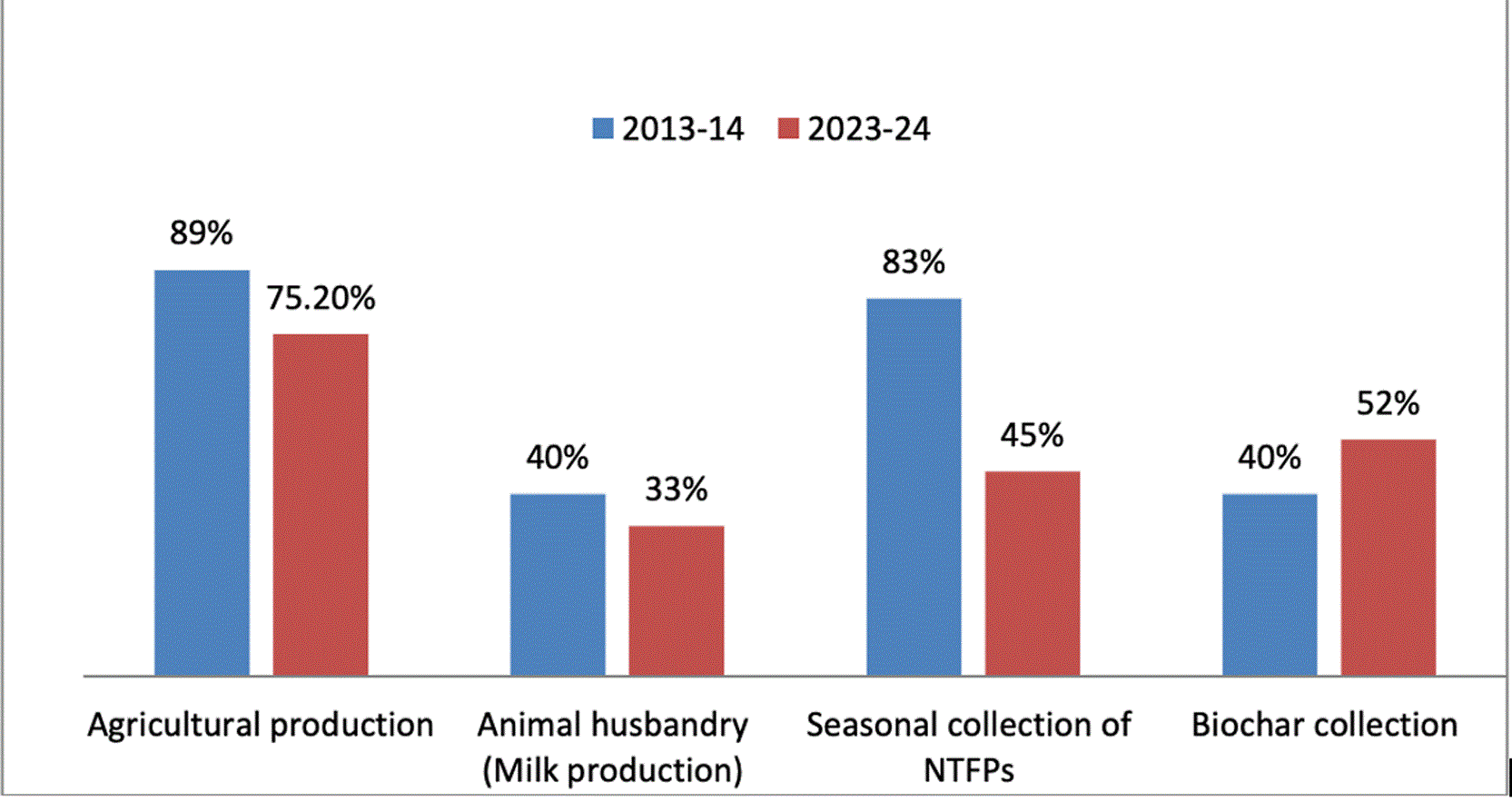
Note. The figure illustrates changes in the proportion of respondents reporting the effects of climate change on four traditional livelihood activities—agricultural production, animal husbandry (milk production), seasonal collection of non-timber forest products (NTFPs), and biochar collection—between 2013–14 and 2023–24. The comparison indicates a decline in agricultural production, animal husbandry, and seasonal NTFP collection, while reliance on biochar collection has increased over the study period.
Agriculture has historically been a standard method of livelihood for the tribal communities. As discussed above, many tribes practiced shifting cultivation, including slashing and burning. The crops grown were also based on the requirements and dietary practices of community members. “However, due to the cumulative impact of deforestation, ecological imbalance and pressure of the growing population, settled agriculture has taken precedence over the traditional cultivation”.37 Many of the PVTGs who traditionally shifted lands based on the nutritional quality of the soil have changed their way of sustenance and are creating boundaries around the villages to protect their lands. Another very important means of livelihood for the tribal communities is the collection of forest produce, which is practiced by communities throughout the world. However, with the passing of time and the shortage of natural resources, the government has forced it to take steps to restrict the use of land by the tribal communities. The Indian government brought in a huge step in 2006 to give certain rights to the tribes dependent on the forest called “The Forest Rights Act, 2006”.55 This act protects the forest dwellers’ right to gather forest produce for their use and access forest land as their right to livelihood. This model looked promising on papers but failed to deliver what it aimed.14 Another widely practiced livelihood of tribes worldwide is hunting including activities of fishing activities. This also has a cultural significance, as hunting tribes is crucial for rituals and certain festivals. One of the PVTGs from Odisha, named the Mankirdia, is known for its monkey hunting abilities. “They use nets for catching monkeys. They eat the flesh of the monkeys and sell the skin to the local skin traders for cash”.40 The name ‘Mankirdia’ was also derived from monkeys. Tribal activities, such as fishing and killing small animals for sacrifice, are widely accepted as part of the tribal community’s tradition. Many of the tribes present in Odisha have always been onto making small handicrafts products, such as baskets, hunting equipment, paintings and other household items. These products are usually sold in the nearby markets as cash or other products. “The production of handicrafts is (after agriculture) the largest source of income among rural populations – an estimated 11.65 million Indians were engaged in craft production in 2013”.54
With the evolution of humans, age-old customary practices involving the exchange of goods without any form of money exchange have been substituted with money. However, certain rural communities, including the tribal communities, still practice this exchange system. It is an essential socioeconomic tradition for tribes who sometimes exchange their agricultural goods, forest gatherings, and other tribal communities, even with language barriers. An article even pointed out the important role of women in the whole system as they are responsible for nurturing the family along with gathering forest produce, cooking etc. “It pointed out certain principles behind the tribal barter system: (i) there is no minimum amount of food and other bioresources required to participate in barter system (any amount can be exchanged), (ii) from fresh to boiled and roasted form of food production can be used during exchange, (iii) plants and animals both could be the important material during exchange, (iv) sometimes cultural items (such as garland - customary mala), dresses, wool, hairs, skin and handicrafts play a significant role to make exchange with bioresources, (v) exchanges are not based on the design and visual quality of products; preference principle factors are the traditional values (in case of food it is taste, flavour and feelings), (vi) exchange is based on reciprocity and complementaries and (vii) barter is based on open access system (monopoly to exchange bioresources are considered to be unethical among many tribes)”.46 The tribes see this as a way to sustain their nutrition and access to certain varieties of plants and animals that they can exchange in the local markets without involving money. “It is also a sustainable method of ensuring that the surplus from any household do not get wasted. In the hilly Koraput district of Odisha, the barter system is called Kheja, where women from the tribal communities use millets instead of money for vegetables, soap, oil, and dried fish”.24,25 “Other tribal communities residing in the Nuapada district also use barter systems to exchange mahua flowers to obtain essential household items such as oil, snacks, vegetables etc.”.28 This system of exchange is very prevalent within the PVTGs living in Odisha, as local markets in these remote regions give them access to interact and trade with other communities for essential goods.
The morphology of Odisha consists of a very diverse landscape with coastal areas, mountains, rivers and plains. “On the basis of homogeneity, continuity and physiographic characteristics, Odisha has been divided into five major morphological regions: the Odisha Coastal Plain in the east, the Middle Mountainous and Highlands Region, the Central plateaus, the western rolling uplands and the major flood plains”.12 Each region specifies different climatic conditions that are unique to that particular area, such as coastal pains; the climate tends to be more hot and humid, while in the mountainous regions, it is much more cooler, making it favourable for certain crops to grow. Many of the PVTGs present in Odisha mountainous regions, especially in the districts of Mayurbhanj, Malkangiri and Rayagada, which are remote areas with limited infrastructural development.
The above Figure 2 geophysical distribution shows that the PVTGs present in Odisha are mostly hill tribes and live more closer to nature, with having forest dependency. This makes them more vulnerable to climatic conditions, such as floods, droughts, rising temperatures, and cyclones.
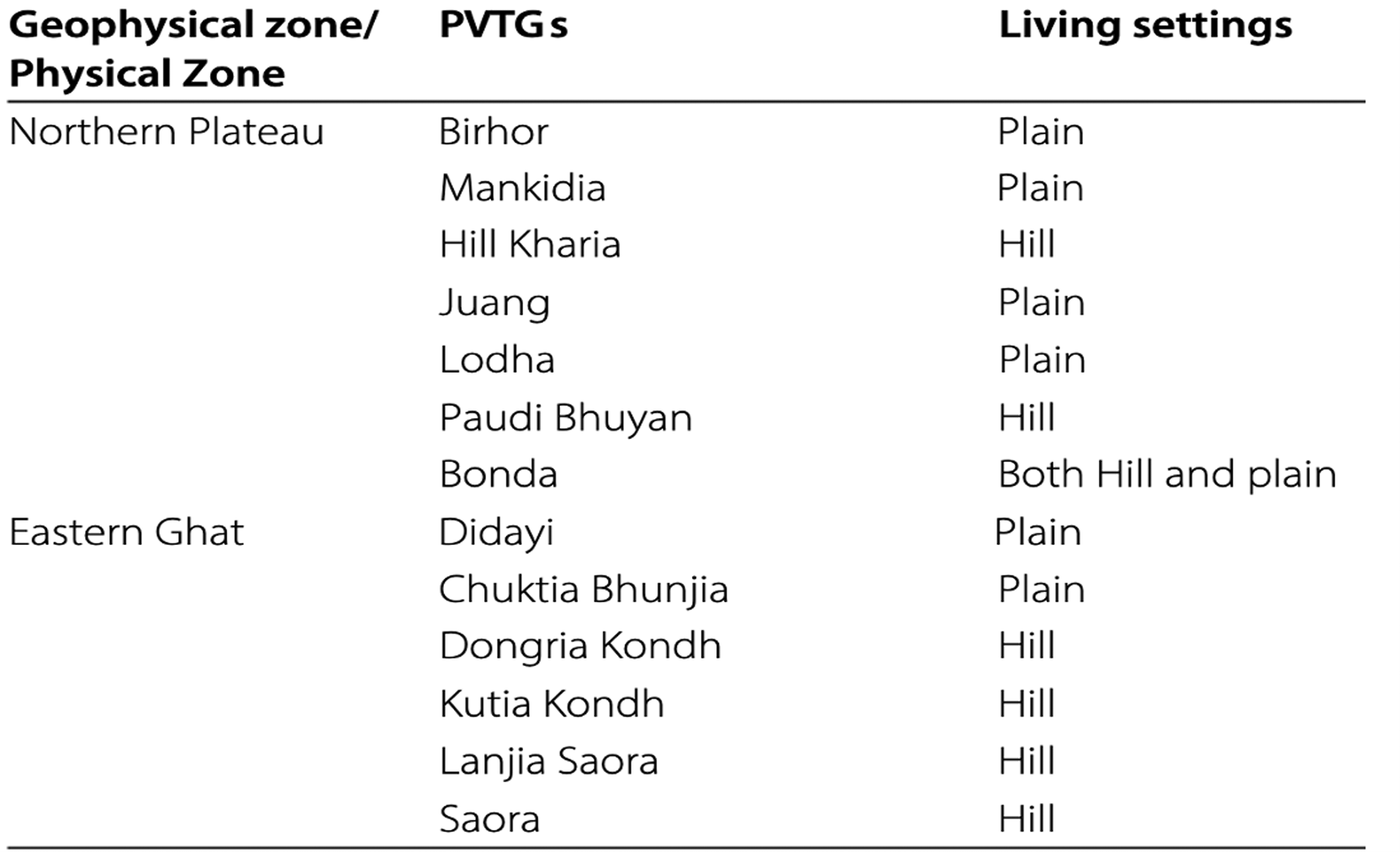
Note. The figure depicts the distribution of Odisha’s 13 PVTGs across the Northern Plateau and Eastern Ghat geophysical zones, indicating their predominant living settings (plain, hill, or both). The spatial distribution demonstrates the ecological contexts within which these communities reside and their differential exposure to environmental and climatic conditions.
Historically, Odisha has been prone to a variety of natural calamities, such as frequent cyclones, droughts, and floods. “A study on the effects of disasters revealed that between 1963 and 1999, Odisha experienced 13 major disasters, which killed 22,228 people and rendered more than 34 lakhs homeless”.16 As climate change is slowly becoming an integral part of everyday life, this region is also becoming prone to the recent climate hazards. The main reasons behind Odisha’s climate crisis are the diverse topography, mostly the hot climate and minimal winters, which have a disproportionate impact throughout the state. Another reason is the poor economy of the state and limited infrastructure in many remote areas, which makes the already marginalized population more vulnerable. “In the last century, out of the 1019 cyclonic disturbances in the Indian subcontinent, 890 were along the eastern coast, and of these, 260 cyclonic disturbances had andfall along the Odisha coast. In the districts of Jagatsinghpur and Kendrapada, forest cover was reduced by 50 per cent due to this super cyclone. Floods have become an annual affair in Odisha, India,. Areas with no history of floods such as the districts in western Odisha, were submerged in the last few flood situations. Ironically, Odisha suffered from one of its worst droughts in 2001. It affected the lives of 11 million people in more than two-thirds of the state’s districts, engulfing earlier drought-free districts like Sundergarh and Kendrapada”.21
3.1.1 The story of saura from mahendragiri
In 2018, a cyclone named ‘Titli’ hit Eastern Odisha which resulted in affecting the Saura tribes, who never had witnessed this natural calamity before. The Odisha state has historically been prone to cyclonic storms, but it was limited to certain districts, especially the coastal ones. Recently, the intensity of cyclones has increased, which has also started to affect PVTGs living in hilly areas. Here, climate change plays a major role as the temperature rises and the ocean becomes warmer, resulting in the frequency of the cyclones. “Cyclones result from depressions. Depressions are a cyclic, regular phenomenon without which we will not obtain southwest and northeast monsoons. However, because of climate change, these depressions become deep depressions, and deep depressions become cyclonic storms”.1 Due to this particular cyclone, the Saura community lost vegetation, and the slopes affected their houses and other sources of livelihood. Therefore, to protect these groups, the government relocated them to another location, away from the Mahendragiri hills, which was traditionally their ancestral place. They have relied on these hills for sustenance in the form of practising shifting cultivation, growing crops, and collecting forest produce. “But the relocation has happened 18 kms away from their traditional dwelling place with lot of stones in the surroundings making it difficult to grow the plants or practice kitchen gardening that they are accustomed to”.3 Many reports have claimed that this cyclone destroyed the vegetation of the hill. “According to a community member, the soil in the new area resists farming due to the presence of rocks, along with land disputes with Andhra Pradesh. In Barghara, the land was plentiful. Families grew millets such as ragi, jhana, ganthia, and kangu (finger millet and foxtail millet) through podu chasa (shifting cultivation), along with gourds, pumpkins, and other vegetables. Here, even a small plot is rare”.1 These instances show how the communities face livelihood challenges owing to climate change.
3.1.2 The Bonda’s success millet story
The Bonda community, which has been identified as one of the PVTGs from the Malkangiri district of Odisha, is facing the climate change impacts. There have been reports of the loss of vegetation in villages, along with water scarcity. The forests around villages are no longer giving communities sufficient produce, and they are forced to go and buy everyday essentials. “Over the years, Bonda men as well as the youth are migrating for work as the community is no longer able to meet its needs from the forest. They have also started migrating to nearby towns such as Jeypore and Koraput to work in hotels”.4 Women are also affected by to the rise in temperature, as they have to travel longer distances in search of water.
Figure 3 above shows the deviation in rainfall in Malkangiri from 2008 to 2019. This disturbed rainfall pattern affected agriculture in he Bonda community. However in 2017, the “Odisha Millet Mission”8 was brought in by the government to help the tribal communities to produce millets. This crop has been recalled as one of the first things to be cultivated by humans and holds significance in the history of tribal communities. “Millets are considered super crops because they require 60% less water than paddies and can be harvested within 70-100 days as against 120-150 days for paddy or wheat. They are also resilient to drought, salinity, extreme heat, pests and diseases. It also contains nutritional value when added to the diet of the tribal communities”.18 Bonda community members are benefiting from this crop, which shows how traditional knowledge and sustainability can help the community members to better fight climate change.
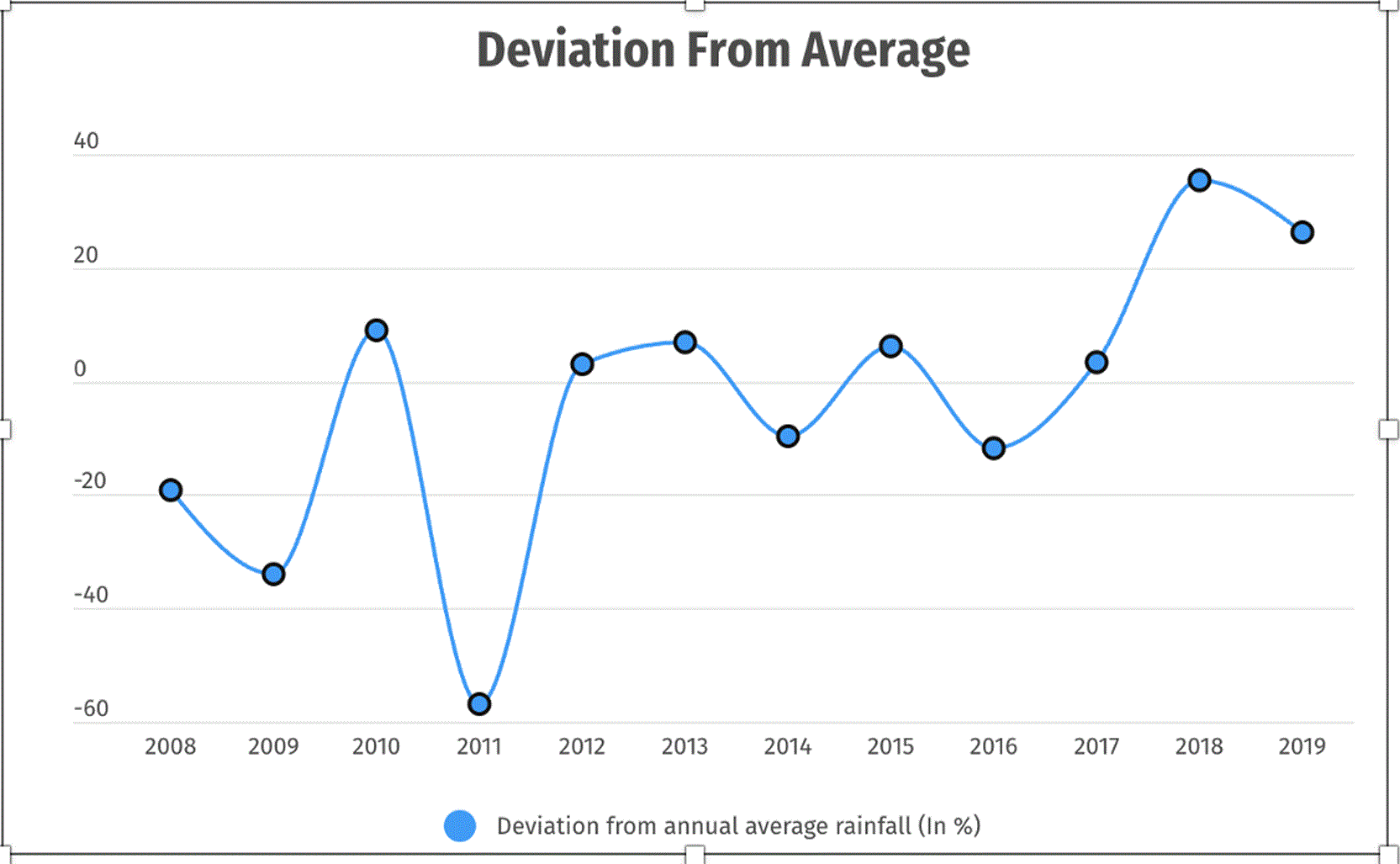
Note. The figure illustrates the annual percentage deviation from the long-term average rainfall in Odisha between 2008 and 2019. Positive values indicate years with above-average rainfall, whereas negative values represent below-average rainfall. The fluctuations highlight the increasing variability in precipitation patterns, reflecting the climatic uncertainties that have implications for agriculture, forest-dependent livelihoods, and the resilience of tribes in Odisha.
India has always been an agriculturalist country, where almost half of the population depends directly on this sector for their source of income. “The agriculture and allied sectors contributed approximately 18.4% of the India’s Gross Value Added (GVA) at current prices during 2022-23”.7 However, governmental reports suggest that this value is decreases every year by a small percentage. Many factors can be identified for the decrease in production and climate change can be considered a major reason especially in India. Owing to various changes in the climate, crop yield is the most affected.
The above Figure 4 by UNDP suggests that by 2050, most of the prices of basic cereals and pulses will rise due to a decrease in their production, which will create food insecurity and malnutrition along with more poverty for the farmers. An increase in carbon dioxide has been identified as reducing the nutritional value of food and decreasing yield production.10
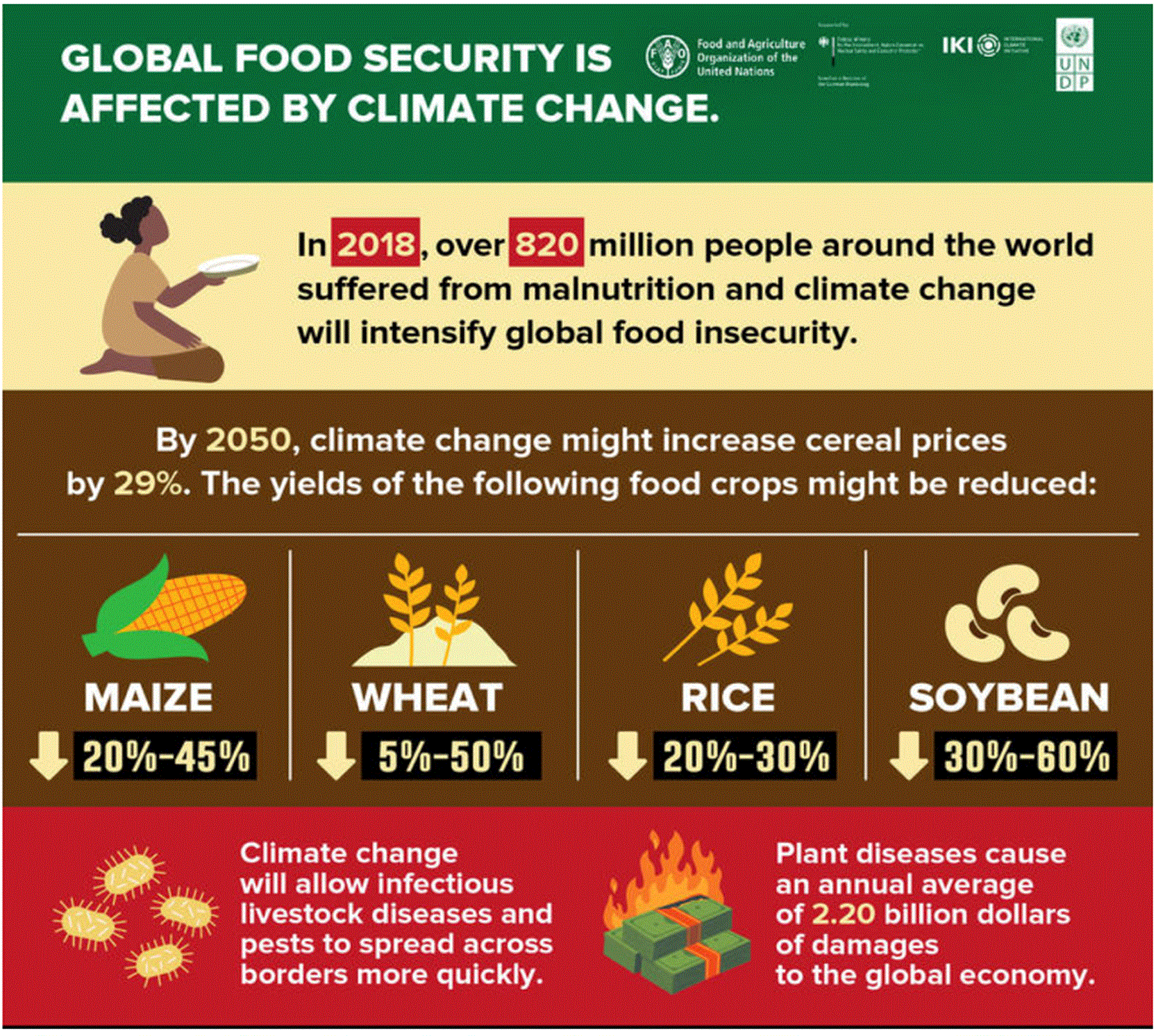
Note. The figure illustrates how global food security will be affected by climate change where yields will be reduced which will increase the cereal prices. According to this the production of maize will go down by 20% - 45%, wheat production will go down by 5% -50%, rice to 20% -30% and soybean from 30%- 60%.
In the context of Odisha, the tribal population especially PVTGs, practice some or other forms of agriculture for their livelihood. They have been practising shifting agriculture since the ages; however, due to climatic changes and other factors, the trend has shifted to settled agriculture. “Interestingly most of the tribal communities from Odisha relay on rainfed agriculture rather than the infrastructure because it lacks in many tribal districts”.63 There is therefore a heavy reliance on the monsoons for the crops growth, but monsoons have become very unreliable in recent times.
The above Figure 5 shows the graph representation by “Revenue and Disaster Management Department, Government of Odisha”48 which clearly indicates huge deviations in the rainfall pattern especially in the tribal districts. Odisha is prone to many natural disasters and has a direct and significant impact on the agricultural sector. For example, cyclone alone ruin the cultivation destroys lands. “A study indicated that cyclone Phailin in 2013 resulted in the submergence of fields and crop damage, particularly in Nayagarh, Cuttack, Jajpur, Kendrapara, Jagatsinghpur and Bhadrak districts and affected vulnerable sections such as scheduled caste, wage labourers and sharecroppers”.27 Multiple reports suggests that small-scale farmers are affected more by natural disasters because of a lack of resources. Similarly, an increase the frequency of floods also results in loss of crop loss. “A study done in Puri district of Odisha showed that floods lead to crop submergence and subsequent crop failure and contributes to increasing the vulnerability of people”.27
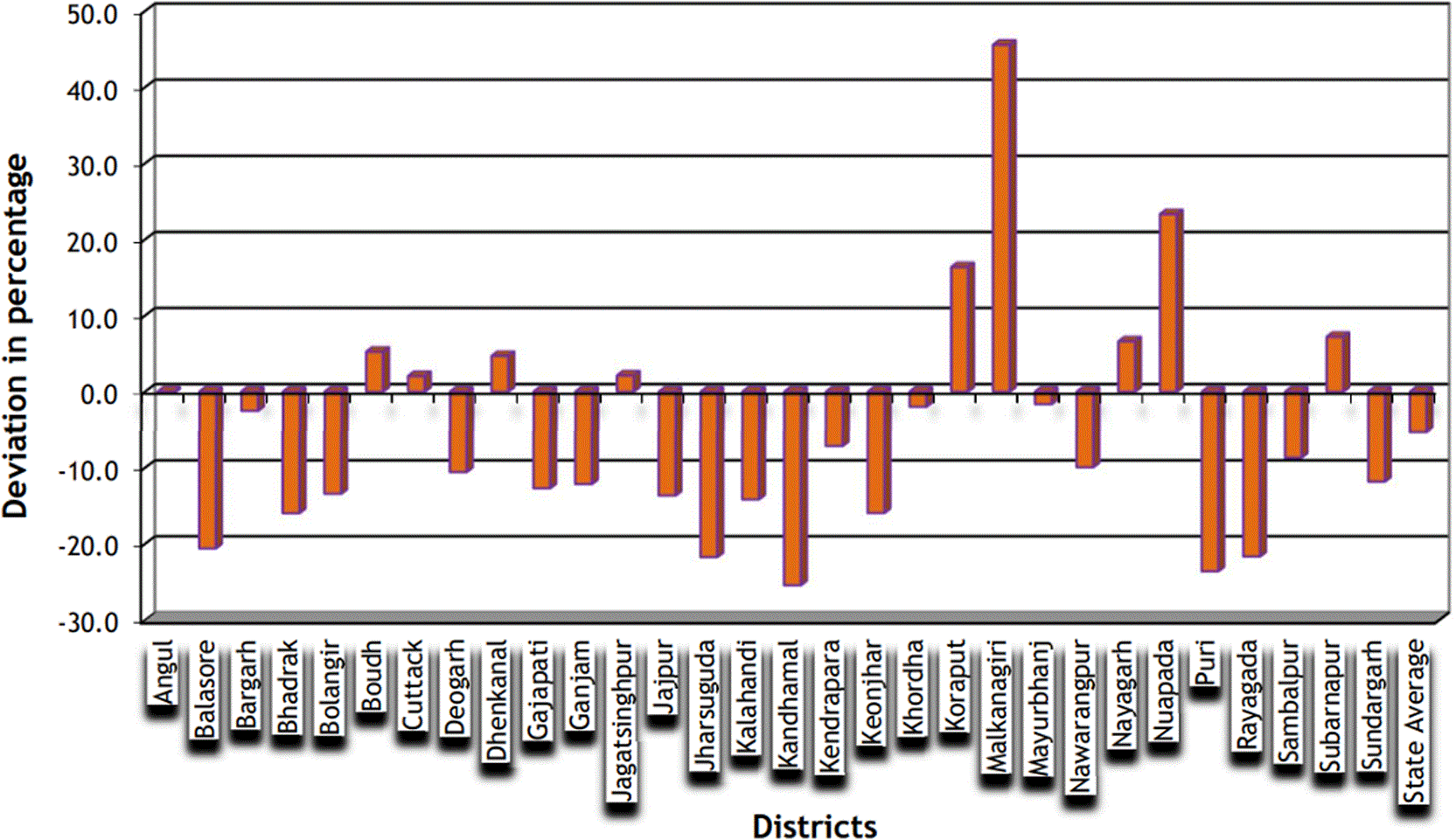
Note. District-wise rainfall deviation (%) from the long-term normal across all districts during 2024. Positive values indicate above-normal rainfall, while negative values indicate below-normal rainfall. The x-axis represents the districts of Odisha, and the y-axis shows the percentage deviation from normal rainfall. The state average rainfall deviation is also included for comparison.
Climate change has had a direct and severe impact on forest resources worldwide. An increase in carbon dioxide increases the growth period which can harm the fruit bearing capabilities of the trees. The increased incidence of floods, droughts, and shifts in temperature can directly impact the ability of the plants to produce. Recently, there has been a mass increase in wildfires62 due to the rise in temperature worldwide, which effects forest biodiversity. “Forests are responsible for providing well-known tangible benefits such as timber, fuelwood, fodder, fibre, grasses, and other NTFPs (Non-Timber Forest Products), along with intangible services such as watershed benefits, ecotourism, biodiversity conservation and carbon sequestration”.11 It is also considered a major source of livelihood for many communities in India, especially PVTGs. Almost all PVTGs living in Odisha depend on forests for their everyday livelihood. It has also been identified through many studies that the tribal population throughout the world was primarily forest dwellers and later took up other varieties of livelihoods due to a decrease in the forest covers. “Though many theories also suggest that largely most of the forest-dwellers depend on agriculture as their primary occupation; however, livestock rearing and NTFPs provide supplementary livelihood opportunity to majority of the villagers”.6 Odisha accounts around 7.2% of India’s total forest covers and also hosts many national parks and sanctuaries. It is rich in flora and fauna, including mangroves and evergreen forests. “The tribal population of Odisha depends on the MFP”.57 “Minor Forest Produce (MFP) play an important role in fostering the livelihoods of rural communities, particularly for tribals in collecting and trading commodities, including Kendu leaf, bamboo, honey, tamarind, and various other products”.9 According to various governmental reports, the revenue generated from these MFPs has increased in the recent years; however, these benefits the government, while the livelihood income of the tribes tends to fall.9 A governmental report on Lanjia Saora suggests that there is a decline in gums(−50%), broomstick(−42%), seeds, fruits & leaves (−39%), flowers (−12%) as a result their average household consumption has come down by 50% to 9%”.19 Forest, according to many PVTGs, is worth worshiping because according to them, it is a place where they are not just dependent on their income but it also gives them nutrition and provide a sense of identity. This protects these patients from malnutrition. “For the Kondhs, the forest has a sense of belonging rather than that of any ownership”.22 The demand for raw forest production has also increased within the urban population in the recent times, along with the demand in local markets. It is usually the surplus available to the community that is sold in the nearby local market.
The story of the Mahua Flower gathering by the Kutia Kondh community, provides a clearer picture. For the Kondh community, a PVTG residing in Odisha, Mahua has been a source of income since ancient times. This flower is used to produce country liquor, which is consumed and sold in the markets by the members, especially women. This plant is also known to have nutritional and medicinal value as the flowers bloom seasonally, making it a seasonal income. “The studies have shown that out of 89 households within the Kondh community, 79 depend on mahua plant but the average household income from of sale of these flowers is about $ 16 which is very less in comparison to the state average ($ 40)”.22 The availability of this plant is also decreasing in the forest due to the adverse impacts of climate change, decreasing the income of community members. Amongst most of the communities, a shifting trend is visible in their livelihood. “Due to non-availability of the forest resource, the shift is towards wage-labour, carpentry, masonry, plumbing, auto-driving, tea-garden worker etc”.19
Another story of tribals from the Koraput district also narrates a similar situation. It has been observed that due to the shirking of the forest, the livelihood of the tribals is being directly affected, and more importantly, the socio-economic position of women is threatened. This study particularly points out that most women are responsible for the collection of “Non-Timber Forest Produce”.15 “The women in Hathipakhna conserve nine varieties of tubers and eight types of mushrooms among other types of seasonal produce, which are eaten as well as utilized in rituals. The surplus is sold in the market as non-timber forest produce (NTFP), which serves as the primary source of income for most households in the region”.47 These instances narrate how women’s economies are dependent on forests due to their role as primary care takers of the family and any difference in their livelihood, directly threatens their identity and push them into marginalization.
The tribal population living in India has always been in the form of traditional arts and crafts that utilize the locally available raw materials. The skill of making a particular art is usually passed down to the next generation, making a major chunk of their livelihood income. The 13 PVTGs living in Odisha are also well-known to be masters of different skills where they are involved in making everyday household products for their domestic use as well as to sell in the local markets. This also portrays a sustainable living that which the tribes practice because of their close proximity to the environment.
Table 1 depicts all the 13 PVTGs from Odisha and the major art form which they make and sustain a livelihood from this extra income. This also works as a supplementary source for the communities in the off-season or when the agricultural yields are not sufficient enough. It also forms a part of their cultural heritage and indigenous knowledge which is protected through various legislations in India. Also in today’s time, there is a demand for environment friendly products which shows a huge potential for such markets. However, the markets are not very stable. There can be sudden demands or requirements at all. These market fluctuations often impacts the community members. The local markets are the only place accessible by these communities and their reach is usually limited to their concerned region. It becomes difficult for these groups to surpass the middlemen and sell in the urban market, where the actual value of the products are given. Hence, government intervention along with NGOs help in these cases. It has been observed through many studies that the PVTGs due to the effects of climate change and other factors are unable to gather enough raw materials from the forest for continuation of their art. “Most of the tribal artisans face constraints and difficulties in gathering or procuring raw materials. Raw materials like bamboo, wood, stone, fibres are facing shortage. Procuring raw materials cost a lot and the artisans fail to make even a margin profit if they procure raw materials”.20
In 1999, the Indian government took a major step towards the upliftment of Indian handicrafts and introduced “The Geographical Indications of Goods (Registration and Protection) Act”52 which became part of IPR rights. It gives GI tags to those unique products originating from a particular place in a way that protects the community knowledge by surpassing the individual rights of IPR. “Under this preview, the PVTGs have registered items like Dongariya Kondh embroidered shawl, Lanjia Saura painting, Khajudi Guda (jaggery), Dhenkanal Magji (food), Similipal Kai Chutney, Nayagarh Kanteimundi Brinjal, Koraput Kalajeera Rice etc. with the help of government initiatives”.53 Despite these measures, the success of GI registration is often debated. This registration does not guarantee monetary gains for the original craftsman, as it simply indicates its geographical origin. There are also other issues, such as government ownership of these tags, lack of knowledge about the legalities by the tribes, and land rights issues, where they are displaced from their ancestral lands due to various factors and are unable to produce the materials for their crafts. Here, climate also plays a major role as the raw materials used for making these products are becoming visibly unavailable to the tribal communities. “There is a fundamental gap in the definition of GI given in Section 2(1)(e) of the Geographical Indications of Goods (Registration and Protection) Act, 1999, which assumes environmental stability to maintain the quality, texture, and characteristics of the product. This assumption is altered by the increasing impact of climate change”.13
“The Forest Rights Act, 2006”55 was the most innovative and promising legislation to bring to the tribal communities of India. It aims to correct the social injustice done to the tribes living in Indian territory by giving them rights to their lands and access, use, and sale of forest produce. “It gave meaning to the term forest dwelling Scheduled Tribes- means the members or community of the Scheduled Tribes who primarily reside in and who depend on the forests or forest lands for bona fide livelihood needs and includes the Scheduled Tribe pastoralist communities”.55 It protects the customary rights of STs living and is dependent on the forests. In Odisha, its implementation began in 2008 and it was undertaken by the “ST & SC Development Department”56 and the SCSTRTI. However, it is has been criticized for its poor implementation in various studies. “One of the major reason for the failure was the focus on distributing land to individual beneficiaries, side-lining tribal friendly provisions such as community forest rights (CFRS)”.29 This problem was due to a lack of clarification on several provisions of the act and the unwillingness of governmental bodies to let go of the lands. Another implementation issue is the lack of legal awareness amongst the tribal population. “Constitution of Forest Rights Committees was done in a hurried and targeted manner which reduced the scope for better comprehension of the law and related processes at the level of potential right-holders”.32 Other factors involved the relocation of many PVTGs to the protected areas making it difficult to give land rights to these communities, the most common being the lack of participation of many stakeholders, especially women. It is obvious from various studies that the livelihood of the forest-dwellers who are majorly the tribal groups depends on land rights along with absolute access to forest resources, which this act initially promised. Nevertheless, due to implementation issues, the provisions of the act did not achieve enough success, without much to the livelihood of the PVTGs.
The main objective of the OPELIP is to identify targeted PVTG households and improve their livelihoods and food security. It also targets their enhancement of land rights, improvement agricultural yields, and other alternative income generation sources. “The programme adopts an integrated approach, involving support for improved access to land, natural resources, agricultural technologies, financial services, markets, productive and social infrastructure, and essential social services”.30 This programme also aims to improve the livelihoods of tribal women through the formation of various self-help groups and business opportunities. “A report on the outcome of this program by the Ministry of Tribal Affairs, suggests some interesting outcomes. It has been pointed out that from the 62,356 households taken as samples, there has been some positive results with the improvement in agricultural production but the gains were not large enough to increase sales revenue”.17 The reason can be identified as that of market access, because even if there was a surplus from the yields yet the gains did not significantly improve.
Regarding livelihood, the OPELIP showed no effect at all, which highlights the failure of the objectives mentioned for this program. Therefore, there is no evidence to suggest that this particular programme has enhanced the livelihoods of the PVTGs.
This study adopted a PVTG -‘centric approach’ to examine climate change. The reason for this is the lack of sufficient attention, both academically and politically, on the PVTGs, especially with regards to the negative impacts of climate change. Hence, a potential gray area of study is promising. Odisha hosts the maximum number of PVTGs in the country, with 13 diverse communities, making it a relevant situation to examine climate change impacts. As an economically weaker state, it hosts varied topographies along with the prevalence of natural disasters such as cyclones, floods and droughts. This ultimately affects the livelihoods of communities residing in the state. This study highlights the most common livelihoods practiced by the 13 PVTGs (i.e., agriculture, collection of forest resources and handicrafts) to examine the impacts of climate change. In terms of agriculture, there has been a massive shift visible from shifting agriculture to settled farming due to lack of lands, uneven rainfall patterns, non-viability of certain crops due to extreme weather changes and lack of infrastructure to overcome the climate impact on crops. The settled farming methods are also not very reliable due to natural disasters faced by the communities, along with issues such as relocation, mining, lack of access to bigger markets and land rights. Through the efforts of the Odisha government, this paper discusses the success stories of millet farming, which is known to be a weather-resilient crop. The other livelihood practice that also forms part of the customary practices among tribals is the collection of forest produce. However, due to the negative impact of climate variations, forest resources have become limited,which directly impact the income of these individuals. Tribal women are usually involved in the collection of forest produce for their household needs, and sell the surplus in the local markets. However, the non-availability of forest products is moving them towards more marginalization along with an identity crisis. Another likelihood discussed in this paper is that of handicrafts and art from the PVTG communities. The raw materials for these products are also usually collected or found around the villages that are depleting because of changes in various climatic conditions, impacting their source of income. In the recent past, the Odisha government has tried to bring in many programs for the upliftment of the PVTGs like the OPELIP, but the results are not as promising as mentioned in the goals and objectives. A major step taken by India to protect the rights of these communities was the FRA Act 2006, but various studies show a lack of proper implementation and failure of governmental methods.
Considering all the factors presented in this paper, there is a need for more research and intervention by the government with regards to the effect of climate change on the livelihood of the PVTGs due to climate change. “It is evident that the impacts of climate change are directly visible with the decline of the household income, so many theories suggest that there should be increasing access to credit facilities, especially with agriculture to cope with the losses”.23 Overrally educating the farmers with more weather resilient agriculture and providing infrastructural support is known to improve their condition. It is also suggested that as the reliance on bater systems is high amongst these communities, policy making and schemes should incorporate a systematic barter process that will enhance sustainable living amongst these communities. Another important issue identified within this paper is that of poor market access and to overcome this, it is essential for the government to provide linkages between urban markets and direct selling of the forest produce without any middleman’s intervention. “Another effective recommendation is the certification of NTPFs, which involves a system of verifying and labelling of forest products to ensure that they are produced, harvested, and traded according to specific environmental, social, and economic standards”.14 There is an increase in the demand for forest products; therefore, the chances of environmental degradation and misuse also increase. Therefore, a certification process can make things easier and more viable for everyone. Another recommendation is the active participation of women because of their central role in managing households, providing food, collecting water, and so on. This can be achieved through many self- help groups that have shown many positive results in Odisha. Finally, integrating the Traditional Knowledge of the communities can sometimes provide better results and improve implementation programs by the government.
For this study there has been no physical interaction with any respondents. So, there is no requirement of any ethical clearance. The data set has been taken from secondary sources for which the authors have provided proper citation. The following table lists the secondary sources with tables and figures.
No primary data were generated or analysed during this study. The findings are based exclusively on secondary data obtained from published literature, government reports, and publicly available sources, all of which are appropriately cited within the manuscript and referenced. Therefore, no separate dataset has been deposited in a data repository.