Просмотр новости
Найдите то, что Вас интересует
 Спутники
 РН
РН SpaceX
 Роскосмос
 NASA
NASA
СпутникиРНSpaceXРоскосмосNASASainsbury’s combination with Argos 10 years ago never quite worked. Why? And as it finally decides to sell the business, what happens next?
Sainsbury’s combination with Argos 10 years ago never quite worked. Why? And as it finally decides to sell the business, what happens next?
When Sainsbury’s bought Argos 10 years ago, the supermarket’s then CEO Mike Coupe argued it would “enhance both businesses” by giving customers more choice.
He saw “overlap and opportunity” in customers wanting “more choice… faster than ever, driven by the rise of mobile phone and digital technology”.
Mobile and digital tech have continued their rise, but Sainsbury’s is selling Argos, it confirmed on Friday.
After previous talks with Beijing-based retailer JD.com fell flat in September, it will now sell Argos to Swift, a new company led by retail heavyweights Richard Pennycook, Trevor Strain and veteran financier Matt Truman.
But Sainsbury’s will get much less than the £1.3bn it paid in 2016, at just £120m.
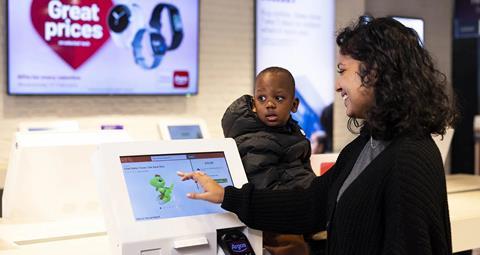
Why is Sainsbury’s selling?Sainsbury’s argued in 2016 that the combination of the two businesses would boost its sales and delivery network, but Argos has never quite met hopes.
The GM retailer has endured patchy growth since the 2008 financial crash, and in recent years faced intense online competition from Amazon, Temu and Shein, to name a few.
Source: Sainsbury’s
Sales last year grew by 0.7% in a “subdued GM market”, Sainsbury’s said at the time. And its latest trading update, for the 16 weeks to 20 June, saw GM and clothing sales decline 3.7% to £438m. Sales at Argos fell 0.5% to £1.1bn, in comparison to a 3.6% rise in grocery sales to £7.6bn.
Bernstein’s William Woods says the sale ends a “long and ultimately failed saga”, and the price marks the “continued capital destruction of food retail management teams who dream that they are anything but ‘boring’ supermarkets”.
“The dream of tying together omnichannel shopping across food and non-food didn’t really work. Argos and Sainsbury’s didn’t have the perfect customer overlap,” he adds.
Matthew Clements of Barclays says: “[Argos] has been a drag on growth, margins and free cashflow generation.”

Sainsbury’s can now focus more on the food business and Next Level strategy, free of the “permanent overhang of volatile Argos results”, says Woods.
Launched in 2024 and building on the Food First strategy of four years earlier, Next Level is a three-year plan to grow food volumes and share while cutting £1bn of costs, on top of £680m saved so far.
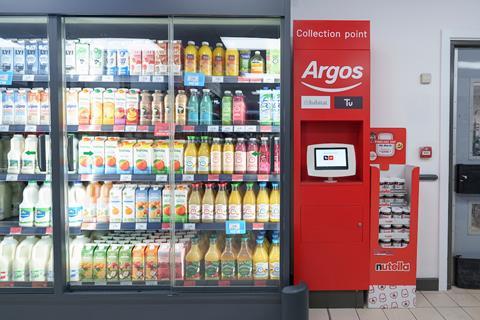
It has already led to more space for food in many locations by reallocating general merchandise and clothing.
Source: Sainsbury’s
Clive Black at Shore Capital, Sainsbury’s house broker, calls the sale a “particularly good outcome”, both for now and the longer term.
Certainly, investors seemed happy at the news. Sainsbury’s shares raced 3.5% higher to 368p as markets in London opened on 31 July, the day of the announcement. It pushed Sainsbury’s stock up more than 12% since the start of the year.
“Sainsbury’s should benefit from enhanced focus with improved margin, returns and cashflows,” says Black. “Future uncertainty and distraction being removed is also a major positive point.”
Clements agrees it is a “positive catalyst” which removes a “volatile and dilutive” earnings stream as well as £250m of net debt, primarily in leases.
“We were not always convinced at the ability of the two businesses to be separated… but discussions with JD.com in September 2025 indicated a divestment was feasible.”
The transaction is expected to complete in February 2027, when Sainsbury’s will get the first £70m of the £120m cash proceeds. Full separation is expected by February 2029, with Sainsbury’s predicting a neutral impact on underlying operating profit.
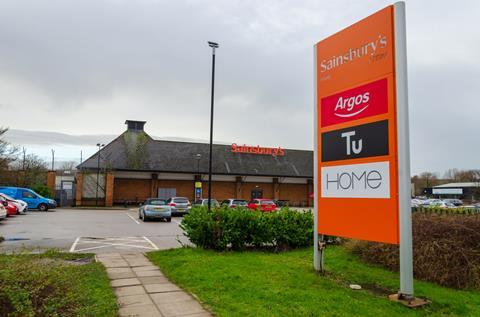
Swift may be a new venture but it is led by “some of the greatest retail, consumer and business talent in the UK”, says Black.
Executive chair Richard Pennycook is best known as ‘the man who saved The Co-op’, after a calamitous financial meltdown at Co-op Bank. But as Morrisons’ finance director from 2005 until 2013, he was instrumental in steering the business out of trouble following the acquisition of Safeway in 2004, and was also closely involved in the turnarounds of Laura Ashley, Welcome Break and Bulmers.
As BRC chair from 2018 to 2020, his most significant contribution was the appointment of Chris Tyas to lead the industry ‘war room’ in the wake of the Covid-19 crisis. He also chaired The Hut Group (now THG) from 2012 to 2018, Fenwick from 2017 to 2020, and has been non-executive chair at 2 Sisters Food Group parent Boparan Holdings since 2020.
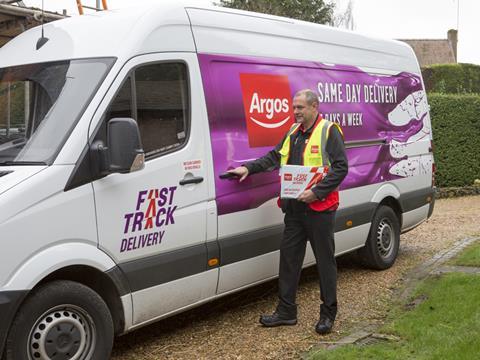
Trevor Strain was a key executive at Morrisons for over a decade, starting out as commercial and operations finance director in 2009. He was promoted to the board as CFO in 2013 and became COO in 2019.
He previously held several executive posts at Tesco, including property finance director. In November 2023 he became portfolio director at Ranjit Singh Boparan’s private office.
Matt Truman is True Capital’s executive chair and co-founder. He began his career at Deloitte, before serving as head of retail at Lehman Brothers and JP Morgan, advising the likes of Tesco, Booker and Ocado.
True Capital has more than £600m of assets under its management across venture capital, private equity and investments in public companies, and advises the likes of ABF, M&S and Walmart.
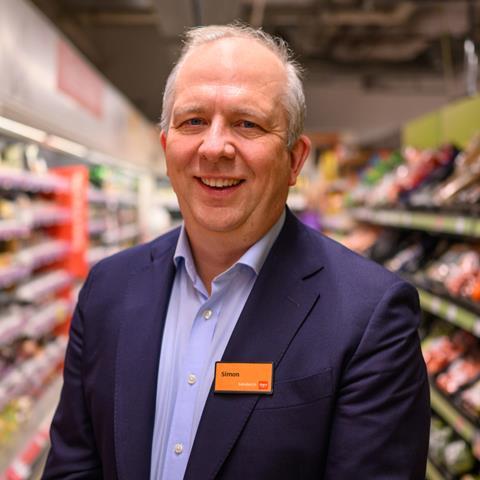
Sainsbury’s CEO Simon Roberts
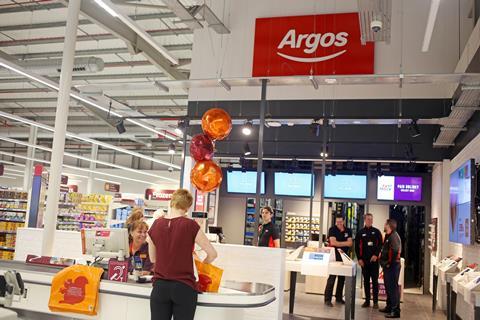
Sainsbury’s CEO Simon Roberts has confirmed Argos will continue to operate inside Sainsbury’s supermarkets.
He also says Nectar will continue to be used by Argos and Sainsbury’s will continue to sell Habitat products.
On future Sainsbury’s supermarkets, Pennycook says: “We’ll have a conversation about whether they would like us in that store”, and vowed that Argos will look at the potential for standalone stores where Sainsbury’s lacks a presence.
Pennycook rules out working with rival supermarkets. “In terms of stores within shops, we’ll be with Sainsbury’s.”
All Argos staff across stores and fulfilment centres, of which there are around 14,000, will transfer to the new ownership when the transaction completes in February 2027.
“Today is business as usual, tomorrow is business as usual,” Pennycook says. “We’ll have plans, but they’re growth plans, and those are going to be developed over the coming months in partnership with the team.”